Table of Contents
- Quick Comparison: Best Breathable Workout Tops
- How We Evaluated These Breathable Workout Tops
- 1. Performance Training Tank: Featherweight Fabric for Extreme Heat
- 2. Core Tech Tank: Anti-Microbial Moisture Management for Women
- 3. Baselayer Muscle Tank: Mesh Ventilation Where You Need It
- 4. Baselayer Tee and Long Sleeve: UPF 50 Coverage Without the Weight
- Best Moisture Wicking Shirts for Men: What to Look For
- How to Choose Workout Clothes for Humidity
- Frequently Asked Questions
Last Updated: September 10, 2026
Quick Comparison: Best Breathable Workout Tops
Finding breathable workout tops for hot weather comes down to fabric engineering, not marketing claims. Research on PCM-enhanced apparel shows sweat production can drop by up to 33% when phase change materials are woven into the fabric (report on PCM technology in athletic apparel). At Greatness Wins, we build every top around that principle: move heat out, move sweat away, keep the fit locked in. Below, we break down five picks, explain what actually separates performance fabric from standard activewear, and show you how to choose for humidity, HIIT, and everything in between.
Here's the short version before the detail:
| Top | Price | Best For | Standout Feature |
|---|---|---|---|
| Performance Training Tank | $45.00 | Extreme heat, intense sessions | Featherweight fabric, consistent fit |
| Core Tech Tank (Women's) | $58.00 | Full range of motion, odor control | Anti-microbial treatment, durable jersey |
| Baselayer Muscle Tank | $39.00 | Targeted ventilation, lifting | Mesh panels in high-sweat zones |
| Baselayer Tee | $39.00 | Everyday training coverage | Lightweight, UPF 50 |
| Baselayer Long Sleeve Tee | $49.00 | Sun coverage without heat load | UPF 50, maximum motion range |
How We Evaluated These Breathable Workout Tops
We scored each top on four criteria: fabric weight, moisture-wicking speed, ventilation placement, and fit consistency after repeated washes. Breathability and moisture control are separate performance metrics, and a top can excel at one while failing the other (Outdoor Gear Lab running shirt testing). Testing methodology in this category typically involves hundreds of hours of wear across real heat conditions; one review program logged over 300 hours across more than 70 tops and shorts (Outside Online summer apparel testing). We applied the same logic: heat dissipation first, then sweat transport, then durability. Fit consistency mattered most, because a top that shifts mid-session defeats the purpose of technical fabric.

1. Performance Training Tank: Featherweight Fabric for Extreme Heat
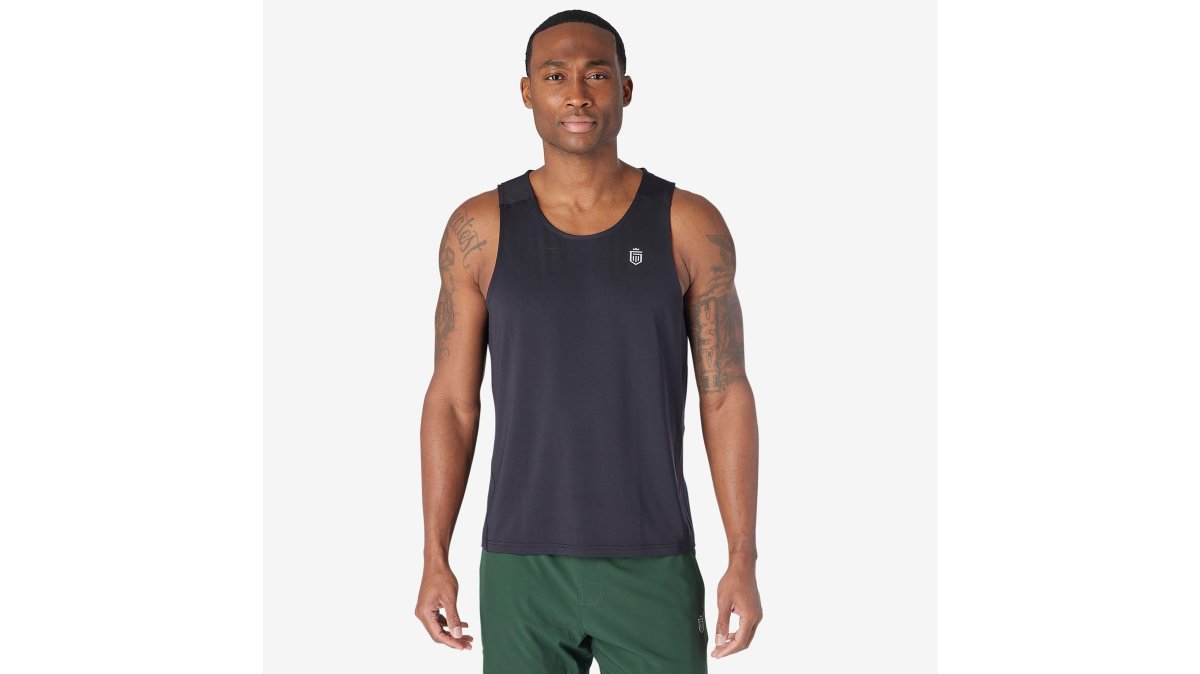
This is the pick for days when the heat wins unless your gear fights back. The Performance Training Tank is built from a featherweight fabric designed for intense workouts and outdoor runs in very hot conditions, and it holds a consistent fit wash after wash. For lifters, sprinters, and hikers logging miles in direct sun, the reduced fabric weight means less heat trapped against the skin. The compression-style cut also supports moisture-wicking synthetic fibers, which work best when they sit close to the body rather than hanging loose.
Pros and Cons
Pros:
- Featherweight construction reduces heat load
- Consistent fit across sizes and washes
- Built for running, lifting, cycling, and hiking
Cons:
- Tank cut leaves arms and shoulders exposed to direct sun
- Compression fit isn't for everyone
2. Core Tech Tank: Anti-Microbial Moisture Management for Women
Odor control is the gap most guides skip, and it matters more than people admit. The Core Tech Tank pairs moisture-wicking jersey with an anti-microbial treatment that keeps the fabric fresh through repeated sessions, which is the real difference between a top you wear twice a week and one you avoid by Thursday. The performance jersey is soft and durable, and the cut supports full upper body range of motion, so overhead presses and pull-ups don't bind at the shoulder. At $58.00, it's the premium option in this lineup, and the anti-microbial finish justifies the gap.

Pros and Cons
Pros:
- Anti-microbial treatment controls odor between washes
- Full upper body range of motion
- Soft, durable performance jersey
Cons:
- Highest price point in the lineup
- Women's sizing only
3. Baselayer Muscle Tank: Mesh Ventilation Where You Need It
Mesh panels only work when they're placed where heat actually builds. This tank puts ventilation in the zones that need it most, which is the difference between marketing mesh and functional mesh. The super lightweight fabric provides coverage without weighing you down, and the baselayer design keeps it close enough to move sweat off the skin efficiently. For CrossFit, lifting, and basketball sessions where you're cycling between intense bursts and recovery, the targeted airflow keeps core temperature from spiking. At $39.00, it's the best value in the group.
Pros and Cons
Pros:
- Mesh ventilation in high-sweat zones
- Lightweight with full coverage
- Strong price-to-performance ratio
Cons:
- Muscle tank cut offers less shoulder coverage
- Baselayer fit runs close, so size up if you prefer room
4. Baselayer Tee and Long Sleeve: UPF 50 Coverage Without the Weight
Long sleeves in summer sound wrong until you've burned through a tank. The Baselayer Tee and Long Sleeve Tee both carry UPF 50 protection with the same mesh ventilation and lightweight construction as the muscle tank, so you get sun coverage without adding heat load. The long sleeve version at $49.00 is the pick for golfers, hikers, and anyone logging hours outdoors where sun exposure is the bigger risk. Both offer maximum motion range, which matters for a golf swing or an overhead press. If you're coming from a standard cotton tee, expect a noticeably cooler wear.

What UPF 50 Actually Means
UPF is the fabric equivalent of SPF, but the scale works differently. UPF 50 blocks roughly 98% of UV radiation that reaches the fabric, and the rating is assigned by testing transmission through the material rather than on skin. The U.S. Food and Drug Administration provides guidance on UPF claims, so a garment can only carry a UPF number if it was tested to a recognized standard. That matters because "sun protective" printed on a hangtag without a UPF number is a marketing phrase, not a verified rating.
Three things drive a fabric's UPF score:
- Fiber type and density. Tightly woven or knit synthetics block more UV than loose knits or open mesh. This is why a mesh panel and a UPF 50 rating can coexist on the same garment, the rating applies to the solid fabric zones, not the ventilation openings.
- Color. Darker dyes absorb more UV, so a black long sleeve can out-perform a white one at the same fabric weight. The trade-off is that dark fabric also absorbs more heat, which is why light-colored UPF tops are the common choice for direct-sun training.
- Stretch and wetness. Fabric stretched tight against the skin transmits more UV, and many knits lose UPF performance when wet. A looser cut and quick-dry fibers preserve protection through a sweaty session.
Coverage vs. Heat Load: The Real Trade-Off
A long sleeve adds surface area, but it doesn't automatically add heat if the fabric is engineered correctly. The Baselayer Long Sleeve uses the same featherweight knit and mesh ventilation as the tanks, so the added coverage blocks UV without trapping a layer of hot air against the arms. For anyone logging two or more hours in direct sun, golfers, trail runners, hikers, paddleboarders, the long sleeve is usually the cooler option overall, because it removes the need for sunscreen reapplication and eliminates the radiant heat that hits bare skin directly.
Where the long sleeve loses: it takes adjustment if you're used to tanks, it holds more fabric against the body on a dead-still, 100-degree day, and it has fewer color options than the tanks. If your session is under 45 minutes and mostly shaded, a tank plus sunscreen is the simpler call.
Pros and Cons
Pros:
- UPF 50 protection verified to FDA labeling standards
- Mesh ventilation keeps airflow moving through the solid fabric zones
- Maximum motion range for golf and lifting
- Eliminates sunscreen reapplication on covered areas
Cons:
- Long sleeve takes adjustment if you're used to tanks
- Fewer color options than the tanks
- Light-colored fabric preserves UPF better when wet, which limits dark colorways for heavy sweaters cooling underwear.
Best Moisture Wicking Shirts for Men: What to Look For
The best moisture wicking shirts for men prioritize sweat transport over everything else, because moisture control and breathability are distinct jobs. Breathability moves heat away from the body; moisture control moves sweat away from the skin (Outdoor Gear Lab on fabric performance metrics). Look for polyester blends and engineered synthetic fibers that pull sweat to the surface for faster evaporation. Seamless construction reduces chafing on long sessions, and four-way stretch keeps the fit ergonomic through lifting and sprinting. Light-colored fabric also helps: darker fabrics absorb more heat and can slow sweat evaporation (Texas A&M AgriLife Extension guidance on hot weather clothing). Skip anything labeled "cotton blend" for training.
How to Choose Workout Clothes for Humidity
Humidity changes the math, because sweat can't evaporate into air that's already saturated. When relative humidity climbs above roughly 60%, evaporative cooling slows dramatically, and above 75% it nearly stops, sweat drips instead of evaporating, so it carries almost no heat away from your skin. That's the mechanism behind the "it's not the heat, it's the humidity" line, and it's why the fabric rules that work in dry heat fail in a Southern summer.
The Humidity Fabric Rules
In saturated air, prioritize these in order:
- Quick-dry fibers over wicking claims. Polyester and nylon move sweat to the surface fast, but in high humidity the surface can't evaporate it quickly either. What matters is how fast the fabric dries once you stop moving, a top that stays wet holds heat against your skin and increases chafing risk. Look for open-knit or mesh-back construction rather than dense compression knits.
- Open-back and mesh-panel designs. Ventilation openings give sweat a path off the skin even when the air can't absorb it. A racerback or open-back cut exposes more skin to moving air than a full-coverage tee at the same fabric weight.
- Loose fit over compression. Loose-fitting apparel allows more air movement across the skin, which improves heat dissipation in moderate heat. Tight garments can reduce the air layer that carries heat away, so a compression top that feels great in a dry gym can trap heat outdoors in humidity.
- Light colors. Dark fabric absorbs more heat and can slow sweat evaporation, so light-colored tops are the default for humid outdoor sessions.
Layering for HIIT in Humidity
High-intensity interval training is the hardest case, because you spike sweat rate during work intervals and then stand still during rest, the exact conditions where a wet top turns into a heat trap. The layering approach that works:
- Base layer: a lightweight, close-fitting moisture-wicking tank or tee (the Baselayer Muscle Tank is built for this) that moves sweat off the skin during work intervals.
- Outer layer: a looser, open-weave top or a mesh-back tee that you can shed during rest intervals. The loose layer provides airflow; the base layer provides wicking. Together they cover both jobs.
- What to avoid: cotton anything (holds sweat, dries slowly, chafes), heavy compression layers in outdoor humidity, and dark colors that absorb radiant heat.
For indoor HIIT in a humid gym, drop the outer layer entirely and rely on the base layer plus a fan or open window. For outdoor HIIT, keep the outer layer on during work intervals and strip it during rest.
Quick-Dry Performance: What to Look For on the Tag
Quick-dry performance matters most in humidity, and the tag tells you more than the marketing copy. Look for:
- Fiber content: polyester, nylon, or a poly-spandex blend. Skip cotton blends for training.
- Construction: open knits, mesh panels, or perforated zones. Dense jersey dries slower.
- Finish: anti-microbial treatments help in humidity because bacterial growth accelerates in warm, damp fabric, the same reason the Core Tech Tank's anti-microbial finish matters more in July than January.
- Weight: under about 5 oz per square yard for hot-weather training. Heavier knits hold more water.
Cooling fabric technology in sportswear is also evolving fast, with moisture-wicking polyester, nylon, and cool-touch finishes now the standard recommendations for summer training.
Frequently Asked Questions
What is the most breathable fabric for hot weather workouts?
Moisture-wicking synthetics like polyester and nylon blends outperform cotton in heat. These technical fabrics pull sweat away from your skin and spread it across the garment surface for faster evaporation. Research from the National Collaborating Centre for Environmental Health (2024) confirms that synthetic wicking materials are standard for thermal comfort during exercise. Look for mesh panels and lightweight construction to maximize airflow. Cotton absorbs sweat and holds it against your skin, which slows evaporative cooling and increases chafing risk.
How do moisture-wicking fabrics help during intense exercise?
Moisture-wicking fabrics transport sweat away from your skin to the outer surface of the garment, where it evaporates faster. This process, called sweat management, keeps your skin drier and supports thermal regulation. For high-intensity training in humidity, this means less discomfort and better temperature control. Without wicking, sweat saturates your clothing and blocks heat dissipation.
What features should I look for in a workout top for humid conditions?
Prioritize mesh panels, lightweight fabric, and quick-dry technology. Strategic ventilation features like mesh cutouts allow heat to escape, a trend brands are adopting across 2026 collections. Light-colored fabrics absorb less heat than dark ones, according to Texas A&M AgriLife Extension. Also check for anti-microbial treatment to control odor and flatlock seams to prevent chafing. Loose-fitting designs improve airflow across the skin, though close-fitting wicking fabrics can be equally effective when engineered correctly.
Are synthetic or natural fibers better for hot weather training?
Synthetic fibers win for hot weather training. Polyester blends and nylon are engineered to wick moisture, dry quickly, and resist saturation. Loose-fitting garments can improve heat dissipation, and technical synthetics maximize moisture management when fit properly. Natural fibers like cotton feel soft but trap sweat, becoming heavy and slow to dry. For intense workouts or humid conditions, synthetic performance apparel delivers measurable advantages in comfort and temperature regulation.
How should I care for moisture-wicking athletic apparel?
Wash moisture-wicking tops in cold water on a gentle cycle and avoid fabric softener, which coats fibers and reduces wicking efficiency. Tumble dry low or hang dry to preserve elasticity and cooling technology. Skip the dryer sheets for the same reason. For anti-microbial treated garments, follow the care label closely to maintain odor control. Proper care extends the life of technical fabric and keeps performance consistent after repeated washes.
Summer training doesn't have to mean choosing between coverage and comfort. Greatness Wins builds breathable workout tops for hot weather with featherweight fabric, targeted mesh ventilation, and anti-microbial moisture management, all backed by free shipping on orders over $100 and free returns within the U.S. If your current gear restricts your swing or soaks through by mile two, it's time to upgrade. Get started with Greatness Wins and train through the heat instead of around it.