Quick Summary
Durable athletic socks for long distance walking need strong fibers like nylon, a tight knit, elastic that recovers, and flat seams. Wool or polyester blends with nylon reinforcement tend to last and keep feet dry better than pure cotton.
- Cotton socks gave no significant shock-absorption benefit compared with barefoot walking in one cited study.
- Nylon adds abrasion resistance where the heel and toe take the most friction.
- Check heel and toe fabric, because a thick sock can hide thin wear points.
- Use the material that matches your conditions, such as polyester-heavy blends for hot, sweaty walks.
- Run a durability check after 10 washes: inspect heel and toe, press cushioning, and note drying time.
Table of Contents
- What Makes a Sock Durable Enough for Long Distance Walking
- Best Socks for Walking Long Distance: Materials Compared
- Moisture-Wicking Socks for Long Walks and Sweat Management
- Best Socks for Walking and Standing All Day
- Darn Tough Socks Compared With Greatness Wins Options
- Fit, Blister Prevention and Care to Make Socks Last
- Choosing Your Long Distance Walking Socks Today
- Frequently Asked Questions
What Makes a Sock Durable Enough for Long Distance Walking
Last Updated: November 12, 2026
Durable athletic socks for long distance walking need to do three jobs at once: stay intact, keep your feet dry, and cushion each step. Most socks fail at one of these before the others. A sock that rolls down or thins out after a dozen miles is no bargain at any price.
A study on cushioning performance found that cotton socks, including double-layer cotton socks, did not provide a significant shock-absorption effect during walking compared with barefoot walking (Cushioning Performance of Specialized Running Socks study). That result matters for long walks. Cotton alone is not enough, which is why durable designs blend fibers on purpose.
Durability for long-distance walking comes down to a few measurable traits:
- Fiber strength: Nylon adds abrasion resistance where the heel and toe take the most friction.
- Knit density: A tighter knit resists thinning and holes, but it must still breathe.
- Elastic recovery: The cuff should snap back after a full day on your feet.
- Seam placement: Flat, well-placed toe seams reduce the hot spots that start blisters.
Watch out: a thick sock is not automatically a durable one. Bulk can hide thin wear points, so check the heel and toe fabric, not just the overall thickness.
Best Socks for Walking Long Distance: Materials Compared
The right material depends on how far you walk, how much you sweat, and how your shoes fit. Rather than rank fibers in the abstract, compare them on the four traits that decide whether a sock survives a long-distance walking schedule: moisture handling, abrasion resistance, cushioning retention, and fit stability after repeated washing.
How the main fiber families behave over distance
Cotton. Soft and breathable at the start, but cotton holds moisture against the skin. A study on cushioning performance found that cotton socks, including double-layer cotton socks, did not provide a significant shock-absorption effect during walking compared with barefoot walking (Cushioning Performance of Specialized Running Socks study). Wet cotton also loses loft, so cushioning flattens in the second half of a long walk. Pure cotton is a poor choice for the keyword use case.
Merino wool. Merino regulates temperature across a wide range, resists odor, and keeps some insulating value even when damp. Darn Tough recommends Merino Wool cushioned socks for high-intensity or long-distance walking to handle excess moisture (Darn Tough guide to choosing walking socks). The trade-off is abrasion: fine merino fibers wear faster in the heel and toe unless they are blended with nylon or reinforced with a denser knit. Merino also takes longer to dry than polyester, which matters on multi-day trips or rainy walks.
Polyester (including recycled polyester). Dries fastest of the common fibers and moves sweat away from the skin efficiently. It has poor abrasion resistance on its own, so it is almost always blended with nylon in the heel and toe. Polyester also holds odor more than merino, which is why some walkers rotate pairs on back-to-back days.
Nylon. The workhorse for durability. Nylon adds abrasion resistance where the heel and toe take the most friction, and it helps a knit hold its shape after washing. A 100% nylon multi-knit sock can be thin and low-profile while still resisting thinning, though it wicks less aggressively than polyester and can feel less breathable in heat.
What the blends actually deliver
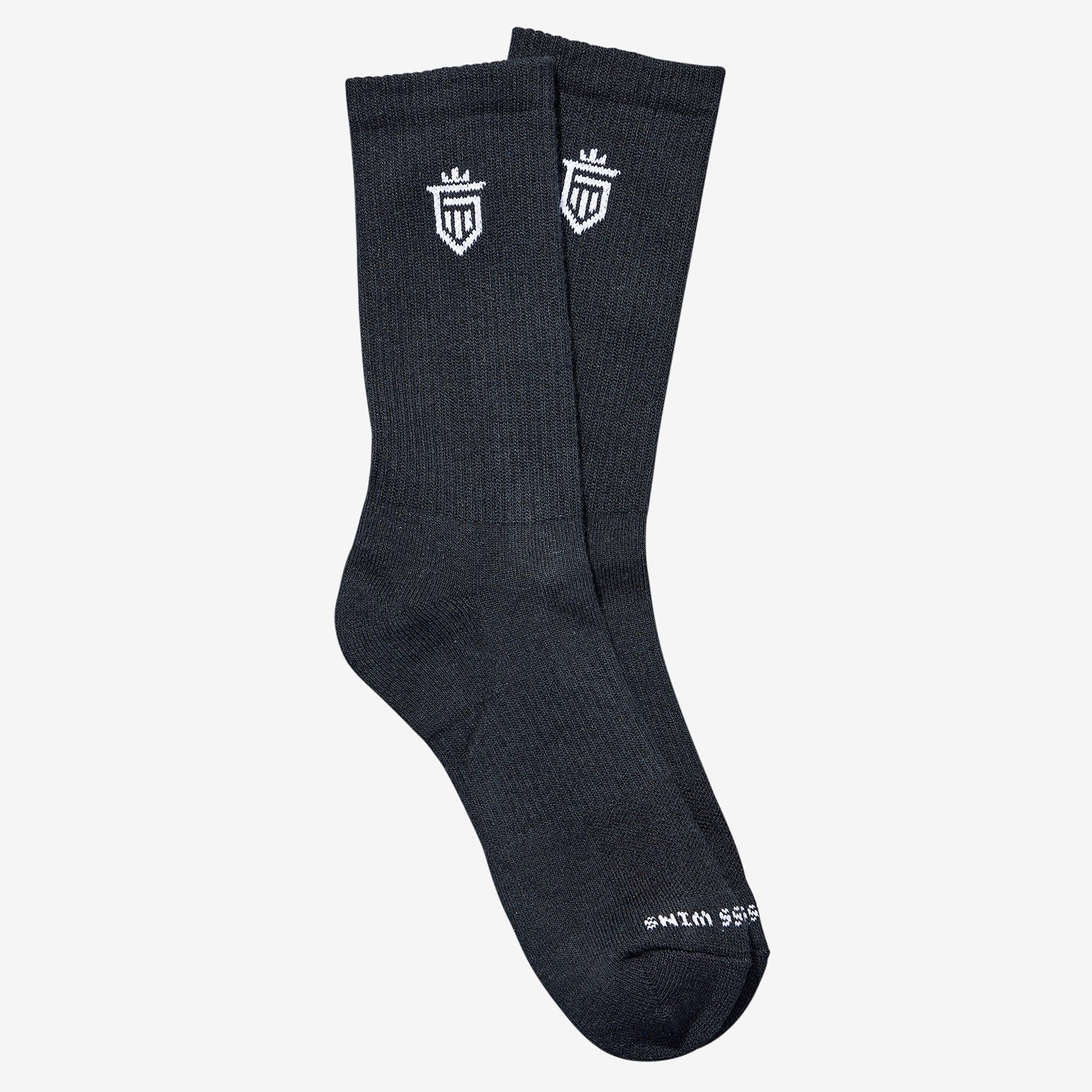
Our Crew Length Sock blends cotton, recycled polyester and nylon. Cotton brings breathability, recycled polyester adds moisture-wicking and durability, and nylon supplies strength. The combination is designed to breathe while staying durable and drying quickly.
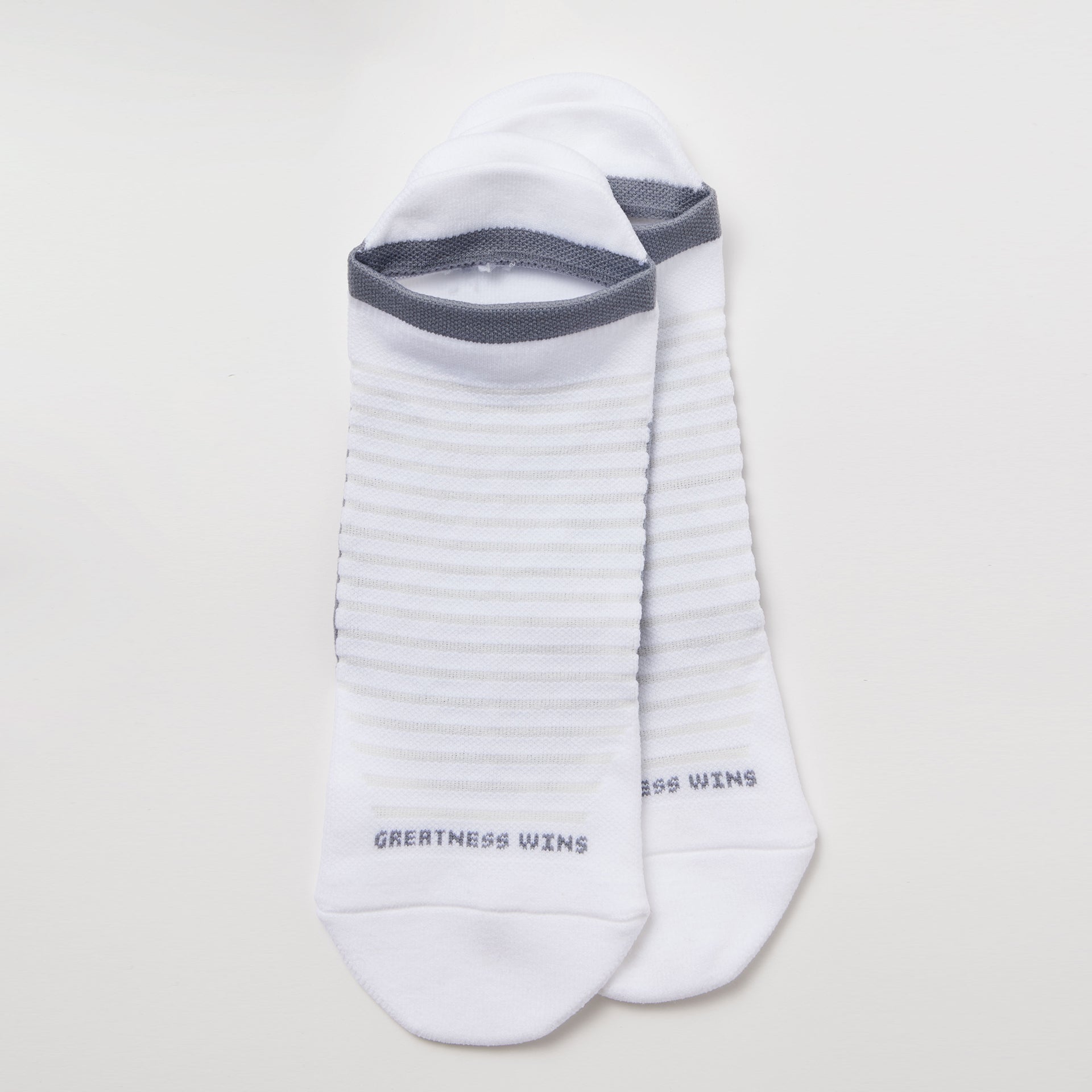
Our Athletic No Show Sock uses 100% nylon with a multi-knit construction. The listing notes that the multi-knit construction allows maximum breathability, arch support and total comfort.
Match the material to the walk, not the label
| Walking condition | Material priority | Why |
|---|---|---|
| Hot, humid, high sweat | Polyester-heavy blend with nylon reinforcement | Fastest drying; limits saturation |
| Cold or shoulder-season long days | Merino blend with nylon | Warmth when damp; odor control |
| Wet, rainy, multi-day | Synthetic blend, no cotton | Cotton stays wet and loses cushioning |
| Sensitive skin, blister-prone | Smooth synthetic or fine merino, flat seams | Reduces friction and hot spots |
| Everyday mixed conditions | Cotton/polyester/nylon blend | Balances feel, drying, and durability |
Sock thickness changes how your shoe fits
Material choice is only half the decision. Sock thickness changes the volume inside the shoe, and that changes pressure points and blister risk. A cushioned crew sock can take up enough room that a shoe which fits well in a thin liner becomes tight across the toes on a long walk. A no-show nylon sock may feel loose in the heel if the shoe was fitted with a thicker sock.
A common pattern is to fit walking shoes with the sock thickness you plan to wear most often, then keep that thickness consistent across pairs. If you switch between a cushioned crew and a thin no-show, expect the fit to change and check for heel slip and toe pressure before a long walk.
Watch out: a thick sock is not automatically a durable one. Bulk can hide thin wear points, so check the heel and toe fabric, not just the overall thickness.
| Sock | Material Focus | Starting Price | Best For |
|---|---|---|---|
| Crew Length Sock | Cotton, recycled polyester, nylon blend | $15.00 | Long walks in mixed conditions |
| Athletic No Show Sock | 100% nylon, multi-knit | $15.00 | Low-profile wear with shoes |
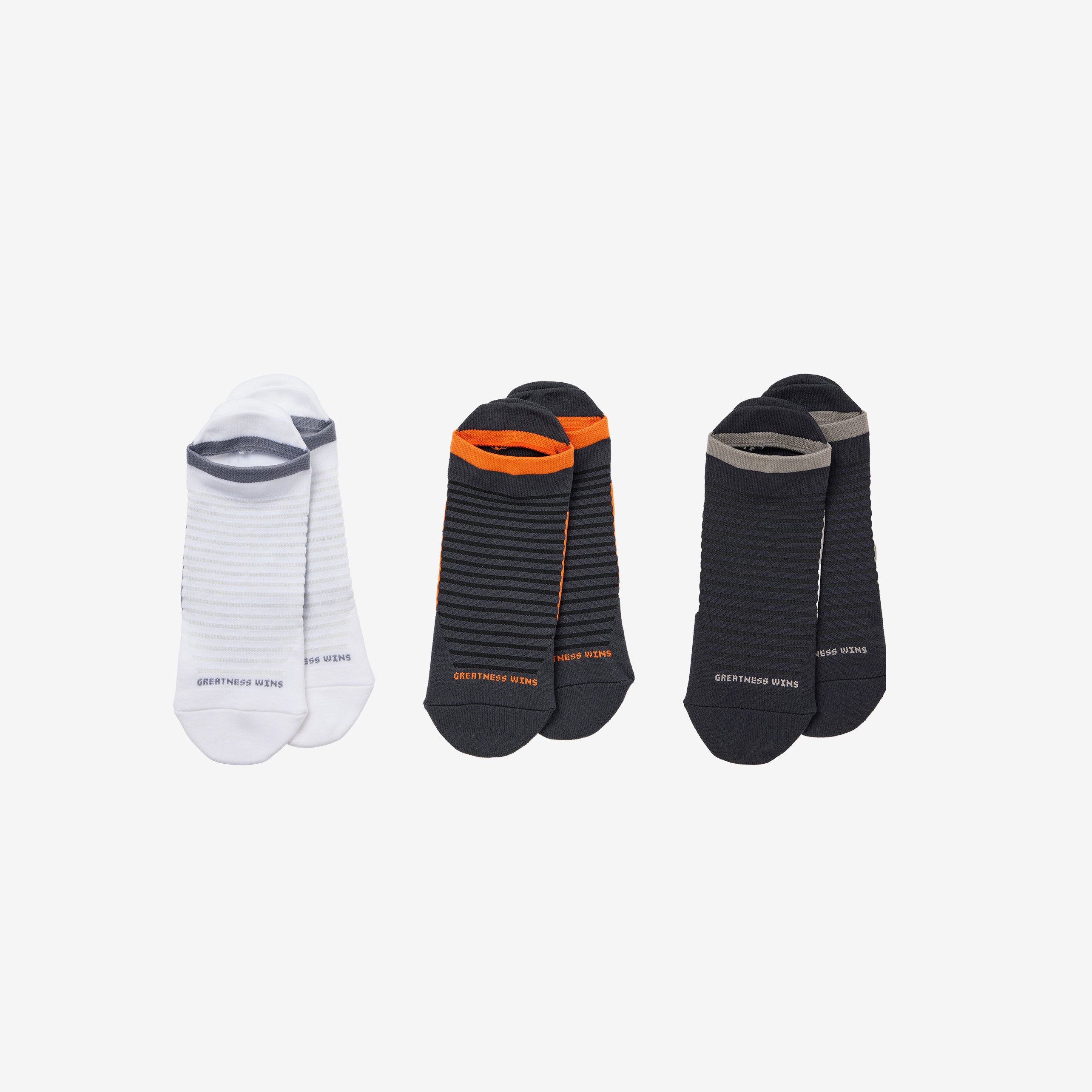
| Athletic No Show Sock - Multi Pack | 100% nylon, multi-knit | $38.00 | Stocking up for regular walkers |
Starting Price
Moisture-Wicking Socks for Long Walks and Sweat Management
Moisture is the main reason long walks end in blisters. When sweat stays against the skin, friction increases and the skin softens. A moisture-wicking sock moves that sweat outward so it can evaporate.
Check the fiber content before you buy. Browse the no-show athletic sock to see its moisture-wicking construction.
Here is a simple way to test your choice on a walk:
- Wear the sock for a short walk and note any warm or damp spots.
- Check the heel and toe after the walk for bunching.
- Repeat on a longer walk before committing to a full week of use.
Best Socks for Walking and Standing All Day
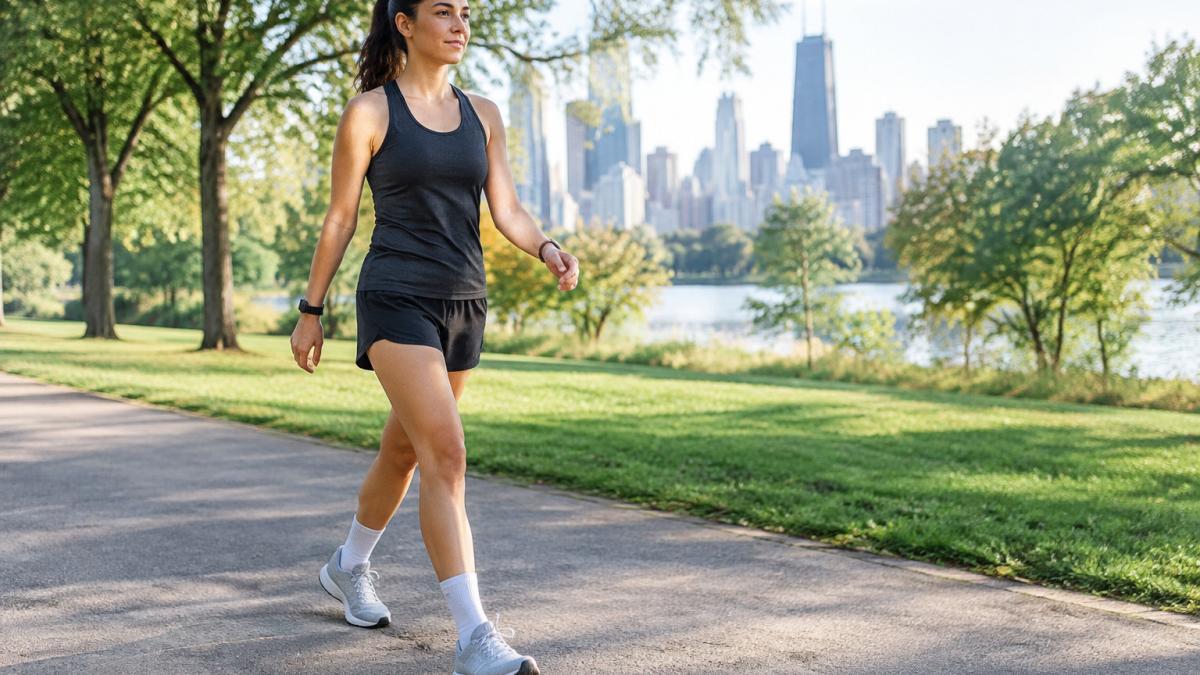
Long walks and long standing days stress feet differently. Standing keeps pressure on the same spots, while walking moves the load. A sock for both needs steady cushioning and a secure fit that does not slide under the arch.
Darn Tough Socks Compared With Greatness Wins Options
Most comparisons stop at fiber content. For long-distance walking, the more useful comparison is durability evidence: how a sock holds up after repeated wear and washing, what it costs per mile, and how care affects lifespan. That is where this comparison focuses.
What Darn Tough emphasizes
Darn Tough's own guidance favors cushioned Merino Wool styles for high-intensity or long-distance walking, and the brand is known for a lifetime guarantee on its socks. Merino brings temperature regulation, odor resistance, and comfort when damp. The trade-offs are slower drying than polyester and a higher upfront price than most synthetic blends. For walkers who log long days in cool or variable weather and want one pair to last, merino cushioned socks are a reasonable benchmark.
What Greatness Wins emphasizes
Our Crew Length Sock relies on a cotton, recycled polyester and nylon blend, and the Athletic No Show Sock uses 100% nylon. The Crew Length Sock starts at $15.00, and the Athletic No Show Sock - Multi Pack at $38.00 brings the per-pair cost down for walkers who rotate socks.
A durability rubric you can apply to any sock
Use this repeatable rubric on whatever pair you buy:
- Abrasion check. After 10 washes, inspect the heel and toe for thinning or pilling. Mark the first sign of wear.
- Cushioning retention. Press the ball and heel between thumb and finger before and after 10 washes. A sock that flattens quickly will feel thin on long walks.
- Fit stability. Note whether the cuff still snaps back and whether the sock slides under the arch after a full day.
- Drying time. Wash and air-dry; record how many hours until fully dry. Faster drying reduces blister risk on back-to-back days.
- Seam and toe integrity. Check for loose threads or seam separation, which create hot spots.
Run this rubric on one pair before committing to a multi-pack. It turns a subjective "feels durable" into something you can compare across brands.
Cost per wear, not sticker price
A $15.00 sock worn 100 times costs $0.15 per wear. A $25.00 merino sock worn 200 times costs $0.125 per wear. The cheaper sock is not always the better value, and the more expensive sock is not automatically cheaper per mile. Track how many walks you get from a pair before the heel thins or the cuff loosens, then divide the price by that number.
Care changes the comparison
Wash socks inside out in cold water, avoid high heat in the dryer, and rotate pairs so no single pair takes every mile. Our Extend the Life of Workout Clothes guide walks through simple steps that apply to socks as well.
How to choose between the two approaches
Choose the fiber that matches your walking conditions and your priorities for drying, feel, and price. Either way, judge the sock by the rubric above rather than by the brand name on the cuff.
Fit, Blister Prevention and Care to Make Socks Last
A sock only works if it stays in place. If yours slide down, check whether the cuff is too loose or the size is wrong. A sock that bunches under the foot creates friction, and friction causes blisters. Wearing a sock with a well-fitting shoe makes the biggest difference.
Double-layer construction is marketed for blister prevention. Wrightsock describes its running and walking socks as using double-layer anti-blister technology and moisture-wicking materials (Wrightsock running socks blister-free performance). Layered designs can reduce rubbing, though you should still test them on real walks.
To make socks last longer, wash them inside out in cold water, avoid high heat in the dryer, and rotate pairs so no single pair takes every mile. Our Extend the Life of Workout Clothes guide walks through simple steps that apply to socks as well. For a deeper look at why socks slip, read our troubleshooting guide on why athletic socks slip down.
Choosing Your Long Distance Walking Socks Today
Start with the conditions you walk in most. Choose the Crew Length Sock for mixed-weather walks that need breathability and durability, or the Athletic No Show Sock for low-profile wear with sneakers. If you walk often, the Athletic No Show Sock - Multi Pack at $38.00 gives you a set of pairs for rotation and gives your feet a rest between wears.
Test your pick on a few real walks before you judge it. Note where you feel heat, where the sock shifts, and how the heel holds up.
Frequently Asked Questions
What kind of socks are best for long-distance walking?
For long-distance walking, look for socks that combine a durable synthetic or nylon base with breathable cotton and moisture-wicking fibers. Crew-length or no-show styles from Greatness Wins, such as the Crew Length Sock at $15.00 or the Athletic No Show Sock at $15.00, are available for your walking needs. The Crew Length Sock blends cotton, recycled polyester and nylon. Choose a thickness that fits your shoe so the foot does not slide inside it.