Table of Contents
- Why Do Leggings Roll Down? The Real Causes
- How Yoga Pants Should Fit: A Step-by-Step Diagnosis
- The Best Leggings Waistband for Staying Up
- Fabric, Compression, and Elasticity: What Keeps Yoga Pants in Place
- How to Wash Leggings to Maintain Elasticity
- Temporary Fixes vs. Durable Solutions for Yoga Pants Sliding Down
- Frequently Asked Questions
Last Updated: October 19, 2026
Why Do Leggings Roll Down? The Real Causes
Most yoga pants slide down because the fit is wrong for your body or the waistband can't fight gravity and movement, which is why knowing how to keep yoga pants from sliding down starts with the cause.
At Greatness Wins, we build performance apparel for athletes who train hard, so we think about fit and fabric differently than fashion-first athleisure brands. Here's what drives the rolling and slipping.
Size and Sizing Mistakes
Sizing down for more compression is a common mistake. Too-small leggings stretch tight across the hips and rear, then creep down as the waistband loses its anchor.
Sizing up creates the opposite problem. Loose leggings have nothing holding them in place. The waistband gaps, the fabric bunches, and gravity wins.
The fix: measure your waist and hips, then match them to the brand's size chart. Don't guess based on your jeans size.
Waistband Construction and Rolling
A waistband that rolls is usually too narrow or too stiff. Thin elastic bands fold under tension; wide, contoured waistbands spread pressure across the hips and stay put.
Seam placement matters too. A bulky top seam digs in when you bend, and the fabric folds at that seam. A smooth, flat seam sits flush and resists rolling.
How Yoga Pants Should Fit: A Step-by-Step Diagnosis
The right fit is snug without squeezing, with a waistband that stays flat through every movement. Use this diagnosis to separate a sizing problem from a waistband-shape problem from a fabric-wear problem before you buy a new pair.
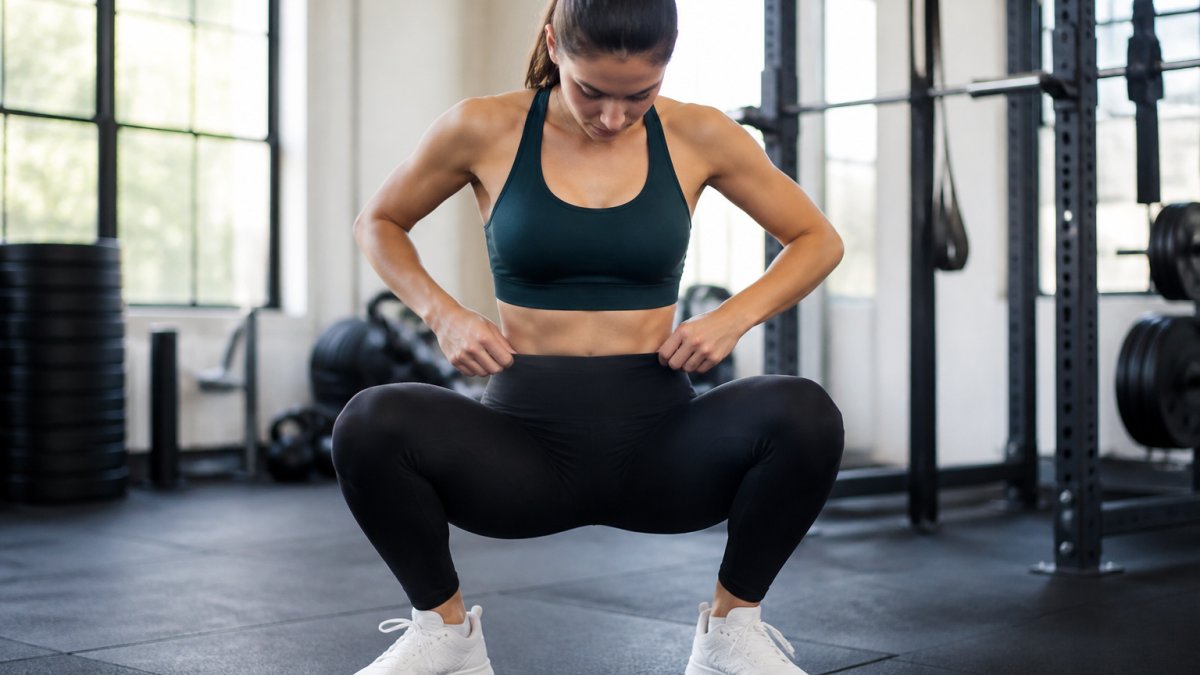
Step 1: Measure, then check the waistband gap
Measure your natural waist (the narrowest point, usually just above the belly button) and the fullest part of your hips, then compare to the brand's size chart, not your jeans size.
With the leggings on, slide a flat hand under the front of the waistband. A whole hand fitting easily means too loose; fewer than two fingers means too tight.
Step 2: Check the hips and the rise
The fabric should hug your hips without pulling across the front or creating tension lines at the crotch, pulling means too small, bunching means too big. A high-rise legging should reach your natural waist; a band at your hip bones has less to anchor against and will roll forward when you bend.
Step 3: Match the waistband shape to your proportions
Two people with identical waist and hip measurements can need different waistband shapes.
- Short torso or high natural waist: A very tall high-rise band can bunch under the ribs. Look for a mid-to-high rise with a contoured band that dips slightly in front.
- Long torso or low natural waist: A low-rise band has too little real estate to anchor. A true high-rise that reaches the natural waist is the fix.
- Waist-to-hip difference of 10 inches or more: A straight-cut band will gap at the back waist. A contoured band that curves in at the waist and out at the hip follows your shape instead of fighting it.
Step 4: Run the yoga-specific movement test
Static fit lies. Leggings that feel perfect in the fitting room can slide once you move. Run this sequence in front of a mirror, ideally before you remove the tags:
- Downward-facing dog (hold 5 breaths): Does the waistband gap away from your lower back or roll forward? Gapping means the band is too loose or the rise is too low. Rolling means the band is too narrow or too stiff.
- Warrior II (hold 5 breaths each side): Does the band dig into your sides or fold over at the hip crease? Digging means too much compression or a band that is too narrow. Folding means the band lacks structure.
- Forward fold (hold 5 breaths): Does the back of the waistband slide down toward your tailbone? If yes, the rise is too low or the fabric has poor recovery.
- Sun salutation flow (3 rounds): Does the waistband stay at your natural waist through the whole flow, or do you need to tug it up between poses? Needing a tug mid-flow is the clearest sign the size or band shape is wrong for you.
- Lunge to twist (5 reps each side): Does the band rotate around your torso? Rotation points to a loose band or a fabric that has lost its snap.
Note which test fails: a gap in downward dog points to sizing, a roll in forward fold to band construction, and rotation in twists to fabric recovery. That tells you whether to size down, switch waistband styles, or replace a worn pair.
Step 5: Re-check after 30 minutes of wear
Fabric relaxes with body heat and movement. Do a short workout or walk, then re-check the waistband gap and hip fit. A pair that fits at minute one but gaps at minute thirty has a recovery problem, not a sizing problem, no size change will fix it.
The Best Leggings Waistband for Staying Up
The best waistband for staying up is a wide, contoured band with a smooth flat seam, worn at your natural waist: width spreads pressure, contouring follows your hips, and a flat seam prevents folding.
Narrow elastic bands are the usual culprit: they concentrate force on one thin strip, which folds under movement.
Look for these features when you shop:
High Waist Essential Legging →
- Wide band (at least 3 inches) that sits flat
- Contoured shape that dips lower in front and rises at the back
- Flat-lock or bonded seams with no bulk
Our High Waist Essential Legging is built around exactly this design. The high-rise waistband holds its position through training, and the double-brushed interlock knit moves with you instead of pulling down.

Fabric, Compression, and Elasticity: What Keeps Yoga Pants in Place
Fabric with good stretch and recovery holds its shape and grips your body.
Elasticity is how far a fabric stretches. Recovery is how well it snaps back.
Compression plays a role too. Light compression keeps fabric in contact with your body, which adds grip.
Nylon and spandex blends tend to recover better than cheap cotton blends. Check the label: a higher spandex content usually means better snap-back.
How to Wash Leggings to Maintain Elasticity
Heat and harsh detergent break down elastic fibers, and once elasticity fades, leggings slide. Wash cold, skip fabric softener, and air dry.
Follow these rules to protect your leggings:
- Wash cold (under 86°F) on a gentle cycle
- Turn them inside out to reduce surface wear
- Skip fabric softener because it coats fibers and reduces grip
Fabric softener is the hidden killer. It leaves a slick coating that makes fabric slide against your skin. If your leggings started slipping after a few washes, softener is a likely reason.
Temporary Fixes vs. Durable Solutions for Yoga Pants Sliding Down
Quick fixes buy you a workout; durable solutions fix the root cause. The gap most guides leave is which temporary fixes are safe to exercise in, and when a fix is worth doing versus replacing the garment.
Temporary fixes: what is safe during exercise
Not every hack belongs in a yoga class. Here's what's practical and what's risky.
- Tuck the waistband under itself (safe for low-impact movement): Folding the band down once creates a thicker edge that grips better. It works for walking, barre, and gentle flow, but the folded edge can dig in during deep twists and forward folds. Re-check it after 10 minutes.
- Roll the band down once (safe, with a caveat): Rolling creates friction against the skin, but it also shortens the rise. In poses like downward dog, a rolled band can slide further down than the original waistband would have. Best for standing work, not inversions.
- Wear a fitted base layer or high-waisted underwear over the band (safe): A seamless, compressive base layer adds a friction layer between the waistband and your skin. Choose one with flat seams so it does not create pressure points under a yoga strap or during floor poses.
Durable solutions: when to repair and when to replace
The right durable fix depends on what's failing:
- If the waistband gaps but the fabric still snaps back: The size or band shape is wrong. Try a contoured, high-rise band in your measured size before considering alterations.
- If the band rolls but the fabric is sound: A tailor can sometimes replace a narrow elastic band with a wider one or add a silicone grip strip inside the band. Ask before you buy, not every knit can take the stitching without puckering.
- If the fabric bags at the knees and waist: Recovery is gone. Alterations will not restore stretch. Replace the leggings.
- If the leggings slip only after washing: The care routine is the problem, not the fit. Switch to cold water, skip fabric softener, and air dry before you spend money on a new pair.
- If the leggings are more than a year old and slip in every pose: Elastic fibers degrade with wear and heat. Replacement is usually more cost-effective than alteration.
| Problem | Quick Fix | Lasting Solution | When to replace |
|---|---|---|---|
| Waistband rolls | Roll band down once | Switch to a wide contoured band | If band rolls in every pose after resizing |
| Leggings slide at hips | Add a fitted base layer | Size to your measurements, choose high-rise | If fabric bags at hips after washing |
| Fabric feels loose mid-workout | Adjust and re-tuck | Replace low-recovery fabric | If recovery does not return after air drying |
| Slips after washing | Re-tuck the band | Wash cold, skip softener, air dry | If slipping persists after 3 care-cycle washes |
| Band digs in during twists | Loosen or remove the fix | Choose a contoured band with flat seams | If digging causes marks or numbness |
Temporary fixes manage symptoms and are worth using only when safe for your movement; durable solutions remove the cause. If you reach for the same temporary fix three sessions in a row, switch to a durable solution.
If you are tired of adjusting mid-workout, our High Output Sports Legging pairs ergonomic seaming with a secure high-rise fit for intense training. For all-day comfort, the Motion Legging uses a buttery-soft nylon-spandex blend with gentle compression and a high waist that stays put.


The FTC's guidance on clothing care labels explains what those care tags actually mean, which helps you wash performance fabrics the right way. And the American Council on Exercise guide to workout apparel notes that proper fit supports safe movement during training.
Frequently Asked Questions
Why are my leggings always rolling down?
Leggings roll down for three main reasons: the size is wrong, the waistband construction is weak, or the fabric has lost elasticity. If the waistband digs in and folds over, the leggings are likely too small. If they slide down without rolling, they may be too big. A contoured or wide waistband with a secure top seam holds better than a thin elastic band. Check the fit first, then inspect the waistband and fabric recovery before replacing them.
Are my leggings falling down because they are too big or too small?
Both can cause sliding. Too-small leggings stretch over the hips and recoil downward, while too-large leggings lack the compression to grip your waist. Test it by walking and squatting: if the waistband gaps at the back, size down; if it leaves deep red marks and rolls, size up. A proper fit should feel snug but not restrictive, with the waistband staying flat through movement.
Do yoga pants slide down because the fabric has lost its stretch?
Yes. Elasticity loss is a common cause of yoga pants sliding. Heat from dryers, harsh detergents, and fabric softeners break down spandex fibers over time. If your leggings fit well before but now feel loose and slide, the fabric likely needs replacing. To slow this down, wash in cold water, skip the dryer, and avoid fabric softener. Check the care label for specific instructions.
What should I look for in yoga pants that stay up?
Look for a wide or contoured waistband with a secure top seam, a high-rise cut that sits at or above the belly button, and fabric with good compression and recovery. Ergonomic seaming and double-knit construction help the garment hold its shape. Try them on and do a squat and walk test before buying. Brands like Greatness Wins design leggings with high-waisted fits and performance fabrics built for movement.