Last Updated: October 25, 2026
Quick Summary
To organize kids sports gear at home, use vertical wall storage with hooks and pegboards in your garage, create labeled zones for each sport, and establish a game-day routine that packs equipment the night before. This system saves time, protects expensive equipment, and teaches kids responsibility.
- Install heavy-duty hooks spaced about 18 inches apart and stagger heights between 3 feet for kids and 5 feet for adults
- Use clear plastic bins labeled by sport or day of the week to keep gear visible and organized
- Create a dedicated drop zone in your entryway with hooks at child height and a bench for daily gear
- Rotate seasonal equipment out of active storage quarterly to keep your organizing system manageable
- Build a game-day checklist for each sport and pack the car the night before to prevent forgotten items
Table of Contents
- Why Organizing Kids' Sports Gear Matters
- Kids Sports Equipment Storage Ideas for Every Room
- Sports Equipment Storage for Garage Organization
- DIY Sports Equipment Storage Solutions on a Budget
- Small-Space Sports Equipment Storage Strategies
- Organizing by Sport and Season
- Building Your Game-Day Routine
- Frequently Asked Questions
Why Organizing Kids' Sports Gear Matters
When you need to organize kids sports gear in a cluttered garage and overflowing closets, it wastes time and money. When you can't find equipment, kids miss practice. When gear gets damaged from poor storage, you buy replacements.
Organizing kids sports gear at home solves this problem. Explore premium athletic gear options that will perform well when properly stored and maintained. A good system saves time, protects expensive equipment, and teaches kids responsibility. When everything has a place, your family actually gets out the door on time.
This guide covers practical, budget-friendly ways to organize kids sports gear in every room of your home, not just the garage. We'll show you systems that work, even in small spaces, and routines that keep everything organized long-term.
Here's what we'll cover:
- Storage solutions for every room in your home
- Garage organization strategies that actually work
- Budget-friendly DIY options
- How to organize by sport and season
- A simple game-day routine that keeps gear ready
Public Storage's sports gear storage guide offers similar practical advice, but we'll go deeper into room-by-room solutions and child-led organization systems that most guides miss.
Kids Sports Equipment Storage Ideas for Every Room
Garage: The Command Center
The garage is the obvious choice for sports equipment storage. It's out of sight but accessible.
Start with wall space. Install hooks at different heights so kids can reach them without help. Low hooks work best for everyday bags and helmets. Higher hooks hold seasonal gear or adult equipment.
Wall-mounted racks hold bikes, scooters, and skateboards without taking up floor space. Pegboards give you flexibility to adjust as your kids grow and their sports change.
Open shelving works better than closed cabinets for active families. Your kids can grab what they need quickly. You can see at a glance what's missing or what needs cleaning.
Keep frequently used equipment at eye level. Seasonal gear goes higher or in the back. This simple rule cuts down on clutter and keeps the most-used items easy to access.
Entryway: The Launch Zone
The entryway is where chaos happens. Kids rush in from school. Gear gets dropped everywhere. Parents can't find what they need for tonight's game.
Create a dedicated drop zone right inside the door. Use a low bench or shelf where kids place bags as they come home. Hooks at their height hold jackets and backpacks. A basket catches cleats and water bottles. Establishing this consistent entry routine prevents gear from migrating into the vehicle, which makes organizing your car a much simpler task once the season is in full swing.
Label each child's space. When gear has a home, kids put it there automatically. A labeled shelf or hook creates accountability without nagging.
Keep only today's and tomorrow's gear in the entryway. Everything else lives in the garage or bedroom. This keeps the entryway functional and prevents it from becoming a storage dump.
Bedroom: Personal Gear Storage
Each child's bedroom works well for equipment they use daily or gear specific to one sport. A low shelf or bin under the bed holds cleats, shin guards, and wrist guards.
Wall space above a desk or dresser holds a small pegboard for frequently used items. Hooks on the back of the bedroom door work for bags and jackets.
Use clear plastic bins so kids can see what's inside without opening them. Label each bin by sport or by day of the week. This system teaches kids where their gear lives and makes packing for practice automatic.
Rotate seasonal equipment out of the bedroom. Winter sports gear goes to storage when spring arrives. This keeps the room from becoming a gear warehouse and makes space for what's actually in use.
Sports Equipment Storage for Garage Organization
Vertical Wall Storage and Hooks
Wall space is your biggest asset in a garage. Use it aggressively.
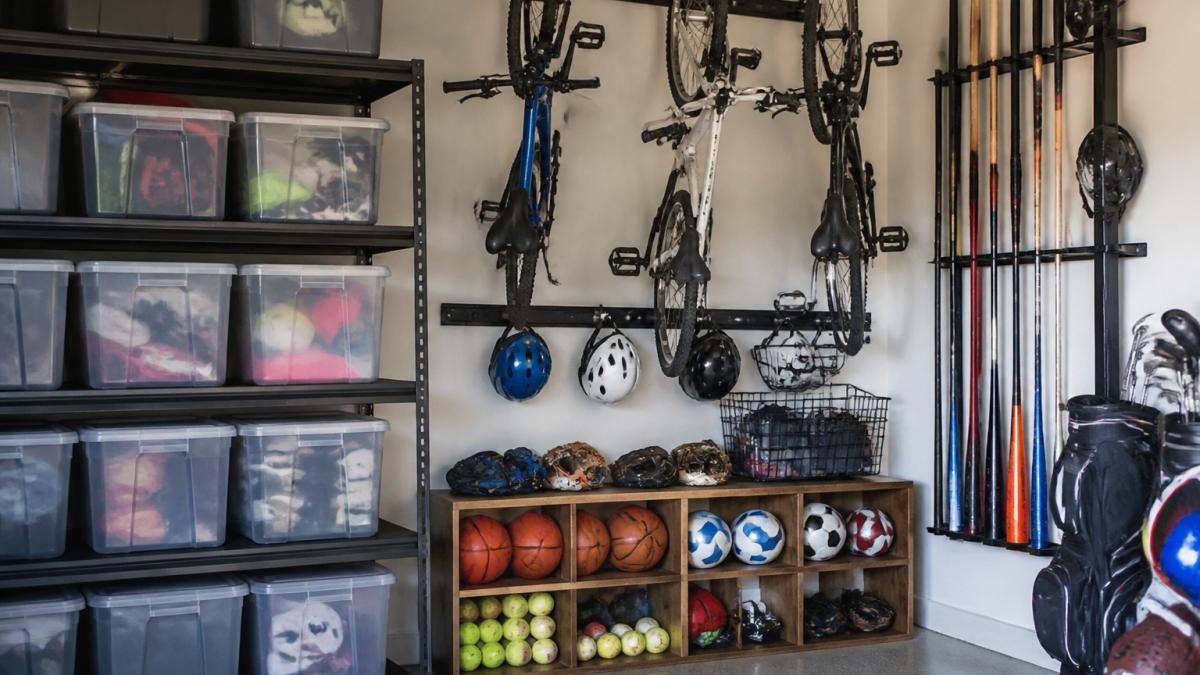
Install heavy-duty hooks for bikes, scooters, and helmets. Space them about 18 inches apart so you can fit multiple items. Stagger the heights, some at 3 feet for kids, some at 5 feet for adults.
A pegboard system gives you flexibility. You can add or remove hooks as sports change. Use pegboard hooks specifically designed for sports equipment, they hold items securely and prevent gear from sliding off.
Wall-mounted racks designed for bikes or skateboards keep those items organized and off the floor. They take up minimal space and make gear highly visible.
Magnetic strips hold metal items like cleats with metal studs. Hooks hold bags, belts, and protective gear. The key is getting everything off the floor and onto the walls.
Bins, Baskets, and Open Shelving
Plastic bins work best for items you don't use every day. Label each bin clearly, "soccer gear," "hockey equipment," "seasonal items." Use clear bins so you can see inside without opening them.
Open shelving holds bins and keeps gear visible. Metal shelving units are affordable and sturdy. A 5-shelf unit holds dozens of items.
Baskets work well for balls and smaller items. Mesh baskets let you see what's inside. Woven baskets look neater but require labels so you know what's stored where.
Stack bins vertically to save floor space. Label the front of each bin at eye level. This system works for kids of any age.
Store uniforms separately from equipment. A hanging rod with labeled hangers keeps uniforms clean and easy to grab. Dirty uniforms go in a mesh hamper nearby for easy laundry sorting.
Organizing Balls, Bats, and Long Equipment
Balls take up space and roll everywhere. Use a mesh bin or ball storage bag designed for this purpose. It keeps balls contained and visible.
Bats, hockey sticks, and lacrosse sticks need vertical storage. A PVC pipe holder works great, cut PVC pipes to length, mount them on the wall, and slide sticks inside. Each sport gets its own section.
Long equipment like skis or fishing rods hangs on wall-mounted racks. Keep them together by sport so you grab everything at once.
Group similar items together. All soccer gear in one zone. All baseball equipment in another. This makes packing for practice faster and prevents forgotten items.
DIY Sports Equipment Storage Solutions on a Budget
You don't need expensive systems. Simple DIY solutions work just as well.
PVC pipe holders for sticks can be built. Buy PVC pipes, cut them to length, and mount them on a board.
Pegboards with hooks can be used. You can build a complete wall system.
Rope and carabiners hold bikes and bags. Screw eye hooks into wall studs, thread rope through, and use carabiners to clip items.
PVC ball storage bags can be made.
Wooden crates stacked and labeled work as bins. Find them free or cheap at farmers markets. Sand them, paint them, and add labels.
Tension rods in closets hold bags and belts. Install one rod per closet.
The key to DIY storage is using items you have or finding inexpensive materials. A little creativity can help you avoid buying pre-made systems.
Small-Space Sports Equipment Storage Strategies
Apartment dwellers and families without garages need creative solutions. The goal is using vertical space and rotating seasonal equipment.
Under-bed storage works for items used occasionally. Clear plastic bins slide under beds easily. Label them so you know what's stored where without pulling them out.
Wall-mounted shelves in hallways or closets hold bins and bags. A 3-shelf unit in a hallway takes minimal space but holds significant gear.
Over-the-door hooks and racks hold bags, belts, and helmets.
Hanging organizers designed for shoes work for small equipment. Pockets hold cleats, shin guards, and gloves. Hang one per child.
A narrow rolling cart fits in closets or against walls. Three to four shelves hold bins and keep gear accessible.
Vertical storage is non-negotiable in small spaces. Every inch of wall space should work. Hooks, shelves, and pegboards turn empty walls into functional storage.
Rotate seasonal equipment out of your home. Winter sports gear goes to storage in May. Summer gear comes out.
Organizing by Sport and Season
Mixing equipment from different sports creates confusion. Organizing by sport first makes packing faster and prevents forgotten items.
Create zones for each sport. All soccer gear together. All baseball equipment together. Within each zone, separate by frequency of use. Everyday items in front. Seasonal or occasional items in back.
Use color-coded labels or bins. Soccer is blue. Baseball is red. Hockey is black. Kids learn the system quickly and put gear away correctly.
Seasonal rotation prevents clutter. Spring sports come out in March. Fall sports go into storage in October. This keeps your active storage manageable.
Create a simple inventory. Write down what gear belongs to each sport. Check it monthly. This catches missing items before they're needed for a game.
Keep a "game day" bin ready. It holds items needed for every sport, water bottles, towels, first aid supplies.
| Sport | Primary Storage | Frequency Check | Seasonal Notes |
|---|---|---|---|
| Soccer | Wall hooks, open bin | Weekly | Store indoors May-August |
| Baseball | Bat rack, glove shelf | Bi-weekly | Store indoors September-March |
| Hockey | Vertical stick holder | Weekly | Requires climate control |
| Basketball | Ball bin, shoe rack | Weekly | Year-round access |
| Seasonal sports | Back shelves | Monthly | Rotate in/out quarterly |
Building Your Game-Day Routine
A solid routine prevents last-minute scrambling. The routine starts the night before.
Check the calendar. Know what sport is happening tomorrow. Know what time you need to leave.
Gather equipment by sport. Pull the sport-specific bin. Add items from personal bedrooms. Check against your inventory list.
Pack the car the night before. Everything goes in one place. Nothing gets forgotten because it's all packed and visible.
In the morning, do a final check. Water bottles filled? Cleats in the bag? Jersey clean?
Create a checklist for each sport. Laminate it and post it near your storage area.
Use a dedicated sports bag for each child. Everything for that child goes in that bag.
American Academy of Pediatrics guidance on youth sports safety emphasizes the importance of proper equipment maintenance and storage for injury prevention.
Make the routine automatic. After 2-3 weeks, kids do it without reminding. The system works because it's simple and consistent.
Getting kids to practice on time starts with knowing where everything is.
At Greatness Wins, we believe that quality gear deserves quality care. Consumer Product Safety Commission guidance on sports equipment care recommends storing gear in dry conditions and inspecting it regularly for damage.
Frequently Asked Questions
What's the best way to organize kids' sports gear for multiple children?
Assign each child a dedicated color or labeled zone within your main storage area. Use color-coded bins, labels with their names, and separate shelves or wall sections. This prevents mix-ups, teaches ownership, and makes it easy to find gear quickly. Store items by sport within each child's zone so equipment stays grouped logically.
How can I organize kids sports equipment storage ideas to reduce daily clutter?
Create a drop zone near your entryway or mudroom where kids place gear immediately after returning home. Use low hooks, baskets, or a shoe rack at child height so they can access and store items independently. Separate everyday gear (cleats, water bottles, bags) from seasonal equipment stored in the garage. This routine prevents gear from spreading throughout the house.
What's an affordable way to set up sports equipment storage for garage spaces?
Start with plastic bins labeled by sport, add wall hooks, and use pegboards or wire shelving. Sort equipment by sport first, then by season. Vertical storage maximizes limited floor space. Organizing existing bins and hooks can be an alternative to buying new systems.
How do I store cleats, athletic shoes, and uniforms to keep them clean and accessible?
Use a low shoe rack or designated basket in the entryway for everyday cleats and shoes. Store clean uniforms on hangers or folded in labeled bins by sport. Keep a mesh hamper nearby for dirty gear so it doesn't mix with clean clothes.