Table of Contents
- Why Leggings Keep Rolling Down
- Why Leggings Lose Elasticity Over Time
- How to Choose the Right Legging Size
- Waistband Features That Stop Leggings from Rolling Down
- DIY Fixes for a Rolling or Slipping Waistband
- Troubleshooting by Activity: Running, Yoga, and HIIT
- Best Leggings for High Intensity Workouts
- Conclusion
Last Updated: August 19, 2026
Why Leggings Keep Rolling Down
Leggings roll down for one core reason: the waistband cannot maintain enough inward pressure against your body during movement. Understanding that root cause is what separates a permanent fix from a temporary one. We hear this complaint constantly from athletes who have already tried sizing up, sizing down, or buying a new pair, only to face the same problem by the second set.
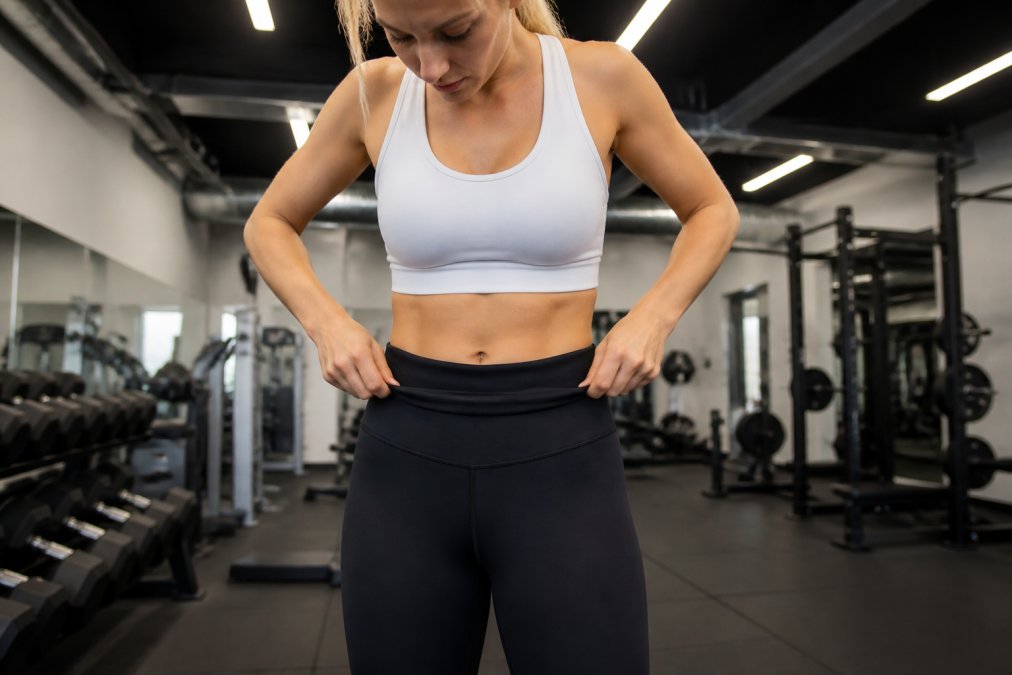
The frustration is valid. A rolling waistband mid-run or during a squat is not just annoying, it breaks your form and your focus. But the cause is almost always traceable to two specific factors: waistband construction and the relationship between your waist-to-hip ratio and the garment's cut.
Waistband Construction and Seam Placement
Waistband construction is the internal architecture of the top band of your leggings. It determines how the fabric distributes tension across your torso during dynamic movement.
A single-layer flat waistband relies entirely on the elasticity of the outer fabric. When that fabric stretches during a lunge or a sprint, there is nothing reinforcing it from the inside, so the band folds outward and slides down. A double-layer or bonded waistband, by contrast, uses an inner panel that holds its shape independently. The seam placement matters too: waistbands with seams running horizontally across the back tend to create a hinge point where the fabric folds. Waistbands with continuous, seamless back panels resist folding far better.
Gusset construction also plays a role. A well-placed gusset reduces tension on the waistband by distributing movement stress through the crotch panel instead of pulling everything downward.
Waist-to-Hip Ratio and Body Shape Fit
Most people assume rolling is a sizing problem. It is often a proportion problem.
Leggings are cut to a standardized waist-to-hip ratio. If your natural ratio falls outside that range, a narrower waist relative to fuller hips, or a longer torso, the waistband has to work against your body's geometry rather than with it. The result is a band that sits at a natural pressure point where it cannot hold.
A common mistake is buying leggings based on hip measurement alone. If the waistband circumference is too large for your actual waist, no amount of compression in the leg panels will keep it in place. The fix is to find styles that offer a tapered fit through the waist, or to look for brands that publish separate waist and hip measurements rather than a single size label.
Why Leggings Lose Elasticity Over Time
Elasticity loss is the other reason how to stop leggings from rolling down becomes a recurring problem even with pairs that used to fit perfectly. The issue is not wear, it is chemistry.
How Washing and Heat Degrade Spandex and Elastane
Elastane (also sold under the brand name Spandex) is the fiber responsible for four-way stretch and fabric recovery in activewear. It is a polyurethane-based synthetic fiber, and it has one significant vulnerability: heat.
According to textile care guidelines from the American Cleaning Institute, high-temperature washing and machine drying are the primary causes of elastic fiber breakdown in synthetic garments. Each hot wash cycle partially degrades the polymer chains in elastane. Over time, the fiber loses its ability to snap back to its original length after stretching. The result is a waistband that stretches out during a workout and never fully recovers.
Fabric denier also affects longevity. Lower-denier fabrics, those with a finer, lighter weave, tend to degrade faster because there is less fiber mass to absorb repeated stress. Higher-denier activewear holds its tensile strength longer, which is why performance-grade leggings typically feel denser than fashion-oriented ones.
The fix is straightforward: wash in cold water, use a gentle cycle, and air dry. Avoid fabric softeners, which coat elastane fibers and accelerate breakdown. A garment washed correctly for a year will outperform one machine-dried for three months.
How to Choose the Right Legging Size
Choosing the right size is the single most effective way to stop leggings from rolling down before they ever start. The wrong size makes every other fix temporary.
The Fit Test: What Good Compression Feels Like
Good compression feels like a firm, even hug around your waist, not a pinch, not a gap. The waistband should sit flat against your skin with no visible creasing or folding when you stand upright. Then test it dynamically.
Run through this fit test before committing to a pair:
- Standing check: The waistband should sit at your natural waist or just above your hip bone without any rolling or gaping.
- Forward fold: Bend forward at the hips. The waistband should stay in place. If it slides down more than 1 centimeter, the size is too large.
- Squat test: Drop into a full squat. The fabric should remain opaque and the waistband should not shift.
- Side-to-side lunge: Step laterally. Watch for the waistband pulling down on the opposite side.
- Pinch test: Pinch the fabric at the thigh and release. It should snap back immediately. Slow recovery means the fabric's elasticity is already compromised.
If a pair fails steps 2 or 4 in the store or at home, it will roll during any real training session. Return it.
| Fit Test Step | What to Check | Pass / Fail Signal |
|---|---|---|
| Standing check | Waistband sits flat, no gap | Flat and snug = pass |
| Forward fold | Waistband stays in place | Drops more than 1 cm = fail |
| Squat test | Fabric stays opaque | Sheers or shifts = fail |
| Side lunge | Waistband holds position | Pulls down on one side = fail |
| Pinch test | Fabric snaps back quickly | Slow recovery = fail |
Waistband Features That Stop Leggings from Rolling Down
The right construction features do more work than any hack or DIY fix. This is where the investment in quality pays off directly.
High-Waisted vs. Mid-Waisted Styles
High-waisted leggings sit at or above the natural waist, typically 2 to 3 inches above the hip bone. Mid-waisted styles sit at or just below the belly button.
For most athletes, high-waisted styles are significantly more stable. The waistband has more surface area in contact with the narrower part of the torso, which means it has a natural anchor point. Mid-waisted styles sit at a wider circumference, which means the band has to work harder against gravity and movement to stay up.
That said, high-waisted is not universally better. Athletes with a very short torso sometimes find that a high-waisted band folds at the top rather than sitting flat. In that case, a mid-waisted style with strong internal construction often performs better.
Silicone Grip, Drawstrings, and Anti-Slip Technology
Three construction features directly address rolling:
- Silicone grip strips: A thin strip of silicone on the inner edge of the waistband creates friction against your skin. This is the most effective single anti-slip feature available. It does not rely on compression alone, it physically anchors the band.
- Drawstrings: A drawstring allows you to cinch the waistband to your exact waist circumference, compensating for proportion differences between your waist and hips. Particularly useful for athletes with a pronounced waist-to-hip ratio.
- Bonded or fused inner panels: An inner waistband panel that is bonded rather than sewn creates a smooth, continuous surface that resists folding. Sewn inner panels can create ridges that act as fold lines.
According to American Council on Exercise guidance on activewear fit, garment stability during exercise directly affects movement quality and injury risk, a rolling waistband is not just a nuisance, it is a distraction that degrades form.
DIY Fixes for a Rolling or Slipping Waistband
Sometimes the pair you already own is worth salvaging. These fixes address rolling without replacing the garment.
- Sew a non-slip strip to the inner waistband: Purchase silicone grip tape or non-slip ribbon from a fabric store and hand-stitch it along the inner edge of the waistband. This replicates the factory silicone grip feature.
- Add a safety pin at the center back: Pin a small safety pin horizontally through the inner waistband layer at the center back. This reduces the waistband's ability to fold outward. Not ideal for high-intensity training, but effective for lower-impact activity.
- Wear a compression belt over the waistband: A thin, low-profile compression belt worn over the legging waistband holds it in place mechanically. This works well for running specifically.
- Try body tape: Double-sided body tape applied to the inner waistband creates temporary grip against your skin. Effective for a single session, not a long-term solution.
- Wash and reshape: If the waistband has stretched out from heat exposure, hand-wash in cold water and gently reshape the waistband while damp. Air dry flat. This can partially restore shape retention if the elastane has not fully degraded.
Troubleshooting by Activity: Running, Yoga, and HIIT
The activity changes what you need from a waistband. A pair that works for yoga may fail completely during a 5K.
Running generates a vertical bouncing force on every stride. The waistband needs strong silicone grip or a drawstring to resist the repeated downward pull. High-waisted styles with a bonded inner panel are the most reliable. Avoid flat elastic-only waistbands for any run over 20 minutes.
Yoga involves extreme ranges of motion, deep forward folds, twists, and inversions. The waistband needs exceptional four-way stretch combined with shape retention. A waistband that is too rigid will gap during inversions; one that is too soft will roll during forward folds. Look for high elastane content (typically 20% or higher) paired with a wide waistband that distributes pressure evenly.
HIIT combines jumping, lateral movement, and rapid direction changes. This is the most demanding test for any waistband. The combination of vertical and lateral forces means the band must resist rolling in multiple planes simultaneously. Compression level matters most here: a waistband with graduated compression, tighter at the top, easing through the hip, stays in place better than uniform compression.
According to National Strength and Conditioning Association guidelines on training attire, clothing that shifts or restricts during high-intensity exercise measurably affects performance output. Gear that stays in place is not a luxury, it is a performance variable.
Best Leggings for High Intensity Workouts
The best leggings for high-intensity workouts combine high elastane content, a bonded double-layer waistband, silicone grip, and moisture-wicking four-way stretch fabric. Those four features together address every failure mode that causes rolling.
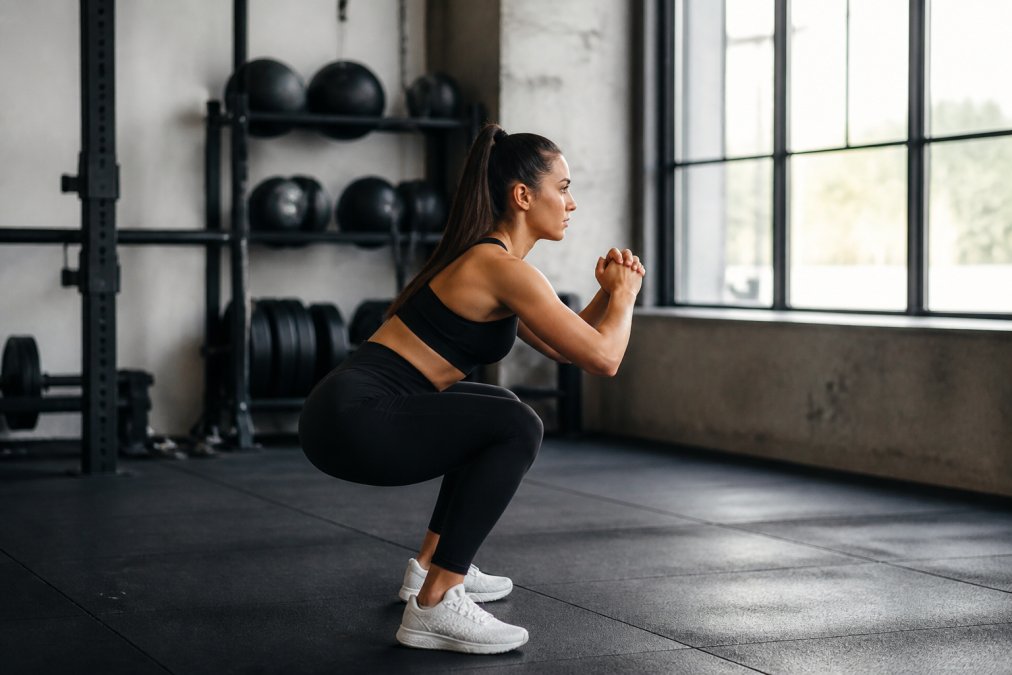
Greatness Wins offers premium and innovative athletic apparel designed to help athletes achieve their personal best. The focus is on technical fabric quality and construction built for rigorous training, not athleisure styling that looks good but fails under load. Free returns within the U.S. mean you can run the fit test at home without risk.
What separates performance-grade leggings from fashion-oriented activewear comes down to fabric denier, elastane percentage, and waistband construction method. Most mass-market leggings cut costs in exactly these areas. The result is a pair that looks fine on the rack and rolls down by the third set.
For high-intensity training specifically, prioritize:
- Elastane content of 20% or higher for genuine four-way stretch and recovery
- Double-layer or bonded waistband with no horizontal back seam
- Silicone grip strip on the inner waistband edge
- Moisture-wicking outer fabric to prevent sweat from reducing grip friction
- Gusset construction to distribute movement stress away from the waistband
The thing nobody tells you about activewear is that the waistband is the first component manufacturers compromise on when cutting costs. It is also the component that determines whether you actually wear the pair or leave it at the back of your drawer.
Frequently Asked Questions
What does it mean if your leggings keep rolling down?
Leggings that roll down are almost always a sizing or construction problem. If the waistband lacks enough compression for your waist-to-hip ratio, or the elastane content has degraded, the fabric can't hold its position under movement. A waistband that sits below your natural waist is especially prone to sliding because it has no bony structure to grip. Check your size, inspect the waistband construction, and look for signs of fabric wear before blaming your body.
Does sizing down help stop leggings from falling?
Sizing down can help if you're between sizes and your current pair is genuinely too loose, but it's not a universal fix. Going too small compresses the waistband unevenly and can cause it to fold and roll rather than stay flat. The goal is a waistband that feels snug without digging in, with four-way stretch fabric that recovers fully after each rep. If the leggings feel restrictive in the hips or thighs, they're too small even if the waist stays put.
Why do my gym leggings keep rolling down during high-intensity workouts?
High-intensity workouts generate more heat and repetitive hip flexion than steady-state exercise, which puts maximum stress on the waistband. Moisture from sweat also reduces the friction between fabric and skin, making slipping more likely. Leggings designed for high intensity workouts use silicone grip strips, wider waistbands with reinforced seam construction, and higher spandex content to maintain shape retention under those conditions. A mid-waisted style with no internal structure will almost always roll during HIIT or heavy lifting.
How do I fix leggings that keep sliding down without buying a new pair?
Start by washing them in cold water and skipping the dryer, since heat breaks down elastane and accelerates elasticity loss. Fold the waistband over once to create a double layer of compression, or use a thin elastic safety-pinned inside the waistband to add grip. Body tape applied to the inside of the waistband at the hip points can also reduce sliding. These are short-term solutions; if the fabric has lost its tensile strength, replacement is the most reliable fix.
If a rolling waistband is breaking your training focus, the solution starts with understanding why it happens, and ends with choosing gear built to prevent it. Greatness Wins offers premium performance activewear engineered for athletes who need their gear to perform as hard as they do. With free shipping on orders $100 and above and free returns within the U.S., getting the right fit carries no risk. Explore the full range and find the pair that stays put.
This article was written using GrandRanker