Table of Contents
- Why Washing High Performance Apparel Requires a Different Approach
- Step 1: Prepare Your Activewear Before Washing
- Step 2: Select the Best Detergent for Athletic Wear
- Step 3: Choose the Right Washing Machine Cycle and Water Temperature
- How to Get Smell Out of Performance Shirt
- Air Drying vs Machine Drying Athletic Gear
- Common Mistakes to Avoid When Washing Synthetic Fabrics
- Storage and Maintenance Best Practices
Last Updated: August 22, 2026
Why Washing High Performance Apparel Requires a Different Approach
How to wash high performance apparel isn't casual, it's the difference between gear that lasts for years and fabric that degrades after a handful of workouts. Most people treat premium athletic wear like regular cotton clothes, which is exactly why they end up disappointed.
The problem is synthetic fabrics. Your high-performance activewear is engineered with polyester, spandex, and elastane to wick moisture, stretch without tearing, and maintain shape under intense movement. But these materials are fragile in ways cotton isn't. A single wash of a polyester garment can release more than 700,000 microfibers, according to research on microfiber shedding. Hot water, aggressive agitation, and standard detergents break down the technical coatings and elastic fibers that make your gear perform.
Proper care is straightforward once you understand what these fabrics need.
According to Shell Global research, 80% of activewear users rewash their clothes due to lingering smells, which means most people are stuck in a cycle of repeated washing that accelerates fabric breakdown. Below, we'll show you exactly how to wash high performance apparel so your gear stays fresh, maintains its technical properties, and actually lasts.
Step 1: Prepare Your Activewear Before Washing
Before anything touches the washing machine, preparation determines whether your activewear survives intact or degrades. This step takes five minutes but prevents most downstream damage.
Turn your gear inside out to protect the outer surface, where moisture-wicking coatings live, from friction against other fabrics and the drum. Check all pockets and seams for debris, sand, sweat residue, and lint trap moisture and create odor hotspots during the wash cycle.
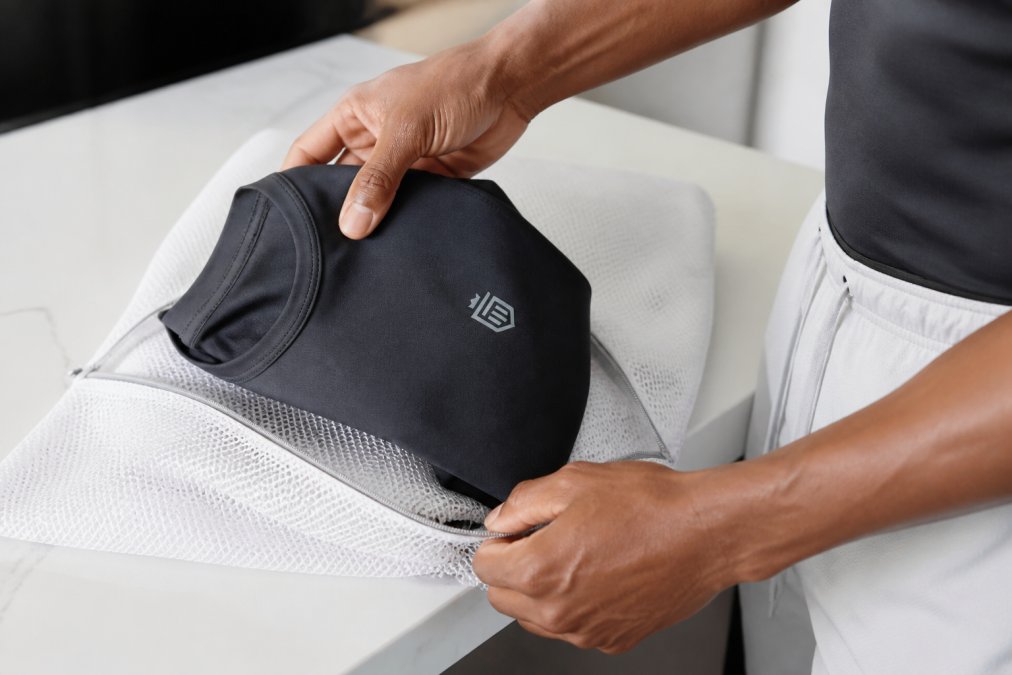
Use a mesh laundry bag
A mesh laundry bag is non-negotiable for synthetic fabrics. Place your activewear inside before loading the machine. The bag creates a barrier that minimizes direct contact with the drum and other garments, reducing friction-induced pilling and fiber breakage. Research shows that using a mesh laundry bag can reduce microfiber release significantly. The mesh material allows water and detergent to flow freely while containing the garment, so your clothes still get clean without sacrificing protection.
Pre-treat stubborn stains
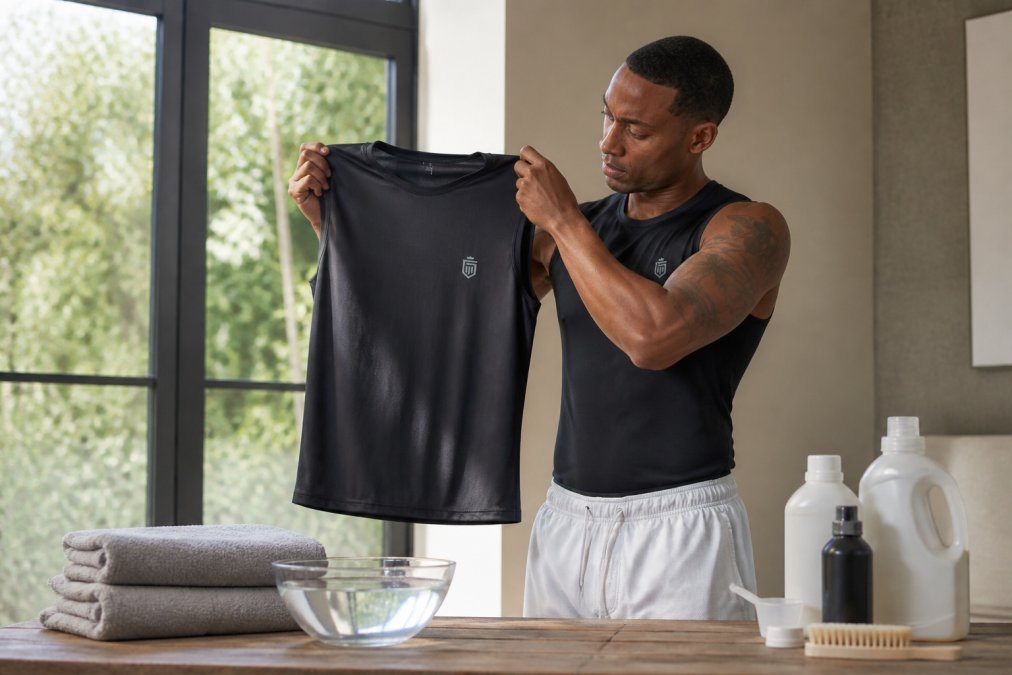
Sweat stains and grass marks require targeted treatment before the main wash. For sweat stains, apply cold water and gently work it into the stain with your fingers, hot water sets protein-based stains permanently. For grass or dirt, soak in cold water for 15 minutes, then gently brush away dried debris.
Avoid pre-treatment sprays designed for cotton; these contain surfactants that leave residue on synthetic fabrics and contribute to odor buildup. A mixture of cold water and mild detergent works without damaging technical coatings.
Step 2: Select the Best Detergent for Athletic Wear
Not all detergents are created equal for synthetic fabrics. Standard laundry detergent contains ingredients that build up on moisture-wicking fibers and trap odors rather than eliminate them.
The best detergent for athletic wear contains enzymes specifically designed to break down protein-based odors, what sweat actually is. Look for detergents labeled for "performance fabrics" or "technical wear."
Avoid fabric softeners entirely. They coat synthetic fibers with a waxy layer that clogs the pores responsible for moisture-wicking. Your gear will feel softer immediately but will trap sweat and smell worse within days.
Use less detergent than you would for regular laundry, typically half the recommended amount. Excess detergent doesn't rinse completely from synthetic fabrics, leaving residue that traps odors and stiffens the material. For heavily soiled gear or persistent odors, consider enzyme-based detergents specifically formulated for activewear.
Step 3: Choose the Right Washing Machine Cycle and Water Temperature
Temperature and cycle selection directly impact fiber integrity and fabric longevity.
Cold water and gentle cycle settings
Cold water is non-negotiable for synthetic fabrics. Hot water damages elastic fibers, breaks down technical coatings, and accelerates color fading. Modern enzyme-based detergents work effectively at cold temperatures (around 60-70°F).
The gentle or delicate cycle reduces agitation, meaning less mechanical stress on fibers and lower risk of pilling, stretching, and fiber breakage. The spin cycle on gentle mode is also slower, reducing stress on elastic materials. A gentle cycle spins at roughly half the speed of a normal cycle, cutting fiber release dramatically.
Set the water level to match your load size, aim for the machine to be about three-quarters full. Wash time should be 30-45 minutes on a gentle cycle. Skip any "quick wash" settings, which use shorter cycles and higher agitation speeds that damage synthetic fabrics.
How to Get Smell Out of Performance Shirt
Persistent odors in performance shirts aren't a sign of poor quality; they're a sign that standard washing didn't fully eliminate sweat compounds. According to research from the American Cleaning Institute, bacteria grows in moist environments, making sweaty clothes an ideal incubator if odor-causing compounds aren't completely removed.
White distilled vinegar solution
White distilled vinegar is one of the most effective tools for eliminating activewear odors. Unlike fabric softeners, vinegar doesn't coat fibers; it breaks down the organic compounds that cause smell.
Add half a cup of white distilled vinegar to the rinse cycle or fabric softener dispenser. The vinegar neutralizes odors without leaving a vinegar smell (it dissipates as clothes dry). For shirts with stubborn, set-in odors, soak the garment in cold water mixed with one part vinegar to three parts water for 30 minutes before washing.
Don't use vinegar and bleach together, this creates toxic chlorine gas.
Odor-neutralizing techniques
If vinegar alone doesn't eliminate the smell, run a second rinse cycle with no detergent and vinegar added to remove trapped residue. For extreme cases, soak overnight in cold water with a small amount of baking soda (one tablespoon per gallon). Air the garment outside before storing; sunlight and fresh air naturally eliminate odors and kill bacteria.
Air Drying vs Machine Drying Athletic Gear
This decision determines how long your gear actually lasts. Machine drying is convenient but destructive to synthetic fabrics.
Heat damages elastic fibers, breaks down moisture-wicking coatings, and accelerates color fading. Even "low heat" settings are often too hot for delicate synthetic materials. Air drying eliminates heat damage and mechanical stress entirely. Lay your gear flat on a clean surface or hang it on a drying rack. Drying time is typically 4-8 hours depending on humidity and fabric weight.
For faster drying, hang items in front of a fan with good air circulation. If you must use a machine dryer, use the "air dry" or "no heat" setting. Never use dryer sheets, these coat fibers and reduce breathability.
Common Mistakes to Avoid When Washing Synthetic Fabrics
Most gear damage happens because people apply conventional laundry wisdom to technical fabrics.
Hot water and fabric softener damage
Hot water is the single biggest mistake. It feels logical, but it actively destroys the materials your gear is made from. Elastic fibers lose their stretch, technical coatings break down, and colors fade faster. Cold water cleans just as effectively with the right detergent.
Fabric softener is the second major mistake. It coats synthetic fibers with waxy residue that traps sweat and creates permanent odors. Bleach also damages synthetic fabrics by breaking down elastic fibers and discoloring technical materials. Use oxygen-based cleaners instead for whitening.
Microplastic shedding and environmental impact
Every wash of synthetic activewear releases microfibers into wastewater. You can't eliminate shedding entirely, but you can dramatically reduce it. The mesh laundry bag cuts shedding by creating a barrier between the garment and the drum. Gentle cycles reduce agitation and friction, the primary drivers of fiber release.
Washing less frequently is another effective strategy. According to Lululemon research, nearly half of regular exercisers don't wash their clothes after every workout. If your gear doesn't smell or look visibly soiled, spot-cleaning and airing it out extends the time between washes, reducing total microfiber shedding over the garment's lifetime.
Storage and Maintenance Best Practices
How you store your gear between wears matters as much as how you wash it. Store gear in a cool, dry place away from direct sunlight. Fold rather than hang items with elastic components like waistbands or shoulder seams, hanging stretches elastic over time and causes permanent shape distortion.
For wrinkles, use a steamer rather than an iron. Steamers use moisture and gentle heat, while irons apply direct, intense heat that can melt synthetic fibers. Air out gear between wears by hanging it outside or near an open window for a few hours. Check seams and elastic regularly for signs of pilling, loose threads, or stretched-out elastic.
| Washing Step | Best Practice | What to Avoid |
|---|---|---|
| Temperature | Cold water (60-70°F) | Hot water or warm water |
| Cycle | Gentle or delicate | Normal or heavy-duty cycles |
| Detergent | Enzyme-based, performance formula | Standard detergent, fabric softener |
| Drying | Air dry flat or hang | Machine dryer, high heat |
| Pre-treatment | Cold water soak for stains | Hot water, pre-spray chemicals |
| Storage | Cool, dry location, folded | Direct sunlight, plastic bags, hanging |
The investment you make in premium athletic apparel from Greatness Wins deserves proper care. Our Core Tech Tee ($55.00) and Performance Training Tank ($45.00) are engineered with advanced moisture-wicking and durability in mind, but that engineering only delivers results if you wash correctly. Follow these steps, and your gear will maintain its performance properties, fit, and appearance for years, not months.

Proper care of high-performance apparel isn't complicated, but it requires understanding why synthetic fabrics need different treatment than everyday cotton. The difference between gear that lasts and gear that deteriorates comes down to cold water, gentle cycles, enzyme-based detergents, and air drying. Greatness Wins apparel is built to perform through intense training and rigorous use. Our Core Tech Training Short ($69.00) and Baselayer Muscle Tank ($39.00) are tested specifically for durability and longevity. Wash them correctly, and you'll get years of reliable performance from every piece.
=== FAQ ANSWERS (audit these too, same rules) ===
[1] Q: How often should you wash high performance apparel? A: Wash high performance apparel after every workout if you've sweated heavily, as bacteria grows quickly in moist synthetic fabrics. However, 46% of regular exercisers don't wash clothes after every wear. If you only lightly perspire, you can wear technical activewear 2-3 times before washing. Let garments air out for 24 hours between wears to reduce odor and extend fabric life.
[2] Q: What is the best detergent for athletic wear? A: Use a mild detergent specifically formulated for synthetic fabrics and technical materials. Look for detergents with enzymes that target protein-based odors and sweat compounds without leaving residue. Avoid fabric softeners and bleach, which clog fabric pores and degrade moisture-wicking properties. Cold-water detergents work effectively at 30°F (86°F) and protect elastane and polyester fibers better than hot-water formulas.
[3] Q: Can I use fabric softener on high performance athletic wear? A: No. Fabric softener leaves a waxy residue that clogs the pores of moisture-wicking fabrics, reducing breathability and causing odor retention. This is why 80% of activewear users rewash their clothes due to lingering smells. Stick to mild detergents without conditioning agents to maintain the technical performance of your synthetic fibers.
[4] Q: Is it better to air dry or machine dry performance gear? A: Air drying is the best option for high performance apparel. Machine drying, even on low heat, causes mechanical stress on synthetic fibers, leading to shrinkage, pilling, and loss of elasticity. Hang garments in a well-ventilated area away from direct sunlight. If you must use a dryer, select tumble dry low and remove items while slightly damp to minimize heat damage to technical fabrics.
Frequently Asked Questions
How often should you wash high performance apparel?
Wash high performance apparel after every workout if you've sweated heavily, as bacteria grows quickly in moist synthetic fabrics. However, 46% of regular exercisers don't wash clothes after every wear. If you only lightly perspire, you can wear technical activewear 2-3 times before washing. Let garments air out for 24 hours between wears to reduce odor and extend fabric life.
What is the best detergent for athletic wear?
Use a mild detergent specifically formulated for synthetic fabrics and technical materials. Look for detergents with enzymes that target protein-based odors and sweat compounds without leaving residue. Avoid fabric softeners and bleach, which clog fabric pores and degrade moisture-wicking properties. Cold-water detergents work effectively at 30°F (86°F) and protect elastane and polyester fibers better than hot-water formulas.
Can I use fabric softener on high performance athletic wear?
No. Fabric softener leaves a waxy residue that clogs the pores of moisture-wicking fabrics, reducing breathability and causing odor retention. This is why 80% of activewear users rewash their clothes due to lingering smells. Stick to mild detergents without conditioning agents to maintain the technical performance of your synthetic fibers.
Is it better to air dry or machine dry performance gear?
Air drying is the best option for high performance apparel. Machine drying, even on low heat, causes mechanical stress on synthetic fibers, leading to shrinkage, pilling, and loss of elasticity. Hang garments in a well-ventilated area away from direct sunlight. If you must use a dryer, select tumble dry low and remove items while slightly damp to minimize heat damage to technical fabrics.
This article was written using GrandRanker