Table of Contents
- Why Premium Athletic Apparel Returns Are Different in 2026
- Activewear Return Policy Best Practices: What to Check Before You Buy
- How to Return Worn Athletic Gear Without Getting Rejected
- Return Policy Red Flags for Clothing Brands: What to Avoid
- Refunds, Store Credit, and Restocking Fees Explained
- In-Store vs. Online Returns and International Complexities
- The Sustainability Impact of Athletic Apparel Returns
- Conclusion: Making Returns Work for You
- Frequently Asked Questions
Last Updated: September 11, 2026
Why Premium Athletic Apparel Returns Are Different in 2026
The average return rate for online apparel orders sits at 24.4%, according to Coresight Research's report on the true cost of apparel returns, which translates to roughly $38 billion in annual returns for the industry. Athletic apparel drives a disproportionate share of that figure. Size uncertainty, fabric expectations, and fit across a range of motion make premium activewear one of the hardest categories to buy sight unseen.
This guide breaks down premium athletic apparel return policy tips that actually protect your money in 2026: what to check before you buy, how to return worn gear without a rejection, and which policy terms should make you walk away.
The stakes are higher than most shoppers realize. A 2025-2026 consumer report from Shorr's America's Return Habits study found that 25% of consumers never check a brand's return policy before buying, and 62% return between one and five items per year. Premium gear costs more, so a rejected return hurts more.
Activewear Return Policy Best Practices: What to Check Before You Buy
Activewear return policy best practices start with reading the fine print before checkout, not after the package arrives. The terms that matter most are the return window, the condition requirements, and whether you need proof of purchase.
Return Windows, Proof of Purchase, and Original Packaging
Most brands set a return window between 30 and 60 days from delivery, not from order date. That distinction matters when shipping takes a week. Under Armour, for example, uses a 60-day window for items in original condition with proof of purchase, per its Under Armour Help Center return documentation.
Before you buy, confirm these four terms:
- Return window length and whether it starts at order or delivery
- Condition requirements: unworn, unwashed, tags attached, resellable condition
- Proof of purchase: order confirmation, delivery confirmation, or tracking number
- Original packaging: whether the poly bag or box must be included
| Policy Term | What to Look For | Red Flag |
|---|---|---|
| Return window | 30-60 days from delivery | Under 14 days |
| Condition | Unworn, tags attached | "Final sale" on full-price items |
| Proof of purchase | Order or delivery confirmation | Receipt required with no digital option |
| Packaging | Original packaging preferred | Original packaging mandatory |
How to Return Worn Athletic Gear Without Getting Rejected
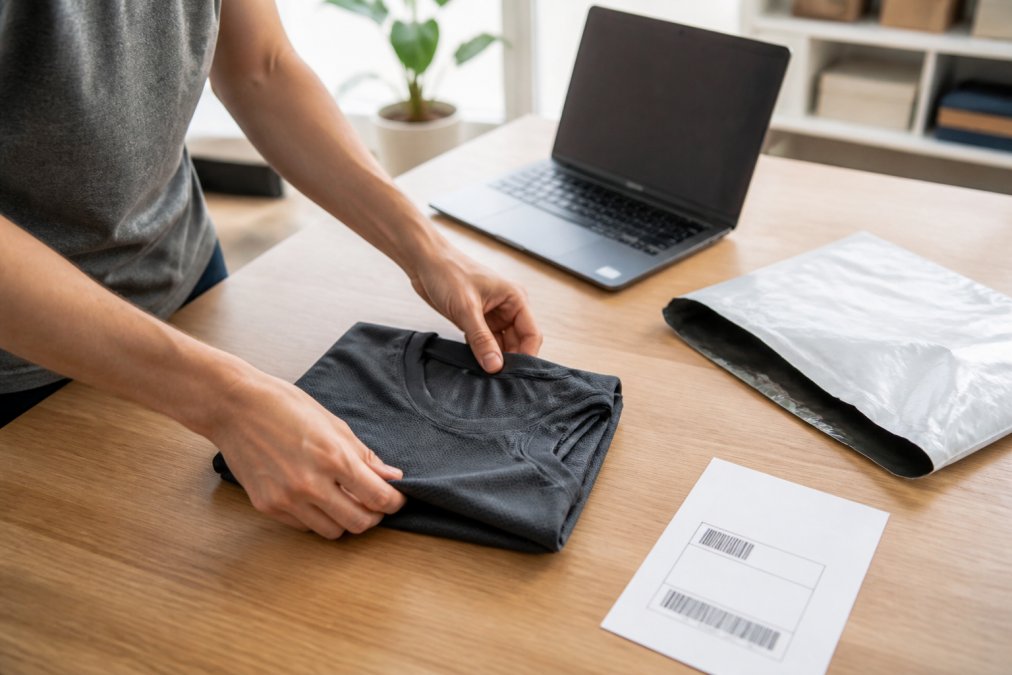
You can return worn athletic gear if it's defective, but you cannot return gear you've simply trained in and decided against. The line most brands draw is between a manufacturing fault and normal use, and understanding how that line gets enforced is what separates a full refund from a rejection.
How Brands Actually Adjudicate a Worn Return
When a worn item arrives at a returns center, it typically goes through a three-step inspection: a visual check for tags and obvious wear, a fabric and seam assessment, and a disposition decision (resell, refurbish, liquidate, or reject). The rejection usually hinges on whether the wear pattern is consistent with a defect or with use.
What counts as a defect:
- Seams that split or unravel along a stress point
- Zippers that fail, stick, or separate from the tape
- Fabric that pills, thins, or loses shape after one or two normal washes
- Elastic that fails in a waistband or cuff
- Color bleeding or fading inconsistent with the care label
What counts as normal use (and gets rejected):
- Deodorant marks, sweat stains, or perfume residue
- Stretched collars, cuffs, or waistbands from repeated wear
- Pilling from friction against a gym bag or equipment
- Faded graphics from repeated washing
- Any item that smells of detergent, fabric softener, or body odor
According to Sizebay's analysis of athletic apparel returns, size uncertainty, not defects, drives most returns in this category, which means most worn returns are actually fit returns in disguise, and brands increasingly push back on them.
The Pre-Return Inspection Checklist
Run this checklist before you seal the box. It's the difference between a full refund and a rejected claim:
- Tags still attached and undamaged
- No deodorant marks, sweat stains, or perfume
- No visible wear on seams, cuffs, or waistbands
- Original packaging included if the policy requires it
- Return authorization number obtained, if the brand issues one
- Photos taken of the item and packaging before shipping
If Your Worn Return Is Denied
A denial is not always final. Most brands route first-time denials through a customer service appeal, and the outcome depends on how you frame the claim. Lead with the defect, not the fit: describe the specific failure ("the left seam separated after two washes") and reference the care instructions you followed. Attach your pre-ship photos. If the brand still refuses, ask for the item to be returned to you rather than destroyed, some returns centers dispose of rejected items, and a written request preserves your options. Escalating to a card issuer's dispute process is a last resort and generally only works when the item was materially not as described.
Return Policy Red Flags for Clothing Brands: What to Avoid
Return policy red flags for clothing brands cluster around three areas: short windows, restocking fees, and final-sale designations on items that aren't actually clearance. Any one of these can turn a $120 training shirt into a sunk cost, but the real skill is knowing which flags are negotiable and which are dealbreakers.
Watch for these terms:
- Restocking fees of 10-20% on returns, common on high-ticket gear
- Final sale labels applied to full-price seasonal items
- Store credit only policies that lock your money into the brand
- Return shipping charged to the customer with no free label
- No return authorization process, which leaves you guessing
Which Red Flags You Can Actually Push Back On
Not every red flag is a wall. Here's how to triage them before you buy:
| Red Flag | Negotiable? | How to Push Back |
|---|---|---|
| Restocking fee on a defective item | Often waived | Cite the defect; fees typically apply to change-of-mind returns, not faults |
| Store credit only | Sometimes | Ask for a card refund on a first-time return; support teams frequently have discretion |
| Return shipping charged | Rarely | Ask if a prepaid label is available for defective items |
| Final sale on full-price item | Rarely | Confirm at checkout whether the item is genuinely clearance |
| 14-day window | No | Treat as a dealbreaker for anything you can't try on first |
A policy that offers free returns within the country, like Greatness Wins does on orders $100+, removes most of this friction. That's not a small perk. It changes how you shop, because you can order two sizes and keep the one that fits.
The Real Cost of a Restocking Fee
A 15% restocking fee on a $150 jacket is $22.50, plus return shipping, which can run $8 to $15 for a padded item. That's roughly $30 to $38 to undo a purchase, or about a quarter of the item's value. Before you accept a partial refund, run the math: if the net refund is less than what you'd get reselling the item yourself, a store-credit offer at full value may actually be the better deal.
Refunds, Store Credit, and Restocking Fees Explained
A full refund returns your money to the original payment method, while store credit and merchandise credit keep it with the brand. Refund processing typically takes 5-10 business days after the return is received, though some brands hold funds until the item passes inspection.
The distinction matters when you're deciding whether to accept store credit. If a brand offers a partial refund minus a restocking fee, calculate the real cost before you agree:
- Full refund: original payment method, no deductions
- Partial refund: original amount minus restocking or shipping fees
- Store credit: full value but locked to that brand
- Merchandise credit: same as store credit, often issued for gift returns
Store credit is only worth accepting at full value. If a brand offers credit minus a fee, push for a refund to your card instead. Most customer support teams can authorize this on a first-time return.
In-Store vs. Online Returns and International Complexities
Online purchases can often be returned in-store, but the reverse isn't always true, and international returns add a layer most shoppers never plan for. Athleta, for instance, allows online returns at physical retail locations, excluding items marked "Mail Only," according to Corporette's coverage of retail return policies.
International returns introduce customs declarations, duties you won't get back, and shipping costs that can exceed the item's value. If you're ordering across borders, confirm three things: who pays return shipping, whether duties are refundable, and whether the brand accepts international returns at all.
The Sustainability Impact of Athletic Apparel Returns
Every returned item carries a reverse logistics cost that goes beyond shipping. McKinsey & Company notes that high return rates aren't an inevitable cost of doing business, and that better prevention strategies can cut costs while improving loyalty, per McKinsey's research on retail returns.
The practical takeaway: order accurately the first time. Use size charts, check fabric composition, and buy from brands with consistent sizing. Fewer returns means less waste and less of your time spent on the process.
Conclusion: Making Returns Work for You
Returns are a test of a brand's confidence in its own product. A premium athletic apparel return policy tips in favor of the customer, not the company, and that's the standard worth holding brands to.
Greatness Wins backs its gear with free returns within the U.S. and free shipping on orders $100+, so you can order with the intent to keep what fits and send back what doesn't. Our premium athletic apparel is built for training and the golf course, designed to help you achieve your personal best.
SHOP ALL GOLF
Frequently Asked Questions
Can I return athletic clothes after wearing them for a workout?
Most premium brands require items to be in original condition with tags attached. Worn or washed gear is typically not eligible for a standard return. However, defective items are an exception. If a seam splits or fabric fails during normal use, contact customer support within the return window. Document the issue with photos before sending it back.
What should I look for in a premium brand's return policy?
Check the return window length, condition requirements, and whether refunds or store credit are issued. Look for free return shipping and no restocking fees. A 2026 consumer report found 25% of shoppers do not check a brand's return policy before buying. Reading it first prevents surprises if the fit or performance falls short.
Are there restocking fees for premium athletic apparel returns?
Some brands charge restocking fees, especially for items returned without original packaging or after the standard window. Brands that offer free returns within the U.S. typically do not charge these fees for eligible items. Always confirm the fee structure before initiating a return to avoid a partial refund.
How do I document my return to ensure a smooth refund process?
Take photos of the item, tags, and original packaging before shipping. Keep the tracking number and delivery confirmation. If the brand provides a return authorization, save that email. This documentation helps resolve disputes if the package is lost or the refund is delayed beyond the stated business days.