Table of Contents
- Why Sweat Stains Set Into Activewear and How to Prevent Them
- What You'll Need Before Treating Sweat Stains
- How to Remove Set-In Sweat Stains From Clothes
- Using Vinegar for Sweat Stains and Odor Removal
- How to Get Deodorant Stains Out of Activewear
- How to Wash Moisture-Wicking Clothes After Treatment
-
Common Mistakes to Avoid When Treating Sweat Stains
- Mistake 1: Using hot water
- Mistake 2: Drying before confirming the stain is gone
- Mistake 3: Mixing bleach products
- Mistake 4: Scrubbing too hard
- Mistake 5: Ignoring the care label
- Mistake 6: Waiting too long
- Mistake 7: Using fabric softener or dryer sheets on activewear
- Mistake 8: Treating every stain the same way
- Frequently Asked Questions
Last Updated: October 14, 2026
Why Sweat Stains Set Into Activewear and How to Prevent Them
Sweat stains happen when moisture mixes with deodorant, body oils, and salt, then bonds to fabric fibers. This is especially true for moisture-wicking clothes, which pull sweat from your skin but trap residue inside the material.
The longer a stain sits, the harder it becomes to remove sweat stains activewear, and dryer heat locks them in permanently. Prevention matters as much as treatment.
Here's what actually works to stop stains before they start:
- Wash activewear within 24 hours of wearing it
- Don't let damp clothes sit in a gym bag or hamper
- Rinse underarm areas with cool water right after workouts
- Skip the dryer until you've confirmed the stain is gone
- Choose deodorants with lower aluminum content when possible
A $49 baselayer becomes unwearable in weeks when sweat stains aren't addressed immediately.

What You'll Need Before Treating Sweat Stains
Gather these supplies before you start so you don't skip steps halfway through.
Core supplies to remove sweat stains activewear:
- Baking soda (plain, not aluminum-based)
- White vinegar (standard household strength)
- Hydrogen peroxide (3% drugstore version)
- Oxygen bleach (like OxiClean)
- Soft-bristled toothbrush or old brush
- Cool water
- Laundry detergent (regular or sports-specific)
- Small bowl or container for mixing
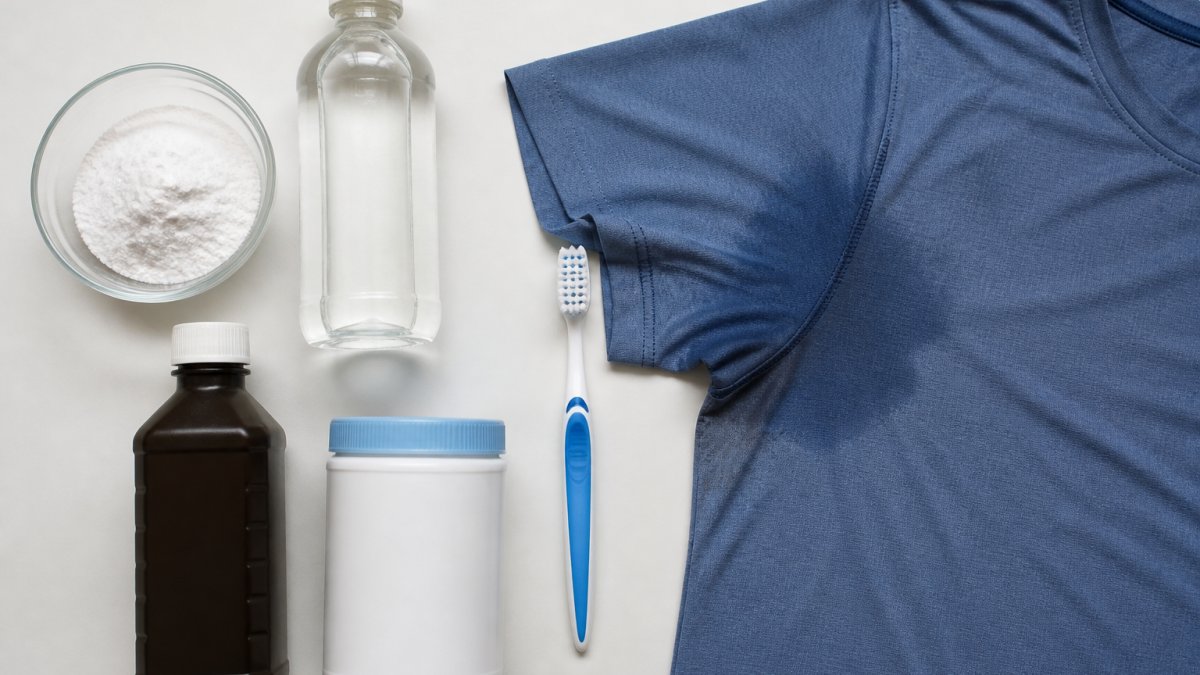
Check your activewear's care label first. If it says "no bleach," skip oxygen bleach entirely. If it says "cold water only," don't use warm or hot water at any step.
Always read your garment's instructions before mixing solutions.
How to Remove Set-In Sweat Stains From Clothes
Set-in stains survived a wash or two and have bonded to the fabric, so regular detergent alone won't lift them. Use a paste or soak that breaks down the stain's chemical bonds. Here are the two most effective methods.
The Baking Soda and Hydrogen Peroxide Paste Method
This method works on fresh and set-in stains. It's gentle enough for most technical fabrics.
Step 1: Mix your paste Combine equal parts baking soda, hydrogen peroxide, and water.
Step 2: Apply to the stain Spread the paste onto the stain and work it in gently with a soft-bristled brush.
Step 3: Let it sit Leave the paste on for 10-15 minutes so the peroxide can break down the stain's bonds.
The Oxygen Bleach Soak
Oxygen bleach is color-safe and works well on stubborn stains, less aggressive than chlorine bleach but stronger than baking soda alone.
Step 2: Add oxygen bleach Add oxygen bleach per the product instructions, usually 1-2 scoops per gallon, and stir until dissolved.
Step 3: Submerge the garment Submerge your activewear with the stained area fully covered.
This works especially well for underarm stains and deodorant residue because the soak reaches deep into the fibers.
Using Vinegar for Sweat Stains and Odor Removal
White vinegar tackles both stains and odor. Sweat stains smell because bacteria colonize the fabric; vinegar kills that bacteria while helping lift the stain.
How to use vinegar for sweat stains:
Spray undiluted white vinegar on the stain, let it sit 15-30 minutes, then rinse with cool water and wash normally. The smell fades once dry.
For persistent odor, add one cup of white vinegar to the wash cycle instead of fabric softener, especially for moisture-wicking clothes that trap odor.

Don't use vinegar on delicate fabrics or anything with a care label warning against acids. Test on a hidden area first if you're unsure.
How to Get Deodorant Stains Out of Activewear
Quick removal for fresh deodorant stains:
Rub with a damp cloth or soft brush. Often that's all you need, since the residue hasn't bonded yet.
For stubborn deodorant buildup:
Mix baking soda with a little water into a thick paste, apply to the stain, and rub gently with a soft brush.
The hydrogen peroxide paste method also works, since peroxide breaks down antiperspirant compounds.
Prevention tip: Wash your activewear within 24 hours. Fresh deodorant stains rinse away; stale ones harden and become tougher to remove.
How to Wash Moisture-Wicking Clothes After Treatment
After treatment, washing matters just as much. The wrong approach can undo your work and degrade the finish that makes technical fabrics worth wearing.
Read the care label before you load the machine
The care label is the only authority on what a garment can survive. Look for four things:
- Temperature: Most moisture-wicking and compression fabrics are labeled cold or cool. If the label says cold, use cold for every step, including the rinse.
- Bleach symbol: A triangle with an X means no bleach of any kind, including oxygen bleach. A triangle with two diagonal lines means non-chlorine bleach only.
- Tumble dry symbol: A circle with an X means do not tumble dry. A circle with one dot means low heat. A circle with two dots means medium.
- Iron symbol: A square with an X means do not iron. Many polyester and elastane blends carry this.
If the label is missing or unreadable, default to cold-wash, no-bleach, air-dry for performance fabrics.
Detergent: how much and which kind
Use the amount the detergent label specifies for the load size. Overdosing is a common cause of lingering odor because residue traps bacteria and oils in the fibers. With an HE machine, use HE-labeled detergent at or below the recommended line.
Sports detergents target the oils and bacteria that cause odor in synthetics. Regular detergent works, but sports detergent performs better on heavily soiled gear. Either way, skip these:
- Fabric softener, coats fibers and blocks wicking
- Dryer sheets, same coating problem, plus they can leave residue that holds odor
- Chlorine bleach, damages elastane and can yellow synthetic fabrics
Machine settings that protect the fabric
- Water temperature: Cold. Warm or hot water can set remaining stain and stress elastic fibers over time.
- Cycle: Gentle, delicate, or the machine's activewear/sport cycle if it has one. A normal cycle with heavy agitation can pill the surface and stretch seams.
- Load size: Wash activewear with similar-weight items. Heavy towels and denim abrade the fabric and can transfer lint.
- Inside out: Turn garments inside out to protect the outer surface and any printed logos or reflective details.
- Zippers and hooks: Close them before washing so they don't snag other pieces.
- Color sorting: Wash lights and darks separately. Dye transfer is hard to reverse on synthetic fabrics.
Drying: the step that decides whether the stain is really gone
Inspect the garment wet, then again fully dry. Wet fabric hides remaining discoloration, and dryer heat sets whatever is left.
- If any stain or odor remains, do not put the garment in the dryer. Repeat the treatment and wash again.
- If the stain is gone, air-dry when possible. Hang or lay flat away from direct sun, which can fade colors and degrade elastic over time.
- If you must use a dryer, choose the lowest heat setting the care label allows and remove the garment while it is still slightly damp.
Air-drying is the safer default for moisture-wicking fabrics, preserving elastic in waistbands and cuffs and avoiding heat that shortens performance finishes.
Never assume the stain is gone just because it looks lighter. Wet fabric appears different than dry fabric. Wait until it's completely dry before deciding if you need another treatment round.
If the stain persists after a full wash cycle, repeat one of the treatment methods before drying.
Common Mistakes to Avoid When Treating Sweat Stains
Most people make the same errors when fighting sweat stains. Each mistake below includes the mechanism behind it and the fabric-specific consequence.
Mistake 1: Using hot water
Hot water opens fabric pores and lets stains sink deeper. On synthetics, heat also relaxes elastane and repeated hot washes shorten the wicking finish. Use cool or cold water for rinsing, soaking, and washing in every method here.
Mistake 2: Drying before confirming the stain is gone
Dryer heat cross-links sweat proteins and salts with the fabric, so a faint wet stain can become permanent after one cycle. Inspect wet, then fully dry. If anything remains, air-dry and retreat rather than relying on the dryer.
Mistake 3: Mixing bleach products
Mixing chlorine bleach with vinegar, ammonia, or hydrogen peroxide creates toxic gas, and oxygen bleach shouldn't be combined with other treatments either (the CDC). Use one method at a time, rinse thoroughly between methods, and never mix in a closed space.
Mistake 4: Scrubbing too hard
Aggressive scrubbing abrades moisture-wicking fabrics, causing pilling and breaking down the fast-dry coating, and can stretch seams on compression pieces. Use a soft brush or fingertips with light pressure and let the treatment do the work.
Mistake 5: Ignoring the care label
If the label says no bleach, skip oxygen bleach and hydrogen peroxide. If it says cold water only, avoid warm or hot water at every step. If it says do not iron, don't press the garment dry. When in doubt, test on an inside hem first.
Mistake 6: Waiting too long
Fresh stains are easier to remove than set-in ones. Treat within 24 hours; waiting a week lets residue bond tighter and gives odor-causing bacteria time to colonize.
Mistake 7: Using fabric softener or dryer sheets on activewear
Fabric softener and dryer sheets coat fibers with a waxy film that blocks wicking, traps odor, and weakens later treatments. Skip both for technical wear; for softer-feeling gear, use sports detergent and air-dry.
Mistake 8: Treating every stain the same way
Fresh sweat, set-in discoloration, and persistent odor need different approaches. A quick rinse handles fresh stains; a paste or soak handles set-in discoloration; odor surviving a normal wash calls for a vinegar or oxygen bleach soak, not another spot treatment. Match the method to the problem.
Never mix hydrogen peroxide with vinegar or chlorine bleach. This creates toxic chlorine gas. Use one treatment method at a time, then rinse thoroughly before trying another.
Frequently Asked Questions
How do you remove sweat stains from activewear without damaging moisture-wicking fabric?
Start with a pre-treatment paste of equal parts baking soda, hydrogen peroxide, and water. Apply gently to the stain and let it sit for 10-15 minutes before rinsing with cold water. Avoid scrubbing aggressively, which can damage technical fabrics. For set-in stains, soak in oxygen bleach overnight, then wash as normal. Always check your garment's care label first, some high-performance fabrics have specific washing instructions that must be followed to preserve moisture-wicking properties.
Can you use vinegar to remove sweat stains from activewear?
Yes. White vinegar works well for both sweat stains and odor buildup in activewear. Mix equal parts white vinegar and water, then spray or soak the stained area for 30 minutes before washing. The acidity helps break down sweat residue and deodorizes the fabric. For stubborn stains, let the vinegar solution sit overnight. Rinse thoroughly with cold water after treatment to remove the vinegar smell completely.
Why do sweat stains remain on workout clothes after washing?
Sweat stains that survive washing are usually set-in stains, the sweat has dried and bonded to the fabric fibers, making them harder to remove with detergent alone. Heat from hot water and the dryer can also set stains permanently. Always pre-treat fresh sweat stains immediately with cold water and a stain remover before washing. For existing stains, use oxygen bleach or a baking soda paste and let it sit before washing in cold water.
What's the best way to prevent sweat stains from setting in activewear?
Treat stains immediately after wearing. Rinse the stained area with cold water and apply a pre-treatment stain remover or baking soda paste within a few hours of wearing. Wash in cold water rather than hot, since heat sets protein-based stains like sweat. Air-dry your activewear when possible to avoid heat exposure. Investing in high-quality moisture-wicking gear like Greatness Wins baselayers helps minimize sweat buildup, reducing stain severity over time.