Table of Contents
- How Compression Gear Works for Recovery
- Does Compression Gear Reduce Muscle Soreness
- Benefits of Compression Tights for Recovery
- How Long to Wear Compression Gear After Exercise
- Sizing, Pressure Grading, and Safety Considerations
- Compression Gear for Athletes: Performance and Durability
- Frequently Asked Questions
Last Updated: October 3, 2026
How Compression Gear Works for Recovery
Compression gear works by applying graduated pressure to your muscles and tissues, which enhances blood flow and accelerates the body's natural recovery process, understanding why wear compression gear for recovery is essential for serious athletes. When you wear compression tights or shorts after intense exercise, the pressure gradient pushes deoxygenated blood back toward the heart more efficiently, reducing metabolic waste accumulation in fatigued muscles.

The science behind this is straightforward: muscle fatigue and soreness result partly from blood pooling in the legs and the buildup of lactic acid and other metabolic byproducts. According to research published in Nature Scientific Reports, compression tights worn after resistance exercise enhance blood flow and indices of exercise recovery. The graduated compression design, typically measured in millimeters of mercury (mmHg), creates a pressure differential that supports venous return without restricting circulation.
Research from the National Center for Biotechnology Information found that compression garments are cited in 85 academic studies regarding their role in mitigating fatigue responses. This consistent research backing explains why athletes across sports, from CrossFit to golf, have integrated compression gear into their post-workout routines. The mechanical support also reduces muscle oscillation, the involuntary vibration of muscle fibers that contributes to soreness and delayed recovery.
Does Compression Gear Reduce Muscle Soreness
Yes, compression gear reduces perceived muscle soreness in the 24-48 hour window after intense exercise, but the effect size and individual variability matter more than headlines suggest. This is the critical recovery phase when delayed onset muscle soreness (DOMS) peaks, and compression's impact is most noticeable, but not universal.
An analysis of 51 studies by RunnersConnect found that compression garments consistently reduce perceived muscle soreness 24-48 hours post-workout. The effect is moderate but meaningful: athletes report 15-30% reductions in soreness severity when wearing compression during this window. However, this aggregate finding masks important variability. Some athletes experience 40%+ soreness reduction, while others see minimal change. This variability depends on training age, individual inflammation response, and compression pressure selection, factors most marketing claims ignore.
Critically, compression reduces perceived soreness, not necessarily the underlying muscle damage. Research from the Journal of Sports Medicine and Physical Fitness distinguishes between soreness sensation (which compression addresses through sensory gating and improved blood flow) and actual muscle fiber microtrauma (which requires time and nutrition to repair). Compression doesn't accelerate tissue healing; it reduces the pain signal and swelling that accompany healing. This distinction matters because athletes sometimes mistake soreness reduction for faster recovery, leading to premature return to heavy training.
The research also reveals an important nuance: compression works best when worn immediately after exercise and for several hours during recovery. Waiting until the next day to start wearing compression gear produces weaker results, studies show soreness reduction drops by 50% or more if compression begins 12+ hours post-workout. The window for maximum benefit is narrow, which is why serious athletes treat post-workout compression as non-negotiable during the first 4-6 hours.
Athletes training 5-6 days per week benefit most from compression's compounding soreness reduction. Those training 2-3 times weekly see marginal benefit since soreness naturally resolves faster. Back-to-back high-intensity sessions maximize compression's value.
Benefits of Compression Tights for Recovery
Beyond soreness reduction, compression tights deliver multiple recovery benefits that compound over weeks and months of consistent training. The primary benefits cluster around circulatory support, inflammation management, and proprioceptive feedback.
Improved blood circulation and oxygenation: Compression accelerates oxygen-rich blood return to muscles, delivering nutrients for tissue repair. Athletes report feeling "fresher" the next morning.
Reduced swelling and edema: Compression prevents fluid pooling and supports lymphatic drainage, reducing visible swelling and stiffness.
Enhanced proprioception and biomechanical stability: Compression provides sensory feedback that improves body awareness and reduces compensation patterns that lead to secondary injuries.
Faster metabolic waste clearance: Compression supports clearance of lactic acid and metabolic byproducts, reducing chemical irritation that contributes to soreness.
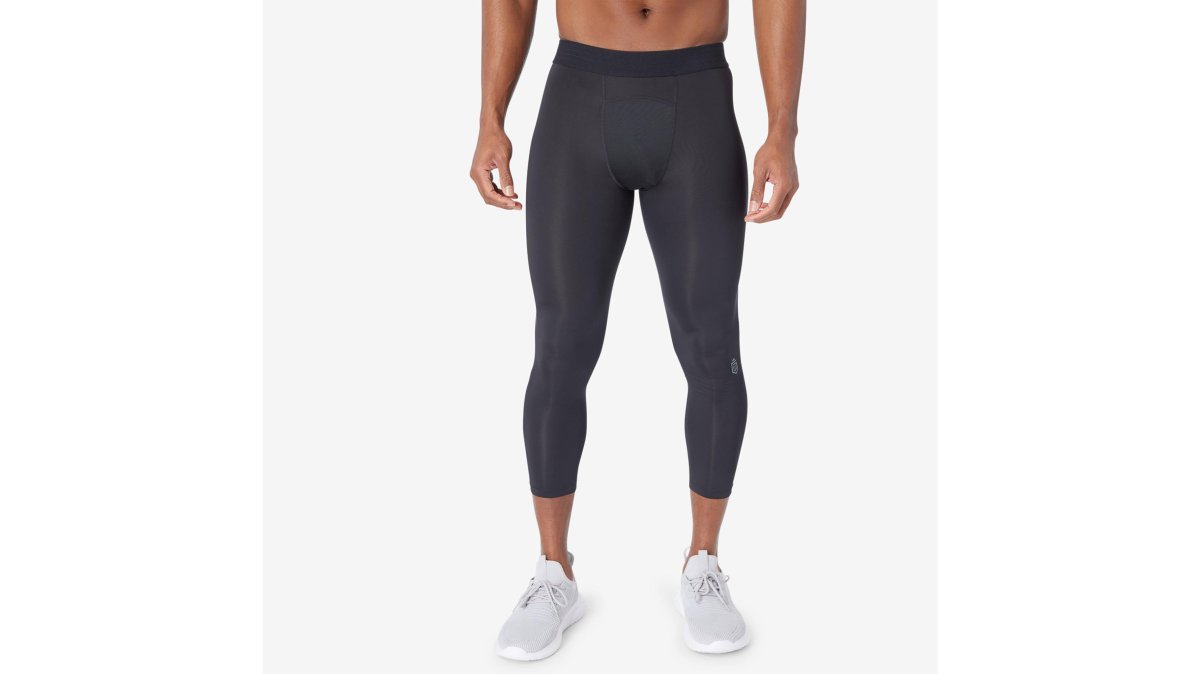
At Greatness Wins, we've designed our compression-integrated baselayer products, like the Baselayer 3/4 Legging at $59, to deliver these benefits through lightweight, breathable fabrics.

How Long to Wear Compression Gear After Exercise
The optimal window for post-exercise compression is 2-4 hours immediately following your workout, which is why wear compression gear for recovery during this critical phase matters most. Most athletes see peak soreness reduction during this critical early recovery phase.
Here's the practical timeline:
- Immediately post-workout (0-30 minutes): Change into compression gear as soon as you finish exercising, when muscles are warm and blood flow is elevated.
- 2-4 hours post-workout: Keep compression on during this critical window for metabolic waste clearance and inflammation management.
- Extended wear (4+ hours): Wearing compression into the evening is safe and beneficial, though marginal gains diminish after 4 hours.
- Next-day wear: Light compression provides modest additional benefit, but by 48 hours post-exercise, compression's impact on soreness is minimal.
The key variable is intensity: after a hard resistance session or high-intensity interval training, commit to the full 2-4 hour window. After moderate-intensity training, 1-2 hours of compression is sufficient.
Sizing, Pressure Grading, and Safety Considerations
Compression effectiveness depends entirely on proper sizing and pressure selection. Ill-fitting compression gear either fails to deliver benefits or, in worst cases, restricts circulation and worsens recovery. This is where most athletes fail, they guess at sizing or assume "more compression" equals better results.
Understanding pressure grading and mmHg: Compression is measured in millimeters of mercury (mmHg). Most athletic compression ranges from 15-20 mmHg (mild) to 25-30 mmHg (moderate, standard for post-exercise recovery) to 30-40 mmHg (firm, for medical conditions). For post-exercise recovery in healthy athletes, 20-30 mmHg is the evidence-backed sweet spot, firm enough to support venous return without creating pressure points or localized ischemia.
Graduated compression (higher pressure at the ankle, decreasing toward the knee and hip) is more effective than uniform compression because it naturally pushes blood toward the heart. Non-graduated compression can impede blood flow if too tight.
Sizing accuracy is non-negotiable: Compression garments must fit snugly without cutting off circulation. Too-small garments create pressure points and restrict blood flow; too-large garments provide no benefit. Measure waist, hip, inseam, and calf circumference according to the manufacturer's sizing chart. Compression sizing is often 1-2 sizes smaller than standard apparel.
Perform a circulation check: press your fingernail into the skin below the garment's edge for 2 seconds, then release. Skin should return to normal color within 1-2 seconds. You should also fit one finger under the waistband without resistance.
Contraindications and when NOT to wear compression: Compression is generally safe for healthy athletes, but specific conditions warrant caution or avoidance. Do not wear compression if you have:
- Deep vein thrombosis (DVT) or history of blood clots: Requires medical clearance before wearing compression.
- Active cellulitis or skin infections: Wait until infection clears.
- Severe peripheral arterial disease (PAD): A vascular specialist should evaluate suitability.
- Uncontrolled diabetes with neuropathy: Consult your physician.
- Acute inflammation or severe swelling from injury: Use ice and elevation first; add compression once acute inflammation subsides.
- Pregnancy: Discuss compression use with your obstetrician.
For athletes without these conditions, avoid compression above 30 mmHg or continuous 24+ hour wear, which can create pressure points and reduce circulation. Limit continuous wear to 4-6 hours post-exercise.
Maintenance and pressure integrity: Compression garments lose elasticity with washing and wear. Most athletic compression maintains its pressure gradient for 50-100 wash cycles if cared for properly. Wash in cold water with mild detergent, air dry (heat damages elastic), and avoid fabric softener (it breaks down the elastic core).
Proper sizing and 20-30 mmHg pressure is non-negotiable for compression to work. Too tight creates circulation problems; too loose provides no benefit. When in doubt, measure twice and order according to the manufacturer's chart, not your intuition.
Compression Gear for Athletes: Performance and Durability
Compression gear designed for serious athletes differs fundamentally from fashion-focused athleisure. True compression apparel uses medical-grade pressure gradients, reinforced seams, and moisture-wicking fabrics engineered to survive dozens of wash cycles without losing elasticity.
Elite athletes have long understood that compression technology originated in medical fields for circulation support and DVT prevention before becoming standard in athletic recovery. According to Red Bull's 2023 analysis, this medical-to-athletic transition explains why the most effective compression gear uses graduated pressure profiles that move deoxygenated blood back to the heart more efficiently than isolated garments.
Durability matters for heavy users: If you train 5-6 days per week, compression gear takes a beating. Cheap compression loses elasticity after 10-15 washes. Premium compression, like Greatness Wins' compression-integrated baselayer products, maintains pressure gradients and fit through 50+ wash cycles.
Look for compression garments with reinforced flat-lock seams, high-quality elastic cores, and moisture-wicking fabrics that dry quickly. These features prevent the degradation that makes compression ineffective. Our Baselayer Short at $49 and Performance Training Tank at $45 are engineered for this durability standard.

Compression gear for recovery isn't optional for serious athletes, it's a proven tool for managing soreness, accelerating blood flow, and supporting tissue repair during the critical 24-48 hour window after intense training. When you pair evidence-based compression with proper sizing, consistent post-workout use, and quality gear that lasts, you're investing in measurable improvements to your recovery timeline and training consistency.
At Greatness Wins, we've built compression technology into our baselayer and performance apparel specifically for athletes who demand durability, proper pressure gradients, and gear that performs as hard as you do. Start with compression tights or shorts designed for your training style, commit to the 2-4 hour post-workout window, and you'll feel the difference within your first week. Free returns within the U.S. mean you can find the perfect fit without risk.
| Recovery Metric | Compression Benefit | Timeline | Best For |
|---|---|---|---|
| Muscle soreness (DOMS) | 15-30% reduction | 24-48 hours post-workout | All training types |
| Blood flow enhancement | Improved venous return | Immediate to 4 hours | High-intensity sessions |
| Swelling reduction | Reduced edema | 2-6 hours post-workout | Resistance training |
| Metabolic waste clearance | Accelerated lactic acid removal | 0-4 hours post-workout | Intense conditioning |
Frequently Asked Questions
Does compression gear actually speed up muscle recovery?
Yes. Research analyzing 51 studies shows compression garments consistently reduce perceived muscle soreness 24-48 hours after hard workouts. Compression tights worn after resistance exercise enhance blood flow and improve indices of recovery by promoting venous return, moving deoxygenated blood back to the heart more efficiently. This accelerated circulation helps clear metabolic waste and reduces inflammation, though the effect is moderate rather than dramatic.
How long should you wear compression gear after a workout?
Wear compression gear for several hours post-exercise to maximize recovery benefits. Most athletes wear compression tights or shorts immediately after training and during the initial recovery window when muscle soreness and swelling develop most rapidly. Some athletes wear them overnight. The key is consistency: wearing compression gear for several hours afterward optimizes recovery benefits and reduces muscle oscillation, which contributes to soreness and fatigue.
Can compression gear help with delayed onset muscle soreness (DOMS)?
Compression garments moderately reduce DOMS, the muscle soreness that peaks 24-48 hours after intense exercise. Academic research cites compression gear in 85 citations regarding its role in mitigating fatigue responses. The graduated pressure profile moves deoxygenated blood back to the heart efficiently, reducing edema and supporting tissue repair. While not a cure, compression gear is regularly used by athletes to mitigate fatigue and enhance recovery when combined with proper rest and nutrition.
What pressure level (mmHg) should I look for in compression gear?
Athletic compression typically ranges from 15-30 mmHg for general recovery and performance enhancement. Medical-grade compression starts at 20-30 mmHg and goes higher for post-surgical or clinical applications. For recovery and athletic performance, 15-25 mmHg provides sufficient pressure gradient to enhance blood flow and reduce muscle vibration without restricting movement. Ensure your compression gear fits properly, too tight restricts circulation; too loose provides minimal benefit. Check sizing charts carefully for consistent fit.