Quick Summary
The best athletic clothes for youth soccer players are moisture-wicking tees, tanks, and shorts with stretch, mesh ventilation, and room to move. Choose by session type, climate, and sizing, since kids grow quickly and need pieces that won't bunch under shin guards.
- Pick moisture-wicking fabrics that pull sweat away from the skin.
- Choose stretch fabrics with mesh panels where players heat up most.
- Avoid cotton as a base layer in cold weather because it holds moisture.
- Layer in cold weather so a player can remove pieces as the session heats up.
- Buy sizes with room to move, since kids grow quickly.
Table of Contents
- Choosing Athletic Clothes for Youth Soccer Players
- Quick Comparison: Greatness Wins Youth-Ready Pieces
- What to Wear to Soccer Practice: Tees, Tanks and Shorts
- Kids Soccer Clothes That Hold Up Through Heavy Use
- Kids Soccer Gear for Cold Weather and Layering
- Soccer Gear for a 4 Year Old: Fit, Sizing and Socks
- Building Your Youth Soccer Kit Within Your Budget
- Frequently Asked Questions
Choosing Athletic Clothes for Youth Soccer Players
Start with three questions: what the session is, how hot or cold it will be, and how often the clothing will be washed and worn. A child who trains three evenings a week needs different pieces than one who plays one weekend game.
Look for stretch that moves with a child's stride, mesh panels where a player heats up, and seams that won't rub during long sessions. Fabrics labeled moisture-wicking pull sweat away from the skin, which helps kids stay comfortable between drills.
Sizing matters more than many parents expect. Kids grow quickly, so choose pieces with room to move without excess fabric that bunches under shin guards or catches on cleats.
Quick Comparison: Greatness Wins Youth-Ready Pieces
Below is a side-by-side look at pieces from our current catalog that suit young players. Prices are listed in USD.
| Product | Starting Price | Best For | Key Feature |
|---|---|---|---|
| Core Tech Training Short | $69.00 | Practice and warmups | Lightweight 2-in-1 short with Coolmax liner |
| Performance Training Tee | $42.00 | Intense sessions | Featherweight, breathable fabric |
| Performance Training Tank | $45.00 | Hot-weather practice | Breathable with a consistent fit |
| Baselayer Long Sleeve Tee | $49.00 | Cool mornings | Mesh ventilation and UPF 50 |
| Athletic No Show Sock | $15.00 | Everyday training | Multi-knit construction with arch support |
What to Wear to Soccer Practice: Tees, Tanks and Shorts
Practice apparel has one job: keep a young player comfortable through repeated sprints, stops, and direction changes without bunching, chafing, or trapping heat. The right combination depends on session type, not just weather.
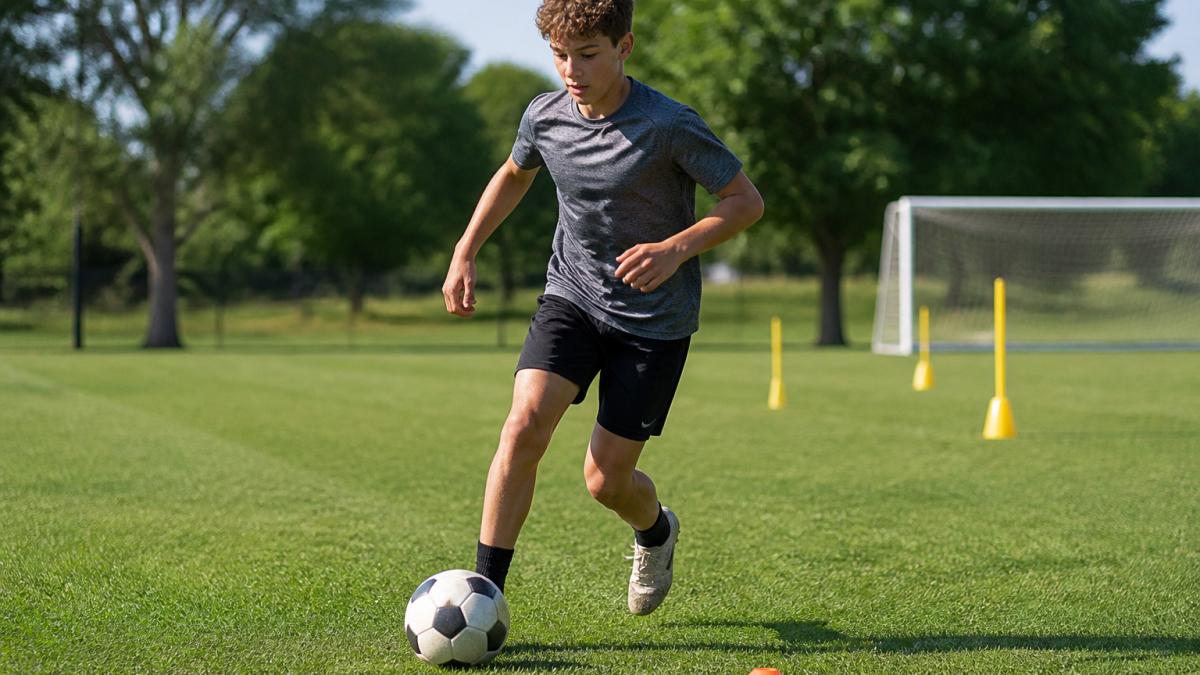
Tops. For most practices, a short-sleeve training tee in a moisture-wicking knit is the default. Moisture-wicking fabrics pull sweat away from the skin (The effects of a moisture-wicking fabric shirt on the physiological and perceptual...). Cotton tends to hold moisture against the body. Look for a fabric blend that includes polyester or a polyester-spandex mix, and check that the knit has visible stretch rather than a stiff hand-feel. Mesh panels under the arms or down the back add ventilation where players heat up most.
Our Performance Training Tee ($42.00) uses a featherweight fabric built for intense workouts, and the Performance Training Tank ($45.00) suits very hot days when extra breathability matters. For a practice top with a sporty cut, browse the Athletic Tech Polo. A tank leaves the shoulders bare, which helps with heat release but offers less protection from sun and turf burns, so many parents keep a tee in the bag as a backup.
Shorts. Practice shorts should allow full leg extension and clear the knee. A hem that falls below the knee can catch on the opposite leg during footwork and drag through lateral movements. The Core Tech Training Short ($69.00) is a 2-in-1 design with a Coolmax liner that provides a gentle compressive feel as you stretch and move.

Watch out: a 2-in-1 short with a tight liner can feel restrictive for players who prefer loose shorts; check that the liner has enough stretch before committing to a full season.
Socks and shin guards. Socks are part of the practice outfit, not an afterthought. Soccer socks should be tall enough to cover shin guards and stay up through running. The Athletic No Show Sock ($15.00) is made with 100% nylon and multi-knit construction that allows breathability, arch support and comfort. It is a no-show cut. Shin guards should sit snug against the shin without pressing into the ankle bone; a guard that shifts during running is a sign the sock or strap is too loose.
Practice versus game day. Practice clothing can be more relaxed than game-day kit. Games typically require matching jerseys, numbered tops, and regulation socks, while practices allow training tees, tanks, and shorts in any color. Keeping a separate practice set and a game set reduces wear on the game kit and makes laundry rotation easier during a multi-practice week.
Kids Soccer Clothes That Hold Up Through Heavy Use
Frequent washing and rough play wear clothing out faster than most parents expect. Look for durable knit construction, reinforced stitching at stress points, and fabrics that keep their shape after repeated laundering.
Our Performance Training Tee and Tank are described as super durable with a consistent fit.
Kids Soccer Gear for Cold Weather and Layering
Cold-weather soccer is a layering problem, not a single-jacket problem. A young player who starts a session cold and then sprints for twenty minutes will overheat if the outer layer cannot be removed or vented. The goal is a system that can be adjusted in pieces.
Base layer. The base layer sits against the skin and should manage moisture first. A long-sleeve baselayer in a stretch knit moves sweat away from the body and adds a thin layer of warmth without bulk. Our Baselayer Long Sleeve Tee ($49.00) includes mesh ventilation placed where you need it most for added breathability. Avoid cotton as a base layer in cold weather; once it absorbs sweat, it holds moisture against the skin and accelerates chilling when a player stops moving.
Mid layer. The mid layer provides insulation. A light fleece or a second technical tee traps warmth while still allowing moisture to pass through. This is the layer a player removes first when the session heats up, so it should be easy to pull off over the head or unzip.
Outer layer. The outer layer blocks wind and light rain. Our Windbreaker Jacket ($165.00) is an ultra-lightweight hooded jacket that provides wind and water resistance. A wind-resistant shell is most useful when the wind chill is the main problem; for steady rain, a water-resistant shell with sealed seams matters more than insulation. The outer layer should be loose enough to fit over the mid layer without compressing it, because compressed insulation loses much of its warmth.
Hands and head. Extremities lose heat quickly. Light gloves and a beanie or headband are inexpensive additions that make a cold practice tolerable, and they are easy to remove once a player warms up.
Wet and windy conditions. On wet fields, prioritize a water-resistant outer shell and a base layer that dries quickly. On windy days, a wind-resistant shell over a mid layer is more effective than a heavier single jacket, because the wind is the primary heat thief. For hot conditions, skip the layers entirely and rely on a breathable tee or tank with mesh ventilation.
Watch out: overdressing a young player is a common mistake; if a child is sweating heavily under a jacket at the start of practice, remove a layer before the session begins rather than waiting for overheating to set in.
Seasonal rotation. A practical cold-weather setup includes one base layer, one mid layer, and one wind-resistant shell per player, rotated between washes. Buying the shell slightly roomy allows for a mid layer underneath and extends the usable range of the piece across fall and early spring.
Soccer Gear for a 4 Year Old: Fit, Sizing and Socks
Very young players need clothing that is easy to put on and comfortable through short bursts of running. Choose soft, stretchy fabrics and avoid heavy seams near the waist and legs.
For socks, the Athletic No Show Sock ($15.00) is designed for comfort and arch support.
Building Your Youth Soccer Kit Within Your Budget
A practical starting kit includes two practice tops, two pairs of shorts, a pair of socks, and one layer for cool weather. Buying in pairs lets you rotate pieces between washes.
Prioritize spending on items worn most often, such as practice shorts and tops, and keep the cold-weather layer as a secondary purchase. For ideas on keeping this gear tidy, see How do you organize kids' sports gear at home?. Free shipping is available on orders of $100 or more, and returns within the U.S. are free.
Frequently Asked Questions
What should kids wear to soccer practice?
Kids should wear a breathable training tee or tank, athletic shorts or training pants, moisture-wicking socks and cleats suited to the field. Lightweight, stretchy fabrics that allow full movement work best for practice. The Performance Training Tee ($42.00) and Core Tech Training Short ($69.00) are examples of pieces built for this kind of repeated, active use.
What should kids wear for soccer in cold weather?
For cold weather, use layers: a base layer next to the skin, a light training top, then a windproof outer layer. The Baselayer Long Sleeve Tee ($49.00) is designed to help you feel cool and dry, and the Windbreaker Jacket ($165.00) is an ultra-lightweight hooded jacket that provides wind and water resistance. Layers can be removed as the child warms up during play.
How should soccer clothes fit a young player?
Soccer clothes should fit snugly enough to avoid bunching but loosely enough to allow full range of motion. Shorts should not ride up when running or kicking, and tops should stay in place when reaching. Because children grow quickly, check fit before each season and consider a size that still allows movement without excess fabric.
What fabric is best for kids' soccer clothes?
Lightweight synthetic fabrics with moisture-wicking and breathable properties work best for youth soccer. Mesh ventilation panels, as used in the Baselayer Short ($49.00), add breathability where you need it most.
Build your season kit with Greatness Wins. Shop our training shorts, tees, and layers, and choose pieces that fit your young player's game.