Quick Summary
Your first beginner cross-training class needs only a few well-chosen pieces: moisture-wicking clothing, footwear that handles more than one kind of movement, and a basic bag. Most gyms supply heavy equipment like barbells, rowers and kettlebells, so check the class description or ask the front desk before buying anything large.
- Choose synthetic or blended technical fabric over cotton, which holds sweat and gets heavy.
- The Core Tech Tee costs $55.00 and the Core Tech Training Short costs $69.00.
- Cross-training shoes balance stable lifting with responsive running or jumping.
- Bring a water bottle larger than you think you need, since sessions can run an hour or more.
- Buy shoes first, then one technical top and bottom, then socks.
Table of Contents
- What You Actually Need Before Your First Class
- Start With Moisture-Wicking Apparel: The Core Tech Tee and Training Short
- CrossFit Gear Essentials: Tank, Socks and Support
- Cross-Training Shoes for Beginners: Choosing for Mixed Training
- Beginner Gym Bag Essentials and What to Pack
- Women's Essential Athletic Gear for Beginner Cross-Training
- Build Your Starter Kit in Order and Start Training This Week
- Frequently Asked Questions
What You Actually Need Before Your First Class
Your first beginner cross-training class does not require a full closet of new gear. For most beginners, a few well-chosen pieces cover everything, and the rest can wait until you know what your training actually demands.
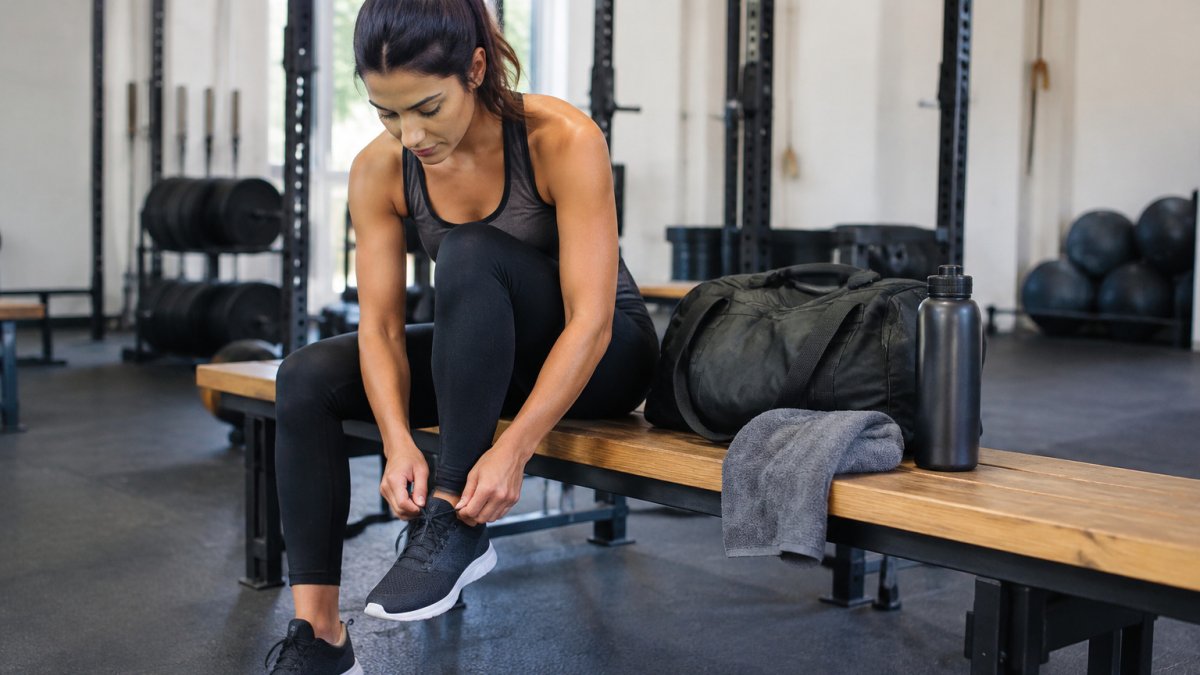
We recommend starting with three categories: moisture-wicking clothing, footwear that handles more than one kind of movement, and a basic bag to carry it all. Most gyms supply the heavy equipment, including barbells, rowers and kettlebells, so you rarely need to buy those yourself. Check your gym's class description or ask the front desk before you buy anything big.
A common mistake is buying for the workout you imagine in six months instead of the one you are doing this week. Start lean. You can add specialized pieces once you know which movements you enjoy and which ones leave you sore.
Watch out: Cotton shirts hold sweat and get heavy quickly. Choose synthetic or blended technical fabric for your first session, even if you already own cotton tees.
Start With Moisture-Wicking Apparel: The Core Tech Tee and Training Short
Moisture-wicking fabric is the first piece of gear worth upgrading. It pulls sweat away from your skin so you stay more comfortable through burpees, rowing and sprints.
The Core Tech Tee is built on a soft double-brush hand feel with a consistent fit, and it is designed as a training tee for intense sessions. At $55.00, it is a solid choice for the top half of a beginner kit.
For bottoms, the Core Tech Training Short at $69.00 combines a lightweight outer short with a Coolmax liner that gives a gentle compressive feel as you move. Its featured details include a 2-in-1 construction and a fabric made from plastic bottles.

Best for: beginners who want one top and one bottom that handle lifting, cardio and general training. Skip if: your budget is tight. Start with one piece and add the second once you know your fit.
The two core pieces for a beginner's top and bottom are priced and built as follows.
| Item | Price | Key feature |
|---|---|---|
| Core Tech Tee | $55.00 | Soft double-brush hand feel, consistent fit |
| Core Tech Training Short | $69.00 | Lightweight outer short with Coolmax liner |
| Core Tech Training Short | $69.00 | 2-in-1 construction, plastic-bottle fabric |
CrossFit Gear Essentials: Tank, Socks and Support
If your class is a CrossFit-style program, you will sweat, lift and move in ways that test your gear. Three items cover most of the needs: a breathable tank, supportive socks and a good sock fit for your shoes.
The Performance Training Tank at $45.00 uses featherweight fabric made for intense workouts and hot days. It is a good pick if you train in warm gyms or do outdoor runs as part of your program.

For socks, the Athletic No Show Sock at $15.00 is made from 100% nylon with a multi-knit construction for breathability and arch support.

Support is a more personal decision. Lifting belts, knee sleeves and wrist wraps help some athletes and feel unnecessary to others. Start without them, then add support only if a specific movement causes discomfort, and check with a qualified coach if pain persists.
Cross-Training Shoes for Beginners: Choosing for Mixed Training
Shoes are the one piece of gear where the wrong choice affects every session, so it is worth understanding the trade-offs before you spend. Cross-training shoes are built to handle two jobs at once: stable lifting and responsive running or jumping. A pure running shoe is cushioned for forward motion and can feel unstable during squats or heavy deadlifts. A pure lifting shoe is firm and flat, which is great under a barbell but tiring for runs and box jumps.
For most beginners, one versatile cross-training shoe is sufficient for the first few months. You only need a second pair once your classes clearly lean one direction, mostly heavy lifting, or mostly running and conditioning.
When you shop, look for these features:
- A flat, stable heel for squats and lifts
- Moderate cushioning for jumps and short runs
- A wide enough toe box so your feet do not cramp during longer sessions
- Good lateral support for side-to-side movements
- A slightly firmer midsole than a running shoe, which keeps you grounded under load
Fit and sizing. Try shoes on in the afternoon, when feet are slightly swollen, and wear the socks you plan to train in. Leave roughly a thumb's width between your longest toe and the front of the shoe, and check that your heel stays locked when you squat.
Care.
Beginner Gym Bag Essentials and What to Pack
A gym bag keeps your gear organized and keeps sweaty clothes away from clean ones. For a first class, pack the basics: a change of top and bottom, a sock pair, a towel, water and your shoes in a separate compartment.
Water deserves special attention. Bring a bottle larger than you think you need. Cross-training sessions can run an hour or more, and many beginners underestimate how much they sweat.
Other useful items include:
- A small towel for wiping sweat from equipment and your face
- Hair ties or a headband if you have longer hair
- A plastic bag for sweaty clothes after class
- Lip balm and any personal medication you need during training
Keep the bag light. You do not need to carry everything you own. Pack for the next session, then adjust based on what you actually used.
Women's Essential Athletic Gear for Beginner Cross-Training
Women beginners have the same core needs as everyone else, plus a few fit considerations. Support and comfort matter more during high-impact movements like box jumps and running intervals, so choose pieces that stay in place without digging in.
The High Neck Pocket Long Bra at $60.00 is designed for maximum performance and intense training. It is made from breathable double-brushed jersey interlock with moisture-wicking properties.
Pair a supportive top with bottoms that move with you. The Baselayer 3/4 Legging at $59.00 is a lightweight option with mesh ventilation placed in the areas you need it most for added breathability.
Sizing deserves a careful check. Read each product's size guide, measure yourself rather than relying on your usual size, and be prepared to size up if you plan to lift in a stretchy fabric.
Build Your Starter Kit in Order and Start Training This Week
Most gear lists tell you what to buy but not what to skip, borrow, or delay. This section does the opposite: it separates what a gym typically supplies from what you actually need to bring, then lays out three budget tiers so you can start without overspending.
What your gym or class usually provides. Before you buy anything large, check the class description or ask the front desk. Confirm what is available so you do not duplicate equipment you will never carry.
What you should bring yourself. Personal items are rarely shared: moisture-wicking top and bottom, socks, training shoes, a water bottle, a small towel, and a bag to carry it all. Support gear such as knee sleeves, wrist wraps, and lifting belts is personal and worth buying only after a specific movement calls for it.
Three budget tiers.
Buy in this order.
- Shoes first. Your feet take the most stress, so a supportive pair matters most.
- One technical top and one bottom. The Core Tech Tee at $55.00 and the All-Purpose Essential Short at $59.00 give you a versatile base for warm-ups and training.
- Socks. The Athletic No Show Sock is an inexpensive upgrade that makes a noticeable difference in comfort.
- Bag and water bottle. Use what you already have if it works.
- Support gear only if needed. Wait until a specific movement calls for it.
Start with your next scheduled class. Wear what you have, note what feels restrictive or slips, and upgrade those items first. Consistency in showing up matters far more than owning the perfect gear.
Greatness Wins builds premium athletic apparel for athletes who want their gear to perform as hard as they do. If you are preparing for your first cross-training class, our Core Tech and Performance pieces are a strong place to start. Shop the full collection to build a kit that lasts through every session.
Frequently Asked Questions
What gym gear is essential for a beginner?
Start with moisture-wicking apparel, supportive cross-training shoes and a water bottle. The Core Tech Training Short ($69.00) and Performance Training Tank ($45.00) cover the clothing basics, and the Athletic No Show Sock ($15.00) adds comfort in shoes. Check your gym's equipment list before buying those items, since you may not need them for your first few sessions. Add specialty items such as grips or lifting belts only after you know which movements you repeat often.
What shoes are best for beginner cross-training?
Choose a shoe that feels stable for lifting and flexible enough for running and jumping. Pure running shoes have a cushioned heel that can make heavy squats less stable, while flat, minimal shoes can feel harsh on runs. A cross-training shoe balances both. Try shoes on in the afternoon when feet are slightly larger, wear the socks you will train in, and confirm there is room at the toe during a squat.
How much should a beginner spend on workout gear?
A reasonable starter kit covers two or three training tops, two shorts or a legging, a pair of socks and one pair of shoes. Using the Greatness Wins listed prices, a tee at $55.00, a short at $69.00 and a sock at $15.00 come to roughly $139.00 before shoes. Buy one or two core pieces first, wear them to several classes, and add more only after you know your training style.
What should I pack in a gym bag for cross-training?
Pack a change of moisture-wicking clothing, clean socks, a towel, a water bottle and your shoes in a separate compartment. Add a small bag for deodorant and toiletries. Keep optional items such as wrist wraps or a jump rope in the bag only if your class uses them, since many gyms supply equipment. Empty and air out the bag after each session to keep it fresh.