Table of Contents
- What Is Moisture Wicking Fabric and Why It Matters
- Key Features to Look for in Breathable Workout Shirts
- Best Moisture Wicking Shirts for Men: Top Picks for 2026
- How to Test Breathability: The Light Test and Other Methods
- How to Care for Moisture Wicking Apparel to Maintain Performance
- Matching Breathable Workout Shirts to Your Training Intensity
- Conclusion
- Frequently Asked Questions
Last Updated: September 16, 2026
What Is Moisture Wicking Fabric and Why It Matters
Moisture wicking fabric is a textile engineered to pull sweat away from your skin and spread it across the fabric surface, where it evaporates faster. This process, called evaporative cooling, is why a good workout shirt feels dry while a cotton tee turns into a wet sponge.
Breathable workout shirts work on two fronts: they move moisture and they let heat escape. Research published by the National Center for Biotechnology Information on thermoregulation in sportswear found that sports clothing mitigates the insulative effect of body heat through breathable, lightweight synthetic materials designed to improve thermoregulation. Get this wrong and you overheat, chafe, and cut sessions short.
Here's what matters most: fabric choice and construction decide whether a shirt helps or hurts. This guide breaks down exactly how to choose breathable workout shirts that hold up under real training, from fabric specs to fit to the wash cycle that keeps them performing.
Key Features to Look for in Breathable Workout Shirts
The features that separate a genuinely breathable shirt from a basic tee come down to fabric technology, construction, and fit. Look for lightweight knits, mesh ventilation, and a cut that moves with you instead of binding at the shoulders.
Fabric Technology: Mesh Panels and Lightweight Knits
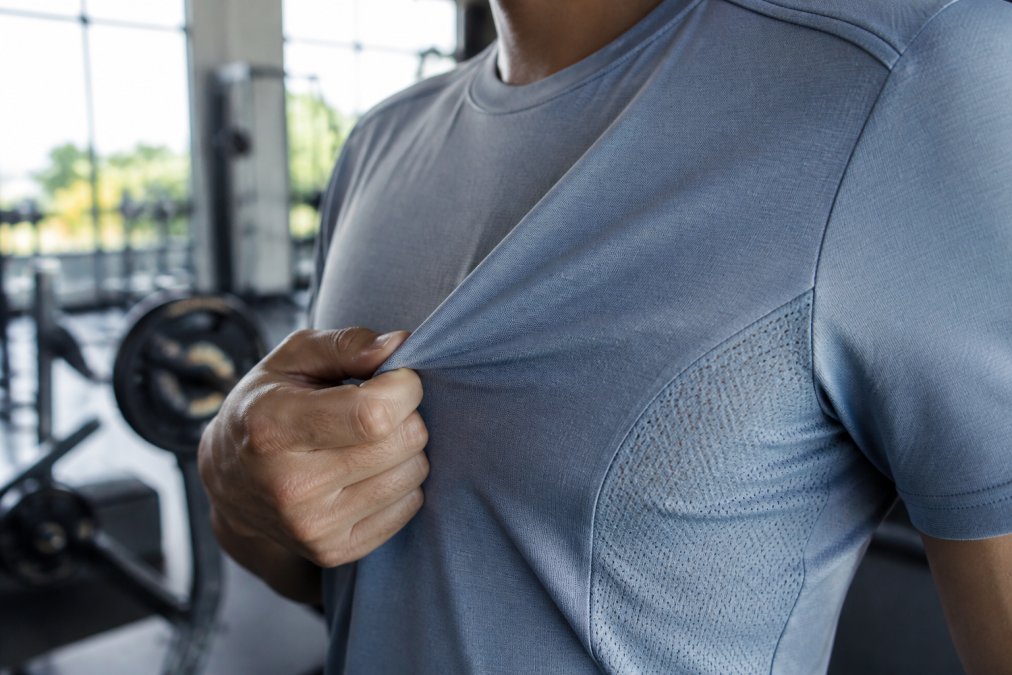
Mesh panels placed at high-sweat zones (back, underarms, chest) improve airflow where you need it most. According to Dynamo Gears on 2026 sportswear design trends, modern brands increasingly build in mesh panels and ventilated designs to prevent overheating. Lightweight knits and natural or recycled fibers let heat escape rather than trap it, per Tasc Performance's gym shirt guide.
Lyocell deserves attention here. Apri Sportswear's 2026 buyer's guide identifies it as softer than polyester, significantly more breathable, and less prone to bacterial odor thanks to its hydrophilic fiber properties. That hydrophilic quality is key: it attracts moisture and moves it along, while hydrophobic synthetics push it away fast but can hold odor over time.
Fit and Construction: Compression vs. Relaxed
Fit changes breathability more than most people realize. A close-fitting top with mesh ventilation manages moisture better than a loose one, which can trap air and limit evaporative cooling. For high-heat training, experts recommend a close-fitting but not restrictive top with integrated mesh panels (Greatness Wins hot-weather training guide).
Watch the seams. Flatlock or bonded seams reduce chafing under repeated motion. Cheap overlock seams rub raw on long runs.
Best Moisture Wicking Shirts for Men: Top Picks for 2026
The best moisture wicking shirts for men combine lightweight fabric, targeted ventilation, and a consistent fit that survives repeated washing. Here are our top picks.
Greatness Wins Baselayer Tee ($39), Our top pick.

| Shirt | Price | Key Feature | Best For |
|---|---|---|---|
| Baselayer Tee | $39 | Mesh ventilation, lightweight | Lifting, CrossFit, cycling |
| Performance Training Tank | $45 | Featherweight, durable | Hot-weather runs, intense training |
| Baselayer Long Sleeve Tee | $49 | Extended coverage, cooling | Cooler sessions, sun protection |
| Baselayer Muscle Tank | $39 | Maximum motion range | Basketball, cross-training |
How to Test Breathability: The Light Test and Other Methods
The fastest breathability test is the light test: hold the shirt up to a bright light. If you can see light passing evenly through the fabric, air will move through it too. Dense, opaque areas signal trapped heat.
Run three checks before you commit:
- Light test, hold fabric to a lamp; even light pass-through means good airflow.
- Breath test, hold fabric to your mouth and breathe; if air flows freely, so will heat.
- Stretch-and-recover, pull the fabric and release; it should snap back without sagging.
How to Care for Moisture Wicking Apparel to Maintain Performance
How to care for moisture wicking apparel comes down to protecting the fiber surface, because that surface is what does the work. Most guides stop at "wash cold, skip softener." The real story is why those rules exist and what quietly destroys breathability over time.
Why Fabric Softener Kills Performance
Moisture-wicking fabrics move sweat through capillary action, liquid travels along tiny channels between fibers and spreads across the surface to evaporate. Fabric softener and dryer sheets deposit a waxy film of fatty compounds across those fibers. The film plugs the channels, so sweat pools on your skin instead of spreading and evaporating. The shirt still looks fine. It just stops working.
The Wash Cycle That Preserves Breathability
- Wash cold, gentle cycle. Heat relaxes and eventually breaks down elastane and spandex, the fibers that give stretch gear its snap-back recovery. Once they go, the fit sags and the knit loses the tension that keeps channels open.
- Skip fabric softener and dryer sheets entirely. No exceptions, including "sport" versions.
- Use a gentle, residue-free detergent. Powder detergents can leave undissolved grit in dense knits; a liquid free of optical brighteners and heavy perfumes rinses cleaner.
- Turn garments inside out and wash with like fabrics. Zippers, Velcro, and hooks from other gear snag mesh panels and pill the face of the knit.
- Air dry, or tumble on low only. High heat is the second-biggest killer after softener. If you must use a dryer, low heat and remove while slightly damp.
- Wash promptly after heavy sweat. Bacteria feed on the oils and proteins in sweat; the longer they sit, the more odor gets set into the fiber and the harder it is to remove.
What Actually Degrades Over Time
A common pattern is a shirt that loses breathability in stages. First the wicking slows as softener residue builds. Then the stretch goes as elastane fatigues from heat. Then the mesh panels pill and mat down, reducing airflow through the ventilated zones. By the time the shirt feels heavy and hot, the damage is cumulative and largely irreversible, which is why prevention beats restoration.
A Quick Care Checklist
- Wash cold, gentle cycle, inside out
- No fabric softener, no dryer sheets
- Gentle liquid detergent, no optical brighteners
- Air dry or tumble low; never high heat
- Wash soon after heavy sweat to prevent odor set-in
- Retire a shirt once mesh panels mat down and stretch no longer recovers
Matching Breathable Workout Shirts to Your Training Intensity
Match fabric weight and ventilation to how hard you're training, and to the air you're training in. Intensity sets how much heat and sweat you produce; climate sets how fast that sweat can actually evaporate. Get one right and the other wrong and the shirt still fails.
Intensity First
- Low intensity (walking, light lifting, mobility work): a mid-weight knit with moderate ventilation is plenty. You're not producing enough heat to need featherweight fabric, and a slightly heavier knit holds its shape better.
- Moderate intensity (steady-state cardio, circuit training): move to a lightweight knit with mesh at the back and underarms. This is the sweet spot where most training lives.
- High intensity (intervals, CrossFit, hot-weather running): go featherweight with mesh panels and a close, non-restrictive fit. At this output, trapped heat is the limiting factor, not coverage.
- Golf and other stop-start sports: prioritize stretch through the shoulders and moisture management over four-plus hours, not maximum compression. You need mobility and sustained comfort, not a second skin.
Then Climate, The Variable Most Guides Skip
How a breathable shirt performs depends heavily on whether the air around you can absorb moisture.
Putting It Together
The mistake is buying one shirt for every workout. A mid-weight knit that's perfect for a cool-weather lift will overheat you on a humid summer run, and a featherweight tank that feels great in dry heat can leave you chilled once the sun drops. Build a small rotation, one featherweight mesh piece for high-output humid days, one lightweight all-rounder, and one mid-weight for cool sessions, and match the shirt to both the session and the sky.
The single biggest mistake is buying one shirt for every workout. Intensity tells you how light to go; climate tells you whether you need maximum mesh or more surface area to evaporate from. Match the shirt to both and you stop overheating.
Conclusion
Getting breathable workout shirts right comes down to reading fabric weight, checking ventilation placement, and matching the shirt to your training. Most people buy on looks and end up overheating.
Frequently Asked Questions
What is the most breathable fabric for workout shirts?
Lightweight synthetic blends with mesh panels excel. For intense workouts, look for fabrics that allow heat to escape rather than trap it, such as those with high airflow and quick-dry capabilities.
How does fabric weight affect breathability?
Lighter fabrics typically allow more airflow and heat dissipation, making them ideal for high-intensity training or hot weather. Heavier fabrics can trap heat, but may offer more durability. For breathability, prioritize lightweight knits and mesh ventilation in key areas.
What should I look for in moisture wicking shirts for men?
Look for moisture-wicking technology that pulls sweat away from the skin, mesh panels for ventilation, and a fit that allows movement without being too loose. Materials like polyester blends with spandex or elastane provide stretch and quick-dry performance. Also consider odor resistance and seam construction to prevent chafing.
How do I care for moisture wicking apparel to maintain breathability?
Wash in cold water with like colors, avoid fabric softeners which can clog fibers, and tumble dry on low or hang dry. This preserves the fabric's moisture management properties and prevents performance degradation over time. Always check the care label for specific instructions.