Last Updated: November 13, 2026
Quick Summary
Lyocell blends manage sweat better because they absorb moisture, move it away from skin, and release it into the air, while a single fabric usually does one job well and the others poorly. The blend ratio matters more than the fiber name, since the majority fiber sets the baseline behavior.
- Absorption, wicking, and evaporation are three separate jobs that lyocell blends aim to balance.
- A shirt that is mostly polyester with a little lyocell will feel and perform like polyester.
- Cotton absorbs moisture but can hold it against the skin and dry slowly.
- Lyocell wrinkles, can shrink, is less abrasion-resistant, and costs more than cotton.
- For high-sweat sessions, push polyester higher and look for mesh panels in high-sweat zones.
Table of Contents
- Why Lyocell Blends Manage Sweat Better Than Single Fabrics
- What Lyocell Is and How Its Fiber Structure Handles Moisture
- How Blend Ratios Change Sweat Performance
- Is Lyocell Better Than Cotton for Sweaty Training?
- The Lyocell Disadvantages You Should Know Before Buying
- Is Lyocell Fabric Good for Summer and Hot Weather?
- Is Lyocell Durable Enough for Daily Training?
- Matching Your Lyocell Blend to Your Sport and Climate
- Frequently Asked Questions
Why Lyocell Blends Manage Sweat Better Than Single Fabrics
Lyocell blends can help with sweat management because they combine three jobs in one fabric: absorbing moisture, moving it away from skin, and releasing it into the air. A single fabric usually does one of those well and the others poorly. That gap is why so many athletes finish a hard session soaked through.
This guide breaks down how lyocell blends work, where they fall short, and how to pick the right blend for your sport.
Absorption, Wicking, and Evaporation Are Three Different Jobs
Most shoppers treat these as one thing. They are not.
- Absorption: the fiber takes moisture into itself
- Wicking: the fabric moves moisture across its surface
- Evaporation: moisture leaves the fabric and enters the air
Cotton absorbs well but can hold sweat against the skin. Polyester wicks moisture quickly but may feel clammy. Lyocell blends aim to balance the three.
The Federal Trade Commission's textile labeling rules require fabrics to be named on the label, so you can check the blend before you buy.
What Lyocell Is and How Its Fiber Structure Handles Moisture
Lyocell is a cellulose fiber made from wood pulp that is dissolved and spun into new fibers. Its structure is what makes it useful in heat.
Sweat moves away from the skin and spreads through the fabric instead of pooling, and moisture can release into the air quickly.
That sequence matters. A fabric that absorbs but never releases stays heavy and wet. Lyocell does both, which is why it feels cool rather than damp.
For a deeper look at how fabrics move heat and moisture, read our guide to temperature-regulating fabric technology.
How Blend Ratios Change Sweat Performance
The blend ratio decides how the fabric behaves, because each fiber in the mix does a different job in the sweat sequence. Lyocell absorbs and releases moisture well on its own, but it is soft, relatively low on abrasion resistance, and has modest stretch. The partner fiber supplies what lyocell lacks, and the percentage determines how much of that partner's behavior you actually get.
Here is what each common partner contributes:
- Cotton: absorbs strongly but holds moisture and dries slowly. A small cotton share softens hand-feel and adds body; a large share makes the garment heavier and slower to dry, which works against sweat management.
- Polyester: absorbs very little but moves moisture along the surface and dries quickly. It also holds shape and resists abrasion. In a blend, polyester shortens dry time and improves durability, but too high a share makes the fabric feel clammy and trap odor.
- Elastane (spandex): contributes stretch and recovery, not moisture handling. It is almost always a small percentage, typically in the single digits to low teens, because a little goes a long way. Its job is fit, so it should not be read as a performance fiber for sweat.
- Modal and other cellulosics: behave similarly to lyocell, absorbent and soft, so they raise moisture uptake without adding dry-time speed.
- Wool and nylon: less common in hot-weather blends, but wool adds odor resistance and nylon adds strength; both change the feel and care profile.
What most guides miss is that the ratio matters more than the fiber name on the front of the tag. A shirt that is mostly polyester with a little lyocell will feel and perform like polyester, because the majority fiber sets the baseline. A shirt that is mostly lyocell with a little polyester will feel cool and soft but dry a bit slower than an all-synthetic piece.
A useful way to read a label is in order of percentage:
- Largest percentage, sets the baseline behavior (absorption, dry time, durability).
- Second-largest, the main modifier; this is where most of the sweat-management tuning happens.
- Stretch fiber, read last; it tells you about fit and recovery, not moisture.
Watch out: a label that leads with a performance-sounding fiber name but lists polyester first is a polyester garment with a marketing story, and it will behave like one in a hard session.
Blend ratios also interact with fabric weight and knit structure. A lightweight, open knit in a high-lyocell blend moves air and releases moisture faster than a dense, heavy knit of the same fiber content. That is why two garments with identical percentages can feel very different on a humid run, the ratio sets the ceiling, but construction decides how close you get to it.
Is Lyocell Better Than Cotton for Sweaty Training?
For sweaty training, lyocell blends are often a good alternative to cotton. Cotton absorbs moisture but can hold it against the skin and dry slowly, while lyocell blends are designed to release moisture more readily.
Cotton still wins on one thing: it is cheap and easy to care for.
| Fabric | Absorbs sweat | Dries fast | Feels cool | Best for |
|---|---|---|---|---|
| Lyocell blend | Yes | Yes | Yes | Training, hot weather |
| Cotton | Yes | No | No | Casual wear |
| Polyester | Low | Yes | Some | High-sweat sessions |
| Cotton-poly blend | Some | Some | Some | Light activity |
The Lyocell Disadvantages You Should Know Before Buying
Lyocell has real drawbacks, and you should know them before you spend money.
- It wrinkles. Lyocell creases more than polyester and needs care when packed.
- It can shrink. Follow the wash care label, and avoid high heat.
- It is less abrasion-resistant. Heavy friction from rough surfaces wears it faster than synthetics.
- It costs more. The fiber takes more processing than cotton.
The good news: most of these are manageable. Wash cold, skip the dryer, and store garments flat or hung. If visible sweat marks are your main worry, our guide on how to find athletic apparel that prevents sweat stains covers fabric choices in detail.
Is Lyocell Fabric Good for Summer and Hot Weather?
Lyocell blends can suit summer and hot weather. They absorb moisture, release it relatively quickly, and many wearers find them cool against the skin. In humid conditions, that combination matters more than thickness.
Breathability depends on fabric construction too. A loose knit moves air better than a tight one. Look for mesh panels in high-sweat zones like the back and underarms.
One caveat: in very dry heat, lyocell's moisture-holding ability is less of an advantage. It still feels cool, but the dry time edge shrinks. For most summer training, it works well.
Is Lyocell Durable Enough for Daily Training?
Lyocell can hold up to daily training when cared for properly. It is softer and less abrasion-resistant than polyester, so it wears faster under heavy friction.
Where it struggles: repeated washing at high heat, and rough surfaces like concrete or abrasive gym equipment. Rotate your pieces and wash cold.
Greatness Wins baselayers use mesh ventilation in the areas you need it most. The fabric is lightweight and is designed to help you feel cool and dry. If you want a wider comparison of hard-wearing fabrics, see our breakdown of the best fabrics for durable athletic wear.
Matching Your Lyocell Blend to Your Sport and Climate
Match the blend to your sport first, then to your climate, because the two push in different directions. Sport sets the sweat rate and the mechanical demands (stretch, abrasion, shape hold). Climate sets how fast moisture can leave the fabric. A blend that is ideal for a humid morning run can be the wrong pick for a dry, windy ride.
Use this decision logic:
- Low-intensity daily wear and casual training (walking, golf, light lifting): a high-lyocell blend with a small elastane share gives cool comfort and softness. Sweat rate is low, so slow dry time is not a problem, and the soft hand-feel matters more than durability.
- Moderate workouts (lifting, studio classes, short runs): a lyocell-polyester blend with polyester as a meaningful minority improves dry time and shape hold without losing the cool feel. This is the most versatile zone.
- High-sweat sessions (interval training, hot yoga, long runs): push polyester higher and look for mesh panels in high-sweat zones like the back and underarms. Lyocell alone will absorb well but may stay damp longer than you want between efforts.
- Humid conditions: favor higher lyocell and open, lightweight knits. In humid air, evaporation is the bottleneck, so a fabric that releases moisture quickly and moves air matters more than thickness. Loose knits and mesh beat tight, dense ones.
- Dry heat: lyocell's moisture-holding advantage shrinks because evaporation is fast anyway. It still feels cool, but the dry-time edge over a good synthetic narrows, so do not overpay for a high-lyocell blend if dry heat is your main condition.
- Cold-weather layering: use a lightweight lyocell blend as a next-to-skin base layer and let an outer layer handle insulation and wind. Lyocell can help manage sweat that builds up under layers. Avoid heavy lyocell knits as an outer layer in cold, wet conditions, they hold moisture and dry slowly when air movement is low.
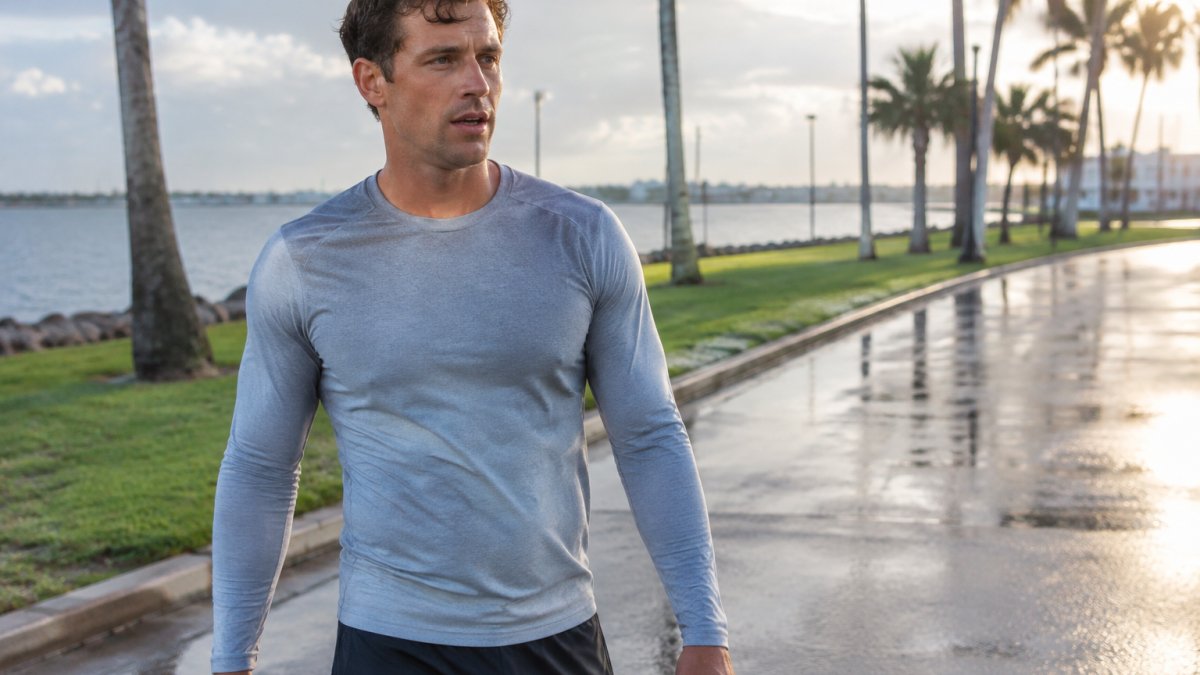
A quick sport-by-sport read:
- Golf: lyocell with elastane for stretch and cool comfort across a long, low-sweat round.
- Lifting: lyocell-polyester for shape hold and faster dry time between sets.
- Cycling: high lyocell for cooling airflow, with attention to fit so the fabric does not bunch.
- Hot, humid runs: lyocell blend with mesh panels and a lighter knit weight.
- Cold-weather training: lightweight lyocell base layer under an insulating midlayer.
Watch out: fit changes performance as much as fiber content. A tight lyocell blend traps air and slows evaporation; a loose one moves air but can chafe under straps and packs. Aim for a close but not compressive fit in high-sweat zones.
For hot-weather training, our baselayer short pairs a cool, dry feel with mesh ventilation. If you prefer full coverage up top, the baselayer tee uses the same lightweight approach.
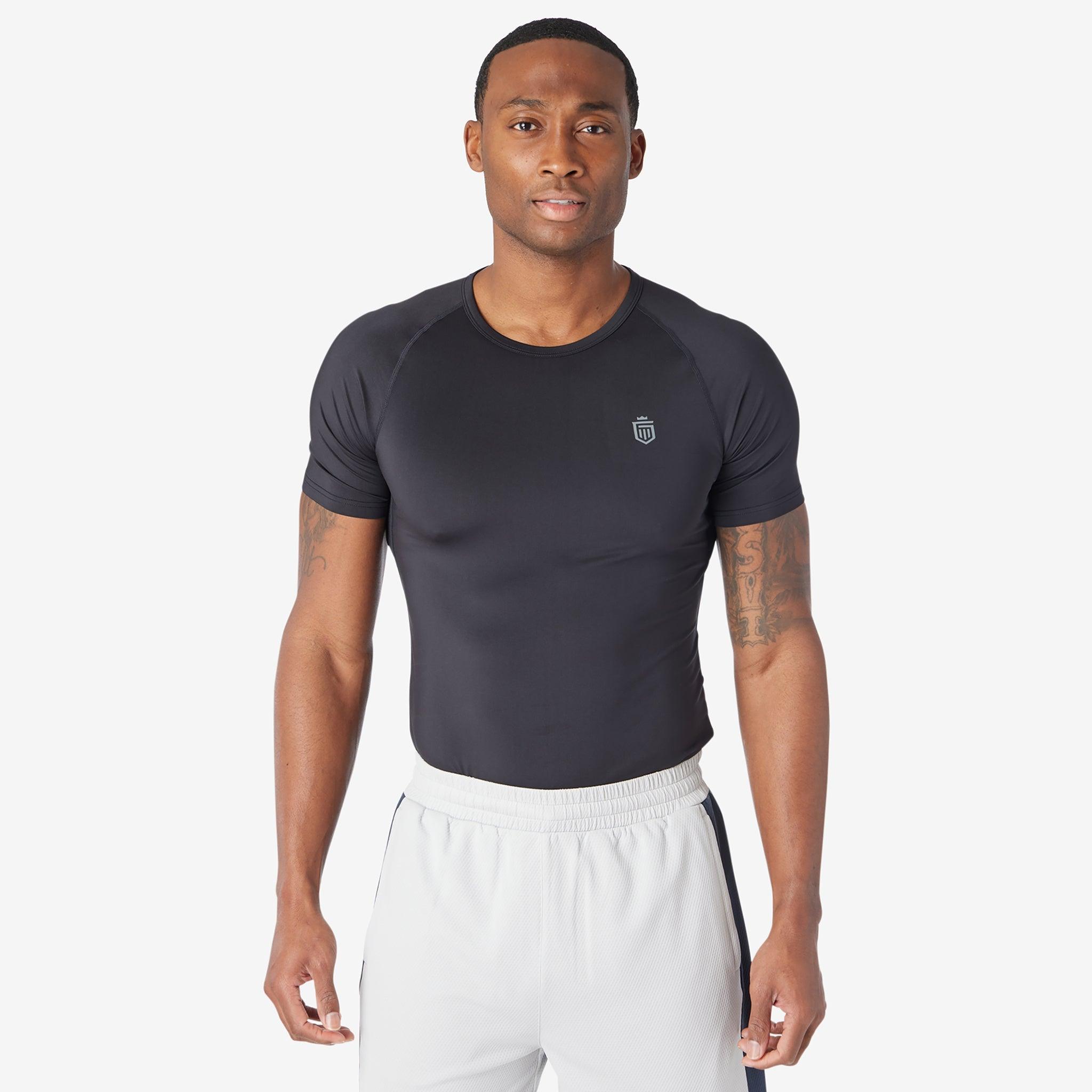
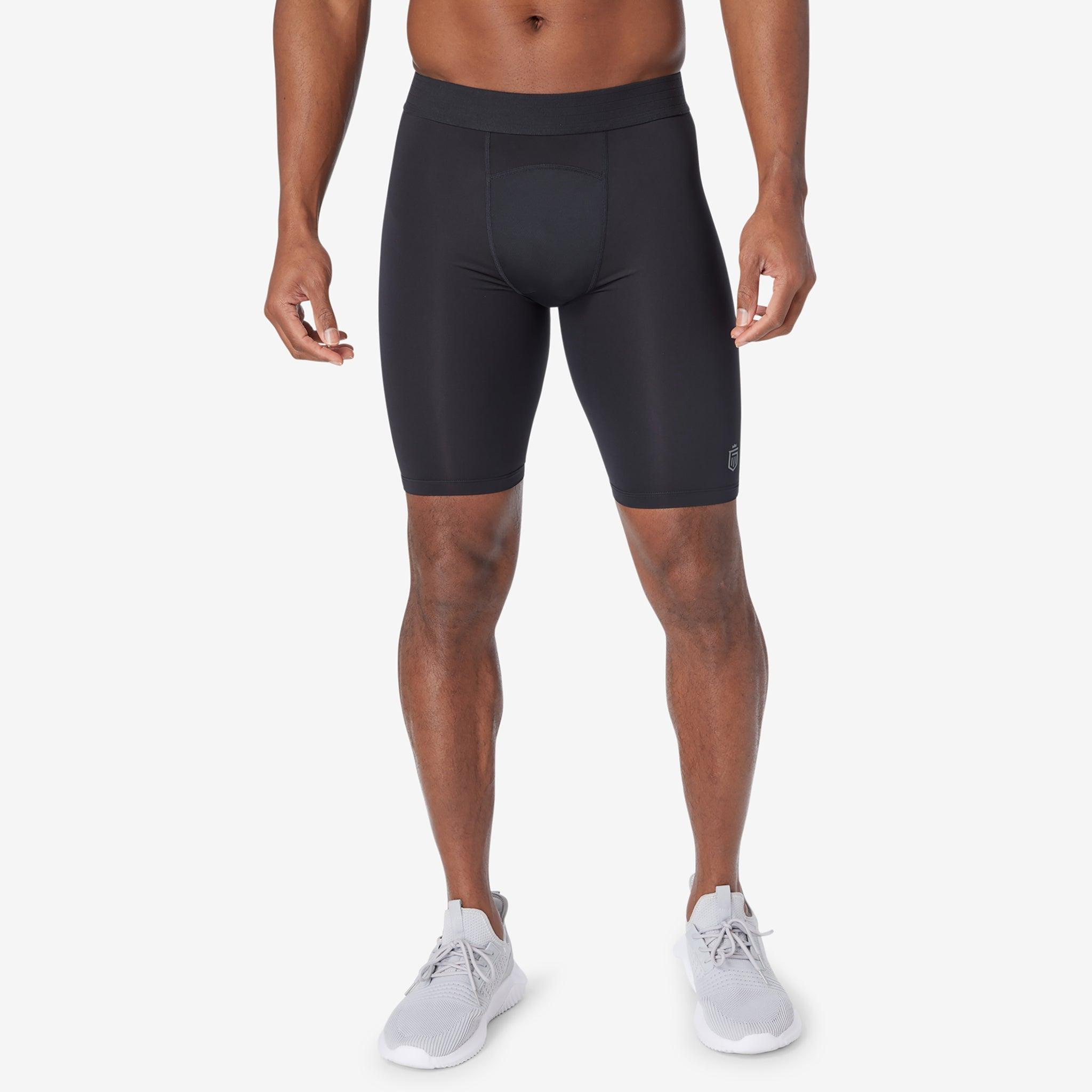
Sweat management comes down to picking the right blend, not the loudest label. Greatness Wins builds performance apparel with lightweight fabric, mesh ventilation in the areas you need it most, and a cool, dry feel. Free shipping applies on orders over $100, and returns are free within the U.S. Get started with Greatness Wins and train cooler in every session.
Frequently Asked Questions
Does lyocell make you sweat more?
No. Lyocell does not cause extra sweating; it changes how sweat feels on your skin. The fiber absorbs moisture into its structure, and Because sweat moves off the skin surface and spreads through the fabric, you notice dampness later and stay comfortable longer. In blends with polyester or elastane, that absorption pairs with quick evaporation, so the fabric dries instead of clinging.
Is lyocell more breathable than cotton?
Lyocell's smooth cellulose fiber and fine knit structures allow air to pass through, and blends are usually knit lighter than cotton jersey. Cotton absorbs well but holds moisture against the body and dries slowly, which is why a soaked cotton tee stays heavy. A lyocell blend moves moisture through the fabric and releases it faster. Breathability also depends on knit structure, fabric weight, and ventilation panels, so check the garment's construction, not just the fiber label.
What are the main lyocell disadvantages for activewear?
Lyocell has three practical weak points. It can wrinkle and crease more than polyester, so it needs prompt removal from the dryer. It is weaker when wet, so rough washing or high heat shortens its life. Blending lyocell with polyester or elastane offsets the wrinkle and strength issues, which is why most performance pieces use a blend rather than 100% lyocell.
Is lyocell durable enough for frequent training and washing?
A lyocell blend can hold up when cared for properly. Pure lyocell loses strength when wet, but blending it with polyester or elastane improves abrasion resistance and shape retention. Wash in cold water, skip fabric softener, and tumble low or hang dry to protect the fiber. Greatness Wins baselayers use lightweight fabric with mesh ventilation, and the brand offers free returns within the U.S.