Table of Contents
- Why Leggings Slide Down During Exercise
- How to Choose the Right Legging Size
- High-Waisted vs. Mid-Waisted Leggings: Which Prevents Rolling
- Compression Levels and Elasticity Matter
- Key Design Features That Stop Rolling
- How to Care for Athletic Apparel to Maintain Elasticity
- Activity-Specific Recommendations and DIY Temporary Fixes
- Conclusion
Last Updated: August 26, 2026
Why Leggings Slide Down During Exercise
The waistband cannot maintain enough inward pressure against your body during movement. When you move, your body shape shifts, and a waistband that fits perfectly while standing may lose contact with your skin during dynamic activity. If the elastic lacks sufficient compression or the fabric's elastane content has degraded, the band can't recover fast enough to stay in place.
The issue worsens with certain body shapes. Leggings are cut to standardized waist-to-hip ratios, so if your proportions fall outside that range, a narrower waist relative to fuller hips, for example, the waistband may work against your body's geometry. Three factors compound the problem: sizing that's too loose, fabric that's lost elasticity, and waistband construction not designed for high-impact movement. The good news is each is addressable.
How to Choose the Right Legging Size
Choosing the right size is the single most effective way to prevent rolling. According to a Women's Health survey cited by ododos in 2025, 72% of women are in the wrong activewear size, which directly correlates with waistband rolling and discomfort (womenshealthmag.com).
Your leggings should feel snug without digging in. There should be no gap at the back waistband when standing, and the band shouldn't compress your stomach uncomfortably. When you bend forward or raise your arms, the waistband should move with your body, not separate from it.
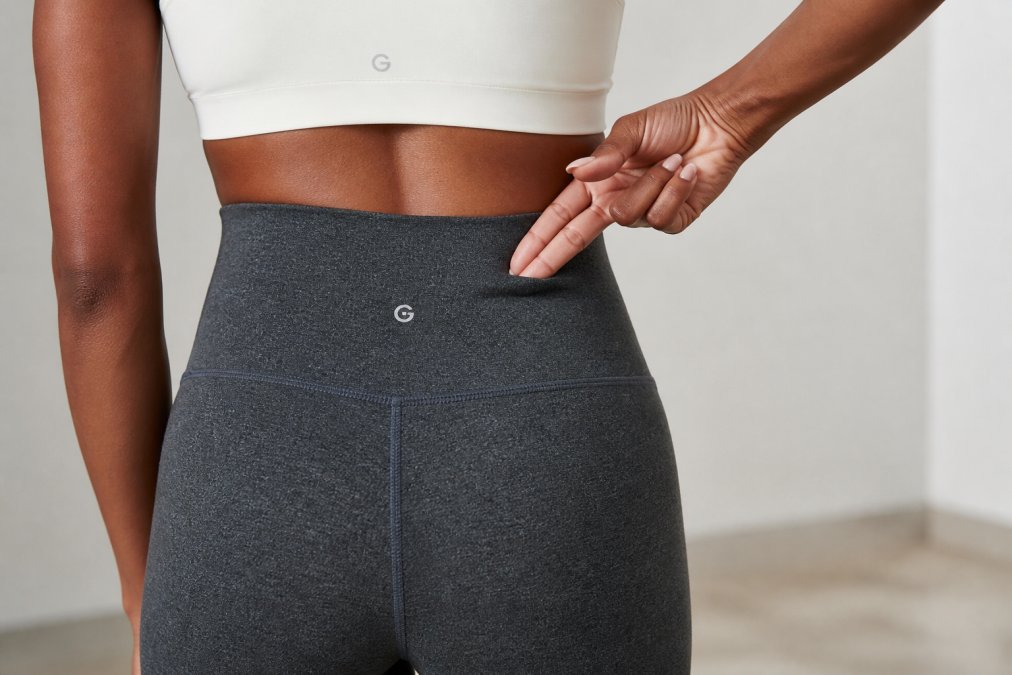
The Two-Finger Test for Perfect Fit
Stand in your leggings and place two fingers horizontally into the back waistband. You should feel slight resistance; the fabric should hold your fingers snugly but not trap them. If the band is too loose, your fingers slide in easily with room to spare. If it's too tight, you can barely fit one finger. The tension you feel is what prevents rolling during movement.
Understanding Waist-to-Hip Ratio
Your waist-to-hip ratio is the relationship between your narrowest waist measurement and your fullest hip measurement. Leggings manufacturers cut patterns to standard ratios, typically around 0.7 to 0.75. If your natural ratio differs significantly, off-the-rack leggings will either be too loose at the waist or too tight at the hips.
To calculate yours: measure your waist at the narrowest point and your hips at the fullest point, then divide waist by hip. If your ratio is 0.65 or lower, you have a proportionally smaller waist relative to your hips, and standard leggings will likely be loose at the waist. If it's 0.80 or higher, you may need a smaller size overall or a brand specializing in different proportions. This explains why the same size works perfectly for one person and rolls constantly for another, it's a geometry problem, not a body problem.
High-Waisted vs. Mid-Waisted Leggings: Which Prevents Rolling
High-waisted leggings sit at or above your natural waistline, while mid-waisted styles sit lower on your hips. High-waisted designs cover more of your torso and distribute compression across a larger surface area, giving the waistband more skin to grip and more opportunities to stay in place during movement. Mid-waisted leggings create a narrower compression band with less surface area and less grip.
For most people, high-waisted styles with a bonded inner panel are most reliable for preventing rolling, particularly during high-intensity workouts. If you have a short torso or prefer a lower rise, a well-fitted mid-waisted legging with superior compression and grip technology can perform just as well.
Compression Levels and Elasticity Matter
Compression is the inward pressure the fabric exerts on your body. The sweet spot for most activities is mild to moderate compression, enough to keep the waistband secure without feeling squeezed. Research shows that leggings washed in cold water retained their elasticity 35% longer than those exposed to hot dryer cycles, according to Good Housekeeping research cited by ododos in 2025.
Elasticity is your fabric's ability to stretch and recover to its original shape. Spandex (elastane) is responsible for this recovery. When elastane degrades through heat, sun exposure, or hot water washing, the fabric loses its ability to snap back, and the waistband can't maintain pressure.
Spandex Content and Fabric Recovery
Most quality athletic leggings contain 15-25% spandex blended with nylon or polyester. A well-made legging with 18% spandex will outperform a poorly constructed one with 25% spandex. Premium spandex maintains elasticity through hundreds of wear-and-wash cycles, while budget spandex degrades within 20-30 washes.
To extend your leggings' lifespan, wash in cold water, avoid the dryer, and air dry flat. This single care change can add months to how long your leggings perform at their best.
Key Design Features That Stop Rolling
Beyond fit and fabric, specific design features make a measurable difference in preventing rolling.
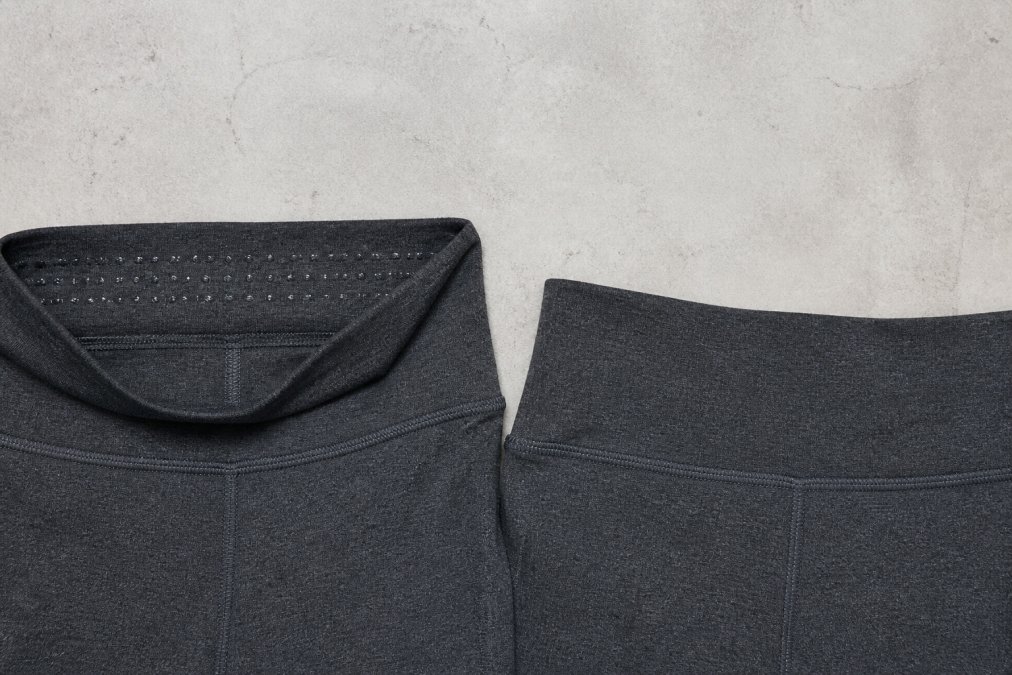
Double-Layer Waistbands and Silicone Grip
A double-layer or bonded waistband uses an inner panel that holds its shape independently, preventing rolling. This inner layer is typically reinforced with additional elastane and often includes a silicone grip strip on the underside. Silicone grip dots or strips create friction between the leggings and your skin, anchoring the waistband in place. Single-layer flat waistbands lack this structural support and rely entirely on compression and fit.
Drawstring Waistbands and Seamless Construction
A drawstring waistband gives you active control over compression, especially valuable if you're between sizes or have a body shape that doesn't match standard proportions. Seamless leggings are often superior because they lack heavy stitching that creates friction points and uneven compression. Seams interrupt the continuity of the elastic, creating weak points where the waistband is more likely to fold or roll.
The combination of seamless construction, double-layer waistband, and silicone grip is the gold standard for rolling prevention.
How to Care for Athletic Apparel to Maintain Elasticity
Your leggings' performance depends as much on how you care for them as on how they're manufactured. Cold water washing is essential, hot water breaks down spandex fibers, reducing elasticity. Wash in cold water with a gentle detergent designed for athletic wear and avoid fabric softener, which coats fibers and reduces breathability.
Air dry flat or hang dry. The dryer accelerates spandex degradation, which is why leggings washed in cold water and air dried retain elasticity 35% longer. Wash less frequently if possible, wear your leggings multiple times between washes if they're not visibly soiled. Turn them inside out before washing to reduce friction on the outer surface and protect silicone grip strips.
Activity-Specific Recommendations and DIY Temporary Fixes
Different activities place different demands on your leggings.
High-Impact Workouts vs. Low-Impact Activities
High-impact activities like running, jumping, and plyometrics create greater forces on your waistband. Your leggings need higher compression, a wider waistband, and silicone grip to stay in place. Low-impact activities like yoga or Pilates place less stress on the waistband, giving you more flexibility in style and fit.
Quick Fixes for Rolling Waistbands
If your leggings roll during a workout:
- Fashion tape: Apply double-sided fashion tape to the inside of the waistband at the back for temporary grip.
- Drawstring tightening: Tighten before activity to increase compression.
- Tucking into a sports bra: Anchor the back waistband into your sports bra for high-impact activities.
- Wearing a longer top: A longer shirt creates friction and visual anchor.
These are temporary fixes. The real solution is finding leggings with proper fit, compression, and construction, which is where the Greatness Wins High Waist Essential Legging excels. Built with double-brushed interlock knit, moisture-wicking performance, and a high-waisted design, it delivers the compression and fit stability that prevents rolling during intense training. At $98, it's an investment in leggings that actually stay in place. https://greatnesswins.com/products/high-waist-essential-legging

| Fix | Duration | Best For | Permanence |
|---|---|---|---|
| Fashion tape | 1 workout | Emergencies | Temporary (washes out) |
| Drawstring tightening | Full workout | Any activity | Lasts as long as you tighten |
| Tucking into sports bra | Full workout | High-impact only | Lasts entire session |
| Longer top | Full workout | Any activity | Lasts as long as you wear it |
| Proper sizing + design | Months | All activities | Permanent (until fabric degrades) |
Rolling leggings aren't inevitable. Start by getting sized correctly using the two-finger test and understanding your waist-to-hip ratio. Then prioritize high-waisted styles with double-layer waistbands and silicone grip. Care for your leggings properly, cold water, air dry, minimal washing, and they'll maintain compression far longer than expected.
If you're tired of constant rolling, the Greatness Wins High Waist Essential Legging is designed specifically to solve this problem. The double-brushed interlock knit provides the compression and recovery needed to stay in place through intense workouts, while the high-waisted cut distributes compression across a larger surface area. Free shipping on orders over $100 and free returns within the U.S. mean you can test them risk-free. https://greatnesswins.com/products/high-waist-essential-legging The Federal Trade Commission (FTC) recommends investing in quality pieces that last, and Greatness Wins delivers exactly that. Your leggings should work as hard as you do, not against you.
Frequently Asked Questions
Are my leggings rolling down because they are too small?
Not necessarily. While sizing is critical, rolling is almost always a sizing or construction problem. If leggings are too small, they compress the waistband unevenly and cause folding rather than staying flat. If they're too large, the waistband lacks compression. The goal is a snug fit, use the two-finger test: fit two fingers comfortably in the back waistband. If you fit more than two, they're too loose; if you can't fit two, the fabric is overstretched and will roll.
What's the best way to prevent leggings rolling down during high-intensity workouts?
High-waisted leggings with bonded inner panels are most reliable for high-impact activities. Look for silicone grip strips, wider waistbands with reinforced seam construction, and higher spandex content (at least 20-25%). Seamless construction distributes compression evenly without heavy stitching that creates friction. The High Waist Essential Legging from Greatness Wins features double-brushed interlock knit with moisture-wicking performance, designed to stay in place during intense training. [EXTERNAL_LINK: https://greatnesswins.com/products/high-waist-essential-legging] Proper care extends performance: leggings washed in cold water retained elasticity 35% longer than those exposed to hot dryer cycles.
How does fabric composition affect whether leggings stay up?
Fabric composition directly determines how leggings maintain compression and recover after movement. Four-way stretch fabrics with high spandex content (20-25%) recover fully after stretching, keeping the waistband tight against your body. Synthetic fibers like nylon and polyester provide structure, while elastane (spandex) creates the stretch and recovery. If elastane content degrades from improper washing or wear, the waistband loses its ability to hold inward pressure. Moisture-wicking fabrics help reduce sweat buildup that can cause slipping. Always check the fiber blend before purchasing, natural fabrics alone won't provide the performance needed for active wear.
Why is proper care important for keeping leggings from rolling down?
Proper care preserves the elasticity and compression that prevent rolling. Washing in cold water and air drying maintains spandex integrity far longer than hot water and machine drying. Avoid fabric softeners and bleach, which degrade elastane. High-quality leggings like Greatness Wins' High Waist Essential Legging are built to last, but only with correct care. [EXTERNAL_LINK: https://greatnesswins.com/products/high-waist-essential-legging] When elastane degrades, the waistband loses compression and begins to roll. By following care instructions, cold water wash, gentle cycle, air dry, you extend the life of your activewear and maintain the snug fit that prevents rolling.
This article was written using GrandRanker