Table of Contents
- Understanding Premium Activewear: Beyond the Price Tag
- Best Fabric for Workout Clothes: Technical Composition Matters
- How Activewear Should Fit: Sizing, Stretch, and Comfort
- Construction Details That Define Durable Activewear
- Activewear for Golf: Performance-Specific Design
- Objective Tests for Premium Quality
- Sizing Consistency and Return Policies
- Frequently Asked Questions
Last Updated: October 15, 2026
Understanding Premium Activewear: Beyond the Price Tag
Premium activewear isn't about the price tag or the brand name. What separates high-performance gear from standard athletic wear comes down to measurable factors: fabric composition, construction quality, fit consistency, and real-world performance.
The activewear market reflects this shift in buyer priorities. According to Cotton Incorporated's Lifestyle Monitor survey, 84% of consumers actively seek easy-care performance features when shopping for activewear, while 80% specifically prioritize shrink resistance.
When evaluating premium activewear, you're really asking three questions: Does the fabric perform as advertised? Will the fit hold up after repeated wear and washing?
Best Fabric for Workout Clothes: Technical Composition Matters
The foundation of any premium activewear piece is its fabric. High-quality athletic wear relies on specific fiber blends and construction methods that directly impact how the garment moves, breathes, recovers, and endures.
Polyester, Nylon, and Spandex Blends
Most technical activewear combines three core fibers. Polyester forms the base: durable, moisture-wicking, and resistant to shrinking and fading.
Premium blends typically run 75-88% polyester, 12-20% nylon, and 4-8% spandex. Cheaper activewear often skews higher on polyester and lower on nylon, which means the garment won't hold up as well in high-friction zones.
What separates premium from standard is the quality of the polyester itself.
Moisture-Wicking and Breathability Standards
Moisture-wicking isn't magic, it's engineering. The fabric's structure must move sweat away from your skin toward the outer surface where it can evaporate, achieved through yarn construction and weave density.
A tight weave (measured in GSM, or grams per square meter) creates a more durable, opaque fabric. Look for 200-280 GSM for bottoms and 150-220 GSM for tops. Below 150 GSM and you risk transparency issues; above 300 GSM and the fabric becomes heavy and restricts airflow.
The best technical fabrics use a knit structure that creates pathways for moisture to travel. Double-brushed interlock knits, used in pieces like the High Waist Essential Legging and High Neck Pocket Long Bra, combine a soft brushed inner surface with a performance outer layer, delivering comfort against skin while managing moisture.


Fabric Weight and Durability Indicators
Heavier fabrics aren't always better, but they're usually more durable.
Lighter fabrics (under 180 GSM) feel silky and breathable but pill faster and may turn transparent during squats or lunges. They suit warm-weather training or layering.
Fabric recovery, the ability to bounce back after stretching, is another durability marker. Press the fabric between your fingers for 10 seconds, then release.
How Activewear Should Fit: Sizing, Stretch, and Comfort
Fit is where many premium brands fail. High-quality fabric doesn't matter if the garment fits inconsistently or restricts movement. The best premium activewear balances a sculpted silhouette with genuine freedom of movement.
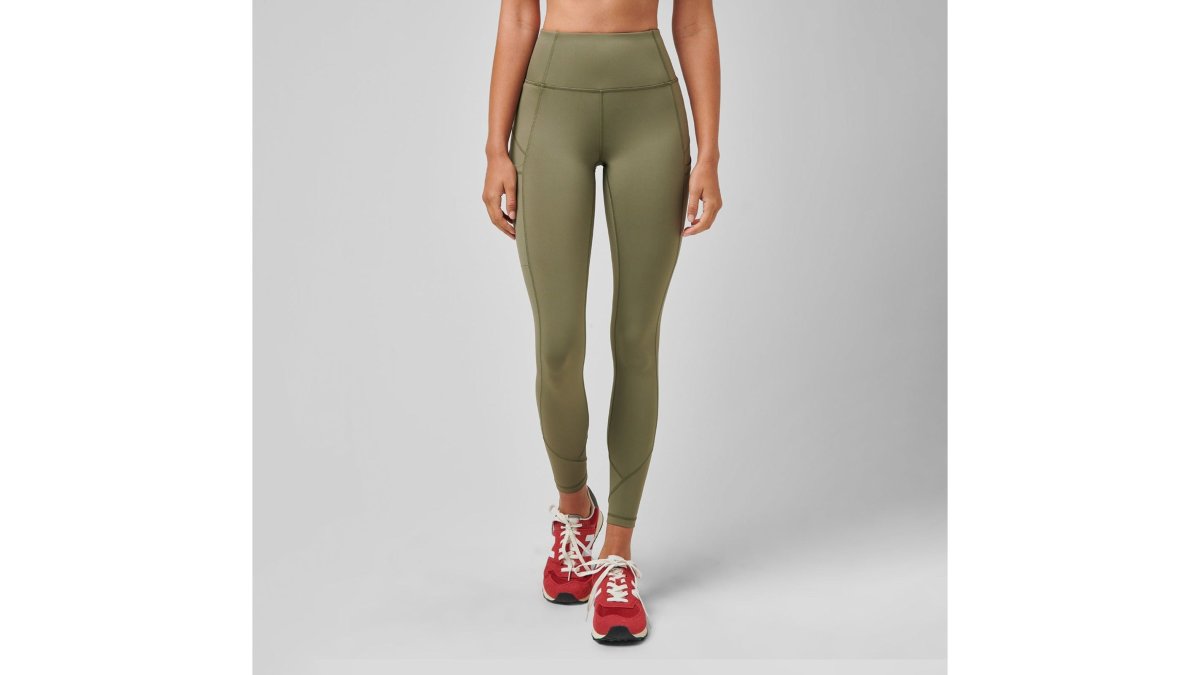
Four-Way Stretch and Range of Motion
Four-way stretch means the fabric stretches both horizontally (side to side) and vertically (up and down), then recovers to its original shape. This is non-negotiable for premium activewear.

The stretch comes from the spandex content and how it's integrated into the yarn.
When you try on premium activewear, move through your actual workout. Squat deeply, reach overhead, rotate your torso. The garment should move with you, not restrict your shoulders or pull at the waistband.
Fit Across Different Body Types
Premium activewear brands recognize that bodies vary.
Sizing consistency matters enormously here. Premium brands typically maintain tighter tolerances, meaning a size M from Greatness Wins should fit consistently, whether you're ordering the High Output Sports Legging or a top.
Check the brand's return policy before committing. Free returns within the U.S. (as Greatness Wins offers) let you order multiple sizes and keep what fits, so fit uncertainty isn't a barrier to finding your size.
Waistband Stability and Garment Coverage
A waistband that rolls down mid-workout is a dealbreaker, no matter how premium the fabric.
Some premium brands add a gusseted crotch, a reinforced, double-layered panel that adds coverage and durability in the highest-stress area.
Coverage matters too. Premium activewear for serious training uses a longer inseam (mid-calf or slightly below) and higher rise (at or above the natural waist) to prevent rolling or shifting during intense movement.
Construction Details That Define Durable Activewear
You can't see construction quality from the outside, but you'll feel it in how the garment performs and how long it lasts. Premium activewear is built differently at the seams, gussets, and fabric edges.
Seam Placement and Gusset Design
Seams are stress points. Premium activewear minimizes seams in high-movement areas (shoulders, armpits, inner thighs) and uses flat-lock or safety-stitch construction.
The gusset, the triangular or diamond-shaped panel at the crotch, is where durability truly separates premium from standard. A double-layered gusset (two layers of fabric stitched together) resists tearing and pilling far better than a single layer.
Seam placement also affects fit. Premium brands position seams to follow your body's natural lines, not cut across them.
High Waist Essential Legging →
Pilling, Colorfastness, and Fabric Recovery
Pilling, those tiny balls of fiber on fabric surfaces, happens to all activewear, but premium brands resist it far longer thanks to fiber quality, yarn construction, and finishing treatments.
Colorfastness measures how well fabric retains color after washing and sun exposure. Premium activewear uses dyes that bond more completely to the fiber.
Fabric recovery is your best durability test. Squeeze a handful of fabric for 10 seconds, then release.
Activewear for Golf: Performance-Specific Design
Golf demands different performance features than running or strength training: freedom of movement through the shoulders and torso, moisture management during hours outdoors, and a polished look that works on and off the course.
Premium golf activewear combines technical performance with a refined aesthetic. Fabrics are slightly heavier (220-260 GSM) for structure and opacity, with matte finishes that hide sweat marks.
Seam placement matters differently for golf. Horizontal back seams can restrict shoulder rotation, so premium golf pieces minimize back seaming.
Moisture-wicking is critical when you're outside for 4-5 hours, often in heat.
Objective Tests for Premium Quality
You don't need a lab to evaluate premium activewear. These simple tests reveal real performance and durability.
The Squat Test and Opacity Check
The squat test is the single best way to evaluate fit and opacity. Perform a full, deep squat with knees bent to 90 degrees or deeper.
Transparency during a squat signals either too-light fabric (under 200 GSM) or inadequate spandex content. Premium activewear maintains full opacity even in the most extreme ranges of motion.
The squat test also reveals fit consistency: does the waistband stay put, do leg openings shift or roll, does the garment bunch?
Care, Lifespan, and Cost Per Wear
Premium activewear costs more upfront, but the value emerges over time.
A $98 legging worn 150 times before noticeable pilling or loss of stretch costs about 65 cents per wear.
Check the care label. Premium activewear designed to last often recommends cold water washing and air drying.
Storage matters too. Fold activewear rather than hanging it (hanging stretches spandex), keep it out of direct sunlight, and wash it inside out to reduce pilling on the visible surface.
| Care Practice | Impact on Lifespan |
|---|---|
| Cold water washing | Extends life 20-30% |
| Air drying vs. machine drying | Extends life 40-50% |
| Washing inside out | Reduces visible pilling 30-40% |
| Avoiding fabric softener | Maintains moisture-wicking 100% |
| Proper storage (folded, dark) | Extends life 15-20% |
Sizing Consistency and Return Policies
Premium activewear means nothing if sizing is inconsistent or returns are a hassle.
Greatness Wins offers free returns within the U.S., which removes the risk from sizing uncertainty. Order your usual size.
Before ordering, check the brand's size chart. Premium brands provide detailed measurements (chest width, inseam length, waistband circumference) rather than vague descriptions.
Read recent customer reviews about fit.
When you invest in premium activewear from Greatness Wins, you're getting high-quality performance pieces designed to support your training and withstand rigorous use. With free shipping on orders over $100 and free returns, you can build your collection with confidence. According to market research from Grand View Research, the global premium sportswear market is projected to reach $174.3 billion by 2030, reflecting growing consumer demand for gear that actually performs.
Frequently Asked Questions
What fabric composition makes premium activewear worth the price?
Premium activewear typically combines polyester, nylon, and spandex in engineered blends. The quality lies in the ratio and knit construction: higher-quality fabrics use tighter weaves and specific GSM (grams per square meter) weights to balance durability with breathability. Cotton Incorporated research shows 84% of consumers prioritize easy-care performance features, which technical fabrics deliver through moisture-wicking and colorfastness. Cheap activewear uses thinner, looser knits that pill easily and lose stretch after a few washes.
How should premium activewear fit to ensure performance?
Premium activewear should offer four-way stretch without feeling tight or restrictive. The waistband should sit securely without rolling down during movement, and the garment should provide full coverage during a squat test (bending forward deeply). Fit varies by body type, so consistent sizing across multiple pieces is critical. High-quality brands use ergonomic seaming and gusseted crotches to reduce chafing and allow a full range of motion. If you feel compression or restriction around the shoulders or hips, the fit isn't right for intense training.
What makes activewear durable enough to justify premium pricing?
Durability depends on seam placement, fabric recovery, and construction details. Premium activewear uses double-layered gussets, flatlock or reinforced seams, and high-quality thread that resists fraying. The fabric should recover quickly after stretching (test by pinching the fabric and releasing it). Colorfastness matters: quality activewear holds color after 20+ washes. Cost per wear is the real measure. Investing in durability saves money over time.
What specific features should golfers look for in activewear?
Golf activewear needs unrestricted shoulder and hip mobility for a full swing. Look for moisture-wicking fabrics that keep you dry in humidity, since golf involves walking and standing in warm conditions. Matte finishes are preferred over shiny fabrics for a professional appearance on the course. Side pockets are practical for storing golf balls or a scorecard. Four-way stretch is essential to avoid feeling restricted during your swing. Consistency in fit matters: if a shirt pulls at the shoulders or a pair of shorts rides up, your focus shifts from your game to your gear.
Is premium activewear worth the investment compared to standard athletic wear?
Premium activewear is worth the investment if you train regularly or use gear frequently. The gap between a $40 and $98 legging isn't just brand markup: it's fabric quality, construction, and lifespan. Premium pieces use technical fabrics engineered for moisture-wicking and durability, reinforced seams that don't fail, and fabrics that don't pill or lose shape. For competitive athletes, active parents, and golfers who use gear 3+ times weekly, the durability and performance justify the cost. For occasional gym visitors, standard activewear may be sufficient. Check return policies: brands like Greatness Wins offer free returns, so you can test fit and performance risk-free.
How can you tell if activewear fabric will last through heavy use?
Test fabric recovery by pinching the material and releasing it: quality activewear bounces back immediately, while cheap fabric stays creased. Check the fabric weight (GSM) on the label: 200+ GSM indicates durability. Examine seams closely for reinforcement, especially at stress points like the gusseted crotch. Ask about colorfastness: premium brands test for color retention after multiple washes. Look for customer reviews mentioning pilling or stretching out of shape after 10+ washes. Brands offering detailed care instructions typically stand behind durability claims. Free returns let you test durability in real conditions.
What's the difference between premium activewear and athleisure?
Premium activewear is engineered for performance during intense training, with technical fabrics, reinforced construction, and activity-specific design. Athleisure prioritizes style and lifestyle wear, often sacrificing performance features like moisture-wicking or four-way stretch. Premium activewear uses tight knit construction and engineered seams; athleisure uses looser, softer fabrics for comfort at rest. The U.S. activewear market reached $22.32 billion in 2025, driven by demand for performance features. If you're training seriously, golf regularly, or need gear that withstands frequent washing, premium activewear's durability and technical features justify the cost.