Last Updated: October 29, 2026
Quick Summary
Fabric technology sets the ceiling on performance, but athletic wear fit decides whether you ever reach it. A moisture-wicking knit that gaps at the shoulder or rides up at the waist fails in ways no fabric spec can fix, so pick fit for your body and movement first, then fabric for your activity and conditions.
- The U.S. activewear market hit an estimated $22.32 billion in 2025, projected to reach $34.13 billion by 2034.
- Synthetics like polyester and nylon win on sweat management and drying speed; naturals win on softness.
- Measure shoulders, chest, waist, and inseam over the base layer you train in, and re-measure every six months.
- Size to the larger measurement point when between sizes and rely on stretch and adjustability for the rest.
- Air-dry performance pieces because high dryer heat breaks down elastane faster than anything else.
Table of Contents
- Athletic Wear Fit vs Fabric Technology: What Actually Decides Performance
- The Best Fabric for Workout Clothes: What the Research Says
- Nylon vs Polyester Athletic Wear: Key Differences That Affect Comfort
- Moisture-Wicking Fabric Comparison: Which Materials Move Sweat Best
- Athletic Wear Fit Guide: How to Get Consistent Sizing
- Durability, Stretch, and How Fabrics Hold Up After Repeated Washing
- Fit and Fabric by Activity: Training, Golf, and Everyday Wear
- Find Your Fit: Choosing Greatness Wins Gear for Your Training
- Frequently Asked Questions
Athletic Wear Fit vs Fabric Technology: What Actually Decides Performance
The U.S. activewear market hit an estimated $22.32 billion in 2025 and is projected to reach $34.13 billion by 2034, according to Market Data Forecast's activewear market analysis.
At Greatness Wins, we build performance apparel for athletes who train hard, so we think about this constantly.
Below, we break down the research on fabric, the fit variables that actually change how gear performs, and how to choose both by activity.
The Best Fabric for Workout Clothes: What the Research Says
The best fabric for workout clothes is one engineered for sweat management, breathability, and durability, not simply a natural or synthetic label. A 2022 review of sports clothing and thermoregulation describes performance sportswear as using lightweight, breathable fabrics, surface treatments, and designs built to enhance sweat evaporation.
That's the technical baseline. Most "best fabric" guides stop at fiber names, which tells you almost nothing about how a garment behaves on your body.
Natural Fibers vs Synthetic Fibers: Where Each Wins
Natural fibers like cotton and bamboo-derived viscose feel soft against the skin and breathe well in low-output settings. Synthetic fibers such as polyester, nylon, and elastane blends excel at moving moisture and holding shape through hard training.
Where each wins:
- Natural fibers: everyday wear, warm-ups, low-sweat sessions, skin comfort
- Synthetic fibers: intense training, humidity, quick-drying needs, stretch recovery
- Blends: balancing skin feel with moisture management and durability
A manufacturer's comparison of natural versus synthetic athletic wear frames the trade-off around comfort, breathability, and sustainability. In practice, synthetics win on sweat and drying speed; naturals win on softness and end-of-life story.
Nylon vs Polyester Athletic Wear: Key Differences That Affect Comfort
Nylon and polyester both manage sweat, but they differ in feel, stretch, and durability. Nylon, often listed as polyamide, is stronger and more abrasion-resistant, with a smoother hand feel.
The comfort difference shows up in two places: wet weight and odor retention. Nylon absorbs slightly more moisture and can feel heavier when soaked. Polyester's hydrophobic surface sheds water quickly but can hold onto oils and odor if not treated.
Fabric construction matters as much as the fiber. Sport mesh panels, knit density, and surface treatments change how a garment breathes and dries. For a deeper head-to-head, see our guide to polyester vs nylon for workout gear.
Moisture-Wicking Fabric Comparison: Which Materials Move Sweat Best
Moisture-wicking fabric moves sweat away from the skin to the garment surface, where it evaporates faster. Synthetics and engineered blends lead here; untreated cotton lags because it holds moisture against the body.
A 2024 study on sportswear fabric properties and running comfort examined how different fabric properties affect comfort and physiological response during running. The takeaway for buyers: fabric selection changes how you feel mid-session, not just after.
Breathability, Ventilation, and Drying Speed
Breathability is airflow through the fabric; ventilation is deliberate design, like mesh panels or laser-cut zones. Drying speed is how fast a soaked garment returns to wearable. All three interact: a highly breathable knit with poor ventilation placement still traps heat under a pack or vest.
- Breathability: open knits, lighter fabric weight
- Ventilation: mesh zones at the back, underarms, and sides
- Drying speed: hydrophobic fibers plus thin construction
The Baselayer Muscle Tank features mesh ventilation placed in areas you need it most for added breathability.
Athletic Wear Fit Guide: How to Get Consistent Sizing
Athletic wear fit is the relationship between a garment's cut and your body in motion, measured at the shoulders, chest, waist, and inseam.
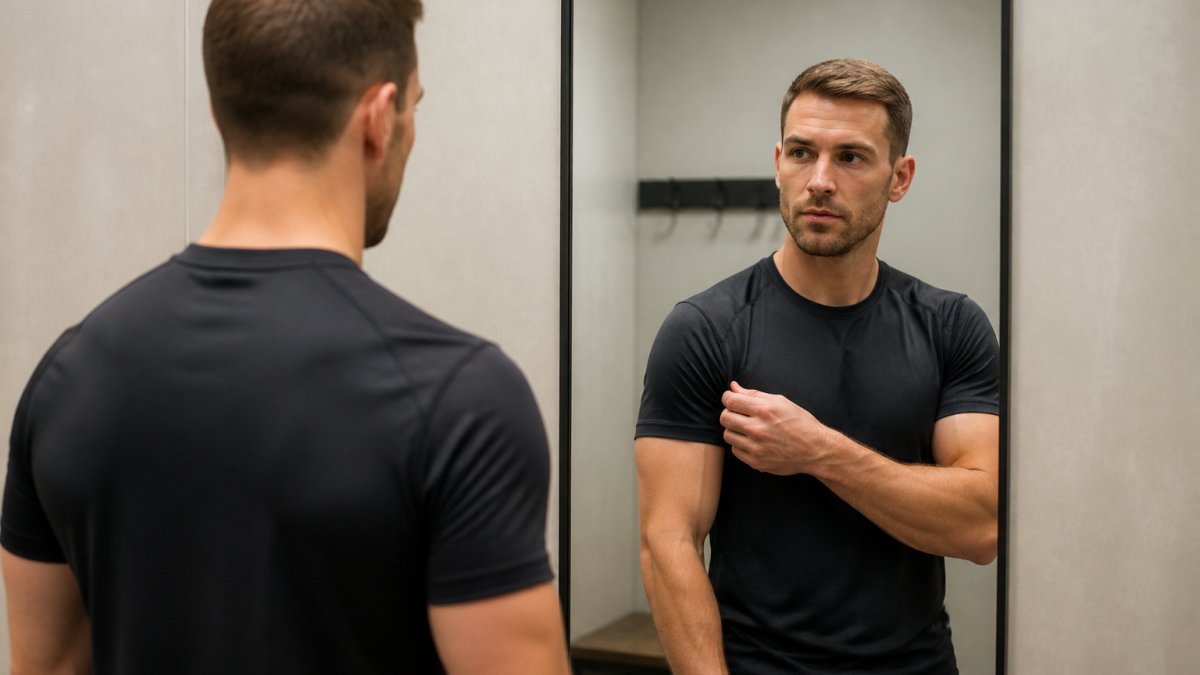
Sizing breaks down for three reasons: vanity sizing across brands, inconsistent grading between styles, and fabric stretch that masks a poor cut until wash five.
Measure These Four Points Before You Buy
- Shoulders: seam sits at the edge of the shoulder bone, not past it
- Chest: fabric lies flat without pulling across the front or gapping at the armhole
- Waist: band stays put through a squat or hinge without rolling
Take measurements over the base layer you'll train in, not over street clothes, and re-measure every six months, training changes shoulder and thigh circumference more than most people expect.
Fit by Garment Type: Leggings, Tops, and Sports Bras
Fit problems are garment-specific, so a single size chart can't solve them. Use these checks per category.
Leggings and shorts. The waistband is the failure point. A well-cut pair stays flat through a deep squat with no gap at the lower back and no dig at the hip.
Tops and tanks. Shoulder seam placement drives everything else.
Sports bras. Fit is measured by band, not cup letter alone.
Fit by Body Shape: What to Adjust, Not What to Avoid
Fit guidance should help you adjust a garment, not steer you away from one. A few common patterns:
- Broader shoulders or chest: size to the chest and shoulder, then check the waist doesn't balloon; raglan and stretch side panels help.
- Longer torso: look for tall lengths or a longer body; a top that ends mid-hip will ride up on overhead lifts.
- Fuller hips and thighs: prioritize four-way stretch and a wide, flat waistband; check that the thigh doesn't pull the seam tight in a squat.
Compression vs Regular Fit: Choosing by Activity
Compression fit applies graduated pressure to support muscles and reduce movement; regular fit prioritizes freedom of movement and airflow. Choose compression for recovery and high-impact work, regular fit for lifting, golf, and everyday training. For the full case, read why wear compression gear for recovery.
Durability, Stretch, and How Fabrics Hold Up After Repeated Washing
Durability and stretch are where cheap gear reveals itself. A 2022 study of experts' views on sports clothing quality found that quality attributes are central to how experts judge sportswear, which tracks with what athletes notice first: sagging waistbands and stretched-out collars.
Stretch comes from knit construction and elastane content. Four-way stretch moves in every direction; two-way stretch only along one axis. Recovery, how well fabric snaps back, matters more than raw stretch for fit consistency over time.
Watch out: high heat in the dryer breaks down elastane faster than anything else you do to your gear. Air-dry performance pieces and they hold fit far longer.
Fit and Fabric by Activity: Training, Golf, and Everyday Wear
Activity should drive both fit and fabric choice, but so should conditions. The same running kit that works at 55°F and low humidity can fail at 85°F and 80% humidity, and a lifting top that's perfect in a climate-controlled gym is wrong for an outdoor session. Use the matrix below as a starting point, then adjust for heat, cold, and sweat rate.
| Activity | Fit Priority | Fabric Priority | Conditions to Adjust For |
|---|---|---|---|
| Strength training | Regular fit, shoulder mobility, hem that stays down overhead | 4-way stretch, durable knit, moderate weight | Warmer gyms: lighter knit and mesh back; colder: add a base layer |
| Running | Minimal excess, no chafe points, secure waistband | Lightweight, quick-drying, ventilated, flatlock seams | Heat/humidity: lighter weight and more mesh; cold: wind-resistant outer layer over a wicking base |
| Golf | Full shoulder rotation, clean silhouette, hem that stays tucked | Stretch blend, moisture-wicking, UPF protection for sun | Heat: lighter polo and moisture-wicking short; wind: layer a quarter-zip |
| Yoga and mobility | Close but not compressive, full range at hips and shoulders | Soft hand feel, high stretch recovery, minimal seams | Heated studios: lighter, breathable knit; cooler: long sleeve over a tank |
| Everyday wear | Relaxed, true to size | Soft natural or blended fabric, odor control | Hot days: natural or open knit; cool: midweight blend |
How to Read the Matrix
Start with the activity, then adjust for the two conditions that change fabric performance most: heat and sweat rate. In heat and high humidity, prioritize lighter fabric weight, more ventilation, and faster drying, synthetics and engineered blends win. In cold, keep the wicking base layer and add an insulating or wind-resistant outer layer; don't swap the base for cotton, which holds moisture against the skin.
For high-sweat sessions, odor control matters as much as wicking. Look for treated polyester or blends that resist odor, and air-dry gear rather than leaving it in a bag.
Find Your Fit: Choosing Greatness Wins Gear for Your Training
Choosing well comes down to matching fit and fabric to your activity, then buying pieces built to hold both through repeated washing. That's the standard we build to at Greatness Wins.
Start with the Core Tech Tee ($55), a training tee with a soft double-brushed feel and a consistent fit. Add the Core Tech Training Short ($69) with its Coolmax® liner for compressive support. For hot sessions, the Performance Training Tank ($45) is featherweight and breathable; the All-Purpose Essential Jogger ($99) covers recovery and everyday wear in durable Pima cotton.


Orders of $100 or more ship free, and returns within the U.S. are free.
Frequently Asked Questions
What fabric is best for athletic wear?
There is no single best fabric, but performance blends usually win. Performance sportswear is generally built from lightweight, breathable fabrics and surface treatments that help sweat evaporate. Polyester and nylon blends excel at moisture-wicking and quick drying, while cotton and Pima cotton feel softer but hold moisture longer. Match the fabric to your activity: synthetic blends for high-sweat training, natural fibers for lower-intensity wear and recovery days.
How should athletic wear fit?
Athletic wear fit should allow full range of motion without excess fabric that bunches or chafes. For training tops, the shoulder seam should sit at the edge of your shoulder and the hem should stay put when you raise your arms. Shorts and joggers should stay in place through squats and sprints. Compression pieces should feel snug but not restrict breathing. A consistent fit across sizes matters as much as the initial feel, so check return policies before committing to a full set.
Is nylon or polyester better for athletic wear?
Both are synthetic fibers used in performance apparel, and each has strengths. Nylon tends to feel smoother and has higher abrasion resistance, which helps in shorts and high-wear areas. Polyester is lighter, dries quickly, and is often engineered with moisture-wicking finishes. Many performance fabrics blend the two to balance durability and drying speed. The better choice depends on your activity: nylon for durability in training shorts, polyester for lightweight breathability in tops and tanks.
How do you compare the quality of workout clothes?
Compare quality by fabric construction, fit consistency, and durability after washing. Check whether the fabric is engineered for moisture-wicking and breathability rather than just labeled athletic. Look at seams, stretch recovery, and whether the garment holds its shape after repeated wash cycles. Fabric performance and fit are generally central to how sports clothing quality is assessed. Reading customer reviews about sizing and longevity adds real-world evidence.
What is the difference between compression and regular-fit workout clothes?
Compression garments fit tightly against the skin to support muscles and reduce movement during high-intensity training. Regular-fit workout clothes sit closer to the body than everyday wear but leave room for airflow and unrestricted movement. Compression is common in baselayers and liners, while regular fit suits training tees, tanks, and joggers. Your choice depends on workout intensity and personal comfort: compression for lifting and sprinting, regular fit for general training and golf.
Fabric technology gets the headlines, but fit is what you feel on rep one and rep one thousand. Greatness Wins builds both into every piece: consistent sizing, moisture-wicking construction, and durable knits tested by athletes who compete at the highest level. Get started with Greatness Wins and train in gear that fits as hard as you do.