Last Updated: November 4, 2026
Quick Summary
To learn how to choose athletic shoes for active kids, measure both feet while standing, then test the fit in person. Look for roughly a thumb's width of room at the toe, a firm heel counter, a flexible forefoot, and an outsole matched to your child's main sport.
- Measure your child's feet standing, since feet spread under body weight and sitting measurements run short.
- The best athletic shoes for kids share a flexible forefoot, firm heel counter, breathable mesh uppers, and cushioned midsole.
- One pair of running shoes should not cover every sport because outsoles are built for different movements.
- Replace kids' athletic shoes every 3-6 months for frequent athletes, or sooner at the first signs of wear.
- Hand-me-down shoes carry the first child's wear pattern, which can push a younger child into an unnatural stride.
Table of Contents
- Start With Fit: Getting Kids' Athletic Shoe Fit Right
- Key Features That Make the Best Athletic Shoes for Kids
- Matching Shoes to the Sport: Finding the Best Kids Running Shoes
- Built to Last: Durable Shoes for Active Kids
- Supporting Foot Development Through Growth Spurts
- When to Replace Worn-Out Shoes and How to Make Them Last
- Shop Athletic Gear Built for Kids Who Never Slow Down
- Frequently Asked Questions
Start With Fit: Getting Kids' Athletic Shoe Fit Right
Learning how to choose athletic shoes for active kids starts with one measurement and one test. A 2025 footwear guidance article published through PubMed Central's footwear guidance for healthy children recommends flexible shoes for children from 6 months to age 3 or 4, so natural foot movement stays possible. Parents often spend more time picking colors than checking fit. That order is backwards.
Here is how to choose athletic shoes for active kids the right way: measure first, then test the fit in person.
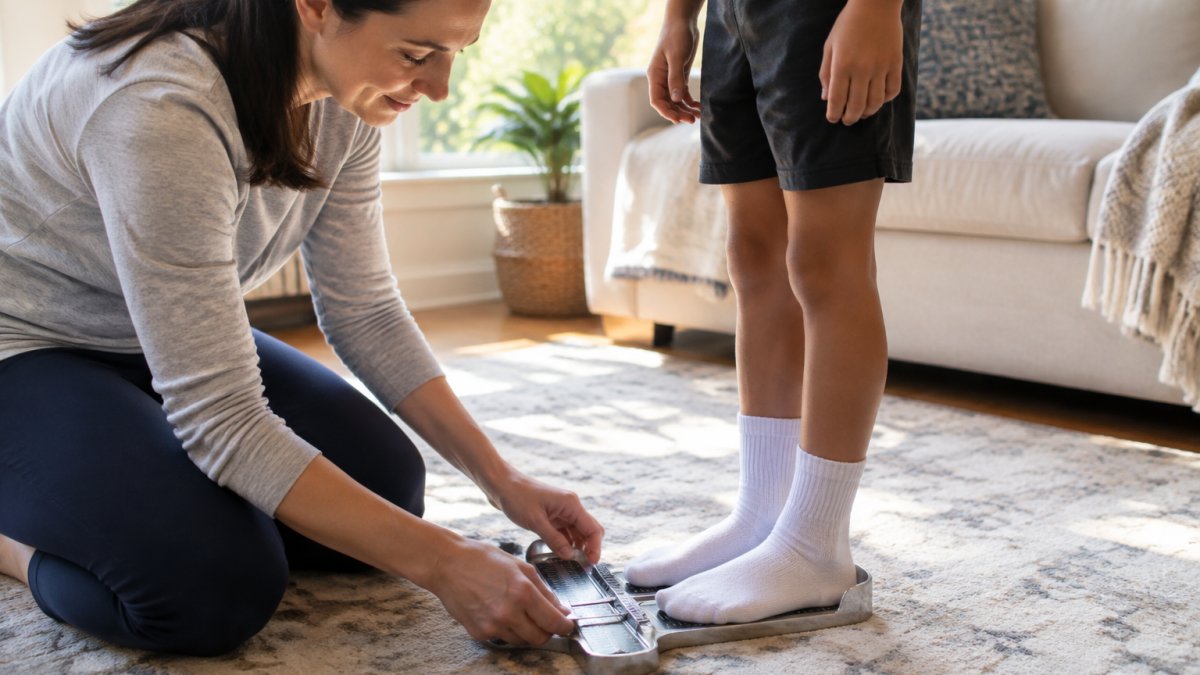
How to Measure a Child's Foot at Home
Growth spurts break any measuring schedule, so measure any time a shoe feels tight.
Follow these steps:
- Tape a sheet of paper to the floor against a wall.
- Have your child stand on it with the heel touching the wall.
- Mark the longest toe. Measure heel to mark in centimeters.
- Repeat for both feet. Use the longer one.
- Measure width across the ball of the foot too.
Standing matters. Feet spread under body weight, and a measurement taken sitting down runs short.
How Much Room Should Kids Have in Their Athletic Shoes?
Kids need room between the longest toe and the front of the toe box, roughly a thumb's width. Less space pinches toes during growth spurts, and more space lets the foot slide.
Check the secure heel too. The heel counter at the back of the shoe should hold firm when you pinch it. If the heel lifts when your child walks, size down or try a different model.
For socks that stay put inside a well-fitted shoe, our guide on why athletic socks slip down walks through the causes and fixes.
Key Features That Make the Best Athletic Shoes for Kids
The best athletic shoes for kids share four traits: a flexible forefoot, a firm heel counter, breathable mesh uppers, and a cushioned midsole. Everything else is preference.
Midsole Cushioning, Heel Counter, and Toe Box
These three parts do most of the work:
- Midsole cushioning: foam under the foot that absorbs shock. Durable foam keeps its bounce longer than soft foam that packs down fast.
- Heel counter: the stiff cup around the heel. A secure heel controls stability and reduces rolling.
- Toe box: the front section. It should be wide enough that toes splay flat, not curl.
Flexibility rounds out the list. Bend the shoe at the ball of the foot. It should fold easily. A shoe that resists bending fights the natural motion of growing feet.
Matching Shoes to the Sport: Finding the Best Kids Running Shoes
The best kids running shoes differ from court shoes and cleats in one clear way: the outsole pattern and how the midsole is tuned. Runners need smooth, flexible outsoles with traction grooves and foam that absorbs repeated heel-to-toe impacts. Court players need a flatter, grippier sole for sideways stops and a snug midfoot so the foot does not slide inside the shoe during a cut. Soccer and baseball players need studs or a turf pattern for grip on grass and dirt, plus a firm heel counter that holds the foot when planting and pivoting.
Match the shoe to the main activity:
| Sport | Outsole | Key Feature | Fit Note |
|---|---|---|---|
| Running | Flexible, grooved | Shock absorption through the midsole | Roomy toe box, thumb's width up front |
| Basketball | Flat, grippy rubber | Ankle stability and lateral support | Snug midfoot, secure laces |
| Soccer | Studs or turf pattern | Traction on grass and turf | Firm heel, low-profile fit |
| Tennis | Herringbone tread | Side-to-side grip | Secure closure, stable heel |
| Baseball/softball | Cleats or turf shoes | Grip on dirt and grass | Snug heel, room in the toe |
One pair of running shoes should not cover every sport. A running outsole has no lateral grip, so a kid who plays basketball in running shoes slides on hard stops. A basketball shoe has a stiff, flat sole that feels clunky on a run and wears unevenly. The wrong outsole wears fast and grips poorly, which is why multi-sport kids often do best with a neutral cross-trainer for gym class plus a sport-specific pair for their main activity.
A 2024 study on how runners pick shoes in stores, published through Taylor & Francis research on in-store shoe selection, found runners ranked fit first, comfort second, and gait analysis or injury prevention third. Kids deserve the same priorities. Fit and comfort come before brand, color, or the latest foam.
Watch out: a shoe marketed as "all-sport" usually means a compromise outsole that grips nothing well. If your child plays two sports seriously, budget for two pairs rather than forcing one to do both jobs.
Once the shoe is sorted, the rest of the kit matters too. Our picks for the best athletic clothes for youth soccer players cover what holds up through a full season.
Built to Last: Durable Shoes for Active Kids
Durable shoes for active kids come down to materials. Synthetic leather and reinforced toe caps resist scuffs. Breathable mesh keeps feet cool but wears faster at high-friction points, so look for mesh backed by a solid overlay.
Check these wear zones before you buy:
- Toe cap: scuffed or peeling within weeks on cheap pairs
- Heel lining: the first spot to tear
- Midsole foam: creases that stay creased mean packed-out cushioning
- Stitching: loose threads at the sides predict blowouts
Velcro versus laces matters here. Younger kids do better with hook-and-loop straps because they tighten the same way every time. Older kids and competitive players need laces for a secure closure they can adjust mid-game.
Forbes tested more than 40 pairs of shoes on a dozen children for its Forbes 2026 kids' shoe testing roundup, with kids ages 2 to 14 wearing the styles. Real wear beats lab claims every time.
When you find a construction you trust, match it with apparel that holds up the same way. Our list of durable athletic wear for active kids covers tested picks.
Supporting Foot Development Through Growth Spurts
Foot development runs on a schedule parents can plan around. Toddler feet are wide and flat, with soft cartilage. Arches form through the preschool years. By the early school years, most kids have a visible arch and a steadier gait.
Shoe choices should follow that timeline:
- Ages 1-3: flexible soles, minimal structure, wide toe box
- Ages 4-6: light cushioning, secure closure, room to grow
- Ages 7-10: sport-specific shoes, firmer heel counter
- Ages 11+: adult-style stability features as needed
Growth spurts can add a full size in months. Buy for the foot your child has now, plus that centimeter of room, not for a season ahead.
Watch out: hand-me-down shoes from an older sibling carry the first child's wear pattern in the midsole. That pattern pushes a younger child's foot into an unnatural stride. Replace insoles or skip the hand-me-down for daily training shoes.
When to Replace Worn-Out Shoes and How to Make Them Last
Replace kids' athletic shoes every 3-6 months for frequent athletes, or sooner when you spot these signs:
- A compressed midsole that no longer springs back when you press it
- A heel counter that folds when pinched
- Visible holes at the toe or heel lining
- Complaints of foot pain after activity
- A thumb's width of space gone at the toe
Midsole foam can break down before the upper looks worn, so a shoe can look fine and still be done. Press the foam under the heel with your thumb; if it stays compressed instead of springing back, the cushioning is spent even if the tread looks new.
Budget-friendly maintenance stretches each pair. Rotating two pairs can help foam recover between sessions. Airing shoes out after practice and wiping mesh with a damp cloth can help them last longer.
Watch out: hand-me-down and thrifted shoes carry the first child's wear pattern in the midsole, which can push a younger child's foot into an unnatural stride. Replace the insoles or skip them for daily training shoes.
When shoes are truly done, recycling keeps them out of landfill. Check the brand's site or your local recycling program before discarding a pair, since some programs accept shoes from any brand.
Keeping the rest of the gear organized makes replacement easier to track. Our guide on how to organize kids' sports gear at home covers storage that keeps pairs matched and easy to find.
Shop Athletic Gear Built for Kids Who Never Slow Down
Greatness Wins builds performance apparel for athletes who train hard.
Here is what you get when you shop with us:
- Premium, performance-focused construction
- Free shipping on orders of $100 or more
- Free returns within the U.S.
Choosing the right shoes is half the job. The other half is kit that keeps up. Start with our athletic no-show sock multi pack and build from there.

Frequently Asked Questions
How much room should kids have in their athletic shoes?
Leave about a thumb's width, roughly 1 centimeter, between the longest toe and the front of the shoe. Kids' feet swell during activity, and a little extra room prevents toe rubbing and blisters. Check fit at the end of the day when feet are largest, and re-measure every few months during growth spurts. A shoe that is too long causes tripping, and one that is too short crowds the toes and limits natural foot movement.
How often should children's athletic shoes be replaced?
Most active kids need new athletic shoes every three to six months, either because they have outgrown them or because the midsole has broken down. Watch for worn tread on the outsole, a heel counter that collapses when you squeeze it, and visible creasing in the foam. Flexibility should come from the shoe's design, not from a shoe that has lost its structure. Rotating two pairs extends the life of each.
Should kids wear different shoes for running and other sports?
For most kids under 12, one well-fitted, flexible athletic shoe handles running, gym class, and playground time. Sport-specific shoes matter more as training volume rises: a young competitive runner benefits from a lighter running shoe with good shock absorption, while a basketball player needs more lateral stability and outsole grip. Fit and comfort are generally considered the top factors in shoe selection. Get fit right first, then specialize.
What features make athletic shoes durable for active kids?
Look for a reinforced toe cap, a secure heel counter that holds its shape, stitched overlays at high-wear points, and a rubber outsole with a defined tread pattern. Breathable mesh keeps feet cooler but wears faster at the toe, so mesh paired with synthetic overlays lasts longer. A secure closure, whether Velcro or laces, keeps the foot from sliding and reduces internal wear. Shoe models can vary considerably in how they perform for kids.
Your kid will outgrow the next pair of shoes in a few months. The gear around those shoes should not quit that fast. Greatness Wins makes premium athletic apparel built for athletes who push hard, with free shipping on orders over $100 and free returns within the U.S. Get started with Greatness Wins and gear up for the next season.