Last Updated: October 26, 2026
Quick Summary
To keep golf shirts smelling fresh, wash them the same day or next day after wearing, use a second rinse cycle to remove detergent buildup, and air-dry instead of using heat. For stubborn odors, soak the shirt in cool water with white vinegar, as bacteria embed themselves in synthetic fibers and require targeted treatment.
- Wash golf shirts the same day or next day after your round to prevent bacteria from establishing in the fibers
- Use a second rinse cycle to remove detergent residue that can trap odor in synthetic fabrics
- Air-dry performance golf shirts whenever possible rather than using a dryer to preserve moisture-wicking properties
- Soak stubborn odors in cool water with white vinegar, never using hot water or bleach on synthetic fabrics
- Keep your closet dry with a dehumidifier if needed, as moisture reactivates bacteria in stored shirts
Table of Contents
- Why Golf Shirts Develop Persistent Odors
- The Complete Prevention Routine: From Course to Closet
- How to Wash Moisture-Wicking Shirts Without Trapping Odor
- Best Detergent for Athletic Clothes and Odor Removal
- How to Remove Odor from Polyester Shirts That Won't Go Away
- How to Store Golf Shirts Between Rounds
- Choosing Performance Gear That Resists Odor Buildup
- Start Your Fresh-Smelling Gear Routine Today
- Frequently Asked Questions
Why Golf Shirts Develop Persistent Odors
Performance golf shirts trap odor differently than everyday clothing. Here's why: when you wear a moisture-wicking polo during a round, your body releases sweat, body oils, and bacteria. Synthetic fabrics like polyester don't absorb moisture the way cotton does. Learn how synthetic and cotton golf shirts compare in performance Instead, they pull sweat away from your skin and move it outward. This is great for staying dry during play, but it creates a problem.
The bacteria that cause odor thrive in these synthetic materials. Research on microbial odor profiles of polyester and cotton clothing shows that polyester garments develop distinct microbial communities after wear. These microorganisms don't just sit on the surface. They embed themselves into the fibers, creating odor that's stubborn and hard to remove.
The real problem isn't the fabric itself, it's how bacteria colonize it. University of Alberta research on clothing odor found that people concerned about smelly clothes should avoid polyester when possible, as performance synthetics can retain odor more readily than alternatives. But if you're committed to performance gear for golf, understanding this microbial reality changes how you approach prevention and treatment.
The Complete Prevention Routine: From Course to Closet
The best way to keep golf shirts smelling fresh is to stop odor before it starts. Prevention beats any treatment you'll apply later. This routine takes minutes but delivers dramatic results.
Remove Your Shirt Immediately After Your Round
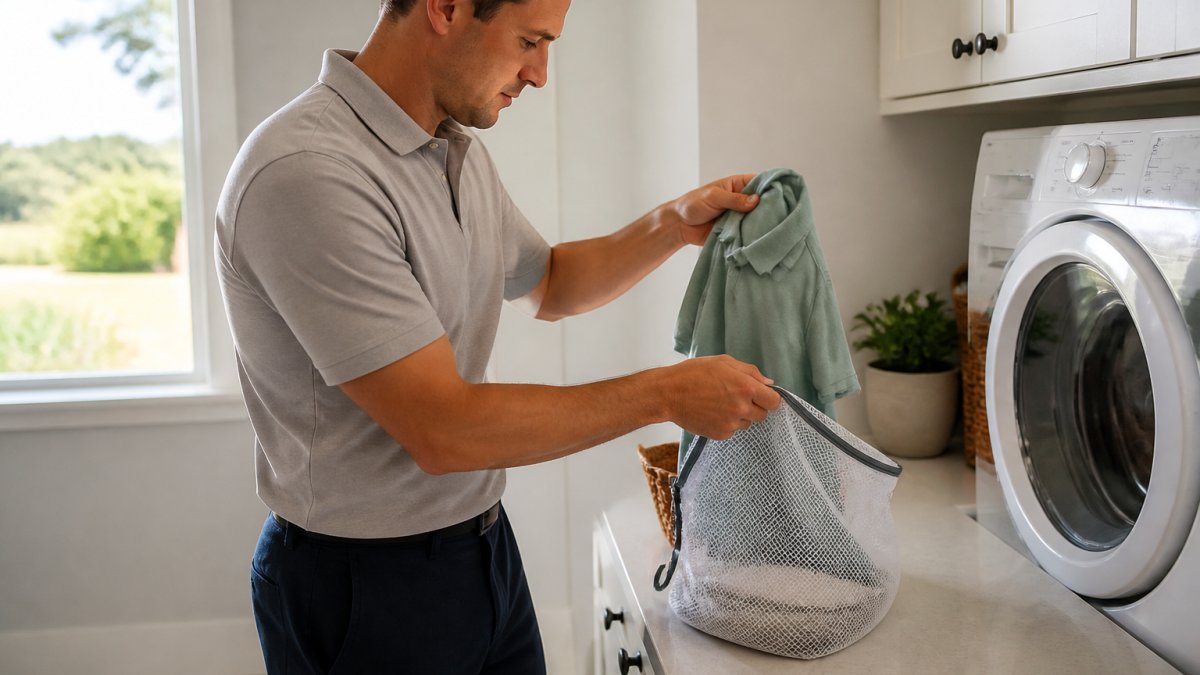
Don't let the shirt sit in that mesh bag for more than a day or two before washing. Ideally, wash it the same day or the next day. The sooner you wash, the less time bacteria have to establish themselves in the fibers.
Pre-Treat Sweat and Odor Buildup Before Washing
After pre-soaking, don't wring the shirt out aggressively. Gently squeeze out excess water. Aggressive wringing can push odor-causing bacteria and oils deeper into the synthetic fibers rather than removing them.
How to Wash Moisture-Wicking Shirts Without Trapping Odor
Washing performance golf shirts requires a different approach than washing regular clothes. Standard laundry practices can actually trap odor in synthetic fabrics rather than remove it. The key is using the right water temperature, cycle type, and detergent.
Choose the Right Water Temperature and Wash Cycle
Rinse twice if your washer allows it. A second rinse cycle removes detergent residue that can trap odor. Many washers have an extra-rinse option, use it. The goal is clean fabric with no detergent buildup.
Skip Fabric Softener and Dryer Sheets
Air-dry your performance golf shirts whenever possible. If you must use a dryer, use the lowest heat setting and skip the dryer sheets. Better yet, hang-dry them. Lay the shirt flat on a clean surface or hang it on a rack. Air-drying preserves the fabric's performance properties and eliminates the risk of heat-setting odors.
Best Detergent for Athletic Clothes and Odor Removal
Consider detergents marketed for moisture-wicking or technical fabrics. These are formulated to clean without leaving buildup on the fibers. Brands that make performance gear often recommend specific detergents. Follow those recommendations if available.
How to Remove Odor from Polyester Shirts That Won't Go Away
Sometimes odor persists even after washing. Your golf shirt smells fresh when it comes out of the dryer, then develops a sour smell again within a few days. This means odor-causing bacteria are still embedded in the fibers. You need a stronger treatment.
White Vinegar Soak for Stubborn Odors
Don't use hot water with vinegar. The combination can damage some synthetic fabrics. Stick with cool water. If your shirt has stubborn odor that returns after one vinegar soak, repeat the process. Persistent odor sometimes requires multiple treatments.
Enzyme-Based Treatments and Sports Detergents
Never use bleach on performance golf shirts. Bleach damages synthetic fibers and can degrade the moisture-wicking properties. It also doesn't effectively remove odor from polyester the way vinegar and enzymes do.
How to Store Golf Shirts Between Rounds
Keep your closet dry. If humidity is high where you live, consider a small dehumidifier in your closet. Moisture in the air can reactivate bacteria in stored shirts. A dry environment keeps clean shirts fresh longer.
Choosing Performance Gear That Resists Odor Buildup
Our Athletic Tech Polo is extremely lightweight, with maximum stretch allowing full range of motion and superior moisture-wicking technology. At $99.00, it is designed to support your pursuit of greatness.

Our Performance Tech Stripe Polo features an exceptionally soft, ultra-lightweight fabric with a two-side peached finish, a three-color yarn-dyed microstripe pattern, and maximum stretch for freedom of movement. It is $115.00. Free shipping is available on orders $100+, and returns are free within the U.S.

Greatness Wins offers two performance polos designed to resist odor buildup during golf.
| Product | Price | Key Features |
|---|---|---|
| Athletic Tech Polo | $99.00 | Lightweight, maximum stretch, superior moisture-wicking |
| Performance Tech Stripe Polo | $115.00 | Ultra-lightweight, peached finish, three-color microstripe pattern |
Start Your Fresh-Smelling Gear Routine Today
Greatness Wins offers performance-focused athletic apparel for training and golf. Shop our golf collection and build a rotation of gear that supports your pursuit of greatness, backed by free shipping on orders $100+ and free returns within the U.S.
Frequently Asked Questions
Why do golf shirts smell after one round?
Golf shirts develop odor because sweat, body oils, and odor-causing bacteria accumulate in synthetic performance fabrics. Polyester and poly-blend materials trap moisture and bacteria more readily than cotton, and the bacteria produce odor compounds that bond to the fibers. Moisture-wicking fabrics are designed to pull sweat away from skin, but if the shirt isn't removed promptly or washed soon after play, bacteria multiply and create persistent odors that regular washing may not eliminate.
Should you wash a golf shirt after every round?
Yes, washing promptly is critical. Remove your golf shirt immediately after your round and wash it within 24 hours to prevent odor-causing bacteria from establishing themselves in the fibers. The longer sweat and body oils sit in a performance shirt, the more difficult the odor becomes to remove. Prompt washing also prevents fiber residue and bacteria buildup that can make future odors worse, even with antimicrobial treatments.
Can fabric softener make moisture-wicking shirts smell worse?
Yes. Fabric softener coats synthetic fibers and traps moisture, sweat residue, and odor inside the fabric rather than allowing it to rinse away. This coating also reduces the moisture-wicking ability of performance fabrics. Skip fabric softener entirely and avoid dryer sheets when drying golf shirts. Air-drying with good airflow is the best option for preserving both odor resistance and the fabric's technical performance.
How do you get sweat odor out of polyester golf shirts?
Pre-soak the shirt in white vinegar (1 part vinegar to 3 parts water) for 30 minutes to neutralize odor compounds, then wash with an enzyme-based or sports detergent in cold water. Enzyme detergents break down the proteins in sweat and body oils that bacteria feed on. If odor persists after washing, soak again before a second wash. Ensure thorough drying with strong airflow, as moisture trapped in polyester fibers can reactivate odor. Avoid heat drying, which can set odors permanently.