Table of Contents
- Why Leggings Slide Down During Yoga
- Choosing the Correct Size and Fit
- The Role of High-Waisted Designs and Wide Waistbands
- Fabric Elasticity, Compression, and Synthetic Materials
- Best Leggings for Yoga That Stay Up
- How to Care for Athletic Leggings to Maintain Fit
- Practical Techniques to Stop Sliding During Your Practice
- Conclusion
- Frequently Asked Questions
Last Updated: September 22, 2026
Why Leggings Slide Down During Yoga
Leggings slide down during yoga because they lose their grip on your body as the waistband rides lower with each movement, but you can prevent leggings sliding down through proper fit, fabric, and design.
Yoga poses compress and stretch your torso, downward dog, forward folds, and deep squats shift your weight and change how fabric sits on your hips. Without enough friction, compression, or anchoring power, gravity and motion win.
Preventing leggings sliding down is entirely fixable through three factors: fit, fabric, and design.
Choosing the Correct Size and Fit
The biggest mistake is buying leggings based on your regular clothing size. Athletic wear fits differently by body type, a size that works for an athletic frame will slide on a pear-shaped body, and vice versa.
Measure your waist at its narrowest point and your hips at their fullest point. Your leggings should feel snug at the waist without digging in. If you can pinch more than an inch of fabric at the waistband, they're too loose.
Fit by body type matters more than size number. Different proportions require different strategies:
Pear-shaped bodies (wider hips, narrower waist): Size by hip measurement and look for leggings with ruching or adjustable drawstrings. High-waisted styles anchor above your natural waist, preventing leggings sliding down as your hips shift. Test in a squat: your waistband should not drop more than a quarter-inch.
Apple-shaped bodies (fuller midsection, narrower hips): Size to your waist measurement and look for mid-rise or high-waisted options with structured waistbands (2.5 inches or wider). Test by bending forward and touching your toes, your lower back should be completely covered.
Hourglass figures (balanced curves, defined waist): Size to your waist measurement if the brand offers side panels or princess seaming. Mid-rise leggings work better than high-waisted. Watch the squat test for waistband tilt, if your torso is shorter, you may need petite lengths.
Athletic/rectangular bodies (minimal waist definition, straight lines): Size by waist measurement. High-waisted leggings anchor securely. Your waistband should not drop during deep squats; if it does, you need a smaller size or internal grip strips.
The squat test is non-negotiable. Do a deep squat and watch your waistband in a mirror. If it moves more than a half-inch, they don't match your proportions.
Test side seams and hip fit. Stand sideways to a mirror. Side seams should run straight down without pulling or bunching. Twisting, pulling, or excess fabric indicates poor hip fit and will cause sliding.
| Fit Check | What to Look For | Red Flag | Body Type Priority |
|---|---|---|---|
| Waistband | Snug, no pinching | Gaps or rolling | All |
| Squat test | Stays in place | Drops more than ½ inch | All |
| Forward fold | Full coverage | Exposed lower back | Pear, Apple |
| Side seams | Smooth, no pulling | Bunching or twisting | All |
| Hip width | Follows your curves | Excess fabric or pulling | Hourglass |
| Torso length | Waist sits at natural waist | Waist sits on hips | Hourglass, Athletic |
Size up strategically if needed. If between sizes, size up in the waist and look for drawstrings or side-cinching details. A slightly loose waist you can adjust beats a tight waist that rolls and gaps.
The Role of High-Waisted Designs and Wide Waistbands
High-waisted leggings sit above your natural waist and extend toward your ribs, giving them more surface area to grip and helping prevent leggings sliding down during movement.
According to Ododos, a leading activewear brand, high-waisted styles provide more coverage and anchor higher on the torso to prevent sliding. The extra height matters because it distributes your body's movement across a larger zone instead of concentrating force at one point.
Wide waistbands do the heavy lifting. A waistband of 2.5 inches or more distributes pressure evenly, reducing the likelihood of rolling compared to narrow bands, according to Shop Vitality's athletic wear research. This even pressure keeps the band from folding or bunching.
The Greatness Wins High Waist Essential Legging features a structured waistband, double-brushed interlock knit, and moisture-wicking performance that anchors movement without restricting it.

Fabric Elasticity, Compression, and Synthetic Materials
The fabric itself determines whether your leggings stay put or slip. This is where most people go wrong.
Natural fabrics like cotton stretch too much and lose shape. Synthetic fibers, spandex and Lycra blended with polyester, stretch and snap back, keeping the garment fitted through movement.
Compression matters significantly. High-compression fabric clings to your skin and creates genuine grip. Look for leggings described as "high compression" or "squat-proof."
Moisture-wicking synthetic blends pull sweat away, reducing slickness that causes sliding, and maintain shape when wet. Cotton gets heavier and looser when damp, accelerating sliding.
Check the fabric tag for at least 85% polyester or nylon with 15% spandex. Premium leggings may have higher spandex for maximum elasticity.
High Waist Essential Legging →
Best Leggings for Yoga That Stay Up
Finding leggings that actually stay up means matching three things: your body, your practice style, and your budget.
The Greatness Wins High Waist Essential Legging combines high-waisted design, wide waistbands, double-brushed interlock knit, moisture-wicking performance, and side pockets. At $98, they're an investment.
Side pockets let you carry loose items.
How to Care for Athletic Leggings to Maintain Fit
Proper care keeps your leggings gripping your body. Understanding how different fabrics lose elasticity extends their life.
Turn leggings inside out before washing to protect the outer surface. Use cold water and gentle cycle, hot water breaks down spandex permanently. Wash after every 2-3 wears.
Air dry flat or hanging, heat damages synthetic fibers and causes elastic to lose its snap. Never use fabric softener; it reduces grip.
Washing frequency and elasticity trade-off. Washing more frequently (after every wear) with cold water preserves elasticity better than washing less frequently with hot water. However, any washing degrades spandex slightly.
When to replace. If your leggings drop more than one inch during a squat test, or if the waistband gaps visibly when you stand, restoration won't help. The spandex has lost too much elasticity.
Practical Techniques to Stop Sliding During Your Practice
Once you have the right leggings, these techniques keep them anchored through your entire practice.
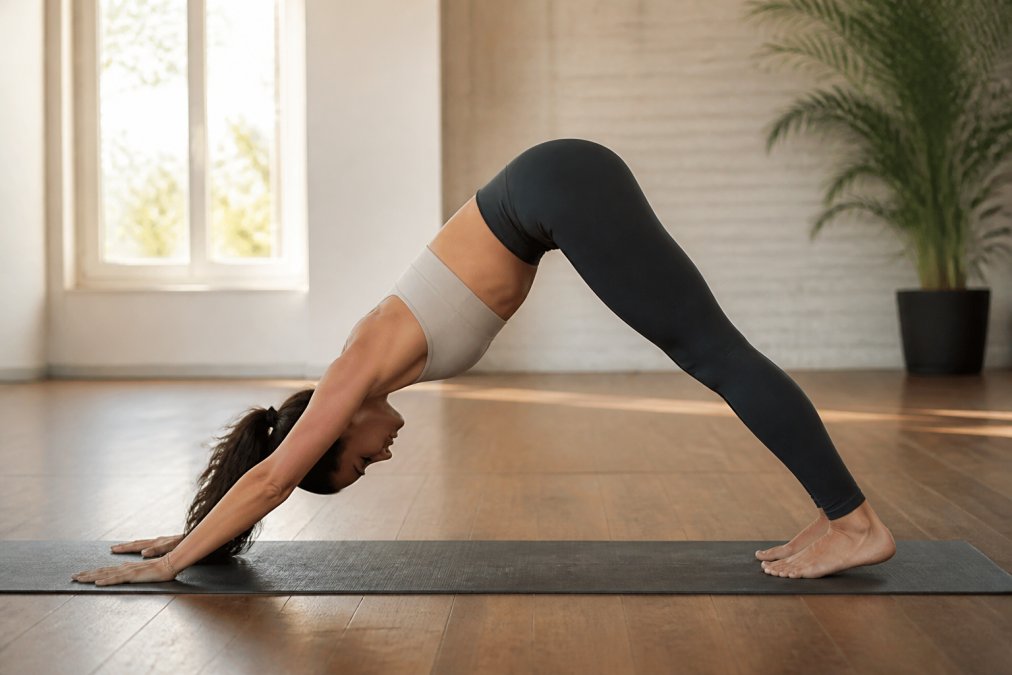
Adjust before you start. Pull your leggings up to their proper position before your first pose. Make sure the waistband sits where it should. This prevents the gradual drift that happens when you start from a slightly-low position.
Use a drawstring if available. Many leggings have internal drawstrings. Tighten them enough to add extra grip without cutting off circulation. This is your backup anchor system.
Wear a fitted tank or crop top. A tight shirt tucked into your leggings creates friction at the waistband. This prevents the top of your leggings from rolling down. The contact point between shirt and waistband adds grip.
Layer strategically. A fitted layer under your leggings reduces friction against your skin. Some practitioners use compression shorts or fitted bike shorts under loose leggings. This prevents the outer layer from sliding while keeping your practice comfortable.
Engage your core. This isn't just good yoga form. When you engage your abdominal muscles, you create tension that holds the waistband in place. Your core literally anchors your leggings.
Check your position after transitions. After big movements like jumping back from a forward fold, pause and adjust. A quick pull-up takes two seconds and prevents the frustration of constant sliding.
Avoid leggings with a low rise. Low-rise leggings sit on your hip bones, not your waist. They have less surface area to grip and slide more easily. If you're struggling with sliding, rise height is usually the culprit.
Most sliding happens because practitioners start with leggings that don't fit properly or lack the right fabric properties. Fix those two things, and these techniques become backup tools instead of constant requirements.
Conclusion
Sliding leggings interrupt your practice and break your focus. The solution isn't complicated: choose leggings designed to stay up, make sure they fit your body, and care for them properly.
The Greatness Wins High Waist Essential Legging solves this problem with high-waisted design, wide waistbands, and double-brushed interlock knit that grips your body through every pose.
Frequently Asked Questions
How do I know if my leggings are too big?
Leggings that are too big will gap at the waistband, especially when you bend forward or squat. They'll slide down during movement and bunch at the ankles or knees. The waistband should sit snugly without rolling or creating folds. If you can pinch more than half an inch of excess fabric at the sides of your waist, they're likely oversized. The squat test is reliable: bend into a deep squat and check if the waistband stays in place without slipping.
What fabric should I look for to prevent leggings from sliding?
Choose leggings with moisture-wicking synthetic fibers. These materials provide elasticity and compression that anchors the fabric to your body. Double-brushed interlock knit fabrics offer better grip and stability than thin, slippery materials. Avoid fabrics with low elasticity or those that feel slick to the touch, as these are prone to rolling down during dynamic yoga poses and movement.
How should high-waisted leggings fit to prevent slipping?
High-waisted leggings should sit at or just above your natural waistline and anchor firmly without digging in. The waistband should be at least 2.5 inches wide to distribute pressure evenly and prevent rolling. When you perform a squat or forward fold, the waistband should stay in place without sliding down more than a quarter inch. There should be no gaps between the waistband and your torso, and the fit should feel secure even during intense movement and yoga poses.
Does washing affect how leggings fit?
Yes, improper care can damage elasticity and cause leggings to lose their anchoring ability. Wash in cold water, use gentle detergent, and avoid fabric softeners. Tumble dry on low heat or air dry to prevent elastic breakdown from high temperatures. Over-washing or using hot water degrades spandex and lycra, making leggings more prone to slipping. Proper care extends the lifespan of compression and retention, keeping your leggings fitting securely.