Last Updated: October 24, 2026
Quick Summary
Your leggings too big if the waistband gaps away from your body, slides down during movement, or excess fabric bunches behind your knees, at your thighs, or around your hips. Test this by performing a squat: if you can slide a flat hand between the waistband and your back at the bottom, the waist is too large.
- A waistband that gaps or shifts during movement is the clearest sign leggings are too big.
- Excess fabric bunching behind the knees, inner thighs, sides, or hips indicates a sizing issue.
- Sagging around the knees or ankles means the inseam is too long or the leg opening too loose.
- Run five at-home fit tests: squats, bend and reach, lunges and stride, sit and cross-leg, and overhead reach.
- If two or more tests fail on the same body area, the size is likely too large.
Table of Contents
- How to Tell If Leggings Are Too Big: Key Signs
- How Tight Should Leggings Fit for Proper Support
- The At-Home Fit Test: Movement Checks That Matter
- Why Leggings Sliding Down Happens and How to Stop It
- How to Choose the Right Size Leggings From the Start
- How to Stop Leggings From Rolling Down During Workouts
- What to Do When Your Leggings Are Too Big
- Frequently Asked Questions
How to Tell If Leggings Are Too Big: Key Signs
Knowing when leggings too big is the difference between a supported workout and one spent adjusting.
Here are the signs your leggings have crossed from snug into too loose.
Waistband Gaping or Slipping
A waistband that gaps away from your body or slides down during movement is the clearest sign leggings are too big.
Slipping happens because the fabric has too much room: gravity and motion push the waistband lower, and you end up pulling them up repeatedly.
Test this: stand and look in the mirror, then bend forward slightly. If the waistband gaps or shifts, the fit is too big.
Excess Fabric and Bunching
Excess fabric anywhere signals a sizing issue; properly fitting leggings follow your body's contours without sagging or gathering.
Common bunching spots:
- Behind the knees
- Along the inner thigh
- At the sides of the waistband
Bunching fabric catches, shifts, and pulls in ways that distract you. Quality leggings like the High Waist Essential Legging use precision construction and breathable double-brushed interlock knit to eliminate this.

Sagging Around the Knees and Ankles
If the fabric sags or folds around your knees or ankles, you're wearing a size too large. Properly fitting leggings maintain consistent tension from waist to hem; sagging means the inseam is too long or the leg opening too loose.
Sagging at the knees is especially problematic during high-impact activity: the fabric moves independently from your leg, creating friction and reducing compression support.
Loose or Shifting Crotch Area
A loose crotch is one of the most obvious signs of poor fit. The fabric should sit smoothly without excess material; too much fabric creates discomfort and reduces your range of motion.
During workouts, a loose crotch shifts with every movement, making squats, lunges, and running uncomfortable.
How Tight Should Leggings Fit for Proper Support
Properly fitting leggings should feel snug without restricting movement or circulation, hugging your body like a second skin.
Here's what proper fit feels like:
- Waistband sits at your natural waist without gapping
- Fabric follows your leg shape with no excess material
- You can perform a full range of motion without restriction
The distinction between "snug" and "too tight" matters: snug leggings provide compression and support, while too-tight leggings restrict blood flow and range of motion.
Fabric stretch and recovery also affect fit. The Motion Legging uses a buttery-soft moss jersey interlock blend of nylon and spandex that maintains compression through intensive training.

The At-Home Fit Test: Movement Checks That Matter
You don't need a gym mirror to know if your leggings fit. Run these movement tests at home, judging each against a specific pass/fail criterion to tell whether the problem is size, rise, or fabric.
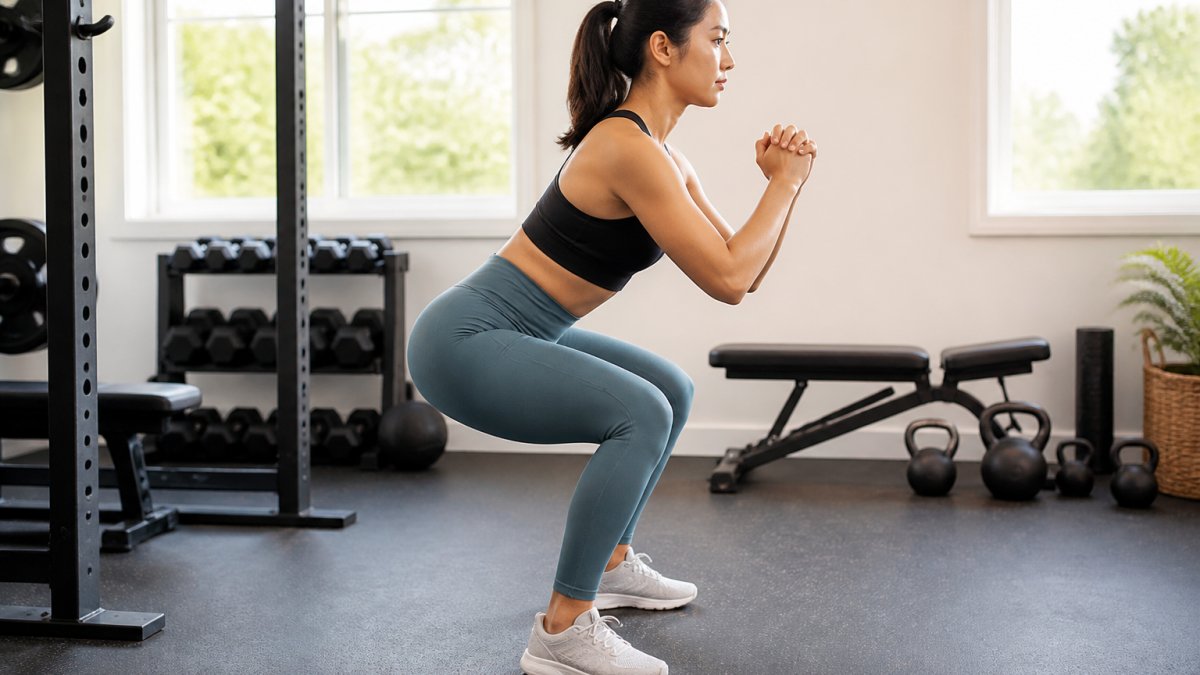
The Squat Test
Squats reveal fit problems instantly because they stress the waistband, thigh, and crotch simultaneously.
Perform this test:
- Stand with feet shoulder-width apart
- Lower into a full squat, keeping your back straight
- Watch for these issues: waistband gapping, excess fabric bunching behind the knees, crotch area shifting, or waistband sliding down
- Rise back to standing
Pass/fail criterion: The waistband should stay in contact with your lower back throughout the descent and ascent. If you can slide a flat hand between the waistband and your back at the bottom of the squat, the waist is too large.
The Bend and Reach
This test checks forward movement, where many fit problems first appear.
Perform this test:
- Stand upright
- Bend forward at the waist, reaching toward your toes
- Notice if the waistband gaps or if fabric bunches at the back of your thighs
- Return to standing
Pass/fail criterion: The back waistband should remain flat against your skin as you hinge forward. A visible gap or a rush of cool air against your lower back means the rise is too high or the waist is too loose. Fabric that pools behind the thigh rather than stretching with it indicates excess material in the leg.
The Lunge and Stride
Lunges and walking test dynamic movement, where loose fits show themselves.
Perform this test:
- Step forward into a deep lunge, dropping your back knee toward the ground
- Push back to standing
- Walk briskly around your home, noticing any sliding, bunching, or shifting
- Repeat on the other leg
Pass/fail criterion: The waistband should not migrate downward during the lunge or the walk. If you have to pull the leggings up after 10 brisk steps, the waist is too large or the fabric has lost recovery. The crotch should stay in place without sagging; if it drops lower than it sat when you stood still, the rise or the overall size is off.
The Sit and Cross-Leg Test
Sitting exposes problems that standing and squatting hide, especially at the crotch and hip.
Perform this test:
High Waist Essential Legging →
- Sit on a firm chair with feet flat on the floor
- Cross one ankle over the opposite knee
- Lean forward slightly and notice any pulling, gaping, or excess fabric at the hip and crotch
- Switch legs
Pass/fail criterion: The fabric should lie smooth across the hip and crotch without a visible fold or a loose pouch of material. If you feel fabric bunching under you or see a gap at the front waistband when seated, the leggings are too big for your torso-to-hip proportion.
The Overhead Reach
Reaching overhead pulls the waistband upward, testing whether rise and torso length match.
Perform this test:
- Stand tall and reach both arms overhead
- Notice whether the waistband rides up or pulls down
- Lower your arms and check whether the waistband returns to its original position
Pass/fail criterion: The waistband should stay at your natural waist without riding up toward your ribs or pulling down below your hip bones.
Run all five tests in one session, ideally before removing tags or washing. If two or more fail on the same body area, the size is likely too large; if failures cluster at the waist while the legs fit well, the issue may be rise or waist-to-hip ratio rather than size.
Why Leggings Sliding Down Happens and How to Stop It
Leggings slide down for three reasons: the waistband is too large, the rise is too high, or the fabric lacks compression.
Rise is the distance from crotch to waistband. A rise that's too high means excess fabric around your midsection, creating slack that allows sliding.
Fabric compression matters too: low-quality leggings lose elasticity after a few washes, and once the spandex breaks down, sliding becomes inevitable.
The fix depends on the cause: size down for a too-large waistband, choose a lower rise for a too-high one, and replace worn-out fabric with quality leggings that hold compression. Learn specific solutions for preventing leggings from sliding during yoga. Explore proven methods to prevent sliding during your workouts.
How to Choose the Right Size Leggings From the Start
Sizing leggings correctly starts with your measurements and the brand's size chart.
Take these measurements:
- Waist (at your natural waist, where you'd wear a belt)
- Hip (at the fullest part of your hips)
- Inseam (from your inner ankle to your groin)
Compare your measurements to the brand's official size chart. Most charts provide specific measurements for each size, not just general guidelines.
Consider your body shape too. Some people carry weight in their hips and thighs, requiring a different fit than someone with a straighter silhouette.
Order from brands with free returns. This removes the risk of sizing wrong. Shop high-waist leggings designed for consistent fit that accommodate various body shapes while maintaining compression and support.
How to Stop Leggings From Rolling Down During Workouts
Rolling waistbands are frustrating during intense activity. Several strategies can help prevent this problem mid-workout.
Use a non-slip waistband strategy:
- Wear a fitted sports bra or crop top that overlaps the waistband, creating friction
- Layer a longer shirt that covers the waistband, preventing it from rolling
- Use fabric-gripping products designed for athletic wear (apply to the inside of the waistband for added grip)
Proper sizing remains your best defense. Discover additional proven methods to keep leggings in place during your most demanding workouts and training sessions.
What to Do When Your Leggings Are Too Big
Before you size down or reach for a temporary fix, diagnose why your leggings too big. The same symptom can come from four different causes, and only one of them is solved by ordering a smaller size. Use this symptom-to-cause guide to pick the right next step.
Symptom-to-Cause Decision Guide
| Symptom | Most likely cause | First check | Best next step |
|---|---|---|---|
| Waistband gaps at the back but legs fit | Waist-to-hip ratio mismatch or rise too high | Measure waist and hip; compare to size chart | Try a different rise or a cut with a drawcord; sizing down may make legs too tight |
| Leggings slide down during walking or squats | Waist too large or fabric recovery is spent | Check whether the waistband has stretched after washing | If new, size down; if older, replace the pair |
| Crotch sags or shifts | Rise too long or overall size too large | Compare rise measurement to your torso length | Try a shorter rise before sizing down |
| Bunching behind knees or at ankles | Inseam too long or leg opening too loose | Measure inseam against your leg length | Look for a petite or short inseam option |
| Fabric feels loose everywhere after a few washes | Lost elasticity or poor recovery | Compare fit when new versus now | Replace with a fabric that maintains compression |
If the Cause Is Sizing
If the waist, hip, and leg all fail the at-home fit tests, the size is genuinely too large. The simplest fix is to exchange for a smaller size. Most quality athletic brands, including Greatness Wins, provide free returns within the U.S., so you can try the smaller size without financial risk. Before you order, re-take your waist, hip, and inseam measurements and compare them to the brand's size chart rather than assuming you are always the same size across brands.
If the Cause Is Rise or Proportions
A waistband that gaps while the legs fit well usually means the rise is too high for your torso or your waist-to-hip ratio differs from the brand's fit model. Sizing down will make the legs too tight without fixing the gap. Instead, look for a mid-rise or a cut with a drawcord or adjustable waist.
If the Cause Is Fabric Recovery
Leggings that fit well when new but loosen after a few washes have lost recovery, not size. Spandex and elastane break down over time, especially with heat from dryers and repeated stretching. Check the care label: line-drying and washing cold extend the life of the elastic fibers. If the fabric already feels thin or stretched out, no temporary fix will restore the compression, and replacing the pair is the practical answer.
If the Cause Is Construction
Some leggings are cut with extra room in the crotch or a straight waistband that does not contour to the body. No amount of sizing down will fix a construction mismatch. Look for leggings with a contoured waistband, gusseted crotch, and flatlock seams, which distribute tension more evenly and reduce gaping and sagging.
Temporary Fixes While You Decide
If you cannot exchange immediately, these stopgaps can get you through a workout:
- Wear a fitted sports bra or crop top that overlaps the waistband to create friction and prevent sliding
- Layer a longer shirt over the waistband to hold it in place
- Use fabric-gripping products on the inside of the waistband
These solutions work temporarily, but they are not ideal for serious training. Properly fitting leggings provide better performance, comfort, and support. Investing in the correct size pays off through better workouts and longer-lasting gear.
The High Output Sports Legging is engineered for maximum performance with ergonomic seaming and breathable double-jersey interlock knit designed to stay in place during intense training.

Frequently Asked Questions
Are my leggings too big if they keep sliding down?
Yes, leggings that slide down during movement are typically too large. This happens when the waistband lacks enough compression to stay in place, or when excess fabric in the hip and thigh area creates too much looseness. A proper fit should stay snug at the waist without shifting, even during intense exercise. If your leggings slip, consider sizing down or choosing a style with a higher rise and tighter waistband construction.
How should leggings fit around the waist and hips?
The waistband should sit snugly against your skin without gapping or folding over. You should be able to fit one finger comfortably between your waist and the band, no more. Around the hips, leggings should follow your natural curves without pulling, tugging, or creating excess fabric. The fabric should feel like a second skin, offering gentle compression without restricting your breathing or movement. If you can pinch more than half an inch of fabric at the waistband or hip area, they're too big.
What should I do if my leggings are too big?
First, confirm the fit issue by performing the at-home movement tests in this guide. If they're definitely oversized, try sizing down one size and test the fit again. Most quality athletic brands offer free returns, so you can exchange them without risk. If you're between sizes, choose the smaller size for leggings since they're designed to compress and support, not hang loose. Greatness Wins offers free returns within the U.S., so you can test the fit at home and exchange if needed.
Can leggings stretch out after wearing and washing them?
Yes, athletic leggings can stretch out over time, especially with repeated wear and washing. High-quality fabrics with proper spandex content recover well, but cheaper materials may lose elasticity faster. If your leggings fit snugly at first but feel looser after a few weeks, this is normal. To minimize stretching, wash in cold water, avoid high heat in the dryer, and rotate between multiple pairs to allow the fabric to recover between wears. Premium leggings with strong fabric recovery maintain their fit longer.