Last Updated: October 28, 2026
Quick Summary
You cannot fully rebuild worn-out elastic at home, but you can restore elasticity in part by stopping further damage. Wash leggings in cold water, skip fabric softener, and always air-dry them flat, since heat breaks down the elastane fibers that give them stretch.
- Heat from the dryer and hot water weaken elastane fibers quickly.
- Wash inside out on a gentle cycle with mild, fragrance-free detergent.
- Skip fabric softener, because it coats fibers and reduces their ability to recover.
- Lay leggings flat to dry rather than hanging them by the waistband while wet.
- Never soak leggings in hot water to shrink them, since the damage is permanent.
Table of Contents
- Why Workout Leggings Lose Their Elasticity
- Restoring Elasticity Versus Stretching the Fabric
- How to Wash Athletic Leggings So the Elastic Lasts
- Step-by-Step: Restoring Elasticity at Home
- How to Stop Leggings From Rolling Down
- When Worn-Out Elastic Can't Be Restored
- Choosing Your Next Pair of Workout Leggings
- Frequently Asked Questions
Why Workout Leggings Lose Their Elasticity
Workout leggings lose their elasticity when the elastane or spandex fibers in the fabric break down over time, and understanding why is the first step toward knowing whether you can restore elasticity at home. Most leggings are a blend of nylon or polyester with a small share of spandex, and that stretch fiber is the first part to wear out. Heat, friction, and harsh detergents speed up the process.
Here is the honest part: you cannot fully rebuild broken elastic fibers at home. What you can do is stop further damage and recover some shape. Knowing the difference saves time and money.
Common causes include:
- Heat from the dryer: High heat weakens elastane fibers quickly.
- Hot water washing: Hot water stresses elastic fibers and shortens their lifespan.
- Fabric softener: It coats fibers and can reduce the fabric's ability to recover.
- Frequent intense training: Repeated stretching during squats and lunges wears the fabric down.
- Sitting in sweaty fabric: Moisture and friction break fibers down faster.
Restoring Elasticity Versus Stretching the Fabric
These two ideas sound similar, but they work very differently. Restoring elasticity means helping the fabric return to its original recovery. Stretching the fabric only changes its size for a short time.
Watch out: Never soak leggings in very hot water to "shrink" them back. Heat is the fastest way to break down elastane.
How to Wash Athletic Leggings So the Elastic Lasts
Good washing is the best way to protect elasticity. Follow these habits every time:
- Wash in cold water on a gentle or delicate cycle.
- Turn leggings inside out to protect the surface.
- Use a mild, fragrance-free detergent. Skip fabric softener completely.
- Wash with similar fabrics and avoid rough items like zippers or hook-and-loop closures.
- Keep the wash load small so the leggings move freely.
Step-by-Step: Restoring Elasticity at Home
Before you start, separate two goals that get mixed together online: restoring recovery (helping sagging fabric snap back) and relaxing tight fabric (making a too-small pair feel looser). Only the first is a real repair. The second is a temporary fit change, and heat-based tricks for it can permanently damage elastane. This walkthrough is for sagging, stretched-out leggings.
Step 1: Diagnose What You Actually Have
If the leggings fail the rest and light tests, skip to the replacement guidance below. No home method rebuilds broken elastane.
Step 2: Match the Method to the Fabric Blend
Blends respond differently, so read the care label first:
- Nylon-spandex: The most common performance blend. Nylon holds shape well but is sensitive to heat and chlorine. Cold water, mild detergent, and air-drying protect it best. Avoid chlorine bleach entirely.
- Polyester-spandex: More resistant to stretching out and quicker to dry, but polyester can hold odor and oils. A gentle detergent and occasional extra rinse help. It tolerates slightly warmer wash water than nylon but still should not see dryer heat.
- Cotton-spandex or cotton-elastane: Common in lounge and lower-impact leggings. Cotton absorbs water and dries slowly, so it sags more when wet. Lay flat to dry rather than hanging, which can stretch the legs under their own weight.
- High-spandex blends (roughly 20% or more): Better recovery but faster heat damage. Treat these as the most delicate item in the load.
Step 3: Wash Cold and Rinse Thoroughly
Wash in cold water on a gentle or delicate cycle, inside out, with a mild fragrance-free detergent and no fabric softener. Keep the load small and avoid zippers, hook-and-loop closures, and heavy towels that abrade the knit. Add an extra rinse cycle if your machine allows it, because detergent residue left in elastic fibers can attract grit and reduce recovery over time.
Step 4: Air-Dry Flat, Never Tumble
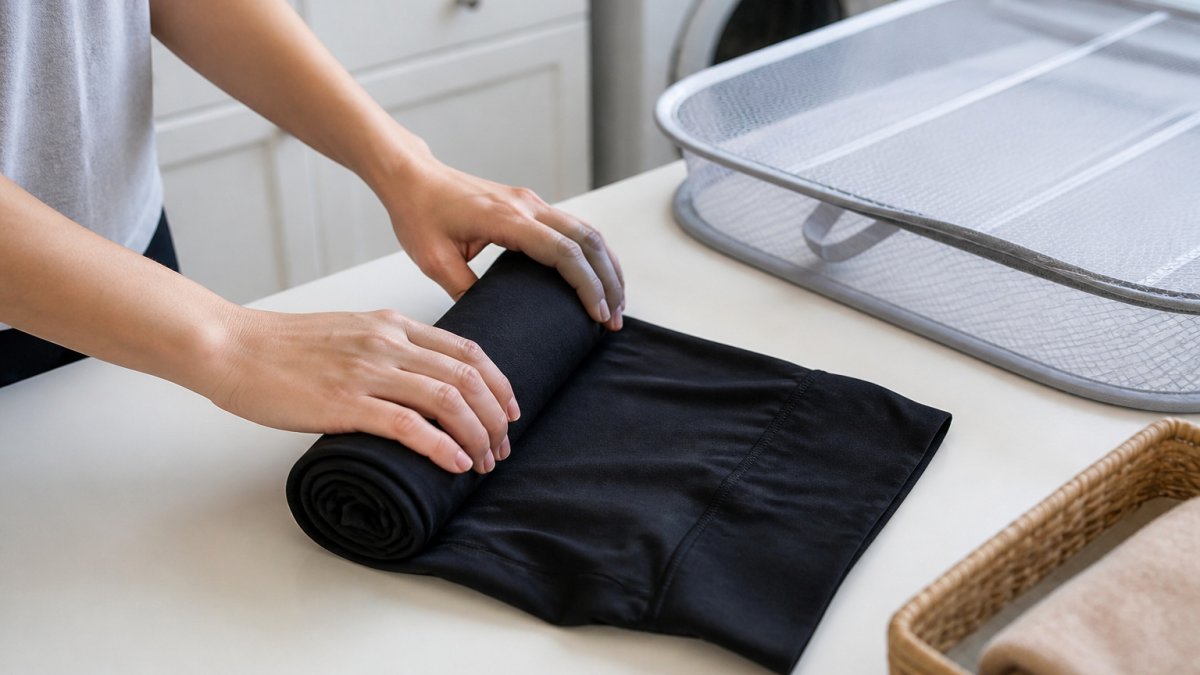
Lay the leggings flat on a clean towel or mesh drying rack, away from direct sun and radiators. Hanging them by the waistband while wet can stretch the legs under their own weight, especially in cotton blends. Expect several hours to dry. Air-drying is the single most effective habit for preserving recovery, and it is the step most people skip.
High Waist Essential Legging →
Step 5: Store Without Stress
Fold leggings loosely rather than hanging them by the waistband for long periods. Hanging concentrates stress on one area of elastic and can create a permanent stretch mark in the waistband. Rotate pairs so no single garment takes every workout.
The table below summarises how each fabric blend should be cared for to protect the elastic that remains.
| Fabric blend | Best care | Avoid |
|---|---|---|
| Nylon-spandex | Cold water, mild detergent, air-dry | Heat and chlorine bleach |
| Polyester-spandex | Gentle detergent, extra rinse | Dryer heat |
| Cotton-spandex | Lay flat to dry | Hanging while wet |
| High-spandex (about 20%+) | Treat as most delicate item | Any heat exposure |
How to Stop Leggings From Rolling Down
A rolling waistband is usually a fit or construction problem, not a fiber failure, and the fix depends on which one you have. For a dedicated, step-by-step fix for that specific problem, see step-by-step fixes for rolling leggings. Diagnose before you sew or size down. Readers can find more proven methods beyond the basics in seven proven methods to prevent rolling.
Diagnose the Cause First
- Construction roll: The waistband is narrow, has a weak elastic insert, or lacks a gripper strip. This is a design limitation you can sometimes reinforce.
Fixes for Fit and Construction Rolls
- Choose a higher-rise style with a wider, firmer waistband. A 3-inch or wider band distributes pressure better than a thin 1-inch band.
- Size down only if the legs and seat still fit comfortably. Sizing down to fix the waist often creates a new problem at the hips.
- Look for a contoured or V-shaped back waistband, which follows the curve of the lower back and resists rolling better than a straight band.
Stretch-Compatible Repairs Beyond the Waistband
- Needle and thread: Use a stretch or ballpoint needle (size 75/11 or 90/14) and a polyester or nylon thread with some give. All-purpose cotton thread snaps when the fabric stretches.
- Stitch type: Use a narrow zigzag (about 1.5 mm wide, 2.5 mm long) or a three-step zigzag. A straight stitch on stretch fabric will pop under tension. If you need leggings that hold up to heavy use, browse our durable workout leggings guide for heavy use.
- Sagging knees: Turn the leg inside out and take in a shallow vertical dart along the back of the knee, no more than 1/4 inch deep, using a zigzag stitch. Test the fit before trimming.
- Baggy seat: Take in the center back seam in small increments, 1/4 inch at a time, basting first and trying on between passes. Keep the seam stretchy with a zigzag.
- Stretched leg openings: Sew a narrow strip of knit elastic or clear elastic into the hem casing with a zigzag, stretching the elastic slightly as you sew so the opening recovers.
- Rolling waistband with firm elastic: Open a small section of the inner casing, insert a length of knit elastic slightly shorter than the band, and stitch it in place with a zigzag, closing the opening afterward.
When Repair Is Not Worth It
A common mistake is trying to fix rolling by stretching the waistband wider. That usually makes the problem worse by further stressing already tired elastic.
When Worn-Out Elastic Can't Be Restored
Watch out: Wearing leggings with worn-out elastic during heavy training can affect how they hold up during movement, so retire them when they no longer support your workout.
Choosing Your Next Pair of Workout Leggings
Our pick is the High Waist Essential Legging. It is made from a super-soft, double-brushed interlock knit with moisture-wicking performance and includes side pockets for loose items, at $98.00.

The High Output Sports Legging at $95.00 is designed for maximum performance and intense training, and uses breathable double-jersey interlock knit with ergonomic seaming to keep you agile.

Researchers' evaluation of leggings selected by athleisure consumers
Frequently Asked Questions
How do I fix saggy leggings?
Start by checking whether the fabric is stretched out or the elastic is worn. Wash them in cold water on a gentle cycle, skip the dryer, and lay them flat to air-dry. Sagging in the seat or knees often comes from repeated heat exposure and tumble drying, which breaks down elastane over time. If the fabric has lost its snap, the stretch is largely permanent. Once washing and drying habits are corrected, a fresh pair with a higher-quality elastane blend will hold its shape far longer than a worn one.
Does heat damage the spandex in athletic wear?
Yes. Elastane, often sold as spandex, is a heat-sensitive fiber. High dryer temperatures and hot water weaken its ability to snap back, which is why leggings lose elasticity faster when they are routinely tumble-dried. A care guide cited in our research warns that hot water stresses elastic fibers and shortens their lifespan. Cold water and air-drying protect the fibers and are the single most effective habit for keeping workout leggings performing.
Is there a way to stretch out leggings that are too tight?
Soaking leggings in warm water can temporarily loosen the fabric, and you can gently pull them to the desired fit while damp. However, this only changes the fit temporarily and does not restore the elastic's recovery. Hot water can also weaken elastane, so use warm rather than hot water and avoid repeated soaking. If the leggings are only snug, a correct size or a different cut is usually the better fix than forcing the fabric.
Can you repair the elastic in gym leggings?
Minor waistband issues can sometimes be repaired by a tailor or someone comfortable with a sewing machine, using a stretch or elastic-fabric needle and a suitable stitch. Repairs beyond the waistband, such as worn seams or thinned panels, are harder to fix reliably. If the fabric itself has lost recovery across the whole garment, replacement is more practical than repair. Keep the care label in mind, since some performance fabrics respond poorly to heat during any repair or finishing process.