Last Updated: November 22, 2026
Quick Summary
The best stretch fabric for training joggers is a synthetic blend of polyester or nylon with spandex, which delivers four-way stretch, moisture-wicking, and shape retention that cotton cannot match. Recovery matters more than stretch, so check that the fabric springs back rather than staying baggy.
- Polyester handles sweat and cost, nylon brings durability, and spandex supplies stretch and recovery.
- Four-way stretch extends both horizontally and vertically, which deep lunges and squats demand.
- Match nylon-spandex to high-intensity training and polyester-spandex to running and sprinting.
- Wash in cold water on a gentle cycle and skip fabric softener to protect spandex elasticity.
- A waistband that no longer snaps back is the earliest sign your joggers are done.
Table of Contents
- What Stretch Fabric Works Best for Training Joggers?
- Polyester, Nylon, Spandex: A Fabric Comparison Table
- Nylon vs Polyester Athletic Wear: Which Performs Better?
- Stretch Direction and Range of Motion in Joggers
- Finding the Best Fabric for Workout Joggers by Training Intensity
- How to Wash Performance Apparel So Stretch Lasts
- How Long Do Workout Clothes Last With Regular Training?
- Choosing Your Training Joggers From Greatness Wins
- Frequently Asked Questions
What Stretch Fabric Works Best for Training Joggers?
The best stretch fabric for training joggers is a synthetic blend, usually polyester or nylon paired with spandex, because that combination delivers four-way stretch, moisture-wicking, and shape retention that cotton cannot match.
Stretch fabric is a knit or woven textile engineered to extend and recover, letting a garment move with your body instead of fighting it.
Here is the part most buying guides skip: a fabric can feel stretchy in the fitting room and still fail you in a deep squat. Recovery matters more than stretch.
A review of sports clothing and thermoregulation published in a PubMed Central-indexed journal notes that loose-fitting clothing can improve heat dissipation during exercise in moderate heat. That is a useful counterpoint to the "tighter is always better" assumption many athletes carry into a purchase.
Below, we'll show you exactly how polyester, nylon, and spandex differ, where each one wins, and how to match a fabric to your training intensity.
Polyester, Nylon, Spandex: A Fabric Comparison Table
Polyester, nylon, and spandex are the three synthetic fibers that do most of the work in performance joggers, and each one earns its place differently. Polyester handles sweat and cost, nylon brings durability and a smoother hand feel, and spandex supplies the stretch and recovery that ties the blend together.
| Fabric | Stretch & Recovery | Moisture Handling | Durability | Best For |
|---|---|---|---|---|
| Polyester | Low alone, needs spandex | Strong wicking, quick-drying | Good, resists wrinkles | High-sweat cardio, budget training |
| Nylon | Moderate alone, excellent in blends | Wicks well, dries fast | Excellent abrasion resistance | Lifting, hiking, mixed training |
| Spandex (elastane) | Exceptional, springs back | Minimal on its own | Moderate, used in small % | Any garment that needs four-way stretch |
| Pima cotton | Low, minimal recovery | Absorbs rather than wicks | Good, wrinkle-resistant | Warmups, recovery days, casual wear |
Fiber composition is the number to check on the label. A jogger listed as 89% polyester and 11% elastane will behave very differently from one that is mostly cotton with a token stretch percentage.
A common mistake is buying on feel alone. A soft brushed interior tells you nothing about recovery. Flip the tag and read the fiber percentage first.
Nylon vs Polyester Athletic Wear: Which Performs Better?
Nylon is generally known for durability and abrasion resistance, while polyester is generally known for moisture management and cost.
Men's Health recommends nylon and Lycra in workout joggers, citing stretch, flexibility, and quick-drying properties. That aligns with what we see in practice: nylon-spandex blends hit a sweet spot for athletes who train hard and want the garment to survive it.
Synthetic fibers like these do have a downside, though. They can lose shape over time if washed carelessly, and they trap odor more readily than natural fibers. If you're coming from cotton joggers, expect a lighter, slicker hand feel and noticeably faster drying.
For a deeper look at why synthetics degrade, the guide on why synthetic workout clothes lose shape and how to fix it covers the mechanics.
Stretch Direction and Range of Motion in Joggers
Range of motion in a jogger depends on four-way stretch, which means the fabric extends both horizontally and vertically rather than only across the body.
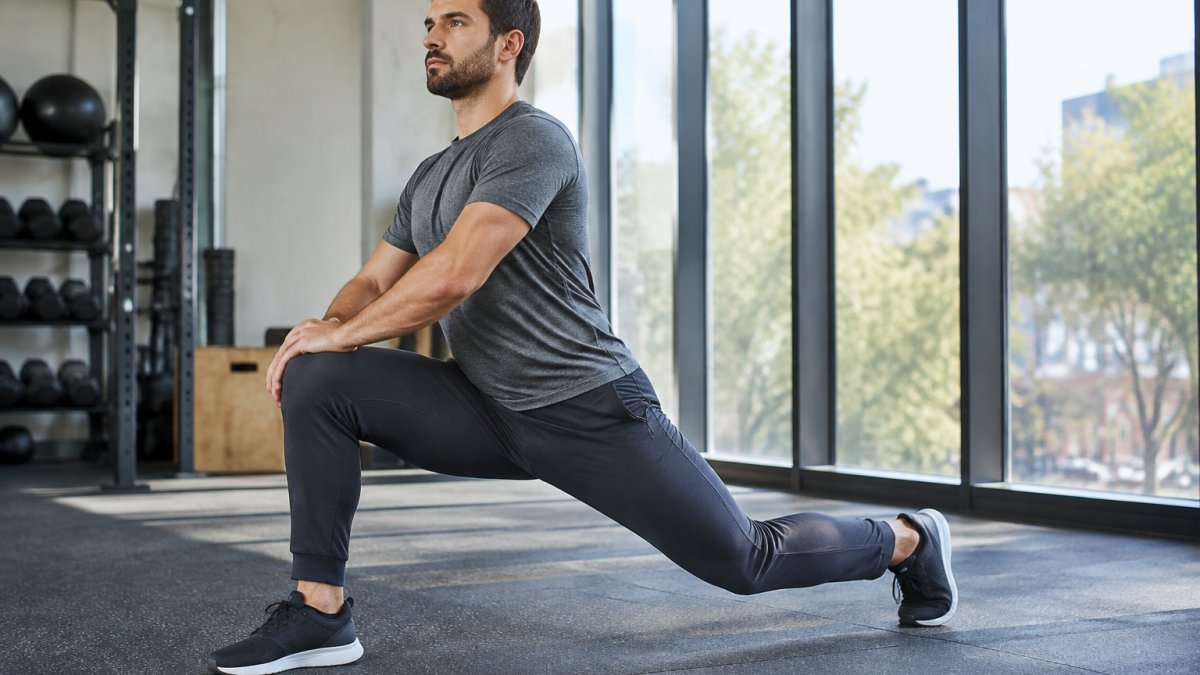
Fabric construction decides how that stretch behaves. A circular knit with spandex throughout the yarn stretches uniformly in all directions. A cheaper fabric with spandex only in one direction will pull and bind the moment you move sideways.
What most guides miss is that stretch direction affects fit as much as mobility. A jogger with strong vertical stretch holds its shape at the waistband and cuffs, which is why consistent fit is possible at all. Weak recovery in either direction is what produces sagging knees and rolled waistbands.
Finding the Best Fabric for Workout Joggers by Training Intensity
The best fabric for workout joggers changes with how hard you train, but the decision is not just fiber type.
Here is how the main training categories map to fabric choice, with the jogger-specific reasoning behind each:
- High-intensity training and CrossFit: nylon-spandex blends in a circular knit. You need abrasion resistance for barbell contact and floor work plus maximum recovery for explosive, deep-range movements. Look for a fabric that snaps back at the knee after a deep squat rather than staying baggy.
- Running and sprinting: polyester-spandex. Prioritize quick-drying and lightweight over abrasion resistance, because road and treadmill work rarely abrades the fabric the way a gym floor does. A lighter weight also reduces heat buildup on longer efforts.
- Lifting: a durable nylon blend with strong shape retention at the knee and hip. A gusseted crotch, where an extra panel of fabric is sewn into the inseam, removes the seam that otherwise pulls in a deep squat and is one of the clearest signs a jogger was designed for lifting rather than lounging.
- Yoga and mobility work: a lighter, double-brushed stretch jersey that moves without bulk. Four-way stretch matters more here than abrasion resistance, because the fabric is being asked to follow a full range of motion rather than survive contact with equipment.
- Warmups and recovery days: Pima cotton joggers, which are wrinkle-resistant and comfortable when sweat output is low. Cotton absorbs rather than wicks, so it is the wrong choice for the working sets and the right choice for the walk to and from the gym.
- Hiking and mixed outdoor training: nylon blends for durability against trail abrasion, with a slightly heavier fabric weight than a gym-only jogger so branches and pack straps do not pill the surface.
Climate matters too, and it interacts with fabric weight rather than replacing it. In hot, humid conditions, lighter fabric weight and breathability matter more than compression, and a polyester-spandex blend dries faster between sets.
The waistband and cuffs deserve their own check because they fail first. A waistband with a high spandex percentage and a wide elastic band holds tension better than a narrow band with a token stretch percentage, and a knit cuff recovers better than a woven one that has no give.
Watch out: a jogger can pass the fitting-room stretch test and still fail in training, because the fitting room does not load the waistband and cuffs the way a deep squat and a shoe pull-on do. Test the recovery of those two zones before you buy, not after the first wash.
How to Wash Performance Apparel So Stretch Lasts
Wash performance apparel in cold water on a gentle cycle and skip the fabric softener, because heat and softener both break down spandex elasticity over time. That single habit is the difference between joggers that hold their shape for years and ones that go slack in months. But the care story for training joggers goes beyond temperature, and the parts most guides skip are the ones that decide whether the garment survives past the first year.
Start with the mechanism.
- Turn garments inside out before washing
- Use cold water, never hot
- Choose a gentle or athletic cycle
- Skip fabric softener and dryer sheets entirely
- Use a mild detergent without added softeners
- Air dry or tumble on low heat only
- Avoid washing with towels or abrasive items that cause pilling
- Close zippers and fasten hook-and-loop closures before washing to stop them snagging the knit
- Wash joggers separately from heavy cotton items that shed lint into the brushed interior
The jogger-specific failure modes are worth naming. Pilling concentrates at the inner thigh and seat because that is where friction is highest, and washing with towels or abrasive items accelerates it.
For the full routine, our guide on how to maintain athletic fabric performance goes deeper on detergent choice, drying, and storage.
How Long Do Workout Clothes Last With Regular Training?
Watch out: the earliest warning sign is not a hole. It is a waistband that no longer snaps back or knees that stay baggy after you stand up. Once recovery is gone, the garment is done, even if it still looks intact.
Signs your joggers are near the end:
- Waistband rolls or sags during movement
- Knees stay stretched out after washing
- Pilling along the inner thigh and seat
- Fabric feels thinner and slicker than when new
- Persistent odor that survives a wash
A University of Kentucky thesis evaluating legging performance examined the features consumers want and the problems they encounter with stretch garments, which is a reminder that fit and durability complaints are longstanding, not new.
Choosing Your Training Joggers From Greatness Wins
Choosing the right jogger comes down to matching fiber composition to your training, then buying from a maker whose fit you can trust. Here is how our lineup maps to the fabric comparison above.
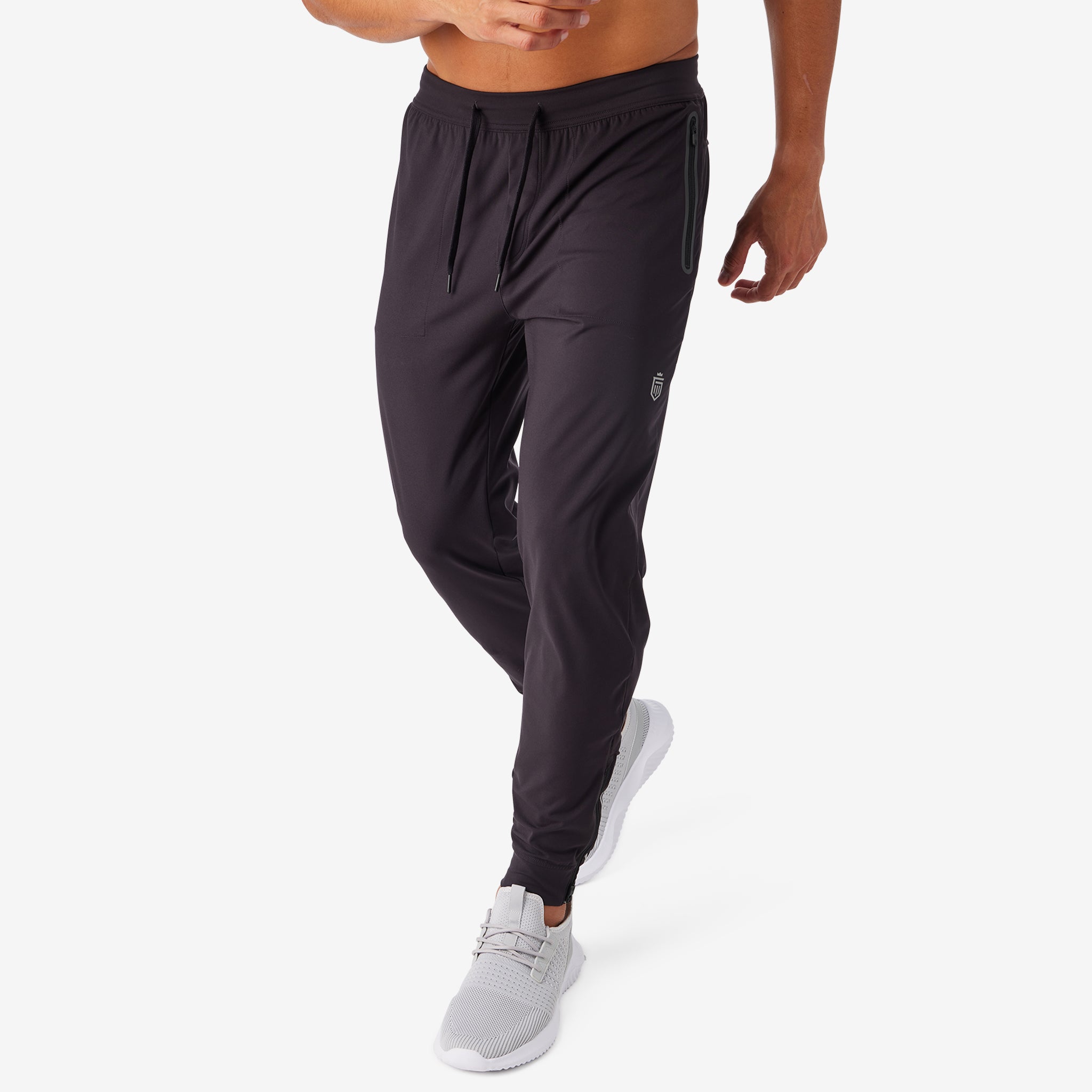
The Core Tech Jogger is our all-sport pick at $105.00, built with an ultra-soft double-brushed hand feel, durability, and a consistent fit for everything from lifting to yoga. For strength and agility work, the Performance Tech Jogger at $109.00 uses a highly durable nylon-spandex blend with zip vents at the leg openings so you can pull them on over your shoes. If you want an elevated cotton option for warmups, the All-Purpose Essential Jogger at $99.00 is made with Pima cotton, a longer-fiber cotton that resists wrinkles.
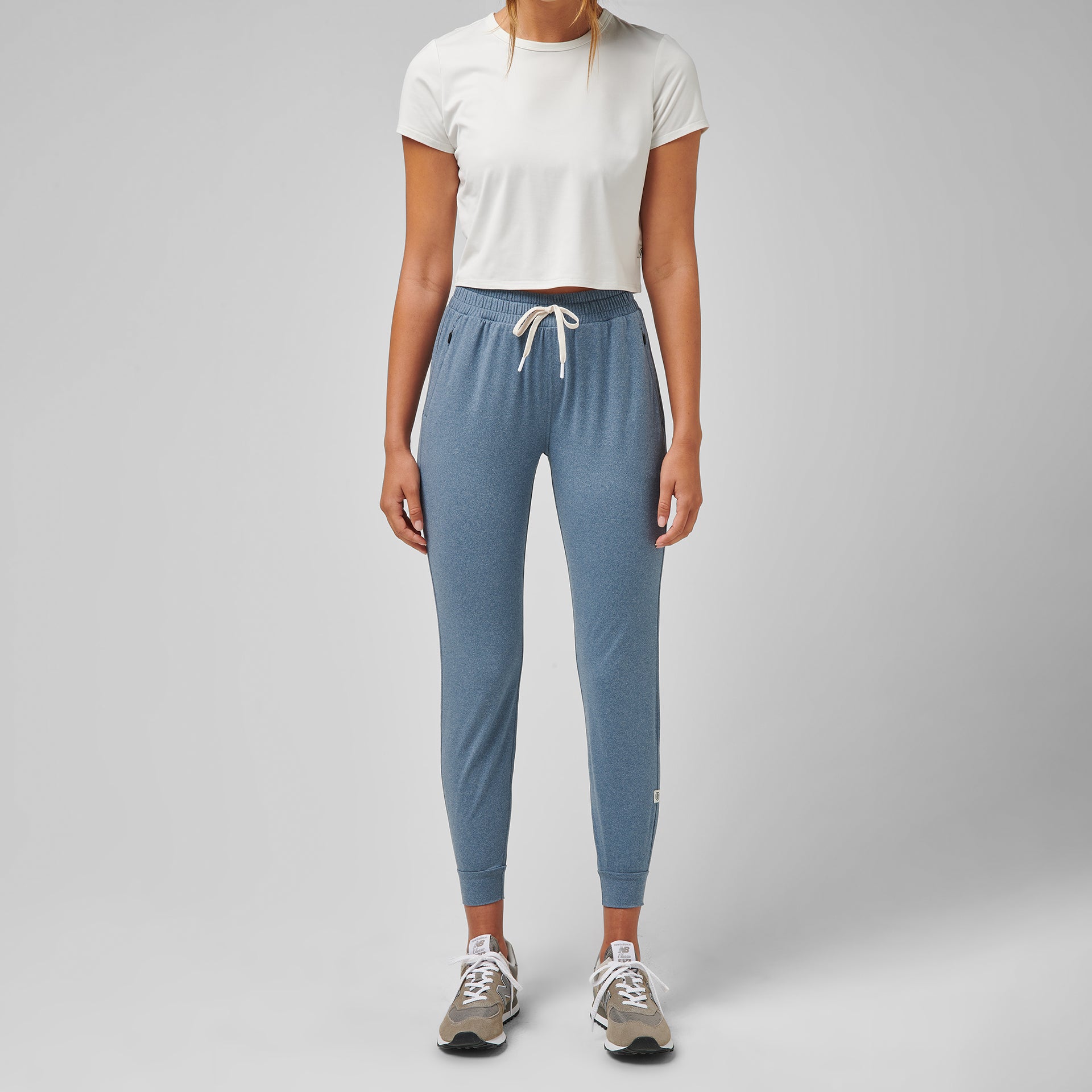
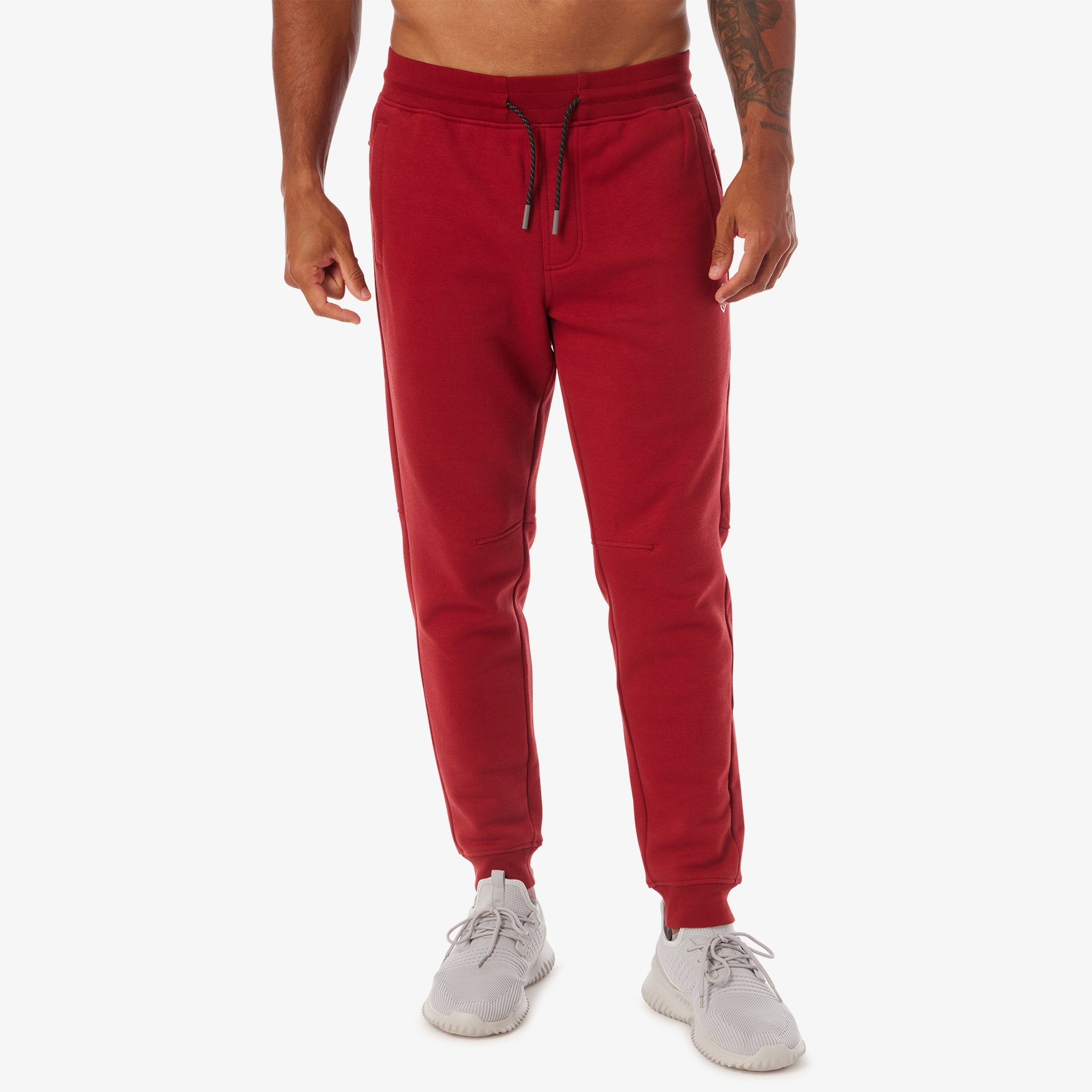
For women, the Slender Jogger at $94.00 is cut from a lightweight, double-brushed stretch jersey that moves at any pace. And the Performance Sweatpant at $65.00 pairs a soft, durable performance fleece with elevated design details for rest days.
Orders over $100 ship free, and returns within the U.S. are free.
The stretch fabric in your joggers is the difference between gear that supports your training and gear that quits on you mid-session. Match the fiber to your intensity, wash it cold, and replace it when recovery goes. Greatness Wins builds performance joggers with the fiber blends, consistent fit, and durability that serious athletes expect, from the Core Tech Jogger to the nylon-spandex Performance Tech Jogger. Get started with Greatness Wins and train in gear built to keep up.
Frequently Asked Questions
What fabric is best for training joggers?
Synthetic blends win for training. A nylon-spandex blend gives the best balance of stretch, durability, and quick drying for high-impact work. Polyester blends cost less and wick sweat well but can pill faster under heavy abrasion. Cotton, including Pima cotton, feels soft and resists wrinkles but holds moisture, so it suits low-impact days rather than sweaty sessions. Match the fiber to your training intensity, not to the look of the jogger.
Is nylon or polyester better for workout joggers?
Nylon is stronger and more abrasion-resistant, which matters if you train on turf, do floor work, or wear the same joggers several times a week. Polyester is lighter and cheaper and moves sweat off the skin quickly. In practice, the nylon vs polyester athletic wear decision comes down to durability versus cost: pick nylon-spandex for high-impact training and polyester blends for lighter sessions or warmer conditions where breathability matters more than toughness.
How much spandex should training joggers contain?
Check the fiber percentage on the label before you buy. Spandex, or elastane, supplies stretch and recovery, and the right blend depends on how much range of motion your training requires.
How should you wash and dry performance joggers?
Turn them inside out, wash cold on a gentle cycle with a small amount of mild detergent, and skip fabric softener, which coats fibers and blocks moisture-wicking. Avoid the dryer on high heat because heat degrades elastane and speeds up stretch loss. Hang or lay flat to dry. Washing after every wear keeps sweat salts from breaking down the elastic fibers, and following these steps is the core of how to wash performance apparel so it keeps its shape.
Prices of Greatness Wins Joggers and Sweatpants