Table of Contents
- Essential Fabrics for Hot Yoga Performance
- Why Cotton Fails in High-Heat Training
- What to Wear to Hot Yoga: Top Picks
- Hot Yoga Leggings: Full Coverage for Intense Sessions
- Hot Yoga Shorts: Lightweight Alternatives
- Fabric Longevity: How Your Gear Survives Sweat Cycles
- Care and Maintenance for High-Performance Activewear
- Frequently Asked Questions
Last Updated: October 6, 2026
Essential Fabrics for Hot Yoga Performance
The foundation of any athletic gear hot yoga practice is fabric that moves moisture away from your skin rather than absorbing it. In a heated studio, synthetic fibers outperform natural materials because they evaporate sweat quickly instead of trapping it against your body.
Moisture-wicking synthetics like nylon-spandex blends and polyester keep you cooler and drier throughout your session. According to a systematic review published in PubMed Central, a single hot-yoga session increases core temperature and heart rate compared with non-heated yoga, making fabric choice critical for comfort and performance.
Look for four-way stretch, which recovers shape in all directions during downward dog, warrior poses, and deep stretches. Flatlock seams (stitched on the outside) prevent chafing, and seamless construction eliminates pressure points where sweat accumulates.
High-quality athletic gear for hot yoga should feature quick-dry, hydrophobic properties. The best fabrics balance breathability with durability, holding up through dozens of wash cycles without losing stretch or moisture-wicking performance.
Why Cotton Fails in High-Heat Training
Cotton is the enemy of hot yoga. It feels soft at room temperature but absorbs sweat like a sponge and clings to your skin, making you feel heavier and hotter as your session progresses.
ALIVE Studios' guide to hot yoga apparel explicitly advises against cotton and loose joggers, recommending fitted synthetic shorts or leggings instead. Cotton holds moisture against your body, which actually increases your core temperature rather than helping you cool down. The fabric also takes significantly longer to dry, meaning you'll feel uncomfortable for hours after class ends.
Loose-fitting cotton pieces are doubly problematic: they lack compression support during intense poses and trap hot, humid air against your skin. Moisture-wicking synthetics move sweat away so it can evaporate, which is what keeps you cool.
When shopping for what to wear to hot yoga, reject anything labeled as cotton-blend unless the synthetic content is at least 85%. Even then, prioritize pure synthetic options for superior performance in high-heat environments.
What to Wear to Hot Yoga: Top Picks
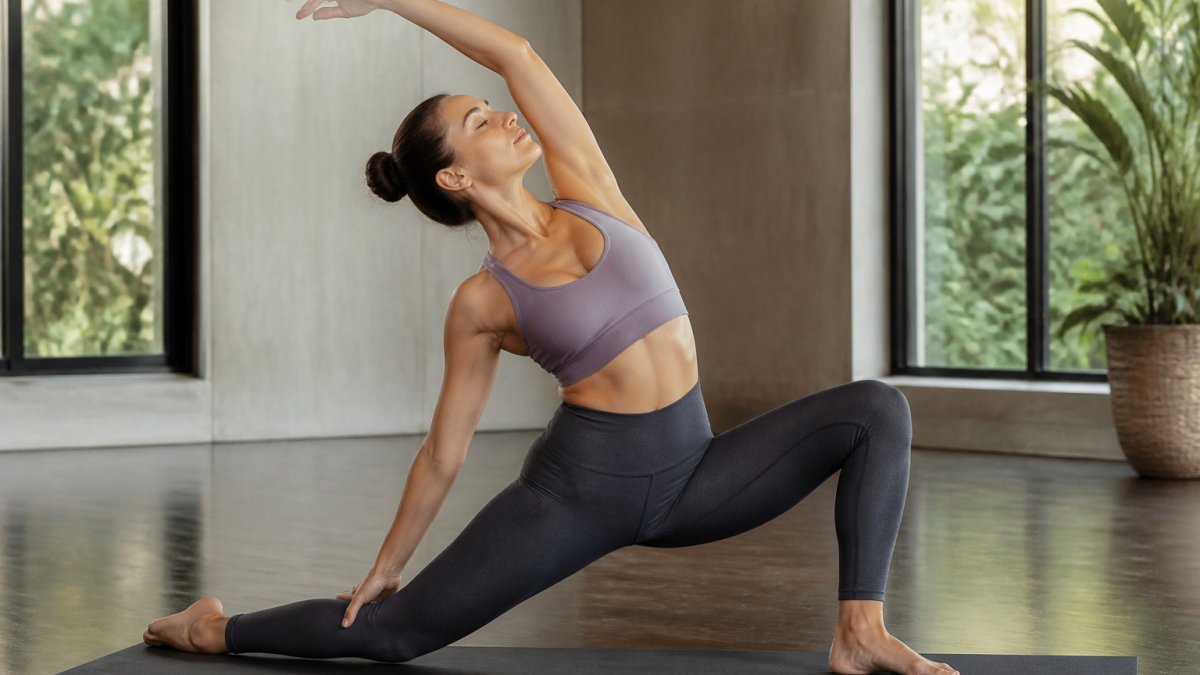
The best athletic gear for hot yoga combines minimal coverage with maximum support, letting heat dissipate while keeping you secure through dynamic movements.
Sports Bra Support for Heat and Movement
A quality sports bra is non-negotiable for hot yoga. The Square Neck Essential Bra from Greatness Wins delivers medium-to-high support with a brushed interlock knit that wicks moisture while keeping you dry. The anti-microbial treatment prevents odor buildup during intense sessions, and the soft construction won't dig into your ribs or shoulders during backbends.

The square neckline provides full coverage with shoulder mobility, preventing strap slippage during inversions.
Pros:
- Moisture-wicking and anti-microbial treatment
- Supportive fit through dynamic movements
- Soft, breathable fabric that doesn't irritate skin
Cons:
- Medium support may not suit high-impact cross-training
- Limited color options compared to fashion-focused brands
Tank Tops and Minimal Coverage Options
For those who prefer more coverage, Vitality's 2026 workout-class guide identifies sports bras, crop tops, and short or biker shorts as cooler alternatives to full-length coverage. Minimal-coverage tops allow maximum heat dissipation while keeping you supported.
The Greatness Wins Core Tech Tank ($58) pairs a performance jersey with moisture-wicking and anti-microbial technology. The design prioritizes full upper body range of motion, making it ideal for vinyasa flows and arm balances. The featherweight Performance Training Tank ($45) offers even more breathability for those who run hot, with super-durable fabric that maintains consistent fit through repeated washes.
Pros:
- Maximum breathability and heat dissipation
- Anti-microbial treatment reduces odor
- Durable construction survives frequent washing
Cons:
- Less coverage than traditional sports bras
- May require additional support for larger frame sizes
Hot Yoga Leggings: Full Coverage for Intense Sessions
High-waisted leggings remain the most popular choice for hot yoga, providing full leg coverage with a fitted silhouette that lets heat escape. The High Output Sports Legging from Greatness Wins ($95) delivers breathable double-jersey interlock knit with ergonomic seaming for agility through challenging sequences.

Side leg pockets store keys or a phone, and the high-waist design prevents roll-down.
Pros:
- Full leg coverage with minimal restriction
- Side pockets add practical functionality
- High-waist design prevents rolling or slipping
Cons:
- Higher price point than shorts
- May feel restrictive for those preferring minimal coverage
- Requires proper care to maintain shape through wash cycles
Hot Yoga Shorts: Lightweight Alternatives
Shorts offer superior heat dissipation for those who prefer minimal leg coverage. The High Waist Essential Short ($68) features double-brushed interlock knit with moisture-wicking performance and side pockets, with a high-waist cut that supports without trapping heat.
The Baselayer Short ($49) adds mesh ventilation in high-heat zones with lightweight fabric that covers without weighing you down, balancing protection with maximum airflow.
Pros:
- Maximum heat dissipation and breathability
- Lightweight construction reduces drag
- Mesh ventilation accelerates evaporation
Cons:
- Less coverage may not suit all practitioners
- Requires confidence wearing minimal leg coverage
- Limited pocket options in some designs
Fabric Longevity: How Your Gear Survives Sweat Cycles
Why heat and sweat accelerate fabric breakdown
Sweat itself isn't the enemy of synthetic fabric, the combination of moisture, heat, and repeated washing is. In a heated room, nylon-spandex or polyester fibers absorb thermal energy and polymer chains soften. Add movement friction and wash agitation, and you get hydrolytic degradation: a slow breakdown that shows up as lost stretch, pilling, and thinning.
Cotton is far more vulnerable. Cotton fibers are cellulose-based and swell when wet, weakening the fiber wall. Pure synthetics last far longer, but aren't indestructible.
What actually predicts longevity
Three factors matter more than brand or price:
- Spandex content. Look for 15-25% spandex or elastane. Below 10%, the fabric may not recover its shape after repeated stretching. Above 30%, the garment can feel restrictive and may degrade faster because elastane is the most heat-sensitive component.
- Knit construction. Double-knit interlock fabrics, like those used in the Greatness Wins High Output Sports Legging, resist pilling and seam stress better than single-jersey knits. Flatlock seams distribute tension across a wider area, which delays the seam failure that typically ends a legging's life.
- Fiber denier. Higher-denier nylon (often labeled as 40D or 50D) is thicker and more abrasion-resistant than low-denier alternatives. You won't always see denier on a hangtag, but you can feel the difference: higher-denier fabric has a denser, more substantial hand.
The wash-cycle reality
You can slow the decline: wash cold, skip the dryer, and avoid fabric softener. Heat is the biggest accelerant of spandex degradation, and the dryer is the most common source of heat damage at home.
A note on anti-microbial treatments
Many hot yoga pieces, including the Greatness Wins Square Neck Essential Bra and Core Tech Tank, use anti-microbial finishes to control odor. These are effective but not permanent: silver-ion and zinc treatments typically fade after 30-50 washes. Moisture-wicking remains, but odor control weakens. For lasting odor resistance, look for anti-microbial properties built into the fiber itself rather than applied as a surface finish.
When to replace your gear
Replace leggings or shorts when you notice any of the following: permanent odor that persists after washing, visible thinning in high-stretch areas (knees, seat, inner thighs), elastic that no longer recovers, or seams that have started to separate. These are signs that the fabric has reached the end of its functional life, and no amount of careful washing will bring it back.
Care and Maintenance for High-Performance Activewear
The wash routine that actually works
Turn garments inside out before washing to reduce exterior friction and pilling. Use cold water on a gentle cycle, hot water accelerates spandex degradation and causes synthetic fibers to lose shape memory.
Skip fabric softener entirely, its molecules coat synthetic fibers and block the capillary action that pulls sweat away, reducing wicking for several washes. Bleach is equally damaging, breaking down nylon and spandex at the molecular level.
Use a mild, tech-friendly detergent. Many mainstream detergents contain enzymes and optical brighteners that leave residue on performance fabrics.
Drying and storage
Air dry whenever possible in a well-ventilated, shaded area, UV degrades synthetic fibers. If you must use a dryer, choose the lowest heat setting and remove garments while slightly damp.
Store clean, dry gear in a cool, dark place. Never leave sweaty gear in a gym bag or car, moisture plus heat breeds odor-causing bacteria.
Odor-resistant technology: what works and what doesn't
Odor is the top complaint among hot yoga practitioners, and where marketing claims most often outpace reality. Here's what the technology actually does:
- Silver-ion treatments. Silver ions disrupt the metabolic processes of odor-causing bacteria. They are effective and widely used, but they are surface treatments that fade after roughly 30-50 washes.
- Zinc-based treatments. Similar mechanism to silver, often used in garments marketed as 'odor-neutralizing.' Zinc treatments tend to be more durable than silver but can leave a slight residue on skin for some users.
- Built-in antimicrobial fibers. Some premium fabrics incorporate antimicrobial agents into the polymer itself rather than applying them as a finish. These retain odor resistance far longer, often for the life of the garment, but they typically cost more.
- Merino wool blends. Wool naturally resists odor because its fiber structure traps bacteria and releases them only when washed. Merino blends can work in hot yoga, but they are warmer than pure synthetics and may not suit practitioners who run hot.
A practical test: after washing, sniff the underarm and crotch areas of your gear before it fully dries.
Sustainability: eco-friendly synthetics that survive the heat
One of the biggest gaps in hot yoga gear advice is sustainability. Traditional nylon and polyester are petroleum-based, but recycled and bio-based alternatives now perform nearly as well as virgin synthetics in high heat.
- Recycled polyester (rPET). Made from post-consumer plastic bottles, rPET has the same moisture-wicking and durability properties as virgin polyester. It is the most widely available sustainable option and is used by many major activewear brands.
- Recycled nylon (ECONYL and similar). Regenerated nylon from fishing nets and carpet waste performs identically to virgin nylon and holds up well in hot yoga conditions. It is more expensive than rPET but offers superior stretch recovery.
- Bio-based spandex. A newer category, bio-based spandex is derived from plant sources rather than petroleum. It performs similarly to conventional spandex but is not yet widely available in hot yoga-specific garments.
When evaluating sustainable options, look for third-party certifications such as Global Recycled Standard (GRS) or Bluesign. These verify that recycled content claims are accurate and that the manufacturing process meets environmental and safety standards.
Inspection and replacement
Inspect seams and elastic every few weeks. Separating flatlock seams, waistbands that no longer lie flat, and translucent high-stretch areas all signal the end of useful life.
Frequently Asked Questions
What is the best activewear to wear for hot yoga?
The best athletic gear for hot yoga combines moisture-wicking synthetic fabrics, supportive sports bras or fitted tops, and either high-waisted leggings or shorts. A 2025 systematic review found that hot yoga increases core temperature and heart rate, making fabric choice critical for comfort and performance. Look for four-way stretch, seamless construction, and anti-microbial treatment to manage sweat and odor during intense sessions.
Is it better to wear shorts or leggings for hot yoga?
Both work, depending on your preference and studio environment. Hot yoga shorts offer maximum breathability and heat dissipation, making them ideal if you run hot or prefer minimal coverage. Hot yoga leggings provide compression-fit support and range of motion for complex poses while keeping you covered. Choose based on comfort level and the specific poses your practice emphasizes.
What fabric is best for hot yoga clothes?
Moisture-wicking synthetic fibers like nylon-spandex blends, Lycra, and polyester are essential for hot yoga. These materials have superior evaporation rates and hydrophobic properties compared to cotton, which absorbs sweat and becomes heavy. Look for performance fabrics with four-way stretch and quick-dry technology to maintain thermal regulation and prevent chafing during high-intensity practice.
How do I keep hot yoga clothes from slipping when you sweat?
Choose high-waisted designs with non-slip waistbands that anchors fabric in place. Seamless construction and flatlock seams reduce friction and prevent bunching. Compression-fit leggings and shorts with opaque, durable fabrics stay secure even during heavy sweating. Avoid loose joggers or cotton, which slip and shift as sweat reduces friction.