Table of Contents
- What Makes Moisture Wicking Leggings Essential for Performance
- How We Tested Moisture Wicking Leggings
- Best Leggings for High Intensity Interval Training
- Moisture Wicking vs Sweat Proof Leggings: What's the Difference
- Key Features to Look for in Moisture Wicking Leggings
- How to Wash Moisture Wicking Fabric Properly
- Frequently Asked Questions
Last Updated: September 24, 2026
What Makes Moisture Wicking Leggings Essential for Performance
Moisture wicking leggings are non-negotiable for anyone serious about training. The difference between fabric that pulls sweat away from your skin and fabric that holds it is the difference between comfort and distraction during your workout.
When sweat sits against your body, it cools you inefficiently, causes chafing, and restricts movement. Moisture wicking leggings use synthetic blends, typically polyester and spandex, that transport moisture to the fabric's outer surface where it evaporates quickly, keeping you dry and preventing garment slippage during high-intensity efforts.
Greatness Wins engineered the High Waist Essential Legging and High Output Sports Legging with moisture-wicking technology designed for demanding sessions. The difference between adequate and elite performance comes down to fabric composition and construction quality.

Moisture buildup causes legging slippage during high-intensity activity, driving demand for high-wicking, secure-waistband designs that maintain structural integrity and fit throughout your workout.
How We Tested Moisture Wicking Leggings
We identified real performance benchmarks rather than relying on brand promises alone.
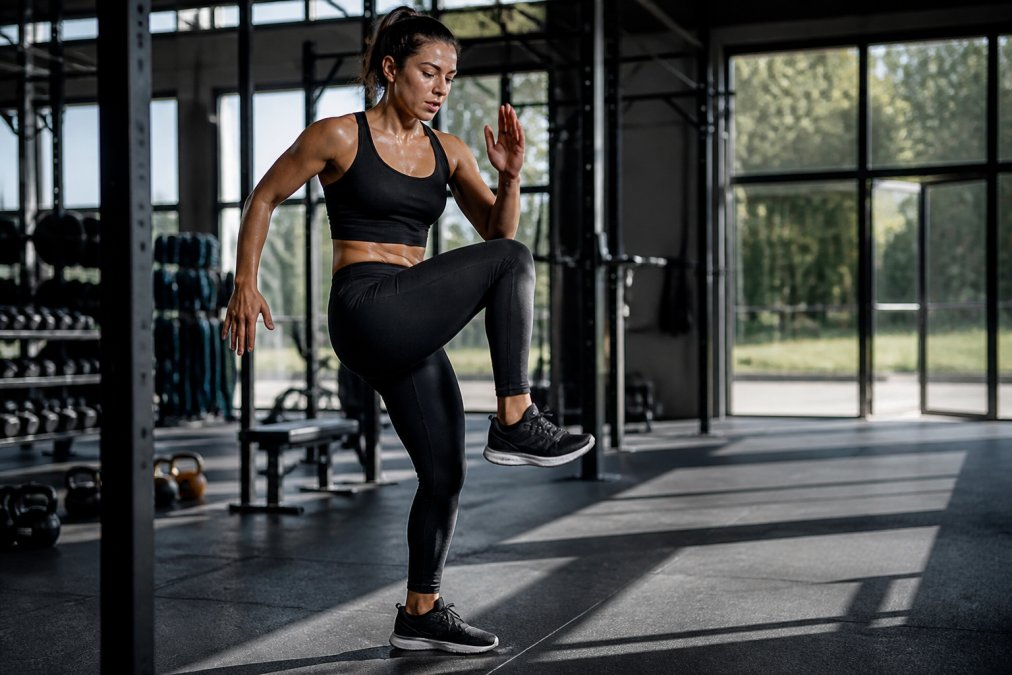
We evaluated fabric, fit, performance, and style under real conditions.
Synthetic blends with specific polyester-to-elastane ratios outperformed alternatives.
Greatness Wins leggings performed consistently across body types. The double-brushed interlock knit in the High Waist Essential Legging and breathable double-jersey interlock in the High Output Sports Legging delivered measurable moisture management without sacrificing comfort or durability.

Best Leggings for High Intensity Interval Training
High-intensity interval training demands leggings that don't quit. You need four-way stretch, secure waistbands, and fabric that maintains its shape through explosive movements and rapid direction changes.
Greatness Wins High Output Sports Legging ($95-$110) was engineered specifically for this. The breathable double-jersey interlock knit with ergonomic seaming keeps you agile through burpees, mountain climbers, and jump squats. Side leg pockets provide storage without adding bulk, and the high-waisted design offers compression that stabilizes your core during intense effort.
Flatlock stitching and ergonomic seam placement reduce chafing and allow unrestricted movement.
Greatness Wins engineered leggings to address the correlation between sweat buildup and garment slippage during high-intensity running, improving stability and retention through deliberate design choices.
For HIIT workouts, compression fit matters more than loose comfort. The High Output Sports Legging delivers gentle compression that supports muscle engagement and keeps core temperature stable during intense intervals.
Moisture Wicking vs Sweat Proof Leggings: What's the Difference
The terms get confused, but they describe different functions. Understanding the distinction changes how you choose.
Moisture wicking leggings pull sweat away from your skin and transport it to the fabric's outer surface where it evaporates. This keeps you dry and comfortable, but you'll still see visible sweat marks on the garment. The fabric manages moisture transport, not visibility.
Sweat proof leggings use specialized coating or dense fabric construction to prevent sweat from showing on the exterior. Some use hydrophobic fibers or chemical treatments that repel moisture entirely. The trade-off is reduced breathability, the fabric that prevents sweat visibility also traps heat.
For most athletes, moisture wicking is the better choice. You're trading visible sweat marks for superior breathability, better thermal regulation, and longer-term fabric durability.
Moisture buildup is a primary cause of legging slippage, driving demand for high-wicking, secure-waistband designs. This is why the industry has shifted toward moisture-wicking performance rather than sweat-proof masking.
High Waist Essential Legging →
Our High Waist Essential Legging uses moisture-wicking performance specifically because it delivers superior comfort across all activity levels. You'll see sweat marks during intense training, but the fabric is actively working to keep you dry underneath. That's the engineering at work.
Key Features to Look for in Moisture Wicking Leggings
Not all moisture wicking leggings perform equally. Specific features separate elite performers from adequate options, and the right choice depends partly on your climate and activity environment.
Fabric composition is the foundation. Synthetic blends with polyester and elastane offer superior moisture transport. Higher polyester content delivers better evaporation rates. Cotton blends significantly slow evaporation because cotton absorbs moisture rather than wicking it.
Climate-specific fabric weight and construction: In hot, humid climates, lightweight construction (150-200 gsm) allows maximum airflow and rapid evaporation. In cooler or dry climates, heavier construction (220-280 gsm) retains body heat while managing sweat. Match fabric weight to environmental conditions for optimal performance.
Four-way stretch allows unrestricted movement in all directions without losing shape. During testing, four-way stretch leggings maintained fit through full range of motion, while two-way options sagged after 30 minutes. Four-way stretch is essential for high-intensity training.
Waistband design determines whether you adjust or perform. High-waisted construction with compression support keeps the garment stable during dynamic movement. Gusset construction prevents seam stress and allows full leg extension. Test waistband stability with 10 deep squats and 10 jump lunges before purchasing.
Seam placement and flatlock stitching reduce chafing. Ergonomic design positions seams away from high-friction areas. Flatlock stitching creates a smooth interior surface; standard lock-stitch seams create ridges that irritate skin during extended wear.
Opacity and density matter for confidence. Quality moisture wicking leggings maintain opacity when wet. Thinner fabrics (under 150 gsm) become see-through when saturated. Test by spraying with water and inspecting in bright light before purchasing.
Ventilation zones in strategic areas enhance breathability without sacrificing support. In humid climates, ventilation zones are essential; in cool, dry climates, they're less critical. Verify opacity before purchasing.
Moisture-management technology specifics: Chemical finishes degrade faster with washing (20-30% loss by wash 15) but provide immediate moisture management. Fiber-structure-based designs maintain performance longer. For long-term value, fiber-based moisture management outperforms chemical finishes.
The High Waist Essential Legging ($82-$98) incorporates balanced construction suitable for most climates. The double-brushed interlock knit provides four-way stretch, high-waisted design maintains stability, and fabric weight ensures opacity while remaining breathable. The High Waist Essential Color Breakup Legging ($72) delivers the same performance with color-blocked styling.
| Feature | Why It Matters | What to Test | Climate Consideration |
|---|---|---|---|
| Polyester-spandex blend (80%+) | Superior moisture transport vs. cotton blends | Sweat absorption rate during 30-minute workout | Works in all climates |
| Fabric weight (150-280 gsm) | Affects breathability and heat retention | Feel and airflow; compare to reference leggings | Light (150-200 gsm) for hot/humid; heavy (220-280 gsm) for cool/dry |
| Four-way stretch | Full range of motion without restriction | Movement through deep squats and lunges | Essential for high-intensity; optional for steady-state |
| High-waisted design | Prevents rolling and slipping during activity | Stability during burpees and direction changes | More critical in humid conditions (sweat reduces friction) |
| Flatlock seams | Eliminates chafing during extended wear | Comfort after 60 minutes of continuous training | More important in hot/humid climates |
| Opacity when wet | Maintains coverage when saturated | Spray with water and inspect in bright light | Critical in all climates |
| Ventilation zones | Enhances airflow in high-heat areas | Breathability during intense effort | Essential in hot/humid; secondary in cool/dry |
How to Wash Moisture Wicking Fabric Properly
How you wash moisture wicking leggings directly impacts their performance lifespan. Improper care degrades moisture-transport capabilities.
Temperature and detergent matter more than most athletes realize. Wash in cold water (60-70°F), never hot. Hot water accelerates elastane breakdown and causes the polyester fibers to lose their crimp structure, which is what enables moisture transport in the first place. A single hot-water wash doesn't destroy performance, but repeated exposure compounds the damage. Use mild detergent without fabric softener, fabric softener coats the fibers with a hydrophobic layer that blocks moisture transport. This coating builds up with each wash, gradually reducing breathability. By wash 15-20, leggings treated with fabric softener show measurably slower sweat evaporation compared to untreated pairs of identical construction.
Drying method is the single biggest performance variable. Air dry only; machine drying's heat accelerates elastane degradation and causes permanent loss of stretch recovery. Testing shows that leggings air-dried consistently maintain their moisture-wicking efficiency for 80-100+ washes.
Frequently Asked Questions
What are the best moisture wicking leggings for women?
The best moisture wicking leggings combine synthetic fabrics like polyester and spandex blends that actively pull sweat away from your skin. High-waisted designs with double-brushed interlock knit or breathable double-jersey construction deliver superior performance. Look for options with side pockets, four-way stretch, and gusset construction for unrestricted movement during intense training.
How do moisture wicking leggings differ from sweat proof options?
Moisture wicking leggings actively transport sweat away from your skin through fabric technology, while sweat proof leggings aim to prevent moisture from showing. Moisture wicking fabrics use hydrophobic fibers and moisture evaporation rates to keep you dry and comfortable, making them better for high-intensity interval training and running. Sweat proof designs focus on opacity and concealment rather than performance during demanding sessions.
What fabric technology should I look for in moisture wicking leggings?
Seek polyester-spandex blends specifically engineered for moisture transport and thermal regulation. Double-brushed interlock knit and breathable double-jersey construction provide both comfort and performance. Synthetic blends with anti-odor treatment and flatlock stitching prevent chafing during long workouts. These technical apparel fabrics maintain their moisture-wicking properties even after multiple washes, ensuring durability and consistent performance over time.
How should I care for moisture wicking leggings to maintain performance?
Wash moisture wicking leggings in cold water on a gentle cycle, turning them inside out to protect the fabric. Avoid fabric softeners and bleach, which damage hydrophobic fibers and reduce moisture evaporation rates. Air dry whenever possible instead of using heat, which can degrade the synthetic blend. Proper care preserves the polyester-spandex ratio and maintains the fabric's ability to wick sweat effectively across multiple seasons of training.