Last Updated: November 11, 2026
Quick Summary
Size girls athletic leggings by measuring her waist, hips, and inseam, then matching those numbers to the specific brand's size chart rather than her pants size. Compare waist first, check length next, and size to the larger measurement when she falls between sizes. Always test the fit with a squat, stride, and bend before cutting the tags.
- A girl wearing size 8 pants might wear XS, S, or M in leggings depending on the brand.
- Measure the waist at its narrowest point, hips at the fullest part, and inseam from crotch seam to just above the ankle bone.
- Take each measurement twice, average the numbers, and remeasure every few months as she grows.
- If waist and hips land in different sizes, size to the larger measurement and look for an adjustable waistband.
- Wash leggings in cold water and skip the dryer to protect stretch fibers and keep fit from loosening.
Table of Contents
- Why a Pants Size Won't Tell You Her Leggings Size
- How to Measure for Girls' Leggings
- Reading a Leggings Size Chart for Kids
- How Should Leggings Fit at the Waist and Through the Leg?
- Girls' Size 14/16 Compared With Women's Sizes
- Between Sizes? Match the Fit to Her Sport
- Fit Problems to Solve Before She Grows Out of Them
- Measure Once, Then Shop Greatness Wins
- Frequently Asked Questions
Why a Pants Size Won't Tell You Her Leggings Size
A girl who wears size 8 pants might wear XS, S, or M in leggings, depending on the brand, waist, length, and compression, according to Greatness Wins' 2026 guide to durable athletic leggings for active girls. That single fact explains most sizing frustration parents run into.
Girls athletic leggings sizing works differently from pants sizing. Pants carry a number. Leggings depend on measurements, fabric stretch, and how she moves in them.
This guide shows you how to measure, read a chart, and pick the right pair the first time. Below, we cover the exact steps plus the fit problems that show up after a few weeks of wear.
Here's what most guides get wrong: they hand you a chart and stop. A chart is a starting point, not an answer.
How to Measure for Girls' Leggings
You need three numbers: waist, hips, and inseam. Take them with a soft tape measure over light clothing, and write each one down. Measuring a girl is different from measuring an adult because her body is still changing, so the goal is a clean reading of where she is today, not a guess about where she will be next season.
- Waist: Measure around the narrowest part of her torso, usually just above the belly button. On younger girls the natural waist can be hard to find, so have her bend sideways, the crease that forms is a reliable landmark.
- Hips: Wrap the tape around the fullest part of the hips and seat, keeping it level. This is usually 6 to 8 inches below the waist on a girl, but let her body tell you where the fullest point is rather than measuring a fixed distance.
- Inseam: Measure from the crotch seam down to where you want the hem to land. For leggings, that is usually just above the ankle bone. Have her stand with feet flat and legs straight.
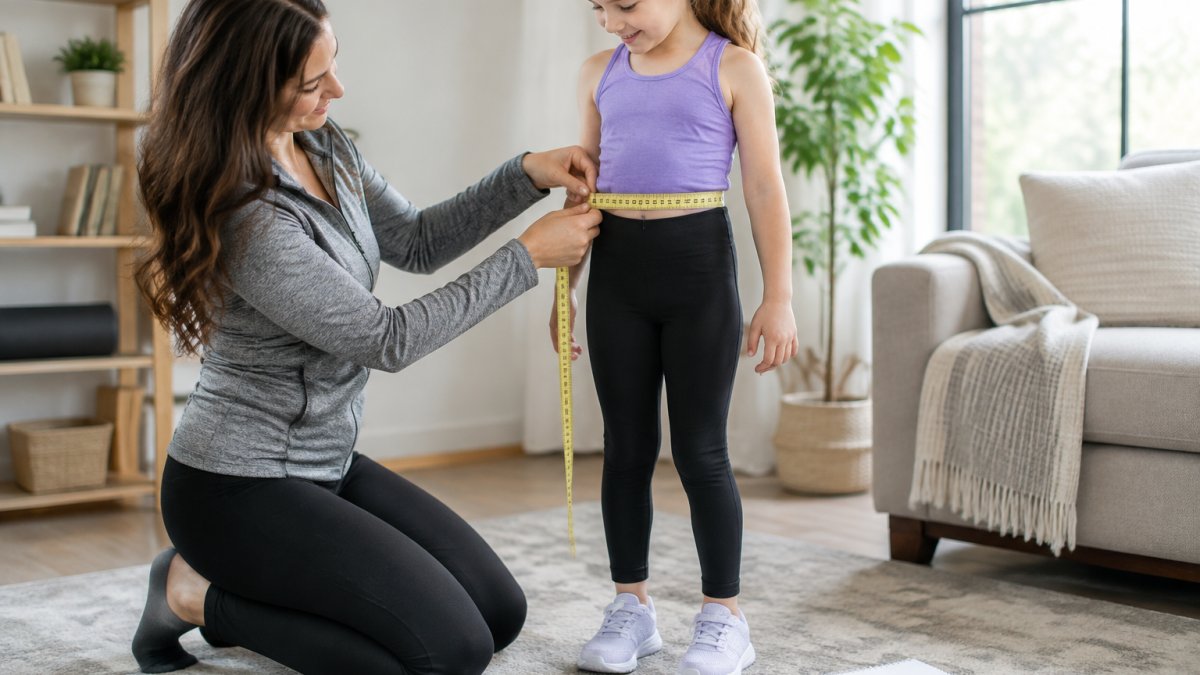
Stand behind her for the waist and hip readings so the tape stays level. Have her stand tall and breathe normally. Don't pull the tape tight, it should touch the body without compressing it.
If you don't have a fabric tape measure, use a piece of string or a phone charging cable, mark the length against a ruler or a yardstick, and record the number. A cloth ruler from a sewing kit works too.
Watch out: measuring over thick clothing or a bulky sweatshirt adds inches and pushes you into the wrong size. Measure over a fitted tee and leggings or shorts, or in undergarments if she is comfortable.
Take each measurement twice and use the average if the numbers differ. Girls grow quickly, so remeasure every few months rather than relying on a number from last year. Record the date next to each measurement so you know when it is due for a refresh.
Reading a Leggings Size Chart for Kids
A leggings size chart for kids lists waist and hip ranges next to letter sizes, and those ranges vary by brand. Nike's girls' chart, for example, includes plus-size labels like S+, M+, and L+ alongside standard sizes, with numeric ranges such as 8-9 Plus and 14-16 Plus, according to Nike's girls' clothing size chart.
That means one brand's Medium is not another brand's Medium. Always match her measurements to the specific chart in front of you, not to the size on her old pair.
Two habits keep this simple:
- Compare waist first, since leggings fail at the waistband before anywhere else.
- Check inseam or garment length next, especially for taller or shorter girls.
If her waist lands in one size and her hips in another, size to the larger measurement and check whether the waistband adjusts.
How Should Leggings Fit at the Waist and Through the Leg?
Leggings should fit snug at the waist without digging in, and close through the leg without restricting movement. The fabric should feel like a second skin, not a tourniquet.
Test the waistband by having her squat, stride, and bend. It should stay put without rolling down. If it slides or bunches, the rise or size is off.
Through the leg, look for smooth coverage with no sheer spots when she bends. Compression should feel supportive. A restrictive fit shows up as pinching at the knee or a waistband that leaves red marks.
Here's the difference in plain terms: snug means the fabric follows her. Restrictive means she fights the fabric.
Girls' Size 14/16 Compared With Women's Sizes
A girls' size 14/16 sits near the top of the youth range and often overlaps with the smallest women's sizes. The two systems are built differently, though, so the numbers are not interchangeable.
Youth 14/16 is cut for a girl's proportions: narrower hips, shorter rise, and a straighter leg. Women's sizing assumes a fuller hip and longer inseam. A girl who measures into 14/16 may find a women's XS too long or loose in the hip.
Sizing research backs up the inconsistency. A 2020 Washington State University study examined how athletic apparel sizing practices handle plus-size women's fit and found wide variation across the industry, according to the WSU graduate research on plus-size women's athletic apparel sizing. Youth sizing shows the same brand-to-brand gaps.
Use this as a rough guide only:
| Size | Waist Range | Hip Range | Best For |
|---|---|---|---|
| Girls 14/16 | Youth large range | Youth full hip | Most girls ages 10-13 |
| Women's XS | Smallest adult range | Narrow adult hip | Taller girls with fuller hips |
| Between the two | Falls between charts | Falls between charts | Try both, keep the better fit |
Check each brand's own chart before assuming a crossover works.
Between Sizes? Match the Fit to Her Sport
Falling between two sizes is normal, and the right call depends on what she does in the leggings. High-impact sports reward compression. Studio work rewards softness. The mistake is picking a size by the sport label alone instead of testing how the fabric behaves in motion.
- Running and field sports: Size up if the smaller size pinches at the knee. She needs full stride length. Test with a few high knees and a short sprint, the waistband should stay flat and the hem should not climb.
- Gymnastics and dance: A closer fit keeps fabric from catching, but the waistband still has to stay flat. Have her do a straddle stretch and a bridge; if the waistband rolls or the seat pulls sheer, go up a size.
- Golf and training: Pick the size that lets her rotate and swing without the waistband shifting. A torso twist and a bodyweight squat are enough to reveal whether the rise is too low.
- School sports and everyday wear: Prioritize coverage and comfort. A squat test and a bend-over check at the seat catch sheerness before it becomes a problem in class.
Our High Output Sports Legging is built for intense training, with breathable double-jersey interlock knit and ergonomic seaming for agility. For softer all-day comfort, the Motion Legging uses a buttery-soft nylon and spandex blend with gentle compression.
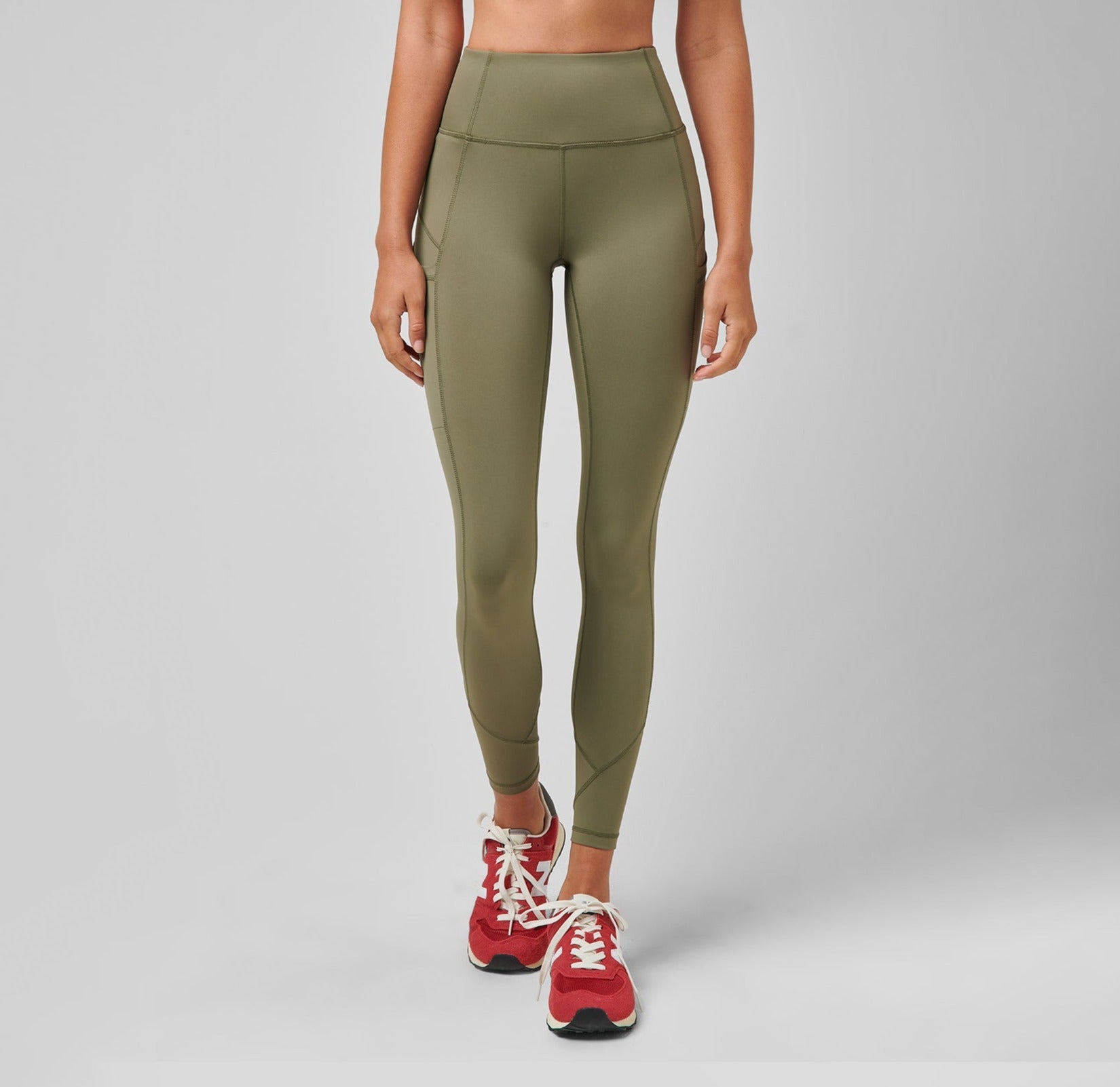
When her waist and hip measurements land in different sizes, size to the larger measurement and look for an adjustable waistband or a drawcord. If the waist gapes but the hips fit, a higher rise or a compression waistband usually solves it better than sizing down. If the hips are tight but the waist fits, size up and check that the leg does not bag at the ankle.
Watch out: a pair that feels right standing still can fail the movement test. Always have her squat, stride, and bend before you cut the tags.
Fit Problems to Solve Before She Grows Out of Them
Growth changes fit faster than wear does. A pair that fits in September can pull at the waist by spring, so plan for adjustability rather than a perfect fit forever.
Watch for these problems:
- Waistband roll-down: Usually a rise or size issue, not a fabric flaw.
- Sheer stretch at the seat: A sign the size is too small for her hip measurement.
- Riding up at the thigh: Often a sign the leg is too long or the compression too light.
- Baggy ankles: Common in taller girls sizing up for length.
Fabric care matters too. Wash leggings in cold water and skip the dryer to protect stretch fibers. Heat breaks down spandex over time, and fit loosens with it.
For a deeper look at pairs built to survive heavy use, read our guide to durable athletic leggings for active girls. Once fit is sorted, our guide on choosing athletic shoes for active kids helps you finish outfitting her for the season.
Measure Once, Then Shop Greatness Wins
Fit comes down to three numbers and one chart. Measure her waist, hips, and inseam, match them to the brand's own size guide, and test the fit with real movement before you commit.
Our High Waist Essential Legging pairs a super-soft, double-brushed interlock knit with moisture-wicking performance and side pockets, priced at $98.00. It's the pair we point most parents toward first. For team orders and budget planning, our guide to affordable athletic wear for youth sports teams covers how to buy for a whole roster.
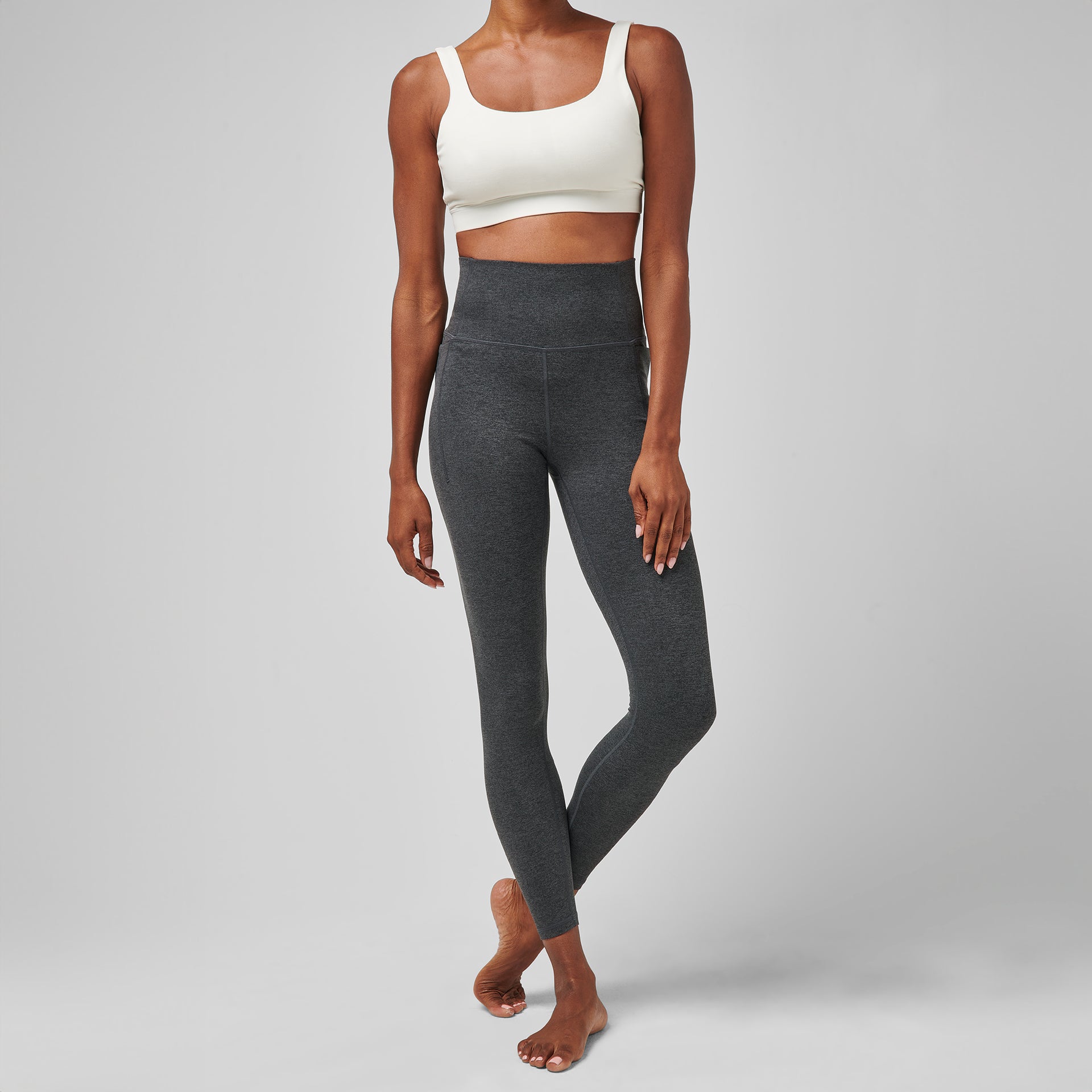
Sizing gets easier when the gear is built to hold its shape. Greatness Wins makes premium athletic apparel with moisture-wicking fabric and consistent sizing, so one good measurement leads to a pair she keeps wearing. Free shipping applies on orders of $100 or more, and free returns are available within the U.S. if the fit misses.
Get started with Greatness Wins and give her leggings that keep up with every practice.
Frequently Asked Questions
Is girls' size 10 or 12 a medium or large?
It depends on the brand's chart, and that is why a pants size alone is unreliable. On many youth charts, size 10 lands in a medium and size 12 sits at the medium-to-large boundary. Nike's girls' chart, for example, uses letter sizes with numeric ranges rather than a single number-to-letter rule. Measure her waist and hips and match those numbers to the specific brand's chart before ordering.
Is a girls' 14/16 the same as a women's small?
Not exactly. A girls' 14/16 often overlaps with the smallest women's sizes in the waist and hip, but women's leggings are cut for a longer rise, longer inseam, and a different hip-to-waist ratio. If she measures at the top of the girls' range, check the brand's women's chart against her measurements rather than guessing from the number. A women's XS may fit one girl and gap at the waist on another.
Should you size up or down in leggings?
Size up when her measurements fall at the top of a range or between two sizes, especially for compression leggings used in training. Athletic leggings should feel snug but never restrict a squat, stride, or deep lunge. Sizing down causes waistband roll, thin fabric over the knees, and seams that pull. If she is between sizes and wants a second-skin feel for studio work, stay true to size; for high-impact sports, go up.
How do you measure a girl for leggings if you only have her height and weight?
Height and weight give a rough starting point, but waist and hip measurements decide the fit. Use a soft tape measure around the narrowest part of her waist and the fullest part of her hips, keeping the tape level and snug without compressing. If you have no tape, a piece of string marked against a ruler works as a shoe-lace measurement alternative. Record both numbers and compare them to the brand's size guide.