Quick Summary
Ergonomic activewear is clothing engineered around how the body moves, with fit, fabric and seam placement chosen to reduce restriction and friction. Good designs combine movement-focused fit, heat and moisture management, flat seams away from pressure points, and lightweight materials.
- Fit should be close at the shoulders and armholes and relaxed through the torso.
- Flatlock seams lie flat against the fabric, which reduces rubbing during repetitive movement.
- Test range of motion with the movements you actually do, such as squats, overhead presses or swings.
- Watch for hem migration, seam pull and restriction during range-of-motion testing.
- Test garments again after the first wash to check whether shape and stretch hold.
Table of Contents
- What Ergonomic Design Means in Modern Activewear
- Fit and Body Zoning: Where Support Actually Goes
- Why Flatlock Seams in Sportswear Matter for Comfort
- How Activewear Range of Motion Testing Works
- Breathability, Moisture Control and Fabric Choice
- The Benefits of Compression Gear for Recovery
- Choosing Your Next Ergonomic Piece at Greatness Wins
- Frequently Asked Questions
What Ergonomic Design Means in Modern Activewear
Last Updated: November 4, 2026
Ergonomic activewear is clothing engineered around how the body actually moves, not just how it looks on a hanger. Ergonomic principles in textiles focus on optimizing fit, reducing garment weight, and altering physical stress during task performance, according to research from the University of Rhode Island's Digital Commons publication on textile ergonomics. That definition matters because it shifts the question from "does this look good?" to "does this stay out of my way when I load, rotate and sprint?"
At Greatness Wins, we treat ergonomic design as a set of decisions made before the first stitch: where the fabric is cut, how it stretches, and where the seams land. Research on smart sportswear describes ergonomic design as aligning human needs with design elements to enhance comfort, health, safety and functionality, as outlined by the National Center for Biotechnology Information's 2025 review of smart sportswear. In practice, that means a shirt should follow your shoulder blades through a full overhead reach, not fight them.
Consumer priorities help explain why this matters. Comfort is often the first thing shoppers notice in activewear, and it is largely a product of ergonomic design.
Modern ergonomic activewear tends to combine four things: a fit that is cut for movement, fabrics that manage heat and moisture, seams placed away from pressure points, and materials light enough that they do not add fatigue. The sections below walk through each one, so you can judge a piece on its construction rather than its marketing copy.
Fit and Body Zoning: Where Support Actually Goes
Body zoning means placing structure and stretch in the parts of a garment that the body needs them, rather than applying the same fabric evenly across the whole piece. Browse the lightweight tank with targeted ventilation to see this fit approach in a real product. Body zoning generally means integrating functional materials and structures into specific garment zones to provide targeted support based on body curves.

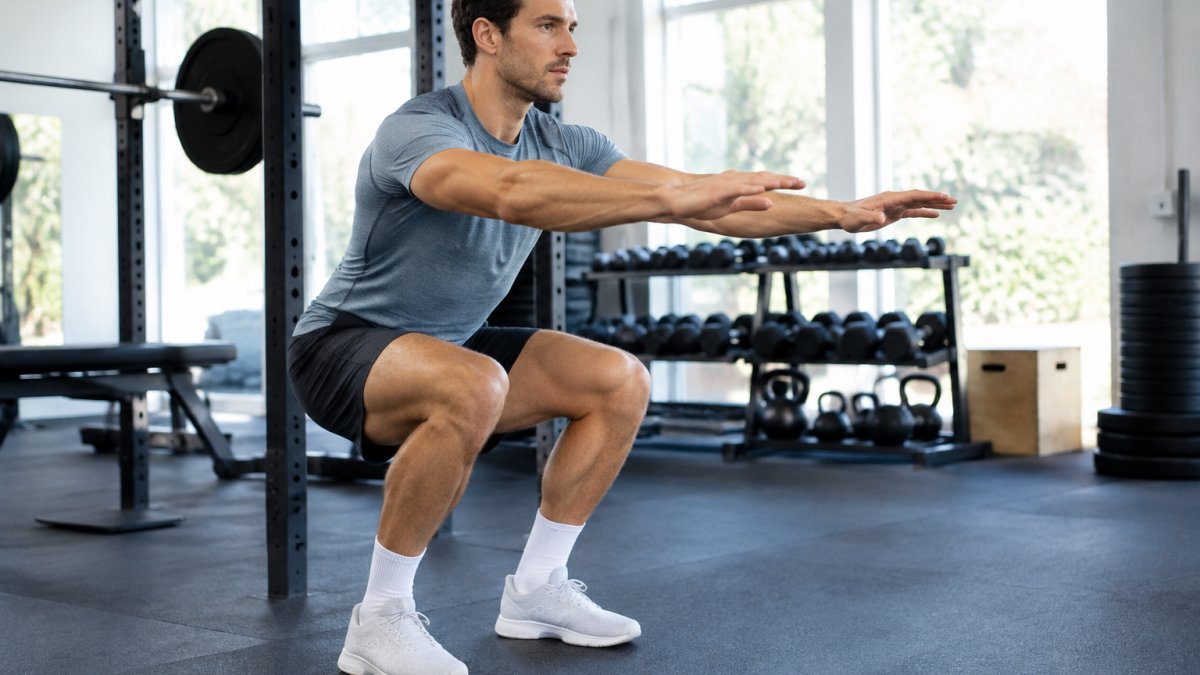
Look for a few practical signs. A tank or tee should sit close at the shoulders and armholes, where restriction is most noticeable, and relax slightly through the torso so it does not bunch when you bend. Training shorts should have a secure waistband and enough room through the hip and thigh for a deep squat.
Our [PRODUCT:Baselayer Muscle Tank | https://greatnesswins.com/products/baselayer-muscle-tank] is a lightweight tank that provides coverage without weighing you down, with mesh ventilation placed where you need it most. Fit is also where sizing consistency comes from. Measure yourself against the brand's size chart rather than your usual label, because cut differs between manufacturers.
Why Flatlock Seams in Sportswear Matter for Comfort
Seams are one of the first places friction shows up. A raised, overlapping seam rubs against skin during repetitive movement, which is why flatlock construction is common in performance garments: the seam lies flat and sits close to the fabric surface.
Watch out: a flat seam can still chafe if it runs directly across a high-friction point, such as the inner thigh or under a heavy strap. Check that seams avoid those zones before buying a garment you plan to wear for long sessions.
Good flatlock stitching also matters for durability. A seam that is cleanly sewn with the right tension holds up to repeated stretching and washing, which connects to the durability question many shoppers ask first.
How Activewear Range of Motion Testing Works
Range of motion testing is the practical check on whether a garment moves with you, but most shoppers reduce it to "try it on and stretch." A more useful approach is to treat it as a small, repeatable protocol with observable pass/fail signals, so you can compare pieces rather than rely on feel alone.
The standard approach is simple: put on the piece, then perform the movements you actually do. For a lifter, that means a full-depth squat, an overhead press, and a bent-over row. For a golfer, it means a full backswing and follow-through with the club. For a runner, it means a high-knee drill and a long stride. The point is to test the garment at the extremes of the movement, where restriction and ride-up show up first.
Pay attention to what happens at those extremes. A top should not ride up above the waistband in an overhead reach, and a bottom should not pull or restrict at the knee in a lunge. Look for three specific failure signals: hem migration (the garment climbs or drops out of place), seam pull (stitching or fabric visibly strains across a joint), and restriction (you feel the garment before you feel the movement).
Watch out: a garment can pass a range-of-motion test in the fitting room and still fail in use if the fabric relaxes or the seams migrate after washing. Test again after the first wash cycle, and check whether the garment returns to its original shape or stays stretched out at the shoulders, knees, and waistband.
When evaluating a garment, look for construction details and fabric composition the brand discloses so you can judge how it will move. The practical takeaway is that range-of-motion testing is something you do yourself, and the brand's role is to disclose enough construction detail, fabric composition, and seam placement for you to predict how the piece will behave before you buy.
Our [PRODUCT:Athletic Tech Polo - FINAL SALE | https://greatnesswins.com/products/athletic-tech-polo-1] is extremely lightweight with maximum stretch, allowing full range of motion.

Breathability, Moisture Control and Fabric Choice
Fabric decides how a garment handles heat and sweat, and breathability ranks high for active buyers. Breathability is a key performance requirement for many active buyers. You can compare a lightweight long-sleeve baselayer with moisture-managing construction to see these fabric choices in practice.

Mesh ventilation placed in the areas you need it most can improve breathability, and moisture-wicking fabric helps keep you feeling cool and dry during training.
Our [PRODUCT:Baselayer Long Sleeve Tee | https://greatnesswins.com/products/baselayer-long-sleeve-tee] is a lightweight baselayer with mesh ventilation placed where you need it most, and it feels cool and dry at all times. The [PRODUCT:Core Tech Training Short | https://greatnesswins.com/products/core-tech-training-short-2] features a 2-in-1 design with a Coolmax liner that provides a gentle compressive feel as you move.
The article's fabric guidance comes down to a few construction choices that affect how a garment handles heat and sweat.
| Feature | Stated benefit | Where it appears |
|---|---|---|
| Mesh ventilation | Improves breathability | Placed where you need it most |
| Moisture-wicking fabric | Keeps you cool and dry | During training |
| Coolmax liner | Gentle compressive feel | Core Tech Training Short |
| Lightweight baselayer | Feels cool and dry at all times | Baselayer Long Sleeve Tee |
The Benefits of Compression Gear for Recovery
Compression gear is often bought for recovery as much as for training, but the ergonomic case for it is narrower and more technical than most marketing suggests. Graduated compression means the fabric exerts higher pressure at the distal end of a limb and lower pressure proximally, which is intended to support venous return rather than simply squeeze the muscle. For a closer look at how compression gear supports recovery, read why wear compression gear for recovery. In activewear, that pressure is usually created by elastane content, knit structure, and panel construction rather than by a single "compression" label.
The practical ergonomic variables are pressure gradient, fit tolerance, and seam placement. A garment that is too tight at the knee or calf can create a tourniquet effect and defeat the purpose; a garment that is too loose provides no graduated support at all. Compression should generally feel firm and even, with no pinching, rolling, or bunching at the joints.
Watch out: compression claims are one of the most common places where activewear marketing outruns the product. A garment described as "recovery-enhancing" may simply be a snug baselayer with no stated pressure gradient, no fabric composition disclosure, and no indication of how pressure changes across the limb. Before buying, check the fiber content, look for a stated pressure or graduated construction, and confirm the seams sit away from the popliteal fossa behind the knee and the crease of the elbow.
For recovery use specifically, the ergonomic trade-off is between support and circulation. Compression tops and tights worn between sessions should be comfortable enough to wear for an extended period, which means the fabric must manage moisture and heat as well as pressure. A common pattern is to use lighter, more breathable compression for post-training wear and reserve heavier, higher-pressure garments for short-duration training support.
Choosing Your Next Ergonomic Piece at Greatness Wins
The right ergonomic piece depends on what you do. A lifter who trains hard should prioritize fit through the shoulders and a fabric that breathes under load. A golfer should prioritize stretch through the swing and moisture control on warm rounds. A parent buying for an active child should look at construction, including seam quality and fabric weight, since frequent wear and washing test a garment's durability.
Before you buy, check the size chart, look for the fabric breakdown and confirm the seams sit away from pressure points. For more guidance, read our [ARTICLE:Best Activewear for Gym: Top Picks for 2026 | https://greatnesswins.com/blogs/news/best-activewear-for-gym-top-picks-for-2026] and [ARTICLE:How to Ensure Consistent Clothing Sizing: 2026 Guide | https://greatnesswins.com/blogs/news/how-to-ensure-consistent-clothing-sizing-2026-guide] to compare options and get your fit right the first time.
Frequently Asked Questions
What is ergonomic activewear? Ergonomic activewear is clothing designed around human movement, with fit, fabric and seam placement chosen to reduce restriction and friction. Research describes ergonomic design in smart sportswear as aligning human needs with design elements to enhance comfort, health, safety and functionality.
How should activewear fit for training? Activewear should feel close at the shoulders and armholes, relaxed through the torso, and allow full movement through the hips and knees. Check the brand's size chart against your own measurements.
Are flatlock seams better for comfort? Flatlock seams lie flat against the fabric, which reduces rubbing during repetitive movement. They are a good sign of construction quality, though seams should still be kept away from high-friction zones.
Frequently Asked Questions
What are the key ergonomic features to look for in activewear?
Look for body-zoned construction that places stretch and support where the body moves most, flatlock seams that lie flat against the skin, four-way stretch fabric that moves in every direction, and mesh ventilation in high-heat areas. When comparing garments, check whether comfort claims are backed by real construction details. The Baselayer Muscle Tank ($39.00) and Baselayer Long Sleeve Tee ($49.00) are lightweight baselayers with mesh ventilation placed where you need it most.
How does ergonomic design improve athletic performance?
Ergonomic design reduces the friction, restriction and bunching that pull attention away from training. Ergonomic principles in textiles generally focus on optimizing fit, reducing garment weight and altering physical stress during task performance. When a shirt stays in place through a full range of motion and a short doesn't chafe during a long session, you can focus on your technique and effort instead of your clothing. The Core Tech Training Short ($69.00) pairs a 2-in-1 design with a Coolmax liner for a gentle compressive feel as you move.
Why is seam placement important in high-performance athletic apparel?
Seams sit where the body flexes, rubs and sweats, so their placement affects both comfort and mobility. Flatlock seams are stitched flat against the fabric, which reduces raised edges that irritate skin during repeated movement. Seams placed over high-stress joints or along the shoulders can restrict an arm swing, which matters for golfers and throwers. When evaluating a garment, check that seams avoid pressure points and that the shoulders and underarms have enough room to move freely.
Do ergonomic design features help prevent sports injuries?
Ergonomic apparel can support comfort and movement, but it is not a substitute for proper training, warm-up or medical care. Gear that restricts motion can change how you move, while garments that fit well and allow a full range of motion help you train without fighting your clothing. If you have an existing injury or pain during activity, consult a qualified healthcare professional before changing your training plan.