Table of Contents
- Why Maintaining Athletic Fabric Performance Matters
- How to Wash High Performance Apparel Without Damaging Fibers
- Drying Instructions for Moisture-Wicking Gear
- How to Remove Sweat Odors from Gym Clothes
- Preventing Pilling, Elasticity Loss, and Fiber Degradation
- Storage and Seasonal Care for Activewear
- Repair and Restoration of Damaged Athletic Gear
- Conclusion
Last Updated: August 28, 2026
Why Maintaining Athletic Fabric Performance Matters
Your investment in premium athletic apparel deserves protection. When you spend $55 to $150 on high-performance gear, you're buying engineered materials designed to wick moisture, maintain elasticity, and support intense training. Yet most people wash activewear like regular clothes, systematically destroying the properties that justify the cost.
According to Shell Global's 2026 activewear market analysis, the global activewear market is valued at $406.8 billion and projected to grow 9.0% annually through 2030. Yet 80% of activewear users rewash their clothes due to lingering smells, suggesting the problem isn't the gear, it's maintenance.
Synthetic fibers like polyester, nylon, and spandex have specific vulnerabilities. Fabric softener reduces wicking efficiency by 35-50% after just a few uses. High heat breaks down elastic fibers and causes pilling. Standard detergent leaves residue that traps odor-causing bacteria and clogs the micro-pores essential for moisture-wicking. This guide covers how to maintain athletic fabric performance so your gear stays functional and durable for years.
How to Wash High Performance Apparel Without Damaging Fibers
The foundation of fabric longevity starts with washing. Most mistakes are irreversible, once elasticity is lost or fibers are damaged, no treatment restores them.
Choose the Right Detergent for Synthetic Fibers
Standard laundry detergent is engineered for cotton and natural fibers. According to research cited by textile care experts at Virginia Tech, standard detergent leaves residue that looks like "mashed potatoes trapped between the fibers" under an electron microscope, a combination of detergent and body oils that bacteria feed on, creating persistent odor.
Sport-specific detergents are formulated to penetrate synthetic fibers without leaving buildup. HEX Performance developed a concentrated, sport-specific laundry detergent engineered to remove odor at the source without heavy residue, achieving cleaner clothes and longer-lasting fabric.
Use 50% less detergent than you think you need. Most people overload the machine with soap, which is the primary culprit in residue buildup. Cold water activates detergent just fine; heat isn't required for synthetic fibers.
Wash Inside-Out in Cold Water
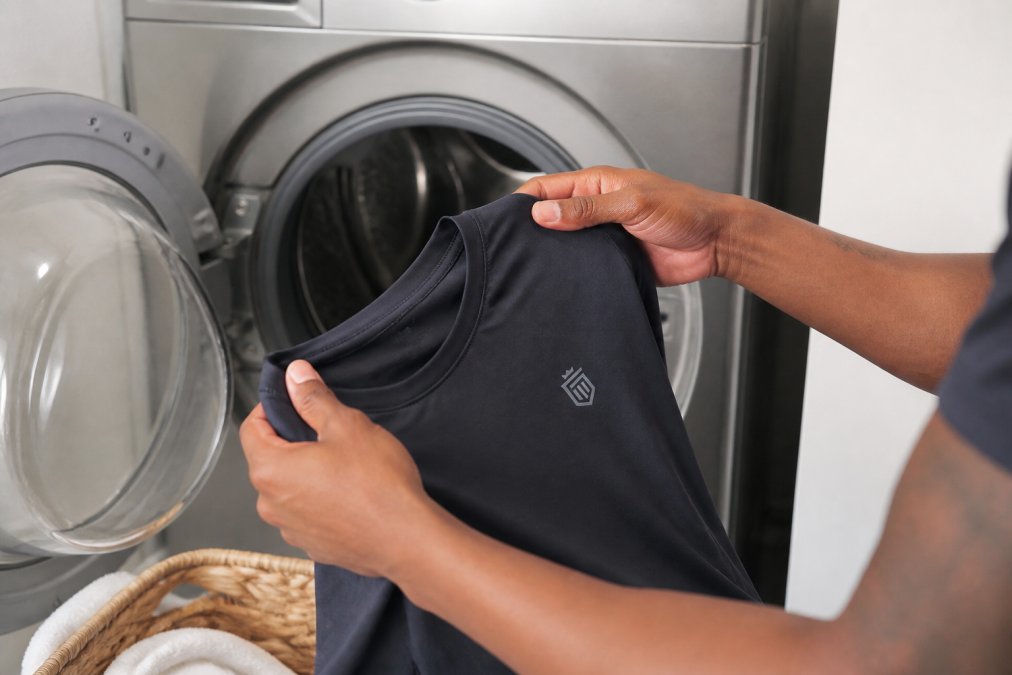
Always wash performance apparel inside-out. This targets sweat and oils on the inside, reduces friction on the visible surface, and protects graphics from wear.
Cold water is non-negotiable. Heat breaks down elastic fibers, causes pilling, and degrades moisture-wicking treatments. Use a gentle cycle to reduce mechanical stress on fibers. Sort by color and fabric type when possible, don't wash compression gear with heavy cotton towels, as friction accelerates pilling.
Skip Fabric Softener Entirely
Fabric softener coats synthetic fibers with waxy residue that eliminates moisture-wicking properties. Even a few uses reduce wicking efficiency by 35-50% and impair breathability. Lululemon, Nike, Patagonia, and Under Armour all explicitly warn against fabric softener on performance fabrics.
Dryer sheets are equally problematic. Skip them entirely. Air drying solves static cling completely.
Drying Instructions for Moisture-Wicking Gear
How you dry your gear determines whether it lasts two years or five. Most damage happens in the dryer, not the washer.
Air Drying as the Gold Standard
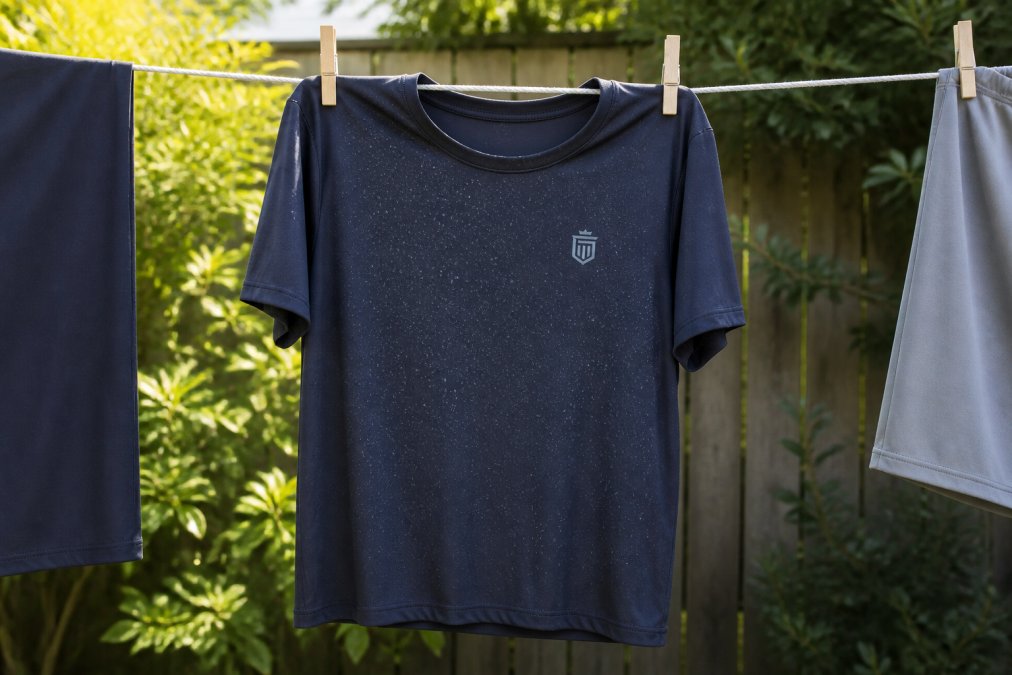
Air drying is the single best way to maintain athletic fabric performance. Drying clothes alone can reduce up to 90% of bacteria without heat stress, according to Athletes of the World. You can extend the time between washes simply by air drying between workouts.
Hang gear on a clothesline, drying rack, or shower rod in a well-ventilated area. Direct sunlight is fine for most synthetic fabrics, though prolonged UV exposure can fade colors. A lightweight performance tank typically dries in 2-4 hours; heavier items may take 6-8 hours.
Tumble Dry Low When Air Drying Isn't Possible
When air drying isn't practical, tumble dry on low heat only. Low heat settings keep temperatures below 120°F, minimizing fiber degradation while removing moisture efficiently.
Remove items promptly when the cycle ends to prevent wrinkles and moisture trapping. For compression gear, consider removing items before the cycle fully completes and finishing them air drying while slightly damp, reducing heat exposure to elastic fibers.
How to Remove Sweat Odors from Gym Clothes
Persistent odor is the number-one reason people rewash athletic gear unnecessarily. Understanding what causes the smell changes how you approach the problem.
Understanding Odor-Causing Bacteria in Synthetic Fibers
The smell isn't sweat itself, it's bacteria that colonize synthetic fibers and feed on body oils and dead skin cells. Synthetic fibers are hydrophobic; they repel water but attract oils, making them excellent at moisture-wicking but prone to bacterial colonization. Bacteria thrive in this oily environment.
Standard washing often doesn't eliminate bacteria because detergent residue provides a protective coating they hide under. Hot water and heavy detergent actually worsen the problem by damaging fibers and leaving more residue.
Effective Odor Removal Methods
The most effective approach is sport-specific detergent combined with air drying. Wash in cold water with proper detergent amounts, then air dry completely. This removes bacteria's food source and eliminates smell without heat damage.
For stubborn odors, soak gear in cold water with sport-specific detergent for 30 minutes before washing to allow the detergent to penetrate and break down oil buildup.
Air drying between workouts is the most underrated odor prevention strategy. Many athletes wear the same piece 3-4 times before washing simply by air drying between sessions.
Preventing Pilling, Elasticity Loss, and Fiber Degradation
Pilling is a visible sign of degradation caused by heat, friction, and residue buildup. Elasticity loss is permanent, once spandex loses stretch, no treatment restores it.
Your prevention strategy combines cold water washing, inside-out placement, proper detergent dosage, no fabric softener, and air drying or low-heat tumble drying.
For compression gear and high-stretch items, consider hand washing for the first few uses. Fill a basin with cold water, add sport-specific detergent, and gently agitate for 2-3 minutes. Rinse thoroughly until water runs clear. This removes manufacturing residue and reduces mechanical stress on elastic components, extending the life of high-end pieces by a full year.
Storage and Seasonal Care for Activewear
Store clean, completely dry gear in a cool, dry place. Never store damp items; moisture promotes mold and mildew. In humid climates, use silica gel packets in storage containers.
Don't fold compression gear tightly for extended periods. Roll compression items loosely or hang on padded hangers instead. Regular activewear can be folded, but avoid stacking heavy items on delicate pieces.
Avoid direct sunlight during storage, UV exposure fades colors and weakens synthetic fibers. A dark closet or storage bin is ideal. For high-end technical pieces, store in breathable garment bags rather than plastic, which traps moisture.
Repair and Restoration of Damaged Athletic Gear
Small tears in synthetic fabrics can be patched using fabric adhesive patches designed for athletic wear. Apply patches to the underside for invisible repairs. For tears larger than half an inch, professional repair is more reliable.
Pilling can be managed with a fabric shaver or pilling comb using light pressure. This takes 10 minutes and restores appearance without affecting performance.
Address loose seams immediately with hand-stitching to prevent further splitting. For elasticity loss in compression gear, there's no true restoration, once spandex loses stretch, it's gone. Proper care during the first year determines whether gear lasts three years or five.
The difference between gear that lasts two years and gear that lasts five comes down to these specific practices. Every decision, from detergent choice to drying method, either preserves or degrades your investment. Greatness Wins designs premium athletic apparel built to perform at the highest level, but that performance only lasts with proper maintenance. Start with the Core Tech Tee or Core Tech Training Short, both engineered for durability through rigorous training, and protect that investment with the protocols outlined here. Your gear will reward you with years of consistent performance.

Frequently Asked Questions
Can fabric softener damage moisture-wicking clothing?
Yes. Fabric softener coats synthetic fibers with a waxy residue that blocks the micro-pores responsible for moisture-wicking. Even a few uses can reduce wicking efficiency by 35-50% and impair breathability. Major brands like Lululemon, Nike, and Patagonia explicitly warn against fabric softener on their performance fabrics. Skip it entirely to maintain athletic fabric performance.
What is the best way to wash synthetic athletic fabrics?
Wash synthetic athletic fabrics inside-out in cold water using a sport-specific detergent or one labeled for synthetic materials. Use less detergent than you normally would, too much leaves residue that clogs performance fibers. Avoid fabric softener and dryer sheets. Wash with like colors and use a gentle cycle. This approach protects moisture-wicking properties and extends the life of your gear.
How long does performance fabric last with proper care?
With correct maintenance, high-performance athletic fabric can last significantly longer than improperly cared-for gear. The key factors are washing in cold water, air drying or tumble drying on low heat, using appropriate detergent, and avoiding fabric softener. Heat is the primary enemy of performance fabrics, it breaks down elastic fibers like spandex and degrades moisture-wicking treatments. Proper care prevents premature elasticity loss and fiber degradation.
Why does my workout gear still smell after washing?
Odor in athletic wear comes from odor-causing bacteria feeding on detergent residue and body oils trapped in synthetic fibers. Standard detergent leaves a film that bacteria thrive on. Sport-specific detergents like those used by HEX Performance penetrate synthetic fibers more effectively and remove odor at the source. Additionally, 80% of activewear users rewash their clothes due to lingering smells, this is a sign detergent residue is the culprit, not insufficient washing.
This article was written using GrandRanker