Table of Contents
- Why Most Workout Gear Fails in the Heat
- The Science of Sweat: How Athletic Gear for Hot Weather Works
- How to Choose Athletic Fabrics for Heat: A Practical Framework
- The Best Moisture Wicking Shirts for Men in 2026
- Shorts That Keep You Cool: Key Features to Look For
- Fit and Heat Dissipation: Loose vs. Compression Gear
- Common Bad Advice About Hot Weather Training Gear
- Conclusion: Gear Up for Your Next Hot Weather Session
- Frequently Asked Questions
Last Updated: September 5, 2026
Why Most Workout Gear Fails in the Heat
The average workout shirt made from basic cotton traps sweat against your skin, raising your core temperature and leaving you feeling heavy and sluggish by minute twenty. This is the fundamental failure of most athletic gear for hot weather: it manages moisture poorly. Performance athletic gear for hot weather solves this through fabric engineering, not marketing hype.
At Greatness Wins, we've analyzed the science behind thermoregulation to build gear that actually works when temperatures climb. Research examining the impact of upper-torso sportswear technologies on physiological heat strain confirms that fabric choice directly affects athletic performance Scandinavian Journal of Medicine & Science in Sports study on sportswear and heat strain. A 2022 review assessing sports clothing's effect on thermoregulation reached similar conclusions PMC review of sports clothing and thermoregulation.
The market has responded. Industry analysts project the global activewear market will grow from $477.6 billion in 2026 to $920.0 billion by 2033 Grand View Research Activewear Market Size Report. That growth is driven by consumers who demand fabric that performs, not just looks athletic.
The Science of Sweat: How Athletic Gear for Hot Weather Works
Thermoregulation is the process your body uses to maintain a stable internal temperature, and sweat is its primary cooling mechanism. When sweat evaporates off your skin, it draws heat away, lowering your core temperature. Effective hot weather gear accelerates this evaporative cooling process.
Moisture-Wicking vs. Absorbent: The Critical Difference
Moisture-wicking is the engineered ability of a fabric to transport sweat away from your skin to the outer surface where it can evaporate. Absorbent fabrics like cotton do the opposite: they soak up sweat and hold it against your body, blocking evaporative cooling.
The distinction comes down to fiber chemistry. Synthetic fibers like polyester are hydrophobic, meaning they repel water. Natural fibers like cotton are hydrophilic, meaning they attract and retain moisture. Some research even suggests natural fibers absorb moisture better than synthetics Thermtest analysis of natural vs synthetic fiber moisture absorption, but absorption isn't the goal. Transport and evaporation are.
How to Choose Athletic Fabrics for Heat: A Practical Framework
The best approach to choosing hot weather gear comes down to three factors: moisture transport, breathability, and weight. But understanding the why behind these factors, specifically how fabric weight and knit structure impact your core temperature, separates genuinely effective gear from marketing claims.
The Physiological Impact of Fabric Weight
The weight of a fabric is not just about comfort; it's a direct input into your body's thermoregulatory system. A common pattern in sports science is that heavier fabrics increase the metabolic cost of movement. When you run or train, every extra ounce of fabric requires energy to move. More critically, heavier, denser fabrics trap a layer of still air close to the skin. This air layer quickly becomes saturated with humidity, which suppresses the evaporation of sweat. Since evaporative cooling is your body's primary defense against overheating, a heavy shirt can effectively disable your cooling system.
Lighter fabrics, typically under 4 ounces per square yard, minimize this trapped air layer and reduce the energy cost of movement. This allows your body to allocate more energy to performance and less to simply carrying your clothing. The most effective hot-weather gear uses the lightest possible fabric that still provides durability and coverage.
Material Matters: Beyond Polyester and Nylon
Polyester remains the workhorse of performance fabric, prized for its durability and moisture-wicking properties. Nylon offers similar benefits with a softer hand feel. However, the current market has evolved with specific knit structures that enhance performance.
Engineered Knits: Look for fabrics with a raised, waffle-like or honeycomb texture. This structure creates channels that lift the fabric off your skin, promoting airflow and preventing the fabric from sticking when wet. This is a key mechanism for heat dissipation that a flat-knit polyester shirt cannot provide.
The Role of Graphene and Tencel: The frontier in 2026 involves graphene knits, which are being used for their high thermal conductivity to pull heat away from the body. Tencel (lyocell) is another option, offering a plant-based fiber that is highly breathable and manages moisture well, though it may not be as durable as pure synthetics for high-abrasion activities.
The UPF Factor: Sun Protection You Can Wear
UPF ratings measure how much UV radiation penetrates fabric. A UPF 50+ rating blocks roughly 98% of UV rays. For athletes training outdoors during peak sun hours, this built-in protection is a practical feature that reduces reliance on sunscreen in hard-to-reach areas. However, note that a fabric's UPF rating can decrease when it is stretched or wet. For high-intensity sessions where you sweat heavily, a tight-fitting, wet shirt may offer less protection than its label suggests, so re-applying sunscreen to exposed areas is still a prudent habit.
The Best Moisture Wicking Shirts for Men in 2026
The $40 to $70 price range represents the sweet spot for engineered moisture-wicking apparel, delivering genuine fabric technology rather than marketing claims Violate the Dress Code pricing benchmark for performance gear.
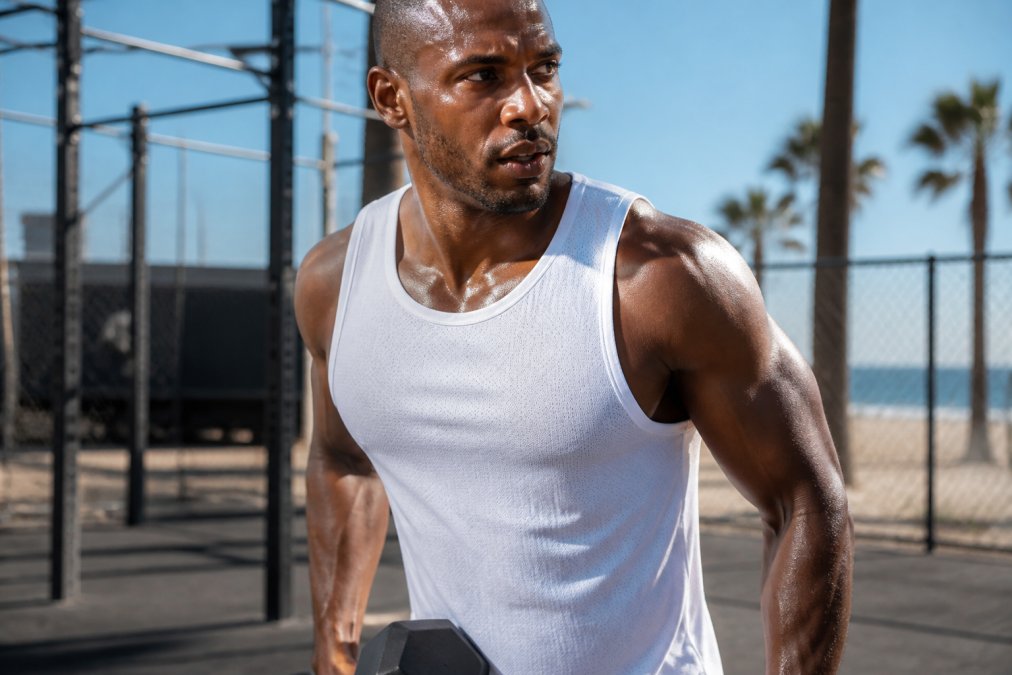
Performance Training Tank: Built for High-Intensity Sessions
The Performance Training Tank from Greatness Wins is our top recommendation for intense workouts and outdoor runs on very hot days. At $45.00, it delivers featherweight fabric engineered for extra breathability when you need it most. The construction is super durable with a consistent fit that holds up through repeated washing.

Baselayer Muscle Tank: Maximum Ventilation for Extreme Conditions
For extreme heat, the Baselayer Muscle Tank at $39.00 takes ventilation further. Mesh panels sit in the areas you need them most, providing added breathability while the super lightweight fabric delivers coverage without weighing you down. It's designed to help you feel cool and dry at all times, even during maximum-effort sessions.
Shorts That Keep You Cool: Key Features to Look For
Ventilation and liner technology separate effective training shorts from basic gym wear. The best designs integrate laser-cut perforation for airflow and performance liners that manage moisture where you need it most.
Core Tech vs. Performance Shorts: What's the Difference?
The Core Tech Training Short at $69.00 uses super lightweight stretch woven fabric with a 2-in-1 design featuring a Coolmax liner that provides gentle compression as you move. The Performance Training Short at $74.00 adds laser-cut perforation for extra ventilation, making it the ultimate choice for high-output training sessions.


Both are made from recycled plastic bottles, addressing the sustainability question that increasingly matters to athletes. For runners who prefer a shorter cut, the Core Tech 5" Short offers the same Coolmax liner technology in a 5-inch inseam.
Fit and Heat Dissipation: Loose vs. Compression Gear
The fit debate comes down to a trade-off between airflow and muscle support. However, the optimal choice is not universal, it depends heavily on the specific type of heat you are training in. The best gear for a humid summer day in the Southeast is different from what you need for a dry, desert afternoon in the Southwest.
High Humidity: Prioritize Airflow and Evaporation
In high humidity, the air is already saturated with water vapor, which significantly slows the evaporation of sweat from your skin. Your body's primary cooling mechanism is compromised. In this environment, a loose-fitting, highly breathable top is often more effective than compression gear. A looser fit allows for more air circulation across your skin, which helps to move humid air away and bring drier air into contact with your skin, facilitating what little evaporation is possible. Look for garments with large mesh panels or open-knit structures that maximize airflow.
Dry Heat: The Case for Strategic Compression
In dry, desert heat, sweat evaporates very quickly. The challenge here is not evaporation but dehydration and direct sun exposure. In this environment, a lightweight compression or form-fitting top can be advantageous. It sits against the skin, which can improve proprioception and reduce muscle vibration, but more importantly, it provides a consistent layer of UPF protection without the bulk of a loose shirt. The tight weave of compression fabric also helps to wick sweat directly from the skin to the outer surface, where it can evaporate instantly in the dry air, creating a continuous cooling effect.
The Hybrid Solution: Ventilation Zones
The most effective modern gear uses a hybrid design. It fits close enough in the torso to transport moisture efficiently, but incorporates strategic ventilation zones, often laser-cut perforations or mesh panels, in areas where heat accumulates most, such as the underarms, the center of the back, and the sides of the torso. This approach combines the benefits of both fits while mitigating their drawbacks. This is where fabric engineering outperforms simple cut-and-sew approaches.
Common Bad Advice About Hot Weather Training Gear
The most persistent myth is that any light-colored, loose cotton shirt will do the job. It won't. Cotton absorbs sweat and holds it against your skin, blocking the evaporative cooling that keeps your core temperature in check.
Another questionable claim involves "cooling" technologies. While light, loose-fitting natural fibers are often recommended for heat, the effectiveness of specific cooling technologies remains under evaluation National Collaborating Centre for Environmental Health assessment of cooling clothing. The reliable approach is to prioritize proven moisture transport and ventilation over marketing claims.
That said, lab data from 2026 confirms that targeted ventilation technology can significantly lower surface skin temperature during high-intensity exercise in hot conditions 2XU lab data on X-VENT ventilation technology. The key is that ventilation must be placed strategically, not randomly distributed.
Conclusion: Gear Up for Your Next Hot Weather Session
Choosing the right gear for hot weather training comes down to understanding how moisture transport, breathability, and fit work together. The science is clear: fabric engineering matters more than brand names or fashion trends.
Greatness Wins builds performance athletic gear for hot weather with these principles baked into every piece. From the featherweight Performance Training Tank to the laser-perforated Performance Training Short, each garment is engineered for thermoregulation, durability, and consistent sizing. Free shipping on orders over $100 and free returns within the U.S. make it easy to find your perfect fit.
Get started with Greatness Wins and train harder when the temperature rises.
Frequently Asked Questions
What is the best gear to wear in hot weather for training?
The best athletic gear for hot weather uses engineered synthetic fabrics like polyester that wick moisture away from your skin, allowing it to evaporate quickly. Look for features like mesh ventilation panels, lightweight construction, and a close but not restrictive fit. The Performance Training Tank and Core Tech Shorts from Greatness Wins are built with these principles, priced in the $40-$70 sweet spot for genuine performance fabrics.
How does moisture-wicking technology work in athletic gear?
Moisture-wicking fabrics are hydrophobic, meaning they repel water. The fibers pull sweat from your skin and spread it across a larger surface area where it can evaporate faster. This process, called evaporative cooling, helps lower your skin temperature and keeps you dry during high-intensity training. This is different from absorbent materials like cotton that trap sweat against your body.
Is it better to wear loose or tight clothing for hot weather workouts?
It depends on the activity. Tight, compression-style gear can support muscles but may trap heat. For most hot weather training, a close-fitting but not restrictive top with mesh ventilation works best. Loose clothing allows more airflow but can chafe and hold moisture against your skin. The key is fabric choice: a lightweight, moisture-wicking material with a fit that doesn't bunch or restrict movement.
How do you prevent overheating while training in the sun?
Start with performance athletic gear for hot weather that offers UPF protection and promotes airflow. Choose light-colored, lightweight tops with ventilation panels. Hydrate before, during, and after your session. Consider training during cooler parts of the day, and listen to your body: if you feel dizzy or nauseated, stop and cool down immediately.
What does the 3-3-3 rule for clothes mean in hot weather?
The 3-3-3 rule is a general guideline for hot weather dressing: 3 layers, 3 breaths, and 3 minutes. It typically means wearing three light layers, ensuring the fabric breathes, and allowing your body time to adjust. For athletic training, a simpler approach works: one high-quality, moisture-wicking base layer that breathes well is more effective than multiple thin layers that can trap heat.
What should you look for in high-performance gear for extreme heat and high humidity?
In humid conditions, sweat doesn't evaporate as easily, so you need gear that aggressively moves moisture away from your skin. Look for fabrics with advanced moisture transport systems, mesh ventilation in high-sweat zones, and a lightweight feel. Avoid cotton entirely. The Core Tech 5" Short with its Coolmax liner is designed for this, using recycled plastic bottles for a fabric that dries quickly even in oppressive humidity.
This article was written using GrandRanker