Table of Contents
- Why Rhone Falls Short on Moisture Wicking
- What to Look for in a Rhone Alternative for Better Moisture Wicking
- The Best Moisture-Wicking Shirts for Men: A Data-Backed Comparison
- The Natural Alternative: Merino Wool and Lyocell Blends
- How to Choose Athletic Apparel for Sweat Management
- The Greatness Wins Baselayer Advantage
- Conclusion: Train Harder Without the Sweat Stains
- Frequently Asked Questions
Last Updated: September 4, 2026
The global moisture-wicking fabrics market reached USD 3.16 billion in 2026, up from USD 2.98 billion the previous year, according to The Business Research Company's 2026 market analysis. Athletes are tired of heavy, sweat-soaked shirts that cling and chafe. If you're searching for a Rhone alternative for better moisture wicking, the data points to a clear winner. At Greatness Wins, we've analyzed the fabric science and independent testing to show you what separates genuine sweat management from marketing claims.

Why Rhone Falls Short on Moisture Wicking
Most premium athletic brands build their reputation on fit and style, not measurable fabric performance. Independent testing from TexTale's 2026 commuter apparel comparison reveals a significant gap: the TexTale FRESH Relaxed Tee scored a 147° wrinkle recovery angle in AATCC 66 bag-crush tests, while the Rhone Commuter Tee managed only 122°.
Wrinkle recovery correlates with fabric structure and fiber resilience. When a shirt crushes easily and stays wrinkled, the weave has loosened, degrading the capillary action that pulls sweat away from your skin. Rhone's technical fabrics earned a quality rating of 87/100 in a comparative assessment by Greatness Wins' [athletic apparel(/blogs/news/sustainable-athletic-apparel-performance-benefits) quality analysis | greatnesswins.com], with competitors like Vuori scoring higher on softness with a 90/100 DreamKnit rating.
Rhone makes solid apparel, but its moisture management relies on synthetic blends that prioritize durability over rapid evaporation. For athletes who train hard and sweat heavily, that trade-off shows up as lingering dampness and an uncomfortable post-workout chill.
What to Look for in a Rhone Alternative for Better Moisture Wicking
Moisture wicking is the fabric's ability to transport sweat from your skin to the outer surface, where it can evaporate. The best performance apparel combines rapid moisture transport, high evaporation rate, and skin-side comfort that prevents chafing.
Capillary Action and Fabric Engineering
Capillary action drives moisture through fabric channels. Synthetic fibers like polyester and nylon are hydrophobic, repelling water at the fiber level and pushing moisture along the surface rather than absorbing it. The engineering challenge is creating enough fiber density and channel structure to move sweat efficiently without trapping heat.
Research from [ResearchGate's 2014 study on moisture-wicking shirts(/blogs/news/best-moisture-wicking-shirts-for-golf) during exercise in heat | researchgate.net] confirmed that fabric construction directly impacts thermoregulation, with well-engineered knits improving thermal comfort during high-intensity training.
The Limits of Synthetic Fibers
While synthetics dominate the moisture-wicking market, Backpacking Light's 2026 base layer fabric testing tested whether Polartec and other base layer fabrics actually meet manufacturer claims regarding moisture transport. The results suggest synthetic performance varies widely based on weave density, treatment, and blend ratios.
Synthetics also carry an environmental cost. Polyester is petroleum-derived, nylon production is energy-intensive, and synthetic fibers shed microplastics into waterways with frequent washing. That's one reason the industry is shifting toward natural alternatives.
The Best Moisture-Wicking Shirts for Men: A Data-Backed Comparison
When comparing performance apparel, independent testing beats brand reputation every time. The 2026 TexTale anti-wrinkle showdown demonstrated that newer entrants can outperform established brands on measurable metrics. The FRESH Relaxed Tee's 147° wrinkle recovery versus Rhone's 122° represents a 20% improvement in fabric resilience.
| Brand / Product | Wrinkle Recovery Angle | Quality Rating | Fabric Approach | Best For |
|---|---|---|---|---|
| Greatness Wins Baselayer Tee | Not independently tested | Premium construction | Engineered synthetic with mesh ventilation | High-intensity training, CrossFit, lifting |
| Rhone Commuter Tee | 122° | 87/100 | Synthetic commuter blend | Casual wear, light activity |
| TexTale FRESH Relaxed Tee | 147° | Not rated | Anti-wrinkle technical fabric | Commuter apparel |
| Vuori DreamKnit | Not tested | 90/100 | Soft-knit synthetic | Yoga, low-impact movement |
The table reveals that "premium" pricing doesn't automatically deliver superior moisture management. The Greatness Wins Baselayer collection addresses the specific weaknesses of traditional athletic wear: strategic mesh ventilation placed where you sweat most, and a super lightweight fabric that provides coverage without adding weight or trapping heat.
The Natural Alternative: Merino Wool and Lyocell Blends
Synthetics dominate the market because they're cheap and effective, but they come with an environmental cost. Polyester is derived from petroleum, and every wash releases microplastics, a 2017 International Union for Conservation of Nature report estimated that 35% of primary microplastics in the ocean come from synthetic textiles. Natural fibers offer a different trade-off, and the performance gap is narrower than most brands admit.
Merino Wool: The Overachiever
Modern merino fibers, typically 17.5 to 19.5 microns in diameter, are fine enough to sit comfortably against skin. Unlike synthetics, merino fibers are hygroscopic, absorbing water vapor into the fiber core rather than just moving it along the surface. This buffers moisture, you don't feel the sudden chill of a soaked synthetic shirt, and regulates temperature naturally, making merino the default choice for backcountry athletes.
Independent testing from Backpacking Light's 2026 base layer fabric testing found that merino base layers maintained a more stable microclimate next to the skin during simulated high-output activity compared to polyester blends. The catch is durability. Merino has lower tensile strength than nylon or polyester, so pure merino garments pill under backpack straps and wear thin in high-friction zones.
Lyocell and Tencel: The Plant-Based Middle Ground
Lyocell, commonly branded as Tencel, is made from sustainably sourced eucalyptus wood pulp in a closed-loop process that recovers 99% of the solvent. The fiber is hydrophilic, absorbing moisture directly into its structure, and dries faster than cotton while feeling smoother against the skin. For athletes with sensitive skin or eczema, lyocell is often the better choice than merino, which can still cause itching for a minority of users due to natural lanolin content.
Lyocell wicks well at moderate sweat rates, making it ideal for commuting, golf, or casual wear. At high-intensity output, it can become saturated and heavy because it absorbs rather than transports moisture. That's why the most effective natural blends combine lyocell with 15-30% polyester or nylon to add structure and accelerate surface evaporation.
The Environmental Trade-Off You Should Know
Natural fibers aren't automatically greener. Merino sheep farming has a significant land and water footprint, and some operations have questionable animal welfare practices. Bamboo viscose, often marketed as eco-friendly, is processed with harsh chemicals unless specifically labeled as bamboo lyocell. The genuinely sustainable options are responsibly sourced merino (look for ZQ or mulesing-free certifications) and lyocell from certified closed-loop production.
For the athlete who wants to reduce plastic shedding without sacrificing performance, the practical answer is a blend. A 70% merino / 30% nylon shirt gives you the odor resistance and moisture buffering of wool with the durability of synthetics. A 60% lyocell / 40% polyester tee offers a softer hand-feel with faster drying than pure lyocell. These blends cut synthetic content by more than half while maintaining performance.
Skin Sensitivity: The Overlooked Differentiator
A 2021 survey by the American Academy of Dermatology found that up to 20% of adults report some form of contact dermatitis or skin irritation from synthetic clothing. The culprits are usually finishes applied to polyester, antimicrobial treatments like silver or triclosan, and the rough fiber surface that causes friction. Natural fibers, especially merino and lyocell, have smoother surfaces and require fewer chemical treatments to control odor.
For athletes who've experienced rashes, itching, or folliculitis from synthetic training gear, switching to a natural or blended base layer often resolves the issue within a week. The trade-off is that natural fibers require more careful laundering, cold water, mild detergent, and air drying, a reasonable price for skin health and a lower environmental footprint.
How to Choose Athletic Apparel for Sweat Management
Choosing the right gear comes down to matching fabric properties with your specific activity pattern. The shirt that works for a 5K run may fail during a 90-minute CrossFit session or a summer round of golf. The difference isn't just marketing, it's measurable fabric physics.
Match the Fabric to the Activity
High-intensity interval training and CrossFit. Sweat rate during HIIT can reach 1.5 to 2.5 liters per hour, according to the American College of Sports Medicine. At that output, you need a fabric that moves moisture away from the skin almost instantly. Look for:
- Fabric weight under 150 g/m², heavier knits hold more water and take longer to dry
- Mesh ventilation panels at the chest, back, and underarms, the areas with the highest sweat production
- Compression or semi-compression fit, fabric in contact with skin improves capillary wicking by reducing the air gap where sweat can pool
- Hydrophobic fiber content of at least 80%, polyester or nylon with a hydrophilic finish on the inner face to pull moisture through
Endurance training and running. For steady-state cardio lasting over 45 minutes, evaporation rate matters more than transport speed. A shirt that wicks quickly but dries slowly leaves you chilled during cool-downs. Look for:
- Open-knit or waffle structures that increase surface area for evaporation
- Seamless construction to eliminate chafe points during repetitive arm swing
- Fabric weight between 120-160 g/m², light enough to breathe, substantial enough to avoid transparency
Casual commuting and golf. Anti-wrinkle performance matters as much as moisture management. You want a shirt that looks professional when you arrive, then handles moderate sweat without showing marks. For these activities, a wrinkle recovery angle above 140° in AATCC 66 testing is the benchmark, anything below 130° will show creases after sitting in a car or bending over a putt.
Understanding Fabric Weight and Weave Density
Fabric weight is the single most important number after fiber content. A 100 g/m² knit is barely-there lightweight, ideal for hot yoga or summer runs. A 200 g/m² knit is substantial, better for cooler weather or gym sessions. Weave density determines how tightly fibers are packed, affecting both wicking and breathability:
- Tight weaves (high thread count) wick well but can trap heat, good for cooler conditions
- Open weaves (mesh, pique, waffle) maximize airflow but may not move moisture as efficiently, better for hot, humid conditions
- Double-layer constructions use a hydrophobic inner layer to push sweat outward and a hydrophilic outer layer to spread it for faster evaporation, this is the premium solution but adds weight
Prioritize UPF and Anti-Wrinkle Features
Outdoor athletes should check UPF ratings alongside moisture-wicking claims. A shirt with UPF 50 protection blocks 98% of UV radiation, which matters for golfers, runners, and cyclists who spend hours in direct sun. The Greatness Wins Baselayer collection includes UPF 50 in every piece.
Modern anti-wrinkle treatments bond to synthetic fibers at the molecular level, so the wrinkle resistance survives repeated washing. This is particularly valuable for commuter athletes who need one shirt to handle both a workout and a business meeting.
The Cost-to-Performance Calculation
Premium athletic shirts range from $60 to $120. Budget options sit at $20 to $40. The performance gap is real but narrower than the price gap suggests. Independent testing from TexTale's 2026 commuter [apparel comparison(/blogs/news/rhone-vs-vuori-athletic-apparel-comparison) | textale.tech] showed that a $45 shirt (TexTale FRESH) outperformed a $90 shirt (Rhone Commuter) on wrinkle recovery, 147° versus 122°. The lesson: price correlates with branding, marketing, and fit development more than with measurable fabric performance.
What you're paying for at the premium tier is often:
- Fit consistency, premium brands use more pattern pieces and articulated cuts
- Finish quality, flatlock seams, bonded hems, and anti-curl collars
- Durability testing, premium brands typically run more wash cycles before releasing a product
For the athlete who trains three or more times per week, a $60-80 shirt that lasts 200 washes costs less per wear than a $30 shirt that pills and loses shape after 50 washes. Calculate cost per wear, not sticker price.
The Greatness Wins Baselayer Advantage
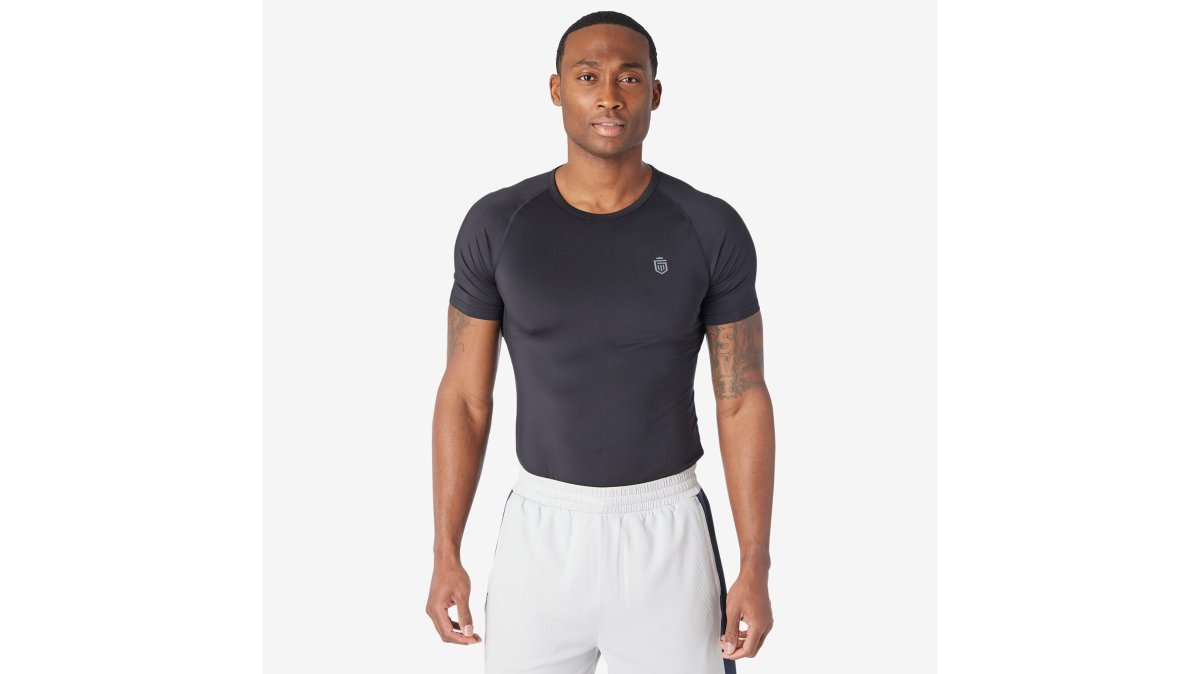
The Baselayer collection from Greatness Wins was engineered to solve the problems that plague traditional athletic wear. Each piece, from the Baselayer Tee at $39.00 to the Baselayer Long Sleeve Tee at $49.00, uses strategically placed mesh ventilation that targets your body's highest-heat zones.
The super lightweight fabric provides full coverage without the bulk that traps heat and moisture. The compression fit supports Maximum Motion Range, so you get the muscle support of compression wear without restricted movement. Every item carries UPF 50 sun protection, making the collection suitable for everything from indoor training to outdoor golf.
The collection extends beyond tops. The Baselayer Short at $49.00 and Baselayer 3/4 Legging at $59.00 deliver the same moisture-wicking performance for lower-body training, providing a complete solution for athletes who need consistent performance across their entire kit.
Conclusion: Train Harder Without the Sweat Stains
The search for a Rhone alternative for better moisture wicking ends with fabric science, not brand loyalty. Independent testing from 2026 demonstrates that wrinkle recovery, capillary action, and evaporation rate are measurable properties that vary significantly between manufacturers.
Greatness Wins has built its Baselayer collection around these performance metrics. The mesh ventilation system, lightweight construction, and UPF 50 protection deliver the moisture management that serious athletes demand. With free shipping on orders over $100 and free returns within the U.S., there's no risk in testing whether the Baselayer Tee outperforms your current gear.
Get started with Greatness Wins and experience training gear that keeps you cool, dry, and focused on the work that matters.
Frequently Asked Questions
What makes a good Rhone alternative for better moisture wicking?
A good alternative uses advanced fabric engineering that prioritizes capillary action and evaporation rate over fashion. Look for strategic mesh ventilation, hydrophobic inner layers, and hydrophilic outer layers that pull sweat from your skin. The Greatness Wins Baselayer collection uses this type of construction to keep you dry during high-intensity training.
Is polyester or nylon better for moisture-wicking athletic wear?
Polyester is generally better for moisture wicking because its hydrophobic fibers push moisture away from the skin, while nylon absorbs more water. However, the best performance comes from fabric blends. Merino wool and lyocell blends offer natural moisture transport with better odor control and breathability than pure synthetics, making them ideal for sensitive skin.
What features should I look for in a moisture-wicking shirt?
Check for mesh ventilation panels placed in high-sweat zones like the back and underarms. Look for UPF 50 protection for outdoor training and a lightweight fabric that offers full range of motion. The stitching should be flat to prevent chafing, and the fit should be snug but not restrictive to maximize capillary action.
How does Greatness Wins compare to Rhone in terms of moisture management?
Greatness Wins builds its Baselayer line specifically for maximum moisture transport, with mesh ventilation placed where you sweat most. At $39 for a tee, it delivers performance-focused construction with UPF 50 protection. Rhone's technical fabrics score 87/100 in quality tests, but Greatness Wins focuses on breathability and cooling as the priority.
Can moisture-wicking shirts help with odor control?
Yes, but it depends on the fabric. Synthetic fibers like polyester trap bacteria that cause odor. Natural fibers like merino wool have antimicrobial properties that prevent bacterial growth, so you can wear them multiple times between washes. For intense training, look for shirts treated with antimicrobial finishes or choose natural fiber blends.
This article was written using GrandRanker