Table of Contents
- Why Blister Prevention Starts With the Right Athletic Socks
- How to Choose Running Socks That Prevent Blisters
- Best Running Socks for Blister Prevention by Use Case
- Double-Layer Running Socks for Maximum Friction Reduction
- Toe Socks for Running: Are They Worth It?
- Identifying Your Blister Cause and Finding the Right Sock Solution
- Care and Replacement: Keeping Your Socks Blister-Free
- Frequently Asked Questions
Last Updated: October 7, 2026
Why Blister Prevention Starts With the Right Athletic Socks
Blisters are one of the most preventable yet persistent problems runners face. At Greatness Wins, we understand that top 10 athletic socks for blister prevention aren't just about comfort, they're about performance and durability.

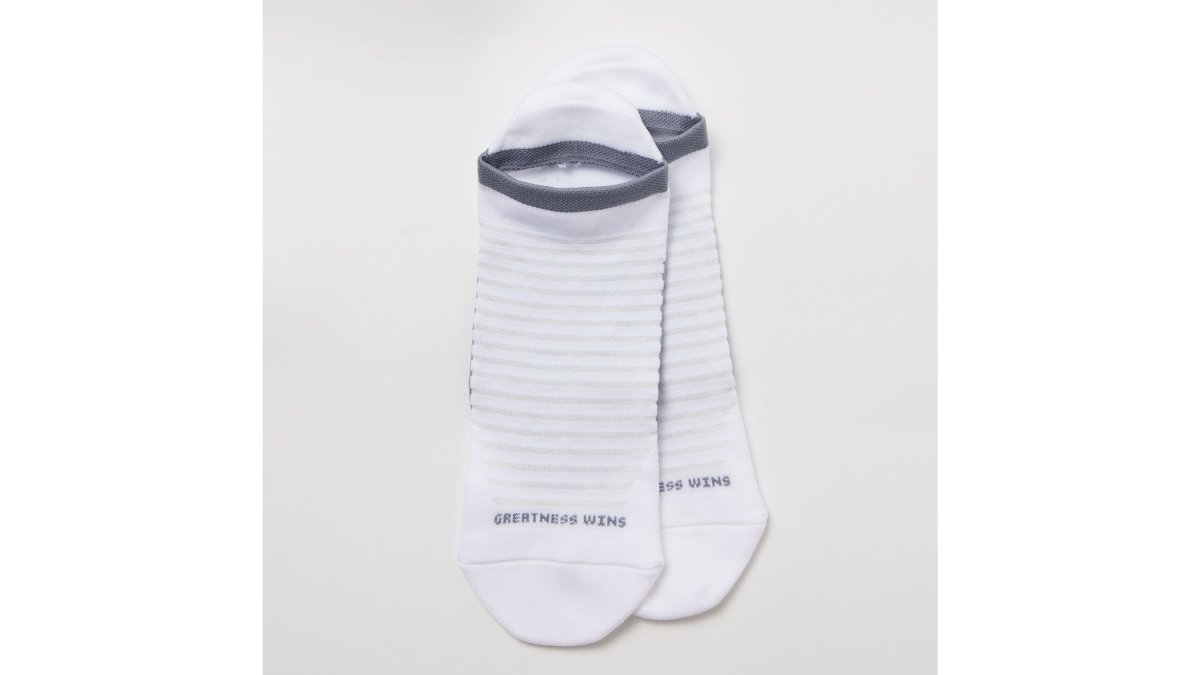
Blisters form when friction between foot and shoe creates heat and moisture that breaks down skin. The right sock interrupts this chain: it reduces friction, manages sweat, and keeps your foot stable.
Most runners treat socks as an afterthought, grabbing whatever's on sale. A quality running sock engineered for blister prevention extends your training window and keeps you consistent.
How to Choose Running Socks That Prevent Blisters
Selecting the right sock requires understanding three non-negotiable factors: fit, fabric, and construction.
Fit and Sizing Matter Most
A sock that doesn't fit properly is worse than no sock at all. Loose fabric bunches and creates friction; too-tight socks cut off circulation and trap heat.
The heel is where most blisters start. A sock with poor heel fit slips during your stride, causing repetitive friction. Look for reinforced heel cups that stay locked in place, with room to wiggle at the toe box.
Sizing varies by brand, so don't assume your shoe size matches your sock size. Order multiple sizes and test them on short runs. Greatness Wins offers free returns within the U.S., so you can find your exact fit without risk.

Moisture-Wicking Fabrics Reduce Hot Spots
Cotton is the enemy of blister prevention: it absorbs sweat and holds moisture against your skin, creating the exact conditions blisters need.
Nylon, polyester, and acrylic all excel at wicking, while merino wool adds temperature regulation and odor control.
Blended fabrics often outperform single-material socks. A blend of recycled polyester, cotton, and nylon, like the Greatness Wins Crew Length Sock, delivers breathability, durability, and quick-drying performance.
Seam Placement and Toe Construction
Seams are friction points: a seam across your toe or heel will cause a blister if you run long enough. The best running socks position seams along the arch or use seamless toe construction.
Examine where seams sit on any sock you're considering. Toe seams should be flat and minimal; some premium socks use bonded seams that lie completely flat, eliminating raised edges that dig into skin.
Best Running Socks for Blister Prevention by Use Case
Different running styles demand different sock features. A sock that works for a 5K on smooth pavement can fail on a 50K trail with creek crossings. The variables that matter most are distance, surface, temperature, and how much your foot moves inside the shoe.
Road Running and Daily Training
Road running produces repetitive, predictable friction: your foot lands in nearly the same position thousands of times per run, loading the same hotspot over and over.
For runs under 10 miles in mild conditions, a lightweight no-show or ankle sock with a snug heel cup and thin, flat toe seam handles most runners. Look for:
- A reinforced heel pocket that stays put
- A seamless or flat-locked toe seam
- A mesh or multi-knit panel over the top of the foot for airflow
In hot, humid conditions, prioritize moisture movement over cushioning. A thinner sock dries faster and traps less heat; a lightweight sock paired with a well-ventilated shoe often outperforms a cushioned sock in summer.
Trail Running and Technical Terrain
Trail running adds debris, lateral movement, and variable foot strikes. Your foot slides side to side on off-camber sections, and grit in the shoe becomes an abrasive between sock and skin.
Features that matter on trail:
- A taller cuff (crew or quarter) to seal the shoe opening
- Denser knit in the heel and forefoot to resist abrasion from grit
- Moderate cushioning under the ball of the foot for descents
If you run trails with water crossings, avoid cotton entirely. A wet cotton sock against skin is one of the fastest routes to a blister.
Long-Distance and Ultra Running
Past roughly 15 to 20 miles, cumulative friction and moisture become the dominant blister drivers. Two strategies dominate:
- Double-layer socks. An inner layer moves moisture and slides against an outer layer, so friction happens between the two sock layers instead of between sock and skin. The trade-off is added bulk, which can change shoe fit. Test them on a medium-long run before race day.
- Toe socks. Separating each toe eliminates inter-toe friction. They work best for runners with a history of toe blisters or narrow toe boxes. Some find the sensation distracting; others won't run long without them.
For ultras, many runners rotate socks at aid stations: a fresh, dry pair mid-race resets moisture buildup that no single sock can manage over 50 or 100 miles.
Hot Weather, Cold Weather, and Wet Conditions
- Hot and humid: Thin, breathable synthetic or merino blend. Change socks if they become saturated.
- Cold and dry: Merino wool regulates temperature without trapping sweat; slightly thicker cushioning is fine.
- Wet and rainy: Avoid cotton. Synthetic blends shed water and dry faster. Some runners apply a thin lubricant to high-friction zones before putting on socks.
Matching Sock Height to the Run
| Height | Best For | Blister-Relevant Feature |
|---|---|---|
| No-show | Road runs, gym, warm weather | Minimal bulk, snug heel |
| Ankle / quarter | Daily training, moderate trail | Debris protection, arch support |
| Crew | Trail, long distance, cold weather | Cuff seals shoe, more coverage |
| Over-the-calf | Ultras, cold, compression needs | Maximum coverage, graduated support |
| Sock Type | Best For | Key Feature | Price |
|---|---|---|---|
| No-Show | Road running, daily training | Minimal bulk, arch support | $15 |
| No-Show Multi-Pack | Runners building inventory | Same features, 3-pack value | $38 |
| Crew-Length | Trail, long-distance, ultra | Extra coverage, blended fabrics | $15 |
The right choice depends less on brand than on matching construction to conditions. A $15 sock that fits your foot and your run outperforms a premium sock that doesn't.
Double-Layer Running Socks for Maximum Friction Reduction
Double-layer construction represents a specialized approach to blister prevention. The inner layer moves moisture away from your skin. The outer layer handles the friction between sock and shoe.
Many ultramarathoners swear by double-layer socks for runs over 20 miles. The trade-off is bulk: shoe fit changes, and some runners find the extra material uncomfortable on shorter distances.
Toe Socks for Running: Are They Worth It?
Toe socks separate each toe, theoretically reducing friction between toes. The concept appeals to runners with history of toe blisters. Reality is mixed.
Some runners report dramatic improvement; others find the sensation distracting or the fit awkward.
If you're considering toe socks, test them first. They're worth trying if standard socks haven't solved your blister issue, but they're not a universal solution.
Identifying Your Blister Cause and Finding the Right Sock Solution
Not all blisters are created equal. The location and pattern of your blisters tells you what to fix, pointing you toward the right sock solution.
Heel Blisters vs. Toe Blisters: Different Solutions
Heel blisters indicate your sock is slipping or your heel isn't getting enough support. The Greatness Wins Athletic No Show Sock's arch support extends to the heel, preventing the movement that causes this problem.

Toe blisters suggest friction between your toes or between toes and the shoe, pointing to a fit issue (too loose in the toe box) or seam placement.
Ball-of-foot blisters form from repetitive impact and friction, responding well to socks with extra cushioning in that zone. Look for targeted padding rather than uniform cushioning.
Foot Type and Blister Prevention
Your foot shape influences blister risk. High-arched feet need pronounced arch support to prevent excessive motion; flat feet need a snug overall fit to prevent slipping; wide feet need socks cut generously across the midfoot without being loose at the heel.
Testing is the only way to know what works for your foot. Order multiple sizes and styles; the free returns policy at Greatness Wins removes the financial risk. Most runners discover their ideal sock within 2-3 tries.
Care and Replacement: Keeping Your Socks Blister-Free
Most sock guides stop at the product recommendation. But a sock that prevented blisters on day one can cause them by month three if the fabric has stretched, the cushioning has compressed, or the moisture-wicking finish has washed out. Understanding how socks degrade, and when to replace them, is one of the most overlooked parts of blister prevention.
How Socks Actually Wear Out
Three things happen to a running sock over time, each raising blister risk:
- Elasticity loss. Spandex or elastane in the cuff, arch, and heel stretches with wear and washing. A sock that once hugged your heel starts to slip, and heel slip is a common cause of heel blisters.
- Cushioning compression. Foam and terry-loop padding under the heel and ball of the foot compresses permanently. Once flattened, impact forces transfer more directly to your skin.
- Fabric thinning and pilling. Abrasion against the insole wears down the knit. Thin spots become friction points, and pilling creates rough texture against the skin.
A sock can look fine in the drawer and still be past its useful life. The failure is structural, not visible.
Washing Without Destroying Performance
How you wash matters more than most runners realize. The goal is to preserve elasticity and moisture-wicking performance.
- Cool or cold water. Hot water accelerates elastic breakdown and can shrink merino wool.
- Mild detergent. Harsh detergents and bleach degrade synthetic fibers and strip the wicking finish.
- No fabric softener. Softener coats fibers and blocks moisture movement.
A simple pattern that works: wash after every run in cool water, air dry, and rotate at least three or four pairs so each has time to fully dry.
When to Replace Running Socks
There is no universal mileage number, but a common pattern is to replace training socks between 300 and 500 miles, or roughly every three to six months for a regular runner. Signs it's time:
- The cuff no longer stays up on its own
- The heel pocket slides when you pull the sock on
- You can see light through thin spots at the heel or ball of the foot
That last signal is the most important. If a sock that used to work starts causing hot spots, the sock is usually the variable that changed, not your foot.
Rotation, Drying, and Odor
Keeping multiple pairs in rotation does more than extend lifespan: it gives each pair time to dry completely between runs, limiting bacterial growth and preserving moisture movement.
For runners training daily, four to six pairs in rotation is a reasonable baseline. Keep a dedicated pair or two for long runs and races so your highest-stakes efforts use the freshest, most intact socks you own.
The best blister prevention strategy combines the right sock choice with proper fit, consistent care, and timely replacement. One quality sock can prevent weeks of training disruption.
Frequently Asked Questions
What features should I look for in athletic socks to help prevent blisters?
The best athletic socks for blister prevention combine snug fit, moisture-wicking fabric, and minimal seams. Look for socks with arch support, cushioning in high-friction areas, and seamless toe construction. Moisture-wicking materials like nylon and recycled polyester pull sweat away from your skin, reducing the heat and friction that cause blisters. Proper sizing is critical, too loose and your foot slides; too tight and pressure builds up.
Are double-layer running socks more effective at preventing blisters?
Double-layer running socks reduce friction by creating a barrier between your foot and the outer sock. When your foot shifts inside the shoe, the inner layer moves with it, while the outer layer stays in place, preventing the skin-on-fabric rubbing that causes blisters. This design is especially helpful for long-distance running and trail running where friction accumulates over many miles.
Do toe socks for running actually work for blister prevention?
Toe socks separate each toe, which reduces friction between toes and can prevent blisters in that area. They work best if you experience blisters between your toes or have a history of toe-to-toe rubbing. However, they require a wider toe box and take time to adjust to. If your blisters form on heels or the ball of your foot, standard athletic socks with good cushioning and fit are usually more effective.
How often should I replace my athletic socks?
Replace athletic socks every 6-12 months with regular use (3-4 times per week), or sooner if elastic weakens, cushioning flattens, or seams fray. Worn-out socks lose their moisture-wicking ability and cushioning, increasing blister risk. High-quality socks made with durable materials like nylon and recycled polyester hold up longer. Wash socks in cold water and air-dry to extend their lifespan.