Table of Contents
- Why Your Athletic Socks Slip Down Inside Running Shoes
- How to Stop Socks from Slipping Down in Shoes
- Running Socks That Stay in Place: What to Look For
- Running Shoe Fit and Sock Slippage: The Connection
- No-Show Running Socks with Heel Tabs: Your Solution
- Sock Maintenance and Replacement
- Frequently Asked Questions
Last Updated: October 12, 2026
Why Your Athletic Socks Slip Down Inside Running Shoes
Athletic socks slip down because of a mismatch between your sock, shoe, and foot, usually several problems working together. Once you understand what's happening, the fix is straightforward.
Socks bunching around your ankles mid-run breaks your stride, causes blisters, and ruins your focus.
Let's walk through the physics, then show you exactly how to stop it.
The Physics of Sock Slippage
Sock slippage happens when your foot moves inside your shoe more than your sock moves with it. Your foot slides forward and down while your sock stays put, leaving a bunched sock around your ankle.
Three forces create this problem:
- Gravity pulls the sock downward with every stride
- Friction between your foot and the sock weakens if the sock is too loose or worn out
- Shoe movement happens when the shoe has too much internal space
The sock must grip your foot tightly enough to move with it. If any of these forces wins, your sock slides.
Common Culprits: Sizing, Elasticity, and Shoe Fit
Most runners overlook one or more of these three factors.
Size mismatch is the easiest fix. A sock one size too big creates loose fabric that bunches instead of hugging your foot.
Shoe fit problems are the hidden culprit. Too much internal volume lets your foot slide around, pulling the sock down.
How to Stop Socks from Slipping Down in Shoes
Follow these four steps in order. Most runners solve the problem at step one or two.
Step 1: Check Your Sock Size and Fit
Your sock size should match your shoe size range. A size 10 shoe needs a size 10 sock, not a size 11 or 12.
Here's how to check:
- Put on the sock without a shoe
- Pull it up to mid-calf
- The cuff should sit snug against your leg, not loose
- Your heel should feel secure in the heel pocket
- The sock should not bunch or fold when you flex your foot
If the sock is too large, buy a smaller size. If it fits well but still slips, move to step two.
Step 2: Inspect Elasticity and Heel Coverage
Stretch the cuff of a sock you've worn for months. Does it snap back quickly or stay stretched out?
A sock with worn elasticity won't hold your foot. Replace socks that:
- Stay stretched after you pull them
- Have a loose, saggy cuff
- Don't grip your heel firmly
New socks always perform better. If you've ruled out sizing and your socks are older, replacement is the fastest solution.
Also check the heel tab design. A good heel tab extends slightly above the heel bone with reinforced fabric, preventing the sock from sliding down during push-off.
Step 3: Evaluate Your Shoe Fit
Shoe fit determines whether your foot stays stable inside the shoe. A foot that moves around will pull the sock down.
Test your shoe fit:
- Put on the sock and shoe without tying
- Stand and shift your weight forward
- Your heel should not lift out of the shoe
- Your toes should not jam into the front
- The shoe should feel snug around the midfoot
If your heel lifts when you shift forward, the shoe is too large; if your toes jam, it's too small.
A proper fit means minimal internal movement. Your foot should feel locked in place, not sliding around.
Step 4: Adjust Lacing and Tightness
Lacing technique controls how much your foot moves inside the shoe. Improper lacing leaves gaps that allow movement.
Follow this lacing pattern:
- Loosen all laces completely
- Pull the laces tight across the forefoot (the widest part of your foot)
- Tighten the midfoot laces snugly but not painfully
- Pull the heel laces tight, this is critical for sock retention
- Finish with the top laces just snug enough to keep your foot from sliding forward
The heel area is most important. A loose heel lets your foot slide down with every stride; tight heel lacing locks your foot, and your sock, in place.
Tie a test knot and go for a short run. If your sock still slips after tightening heel lacing, move to the next section.
Running Socks That Stay in Place: What to Look For
Not all athletic socks are created equal. The best running socks that stay in place share specific design features.
Heel Tab and Heel Pocket Design
The heel tab is the reinforced section at the back of the sock. A well-designed heel tab extends above the heel bone, has extra padding, fits snugly into the shoe's heel pocket, and prevents the sock from sliding down during push-off.
The shoe's heel pocket is the recessed area at the back of the shoe's interior.
Greatness Wins Athletic No Show Socks feature a reinforced heel tab specifically designed for this purpose.

Fabric Blend and Stretch Content
The fabric blend determines elasticity and durability.
Nylon-based blends hold their shape better than cotton-heavy ones, which absorb moisture and lose elasticity faster. Nylon socks maintain their grip longer after repeated washing.
Greatness Wins Crew Length Socks blend cotton, recycled polyester, and nylon to create breathability, durability, and moisture-wicking in one sock.
Sock Length Matters
Sock length affects retention. No-show socks sit below the ankle and work best with low-cut shoes, quarter-length socks reach mid-ankle and suit most running shoes, and crew-length socks extend to mid-calf for maximum coverage.
However, no-show socks with a reinforced heel tab can match the performance of longer socks if the heel pocket design is strong.
Running Shoe Fit and Sock Slippage: The Connection
Your shoe's internal fit directly controls whether your sock stays in place, the most overlooked factor.
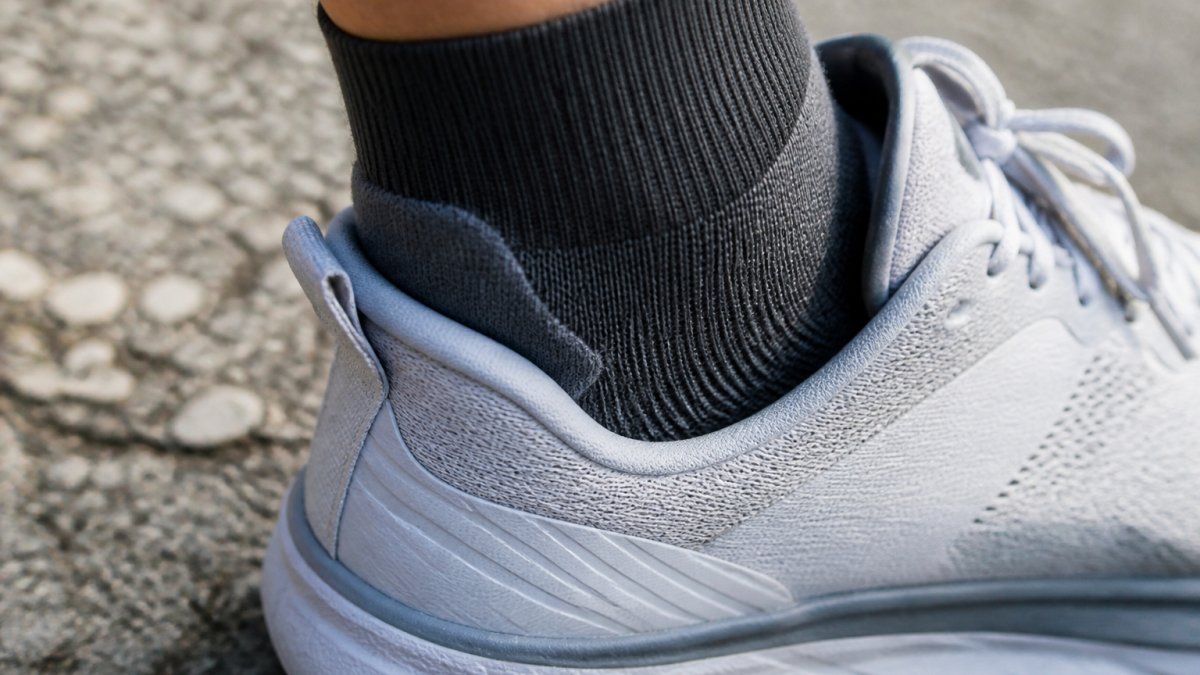
Shoe Volume and Internal Movement
Shoe volume is the total internal space inside the shoe. Excessive volume lets your foot move around, and that movement pulls the sock down.
Two runners in the same shoe size can experience different volumes because of:
- Shoe width (narrow, standard, wide)
- Arch height (how much the shoe curves under your foot)
- Heel counter design (how snugly the heel is held)
A narrow fit and high arch provide more stability; a wide fit and low arch allow more movement.
Test this: Put on your running shoes without socks. Shift your weight forward and back.
Asymmetrical Slipping: One Sock Slides More Than the Other
Sometimes only one sock slips while the other stays in place, which points to feet of different sizes or shapes.
Many runners have one foot slightly larger than the other.
The fix depends on the size difference:
- Small difference (less than half a size): Use thicker socks or add an insole to the smaller foot's shoe
- Moderate difference (half a size or more): Consider buying two pairs of shoes in different sizes, or use shoe inserts to fill extra space
- Severe difference: Custom insoles or professional fitting may be necessary
Asymmetrical slipping also happens with different arch heights: a higher arch creates more stability in that shoe, while the lower-arched foot moves around more.
Pay attention to which foot's sock slips. That tells you which shoe is too loose.
No-Show Running Socks with Heel Tabs: Your Solution
If you've worked through the four troubleshooting steps and your socks still slip, the problem is likely sock design. No-show running socks with reinforced heel tabs solve this.
Why Heel Tabs Work
A heel tab is a thickened section of fabric at the back of the sock, usually extending 1-2 inches above the heel bone. It grips the inside of the shoe's heel pocket, creating friction that prevents downward movement.
The heel tab works because it:
- Fills the shoe's heel pocket completely
- Provides a friction surface that resists sliding
- Keeps the sock from bunching around your ankle
No-show socks without a heel tab rely entirely on cuff elasticity, so a weak cuff or worn elastic slips regardless of how tight your shoe is.
Multi-Knit Construction for Retention
Multi-knit construction varies fabric thickness and knit density across the sock.
This approach balances retention with comfort. The thick heel holds the sock in place. The thin arch lets your foot breathe.
Greatness Wins Athletic No Show Socks use multi-knit construction to maximize breathability, arch support, and comfort. The 100% nylon material provides durability.

Sock Maintenance and Replacement
Even the best socks wear out. Proper care extends their life, but replacement is inevitable.
When Elasticity Wears Out
Elasticity loss is the primary reason socks stop performing. Elastane (spandex) degrades with every wash, and after 50-100 washes most socks lose noticeable elasticity.
Signs your socks have lost elasticity:
- The cuff feels loose even when new
- The sock bunches around your ankle
- The heel tab no longer grips the heel pocket
Once elasticity is gone, no lacing adjustment will fix it, replacement is the only solution.
Most runners get 12-18 months from a quality sock. If yours are older, replacement should be your first troubleshooting step.
Washing and Care to Preserve Stretch
Proper washing extends sock life and preserves elasticity:
- Wash in cool water (not hot)
- Use gentle detergent without bleach
- Avoid fabric softener (it breaks down elastane)
- Air dry instead of machine drying
- Never iron or use high heat
Hot water and machine drying destroy sock elasticity fastest; cool water and air drying preserve the elastic fibers much longer.
Wash your socks after every run to remove sweat and bacteria.
| Problem | Cause | Solution |
|---|---|---|
| Sock too loose around ankle | Sock size too large | Buy a smaller size |
| Sock bunches within first mile | Worn elasticity | Replace socks |
| Heel slides inside shoe | Shoe too large | Tighten heel lacing or buy smaller shoe |
| One sock slips, other doesn't | Asymmetrical foot size | Use insoles or thicker socks on smaller foot |
| Sock slips during push-off | Weak heel tab design | Switch to socks with reinforced heel tabs |
| Sock slides after washing | Elasticity damaged | Use cool water and air dry |
Running comfort starts with the right sock in the right shoe.
If you've checked sizing, elasticity, shoe fit, and lacing, the issue is sock design. Greatness Wins Athletic No Show Socks feature multi-knit construction and reinforced heel tabs that keep socks in place during runs.

Get started with Greatness Wins and experience the difference proper sock design makes in your running comfort and performance.
Frequently Asked Questions
Why do my athletic socks slip down inside my running shoes?
Athletic socks slip down due to three main factors: incorrect sock size, worn-out elasticity, or loose shoe fit. If your socks are too large, they bunch inside the shoe and lose contact with your heel. When elastic degrades from repeated washing or wear, the sock can't maintain tension around your foot. Shoes with excess volume allow your foot to move inside them, causing the sock to shift downward with each stride. Identifying which factor applies to you is the first step to solving the problem.
How do I know if my running socks that stay in place need a heel tab?
A heel tab grips your heel and prevents downward movement during running. Look for socks with a reinforced heel pocket and a raised tab at the back of the heel. Heel tabs are especially important if you have a narrow heel or experience significant foot movement inside your shoes. Greatness Wins Athletic No Show Socks feature multi-knit construction that provides arch support and total comfort.
Can running shoe fit cause sock slippage even if my socks fit well?
Yes. Running shoe fit and sock slippage are directly connected. Shoes that are too large allow your foot to slide inside the shoe, pulling the sock down with it. Even well-fitting socks will slip if your shoe has excess volume or if the heel pocket is too deep. Ensure your running shoes fit snugly around the heel and midfoot without pinching your toes. You should be able to fit one finger between your heel and the back of the shoe when standing.
What fabric blend works best for running socks that stay in place?
Look for socks blending nylon, polyester, and elastane for optimal retention and performance. Nylon provides durability and a silk-like feel, while polyester offers moisture-wicking and quick-dry properties. Elastane (also called spandex) gives the sock stretch and helps it conform to your foot shape. Avoid 100% cotton socks, which absorb moisture, lose elasticity quickly, and don't provide adequate grip. Greatness Wins Crew Length Socks combine cotton breathability with recycled polyester moisture-wicking and nylon strength.