Last Updated: November 17, 2026
Quick Summary
The best athletic accessories for improved gym safety are the ones that stabilize the body, protect joints and keep footing and grip secure during heavy sets. Supportive training shoes, joint-supportive compression, warm-up bands and, once bracing is solid, a lifting belt address the biggest risks. Add them by priority, not all at once.
- Supportive training shoes with good traction and a firm heel keep feet planted under heavy loads.
- Compression gear like the Baselayer 3/4 Legging offers consistent support through squats and lunges.
- A lifting belt helps on near-maximal squats, deadlifts and presses, once bracing technique is solid.
- Resistance band warm-ups activate the shoulder, hip and knee stabilizers before loading them.
- Replace training shoes once the tread flattens, since a worn sole loses traction quickly.
Table of Contents
- How We Evaluated Gym Safety Accessories
- Weightlifting Safety Equipment That Protects Your Joints
- Best Shoes for Weightlifting and Stable Footing
- Lifting Belts for Gym Workouts: When They Help and When They Don't
- Resistance Bands for Warm-Ups and Injury Prevention
- Grip Aids, Socks, and Apparel That Support Safe Training
- Which Gym Safety Accessories to Add First
- Frequently Asked Questions
How We Evaluated Gym Safety Accessories
Gym injuries are more often about joints, footing and fatigue than about lifting heavier loads. The best athletic accessories for improved gym safety are the ones that stabilize the body, protect vulnerable joints and keep grip and footing secure during demanding sets.
Our criteria stay simple: fit, support, traction and durability. Youth-focused guidance from a review on resistance training safety for young athletes recommends comfortable attire that does not restrict movement and athletic footwear with good traction and support, and we applied that same logic to adult training.
Weightlifting Safety Equipment That Protects Your Joints
Joint protection starts with equipment that stabilizes without restricting movement. Knee sleeves and supportive training gear help lifters maintain control through squats and lunges, which is where most joint stress builds up.
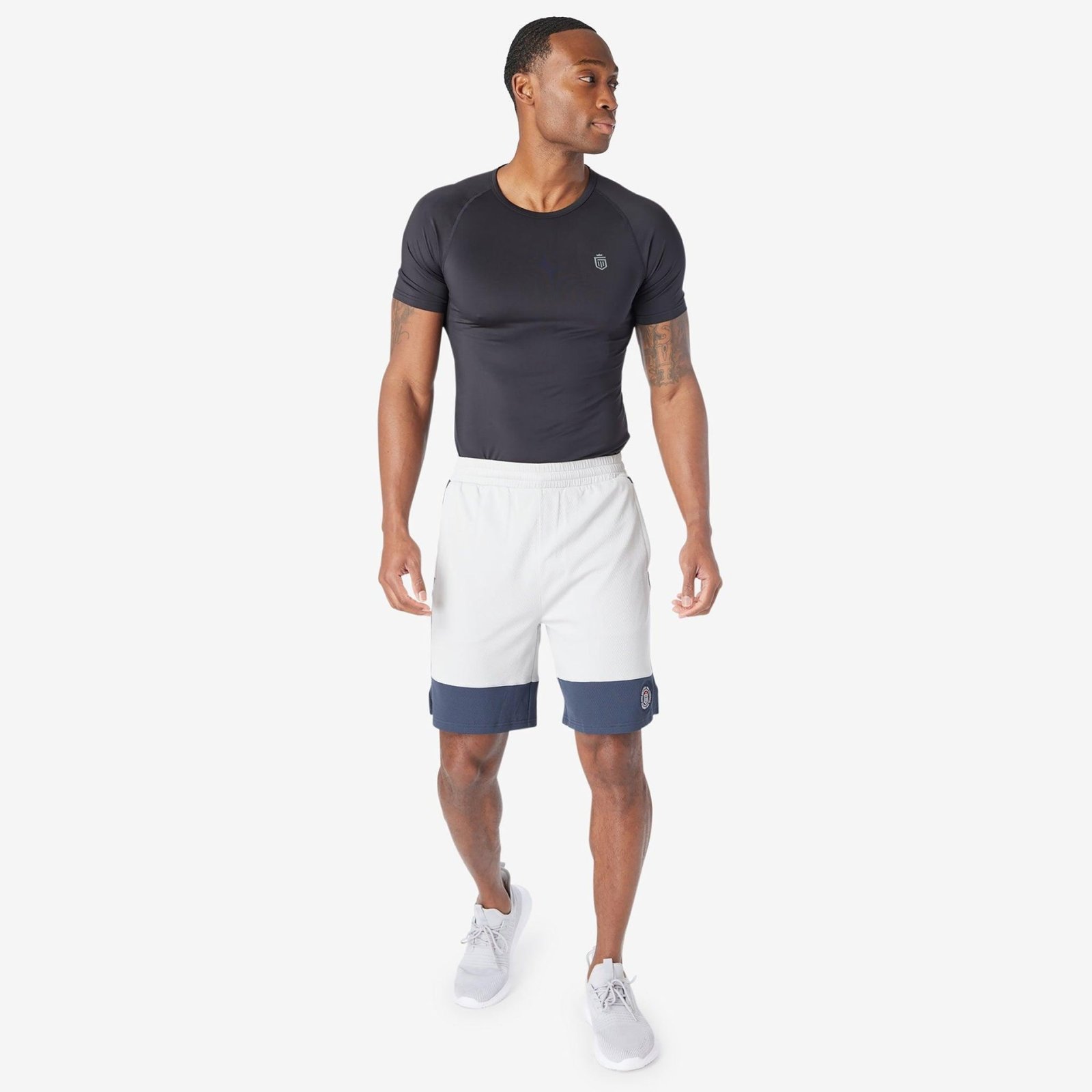
Our Baselayer 3/4 Legging ($59.00) offers compression through the hips and knees with a lightweight fabric that stays out of the way. It pairs well with the Baselayer Short ($49.00) for lifters who want consistent compression across a full session.
Best for: lifters who train with heavy squats and want consistent compression through the lower body. Skip if: you prefer loose-fitting clothing for mobility drills and warm-up work.
Best Shoes for Weightlifting and Stable Footing
Footwear is the foundation of every lift. Proper athletic footwear provides the traction and support that keep feet planted when the bar gets heavy.
The shoes you choose should give a flat, stable base with grip on the gym floor. Look for a firm heel and a sole that does not compress under load. Pair them with grip-focused socks so your feet stay secure inside the shoe.
Watch out: a worn-out sole loses traction quickly, so replace training shoes once the tread flattens.
Lifting Belts for Gym Workouts: When They Help and When They Don't
A lifting belt is not a back brace and it is not a strength shortcut. Its job is to give your trunk something firm to brace against so you can generate higher intra-abdominal pressure during a heavy lift.
That mechanism explains the when. Belts earn their place on near-maximal sets of squats, deadlifts and overhead presses, typically in the 80-90% and above range of your one-rep max, where trunk stability is the limiting factor. They are unnecessary for warm-up sets, moderate-rep accessory work, machine work and most conditioning.
Belt types and what each is for
- 10mm-13mm nylon belts are the entry point. They are lighter, break in immediately and are adequate for moderate loads. The trade-off is that nylon flexes under heavy load, so it gives less feedback than leather.
- 10mm leather belts are the general-purpose standard for most lifters. They are stiff enough to brace against, break in over a few weeks and last for years with care.
- 13mm leather belts are stiffer and better suited to very heavy squats and deadlifts. They take longer to break in and can be uncomfortable for lifters with a short torso.
- 4-inch vs. 3-inch width matters more than most buyers realize. A 4-inch belt can dig into the ribs or hips on shorter lifters during pulls; a 3-inch belt often fits better and still provides adequate bracing surface.
- Velcro vs. prong vs. lever closures. Velcro is fast to adjust and fine for nylon belts. Prong buckles are simple and durable. Lever belts lock in a consistent tightness set after set, which is why many heavy lifters prefer them, but a lever set too tight is uncomfortable to wear between sets.
Fit and sizing: the part most buyers skip
A belt should sit over the navel or just below it, covering the lower abdomen, not riding up on the ribs or down on the hips. Measure around your torso at that height, not at your pants waistline, and size to that measurement rather than to your clothing size.
Watch out: a belt worn too high, over the ribs, changes your bracing angle and can encourage you to arch rather than brace, check the fit in a mirror before your first heavy set.
Durability and when to replace
Belts fail in predictable ways. Nylon belts stretch and the Velcro loses holding power after repeated tightening; a belt that slips a notch mid-lift is a safety problem, not an inconvenience. Leather belts dry out and crack at the fold points, and stitching at the buckle or lever attachment is the first thing to inspect. Check the stitching and the closure before every heavy session, and retire a belt once the closure no longer holds its setting or the leather shows deep cracks at the stress points.
Belt use in a crowded gym
A belt takes up space and time. Put it on for your working sets and take it off between them rather than wearing it around the floor, and set up your platform or rack so the belt does not become a trip hazard for other lifters.
Best for: lifters pulling and squatting near-maximal loads who have already learned to brace without one. Skip if: you are still learning bracing technique, or your working sets are in a rep range where trunk endurance, not peak stiffness, is the goal.
The article's guidance on belt types, widths and closures can be scanned at a glance:
| Belt type | Best for | Key difference |
|---|---|---|
| 10mm-13mm nylon | Entry-level, moderate loads | Lighter; flexes under heavy load |
| 10mm leather | General-purpose lifting | Stiff enough to brace; lasts for years |
| 13mm leather | Very heavy squats and deadlifts | Stiffer; longer break-in |
| 3-inch width | Shorter lifters | Often fits better during pulls |
| 4-inch width | Lifters who need more bracing surface | Can dig into ribs or hips on short torsos |
Resistance Bands for Warm-Ups and Injury Prevention
Resistance bands are a practical way to prepare joints and muscles before loading them. A short band routine before squats or pressing can activate the muscles that stabilize the shoulders, hips and knees, which supports safer lifting.
Band work also builds the kind of controlled movement that protects joints during heavier sessions. A structured warm-up matters more than a long one, so keep the routine focused on the joints you will load that day.
Grip Aids, Socks, and Apparel That Support Safe Training
Grip and footing fail quietly before they fail loudly. A bar that rotates in sweaty hands, a foot that slides inside a loose sock, or a strap that gives way mid-pull all turn a controlled lift into a sudden one. The accessories in this section exist to remove those small failures so the load stays where you put it.
Hand protection and grip: chalk, straps, hooks and wraps
- Chalk is the cheapest grip aid and the first one to try. It absorbs moisture and increases friction between your hands and the bar. Most commercial gyms allow chalk in some form; if yours does not, liquid chalk is the usual compromise. Chalk does not make your grip stronger, it keeps your existing grip from degrading as your hands sweat.
- Lifting straps loop around the bar and take load off the forearm flexors so your back and hips can work heavier without your grip quitting first. They are the right tool for high-volume pulling and for lifters whose grip is the limiting factor on deadlifts. The trade-off is real: rely on straps for every pull and your unassisted grip never catches up, so keep some heavy pulls strapless.
- Lifting hooks are a rigid alternative to straps. They are easier on the hands and faster to set, but they fix your wrist angle and can feel unstable on movements where the bar path moves, which is why most lifters reserve them for heavy, straight-line pulls.
- Wrist wraps support the wrist under pressing loads and are distinct from straps, they do not touch the bar. Use them for heavy overhead pressing and front squats, not as a default on every set.
A common pattern is that lifters buy straps before they have built any baseline grip. A better order is chalk first, then a dedicated grip-training block, then straps for the specific lifts where grip is genuinely the limiter.
Socks: the interface between foot and shoe
Socks matter more for stability than most lifters assume. The Athletic No Show Sock ($15.00) is made with 100% Nylon with multi-knit construction for breathability and arch support, and it works well under training shoes.
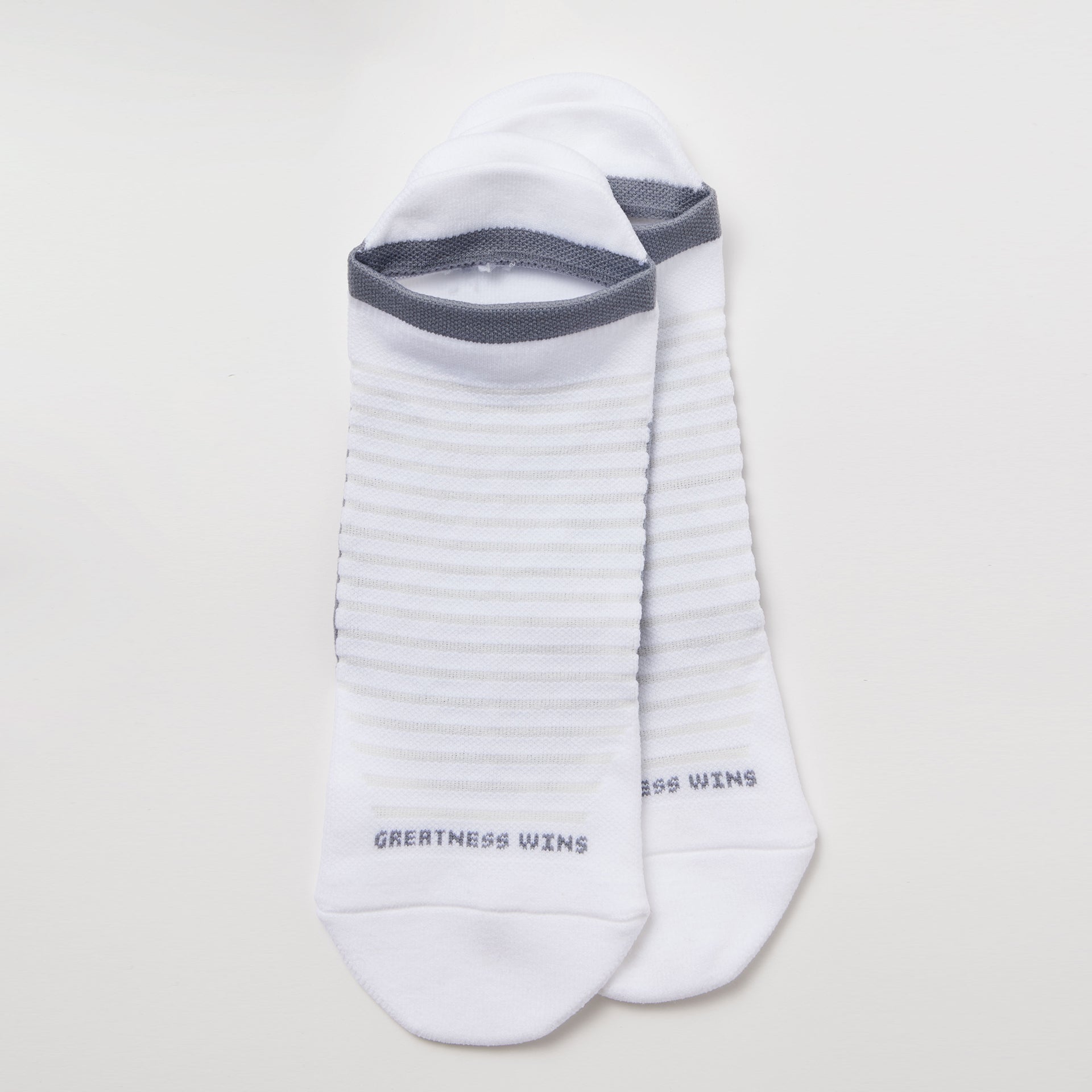
For deadlifts and other pulls, many lifters prefer a thin sock or no sock inside a tight-fitting shoe to reduce movement; for squats and general training, a cushioned sock with a firm arch band is the more comfortable choice.
For a deeper look at sock choice, see our top 10 athletic socks for blister prevention.
Apparel as a safety layer
Loose clothing that bunches at the knee or hangs near a moving bar is a snag hazard, which is why fitted layers are common in lifting environments. The Core Tech Training Short ($69.00) combines a lightweight, super-lightweight fabric with a Coolmax® liner that provides a gentle compressive feel as you move, and the Baselayer 3/4 Legging is a lightweight fabric that provides ultimate coverage without weighing you down.
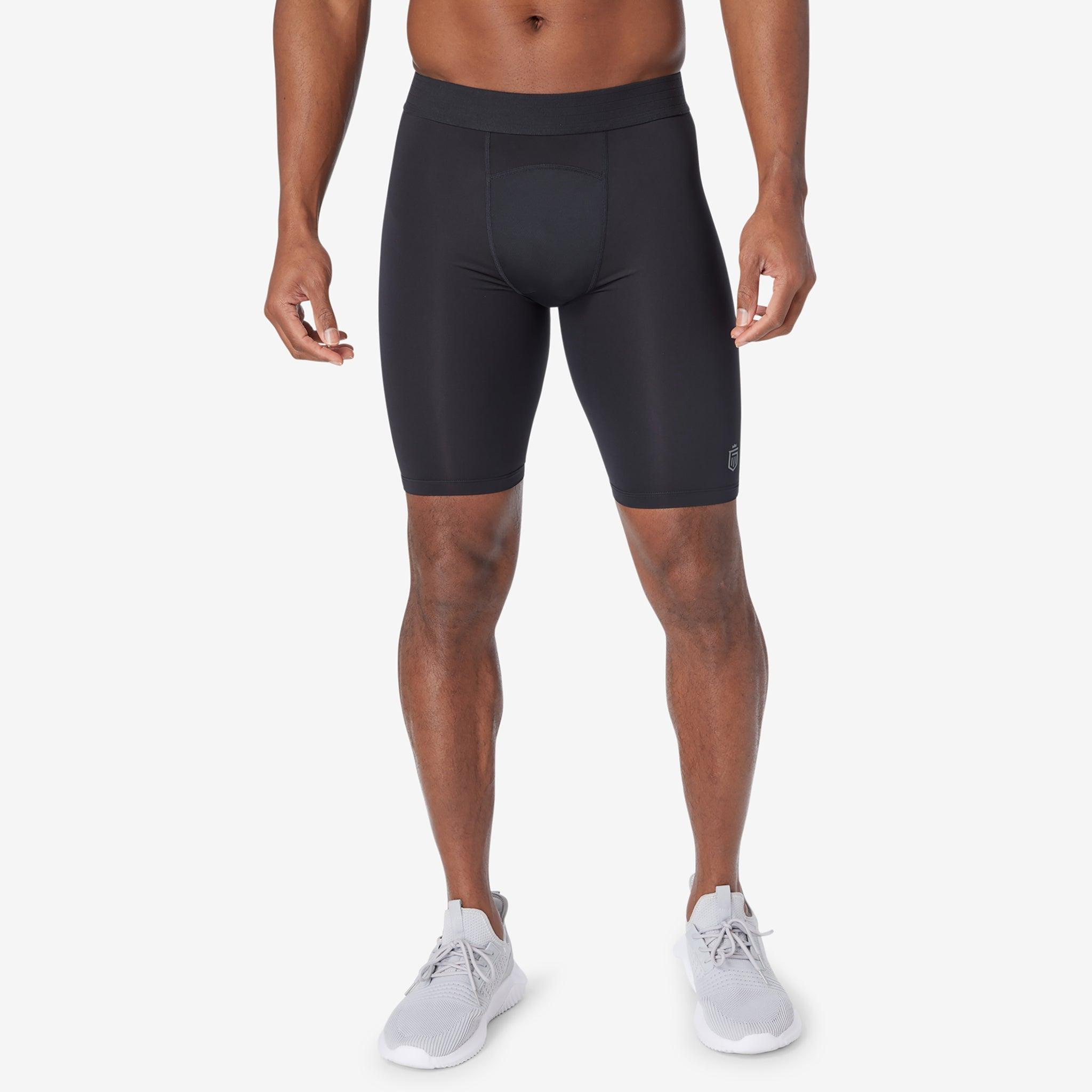
Watch out: compression that is too tight restricts blood flow and range of motion, and a seam that sits directly under a knee or on a contact point will rub under load, fit matters more than the compression rating on the label.
Material care and replacement
Grip aids and apparel degrade. Chalk blocks crumble, straps fray, socks lose their elastic arch band and compression fabric loses rebound after repeated washing. Wash compression and socks in cool water and air-dry them to slow elastic breakdown, and retire any item whose stretch has gone slack or whose seams are pulling. A sock that no longer holds its arch is no longer doing the job you bought it for.
Which Gym Safety Accessories to Add First
Start with the items that address your biggest risk. If you struggle with stable footing, begin with supportive training shoes and quality socks. If your joints ache during squats, add joint-supportive compression.
A practical order: footwear first, then compression for joints, then warm-up bands, then belts for heavy work.
Gym safety comes from consistent habits as much as good gear. Choose the accessories that fit your training, wear them correctly, and replace them when they lose support.
Frequently Asked Questions
What are the most important accessories to bring to the gym?
Start with footwear that gives a flat, stable base, then add a lifting belt for heavy compound sets and wrist wraps if your grip or wrists tire before your back or legs. Greatness Wins' Athletic No Show Sock ($15.00) and Performance Cap ($45.00) cover the everyday basics, while heavier accessories depend on your lifts.
Do lifting belts help prevent injuries at the gym?
A lifting belt can help you brace during heavy squats and deadlifts, but it does not prevent injury on its own. Good technique, progressive loading, and adequate warm-ups matter more. Use a belt for near-maximal sets rather than every exercise, and remove it for lighter work so your trunk muscles keep training. Greatness Wins' Core Tech Training Short ($69.00) and Baselayer 3/4 Legging ($59.00) are available for training.
Are wrist wraps or lifting straps better for gym safety?
Wrist wraps support the wrist joint during pressing and heavy overhead work, while lifting straps reduce grip fatigue during pulls so you can hold the bar safely. Neither replaces proper grip training. Choose wraps for pressing and straps for pulling, and avoid using straps to lift loads you cannot control.
What type of shoes are safest for weight training?
Flat, firm-soled shoes with good traction are generally the safest choice for weight training. They keep your foot planted and reduce the chance of slipping during squats and lifts. Avoid cushioned running shoes for heavy squatting because the soft midsole can compress under load.