Last Updated: November 6, 2026
Quick Summary
The right performance cap depends on your sport's movement, sun exposure, and intensity. Start by matching those three forces to features like secure fit, breathable fabric, and brim coverage, then test the fit before buying.
- Compare caps by movement, exposure, and intensity, then match features to your main sport.
- Choose moisture-wicking synthetics and breathable mesh over heavy cotton for active use.
- Test the fit by shaking your head, nodding, and wearing the cap for 10 to 15 minutes.
- Check brim width and fabric to confirm sun and weather coverage for your conditions.
- Wash in cool water and air dry, because heat from a dryer can shrink synthetic fabric.
Table of Contents
- Start With the Sport: Matching Cap Features to Your Activity
- Step 1: Pick the Right Fabric for Moisture-Wicking and Airflow
- Step 2: Check the Fit With a Breathable Running Hat Test
- Step 3: Use the Sports Cap Fit Guide to Measure and Adjust
- Step 4: Verify Sun Protection and Weather Coverage
- Step 5: Keep Your Cap Fresh: How to Wash a Performance Cap
- Your Next Step: Shop the Performance Cap for Your Sport
- Frequently Asked Questions
Start With the Sport: Matching Cap Features to Your Activity
Choosing a performance cap for outdoor sports starts with one question: what will you be doing in it? A cap that works on a trail run can feel wrong on a golf course or in a pool.
Compare caps by three forces the sport puts on your head: movement (how much the cap will bounce or shift), exposure (sun, rain, wind, spray), and intensity (how much heat and sweat the cap must move). Read your main sport against those three forces, then match the features below.
Running and Trail Running
- Movement: High. The cap must stay put through a cadence-driven head bob, so a secure back closure and a band that grips without pinching matter more than structure.
- Exposure: Sun on face and neck, plus glare from pavement or water. A curved brim that shades the eyes without blocking the forward view is the priority.
- Intensity: High. Look for lightweight fabric, mesh across the crown and back, and a sweatband that wicks rather than absorbs.
- What to avoid: Heavy cotton, stiff structured fronts, and wide brims that catch wind on ridgelines.
Hiking and General Trail Use
- Movement: Low to moderate. Fit can be a little looser, but the cap still needs to stay on in gusts.
- Exposure: Long hours of sun, possible rain, brush, and branches. A slightly wider brim and a more durable front panel earn their weight here.
- Intensity: Moderate and intermittent. Ventilation still matters on climbs, but a cap that dries fast after a shower is more useful than one built purely for heat.
- What to avoid: Ultralight running caps with minimal brims if you will be exposed all day, and caps with no chin retention on windy exposed sections.
Cycling
- Movement: Low on the head, but the cap sits under a helmet, so bulk is the enemy. A low-profile crown and a short, flexible brim keep it from interfering with the helmet fit.
- Exposure: Sun and road spray. A brim that flips up or stays out of the field of view is preferable.
- Intensity: High. Thin, quick-drying fabric and a minimal band reduce heat buildup under the helmet.
- What to avoid: Structured caps, thick seams, and rear closures that create pressure points under helmet retention systems.
Tennis and Racket Sports
- Movement: Moderate to high, with lots of side-to-side motion and looking up. The band must hold through lateral movement.
- Exposure: Direct sun for long stretches. Brim coverage over the eyes matters, and light colors reflect heat.
- Intensity: Moderate. Breathability is important, but so is a band that keeps sweat out of the eyes during play.
- What to avoid: Caps that sit too low over the brow and block upward vision on serves and overheads.
Team Sports and Field Sports
- Movement: High and unpredictable. Secure adjustment and a band that does not slip when you sweat are essential.
- Exposure: Sun and sometimes rain. Durability and colorfastness matter because the cap sees repeated use and washing.
- Intensity: High. Ventilation and moisture management are the core features; structure is secondary.
- What to avoid: Caps with decorative elements that snag, and closures that loosen during play.
Water Sports and Wet Conditions
- Movement: Moderate, but the cap may get wet and heavy. Quick-drying fabric and a secure retention system matter.
- Exposure: Glare, spray, and sun. A dark underbill reduces glare reflected off water.
- Intensity: Variable. The cap should shed water rather than soak it, and it should not become a sail in wind.
- What to avoid: Absorbent cotton and caps with no way to secure them against wind and spray.
Start with your main sport, then look for the features that match it. Outdoor Cap's 2026 headwear trends article, which identifies moisture-wicking fabric, breathable mesh, and all-day comfort as what buyers are choosing
Shop the match: If you run, train, or work out most often, the Performance Cap is built for all-day wear with venting and moisture management. If you want a more casual style for everyday outdoor use, the Trucker Cap is another option to compare.


Step 1: Pick the Right Fabric for Moisture-Wicking and Airflow
Fabric decides how a cap feels after the first mile. Look for materials that pull sweat away from your head rather than soaking it up. A cap that holds sweat gets heavy, itchy, and cold once you stop moving.
Check the fabric label and the cap's design together.
- Look for moisture-wicking synthetics over heavy cotton for active use.
- Prefer breathable mesh panels in the crown or back.
- Choose lighter weights for hot weather and running.
- Check whether the brim and front panel are stiff enough to hold shape after sweating.
Guidance on how performance fabrics move moisture away from the skin
Learn more: If you want to understand how temperature-regulating fabrics work before you buy, read Temperature-Regulating Fabric Technology Explained. For a side-by-side look at synthetic options, see Polyester vs Nylon for Workout Gear: Which Performs Best.
Ventilated Mesh and Eyelet Vents
The Performance Cap includes embroidered eyelet vents.
Look for vents that sit high on the crown, where heat rises, and check that the mesh is soft against the skin. Vents that are too small make little difference; a cap with mesh on the back and eyelets on top will usually run cooler than a solid-panel cap.
Step 2: Check the Fit With a Breathable Running Hat Test
A cap that fits poorly will bounce, slide, or press into your forehead during exercise. Size codes alone will not tell you whether a cap fits your head shape, so test the fit before you commit.
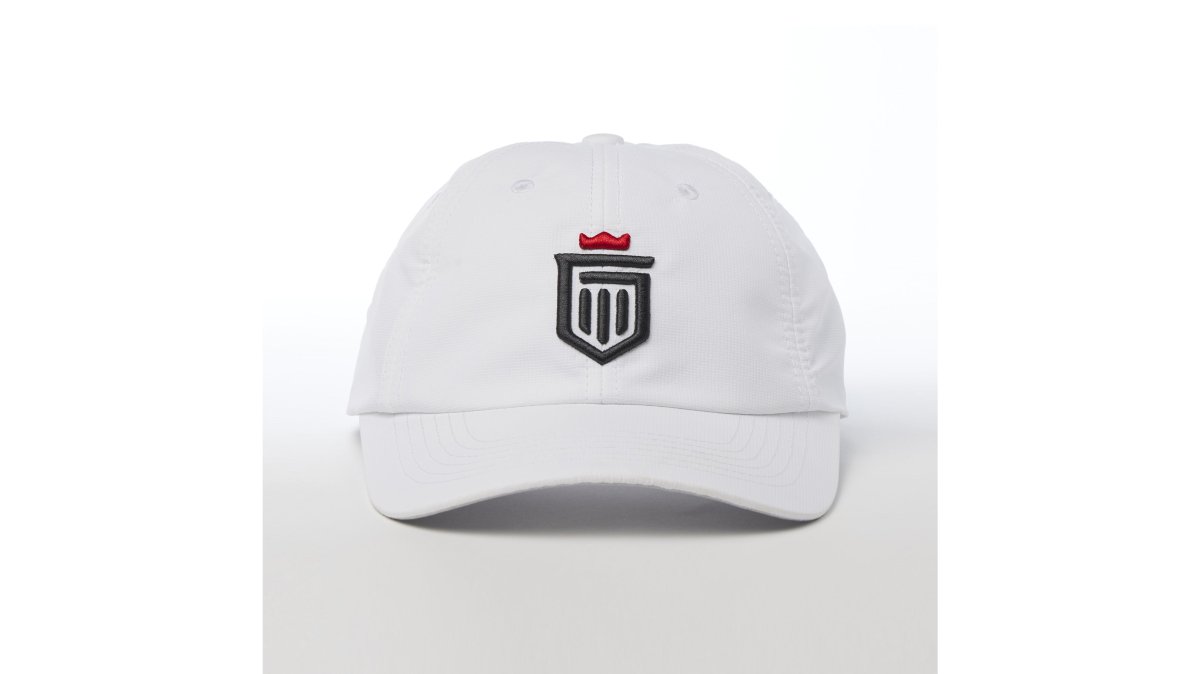
Use this simple check:
- Put the cap on and pull the front down to where the brim sits about one finger above your eyebrows.
- Shake your head side to side and nod up and down. The cap should stay in place.
- Check that the band is snug but not tight enough to leave a deep mark.
- Adjust the back closure so the cap stays in place without pinching.
- Wear it for 10 to 15 minutes to see if the crown or front panel causes pressure.
The Performance Cap includes a Velcro tab at the back to adjust size.
Fit Across Head Shapes
Head circumference is only one number. Two people with the same measurement can need different caps because of head shape, and a cap that fits one shape well will press or slip on another.
Hair Volume and Style
Hair changes the effective size and shape of your head, and it changes during activity.
- Long or thick hair: A low bun or ponytail changes where the cap sits and can push the band forward. Test the cap with your hair in the style you will actually wear it.
- Braids, locs, and twists: These add volume at the crown and sides. Look for a deeper crown or an adjustable closure with a wider range.
- Short or shaved hair: The band sits directly on skin, so pressure points and sweat management matter more. A soft interior band reduces irritation.
- Hair tied up mid-run: If you plan to adjust your hair during activity, test the cap after the adjustment, not just before.
Pressure Points and Slippage
- Pressure points: Check the forehead, temples, and the spot where the rear closure sits. Any point that feels sharp or hot after 10 to 15 minutes will get worse over an hour.
- Slippage: Sweat reduces friction. Test the cap after a light jog, not just standing still. If it slides forward when you look down, the band or closure is not holding.
- Glasses and helmets: If you wear glasses, check that the arms sit cleanly under or over the band without pressing. If you wear a helmet, test the cap under it, because the helmet retention system changes where pressure lands.
- Sensory sensitivity: Seams, tags, and stiff closures are common irritants. Turn the cap inside out and check the interior before buying.
Watch out: Do not rely only on the size chart. A cap that feels right in the store can shift once you sweat, so test it with a light jog or a few minutes of movement, and re-check the fit with your hair in its activity style.
Step 3: Use the Sports Cap Fit Guide to Measure and Adjust
Here is a quick reference:
| Step | What to Check | Why It Matters |
|---|---|---|
| Measure | Head circumference above ears | Gives you a starting size |
| Try on | Fit at brow and crown | Prevents slipping or pressure |
| Adjust | Back strap or closure | Fine-tunes the hold |
| Test | Movement and heat | Shows real-world comfort |
Step 4: Verify Sun Protection and Weather Coverage
Sun protection is a major reason many people wear caps outdoors. Brim size and fabric both affect how much sun reaches your face, neck, and ears.
Look for these details:
-
Brim width: Wider brims cover more of the face and neck.
-
Weather features: Water-resistant or quick-drying fabric helps in light rain or sweat-heavy sessions.
Many buyers see UPF 50+ rating as a key feature, according to the 2026 headwear trends overview. Treat any sun-protection claim as something to confirm, not assume.
Choosing for changing weather: A cap that suits hot, dry days may not hold up in long rain.
Shop for coverage: The 3D Logo Hat has structure at the top and stretch for all sports, with a perforated back to release heat.

Step 5: Keep Your Cap Fresh: How to Wash a Performance Cap
Sweat, sunscreen, and dirt break down performance caps over time. A little care keeps the fabric breathing and the shape intact.
- Check the care label first. Some caps need hand washing.
- Rinse off sweat and dirt with cool water before washing.
- Spot-treat sweat marks with a mild detergent and a soft brush.
- Wash on a gentle cycle in cool water, or hand wash in a basin.
- Air dry the cap on a flat surface or on a hat form. Skip the dryer.
Heat from a dryer can shrink synthetic fabric and weaken the stiffening in the brim.
Learn more: For stubborn sweat marks, see Remove Sweat Stains From Golf Shirts: 7 Proven Methods, which covers methods that also work on performance fabric.
Your Next Step: Shop the Performance Cap for Your Sport
You now have a clear way to choose: match the cap to your sport, check the fabric and vents, test the fit, confirm sun coverage, and plan for care. Use that list to compare options before you buy.
If you are ready to buy, the Performance Cap is designed for all-day wear, with embroidered eyelet vents, interior sport mesh, and a Velcro tab for adjustment. It is priced at $45.00. For a casual alternative, the Trucker Cap costs $38.00 and includes a perforated back to release heat.
Frequently Asked Questions
What features should you look for in a performance cap?
Look for an adjustable closure such as a Velcro tab for a secure fit, and a perforated back that helps release heat during long sessions. Check that the fabric stays comfortable across the full day of wear.
How should a sports cap fit?
Use the adjustable closure to fine-tune the fit so the cap stays put during running, golf swings or hiking on uneven ground.
How do you keep a performance cap from smelling?
Sweat bacteria cause most odor, so rinse the sweatband after heavy sessions and let the cap air dry fully before storing it. Rotate between two or three caps so each one dries completely between uses. Wash the cap regularly by hand in cool water with mild detergent, and avoid fabric softener, which can coat moisture-wicking fibers and reduce their performance.
How often should you wash a sports cap?
Wash your performance cap after every few heavy sweat sessions, or sooner if you notice odor or salt stains. Hand washing in cool water with a gentle detergent protects the fabric and the interior sweat management layer. Air dry the cap away from direct heat, since high heat can warp the brim and weaken stretch fabrics over time.