Last Updated: November 19, 2026
Quick Summary
For a hot yoga clothing fabric comparison, polyester-spandex and nylon-spandex blends win for sweat-heavy practice because they wick moisture, dry fast, and hold four-way stretch. Bamboo and cotton blends feel softer but dry slower and hold sweat, so save them for gentler sessions.
- Polyester-spandex scores 5 for moisture wicking and quick-drying, the top marks in the chart.
- Heavier knits around 220-260 GSM resist cling and transparency better than knits under 180 GSM.
- Flatlock seams and a gusseted crotch reduce chafing when damp fabric clings to skin.
- Wash cold after each hot class and skip fabric softener, which coats wicking fibers.
- Orders over $100 ship free, and returns within the U.S. are free.
Table of Contents
- Why Fabric Decides Your Hot Yoga Experience
- Hot Yoga Clothing Fabric Comparison Chart
- The Best Fabric for Hot Yoga Clothes by Priority
- Natural Fiber Clothing for Hot Yoga: What It Does Well and Where It Struggles
- Moisture-Wicking Yoga Clothes: What the Label Actually Tells You
- Performance When Saturated: Stretch, Recovery and Opacity Under Sweat
- Care, Odor and Long-Term Durability by Fabric
- Choosing Your Hot Yoga Layers at Greatness Wins
- Frequently Asked Questions
Why Fabric Decides Your Hot Yoga Experience
Fabric choice is the single biggest variable in hot yoga comfort, and the stakes are higher than in any other practice. A 2023 review in the European Journal of Fitness, Nutrition and Sport Medicine found that no specific designs exist for yoga sportswear, so most practitioners make do with general-purpose activewear. That gap matters more when the room is heated and you are sweating heavily.
Fabric is where performance starts. The wrong blend holds sweat against your skin, clings, turns transparent, and loses its stretch. The right one moves sweat away, dries fast, and keeps its shape through repeated extension.
Below, we walk through a full hot yoga clothing fabric comparison, from polyester-spandex and nylon-spandex to bamboo and cotton, so you can pick by priority instead of guesswork.
Hot Yoga Clothing Fabric Comparison Chart
Most fabric comparisons stop at fiber names. That is not enough, because two leggings with the same 80/20 polyester-spandex ratio can behave very differently in a heated room depending on knit structure, fabric weight, lining, seam placement, and fit. The chart below scores each fabric family on a consistent 1-5 scale across the properties that matter most when you are sweating heavily, then the notes explain the construction variables that move those scores up or down.
| Fabric family | Moisture wicking | Breathability | Quick-drying | Stretch recovery | Opacity when wet | Odor resistance | Durability | Best for |
|---|---|---|---|---|---|---|---|---|
| Polyester-spandex (smooth knit) | 5 | 4 | 5 | 4 | 4 | 3 | 5 | Heavy sweating, fast classes |
| Polyester-spandex (brushed interior) | 4 | 3 | 4 | 4 | 4 | 3 | 4 | Cooler-weather training, soft feel |
| Nylon-spandex | 5 | 3 | 4 | 5 | 4 | 3 | 5 | Compression, smooth hand feel |
| Bamboo blend (with spandex) | 3 | 3 | 2 | 3 | 3 | 2 | 3 | Softness, slower practice |
| Cotton blend (with spandex) | 2 | 3 | 2 | 2 | 2 | 2 | 3 | Cooler rooms, gentle sessions |
| Recycled polyester-spandex | 4 | 4 | 4 | 4 | 4 | 3 | 4 | Sustainability-minded buyers |
Moisture wicking
How to Read the Chart
Treat the scores as relative, not absolute. A 5 on quick-drying means the fabric family dries faster than the others on the list under the same conditions, not that it dries in a specific number of minutes. The scores assume a typical mid-weight knit; a lighter or heavier version of the same blend will shift the numbers.
Four construction variables move performance more than most shoppers expect:
- Knit structure. A double-jersey interlock knit holds shape and opacity better than a single jersey, even at the same fiber ratio. A mesh panel increases breathability but reduces opacity.
- Fabric weight. Measured in grams per square meter (GSM), a heavier knit (roughly 220-260 GSM for leggings) resists cling and transparency when wet; a lighter knit (under 180 GSM) feels cooler dry but turns see-through faster.
- Lining and gussets. A lined waistband and a gusseted crotch reduce seam stress during deep poses and help the garment keep coverage when saturated.
- Seam placement. Flatlock seams lie flat against the skin and reduce friction; raised or bulky seams can chafe when fabric is damp and clinging.
That is why a brand can legitimately market an 80% cotton fabric for high-sweat activity while another guide advises avoiding cotton. The fiber is only part of the story. Fit, knit, and finish decide how the garment behaves when wet.
Watch out: a high wicking score on a thin, light-colored knit can still mean visible transparency in a deep forward fold, check opacity separately from wicking.
The Best Fabric for Hot Yoga Clothes by Priority
The best fabric for hot yoga clothes depends on what you value most: sweat management, stretch, softness, or durability. For most people in a heated class, a polyester-spandex or nylon-spandex blend wins. For gentler sessions, a bamboo or cotton blend can feel better against the skin.
Here is how we would choose by priority.
Polyester-Spandex and Nylon-Spandex Blends
If you sweat heavily, start here. REI's guide to choosing yoga clothes notes that many yoga pieces use polyester-nylon-spandex blends for a balance of comfort, breathability, and stretch. These synthetics move moisture to the surface, dry quickly, and hold four-way stretch through repeated extension.
Nylon adds a smooth, cool hand feel and strong compression. Polyester tends to dry a touch faster. Both resist pilling better than most natural fibers over repeated wash care.
For a concrete example of the category, our High Output Sports Legging uses a breathable double-jersey interlock knit with ergonomic seaming. If you want a tank to pair with it, the Performance Training Tank 1 is built for the same high-sweat training.
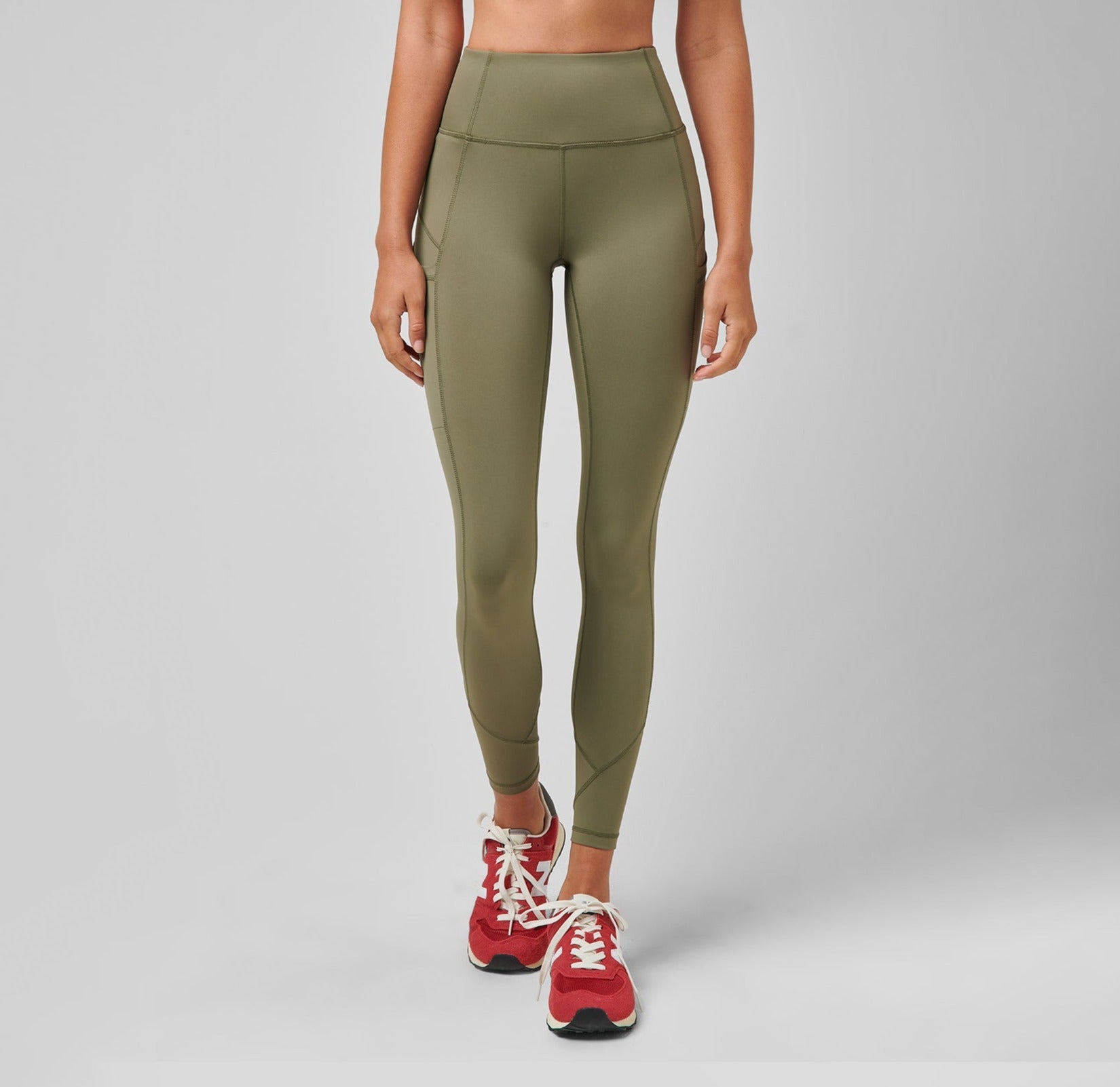
Best for: heavy sweaters and hot, fast-paced classes. Skip if: you want a natural-fiber feel against the skin.
Bamboo and Other Natural Fibers
Bamboo blends feel soft, breathe reasonably well, and suit slower or cooler sessions. They do not dry as fast as synthetics, so in a hot room they can stay damp longer. If you like cellulosic fibers, our guide to choosing lyocell blends for sweat management goes deeper on how these fibers handle moisture.
Natural Fiber Clothing for Hot Yoga: What It Does Well and Where It Struggles
Natural fiber clothing for hot yoga wins on skin comfort and loses on sweat management. Cotton and bamboo feel soft and breathable, but they absorb moisture and hold it, which is why many hot-yoga guides advise against cotton.
The picture is not one-sided. Beyond Yoga's fabric guide describes an 80% BCI cotton fabric intended for high-sweat situations, including hot yoga. That does not resolve the debate, but it shows that construction and blend can offset some fiber limitations.
Where natural fibers struggle: quick-drying, opacity under sweat, and odor retention after repeated use. Where they shine: softness, breathability in cooler rooms, and comfort for sensitive skin.
Moisture-Wicking Yoga Clothes: What the Label Actually Tells You
Moisture-wicking yoga clothes move sweat away from your skin to the fabric surface, where it evaporates faster. That is the whole job, and it matters most when you are sweating heavily.
The label rarely tells you how well a fabric does it. "Moisture-wicking" is a claim, not a standard, and performance depends on knit structure, fiber type, and finish. A common mistake is assuming any synthetic wicks well. A dense, non-breathable synthetic can trap heat and feel clammy.
Look for breathable knits and a fit that suits your training. For a deeper look at wicking claims and where to shop, see our guide to buying moisture-wicking athletic apparel online.
Performance When Saturated: Stretch, Recovery and Opacity Under Sweat
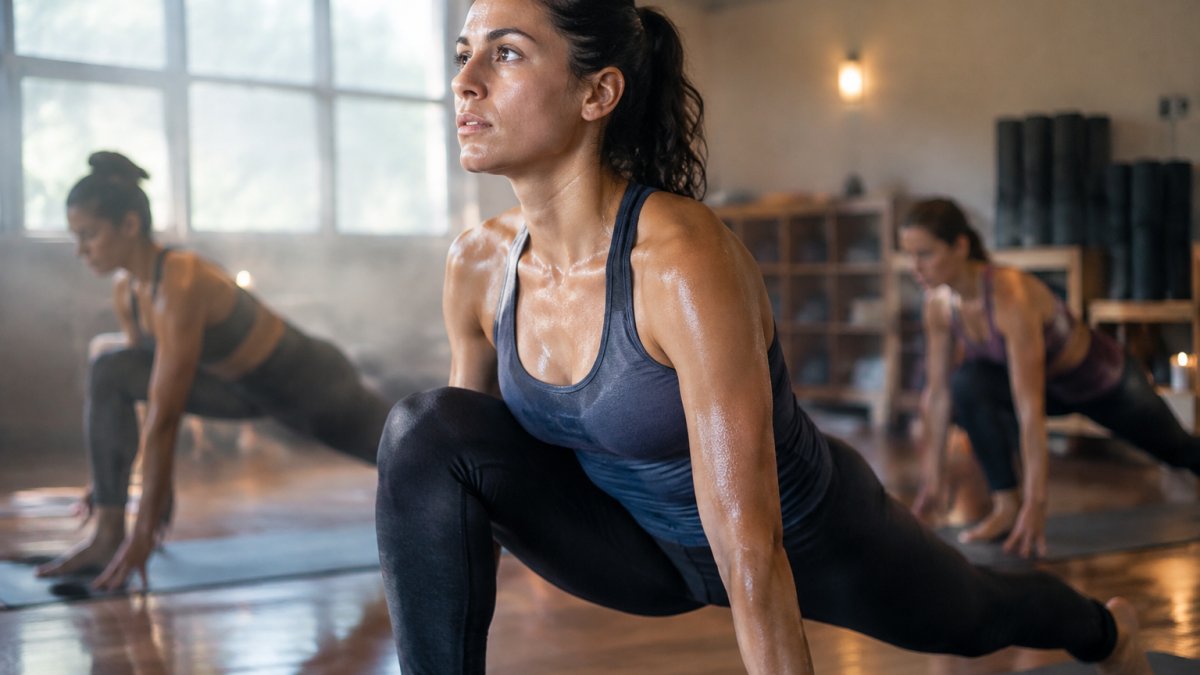
Dry fabric tells you almost nothing about how a garment will behave after 45 minutes of heavy sweating. When a legging or top is saturated, five properties change at once: cling, weight, opacity, friction, and drying time.
Cling. Sweat fills the air gaps in the knit, and surface tension pulls the fabric against the skin. A smooth, tightly knit synthetic slides and stays put; a loose, absorbent knit clings awkwardly and bunches. Fit matters here: a form-fitting garment with moderate compression moves sweat efficiently and stays in place, while a loose one becomes heavy and restrictive when damp.
Weight. Absorbent fibers hold water inside the fiber, so the garment gains weight. Cotton absorbs water into the fiber, while polyester and nylon hold very little inside the fiber and move moisture to the surface instead. That weight difference is what makes a soaked cotton tee feel like it is dragging you down in a hot room.
Opacity. Water fills the spaces between fibers and reduces the light scattering that normally hides what is underneath. Thin, light-colored knits turn see-through first; heavier knits, darker colors, and double-layer construction hold coverage better. A quick check before class: stretch the fabric gently over your hand in daylight and look for your skin tone showing through.
Friction. Damp fabric against damp skin creates more drag than dry fabric, which shows up as chafing at seams, waistbands, and inner thighs. Flatlock seams, a gusseted crotch, and a fit that does not shift reduce friction. This is one reason seamless and flat-seam construction is common in hot-yoga-specific pieces.
Drying time. Once class ends, the garment either releases moisture to the air or holds it. Synthetics dry fastest because moisture sits on the surface; bamboo and cotton dry slowest because moisture is inside the fiber. A damp garment left in a gym bag is also where odor starts, which is covered in the care section below.
Stretch and recovery. Spandex, also called elastane, provides the stretch. In a good blend, it snaps back after repeated extension, so the garment keeps its shape through a full class. In a weak blend, it sags and bags at the knees and waist.
Watch out: a garment that feels supportive when dry can lose compression when saturated if the spandex percentage is low or the knit is loose, test a deep squat and a forward fold before committing to a hot class.
Care, Odor and Long-Term Durability by Fabric
Durability separates training gear from fast fashion. Synthetics can retain odor if sweat sits in the fibers, so washing promptly after class matters.
Natural fibers can stretch out and hold moisture under heavy sweating, which can feed odor. If durability is your priority after reading this, our guide to a durable legging alternative compares options built to last.
A simple care routine keeps any fabric alive longer:
- Wash cold after each hot class
- Skip fabric softener, which coats wicking fibers
- Air-dry when possible
- Rotate two or three pieces instead of one
Choosing Your Hot Yoga Layers at Greatness Wins
Fabric decides your hot yoga experience, and the right blend depends on how hard you practice. For heavy sweating, choose polyester-spandex or nylon-spandex. For gentler sessions, bamboo or cotton blends can feel better. Either way, prioritize breathable knits, four-way stretch, and a fit that stays put when wet.
At Greatness Wins, we build performance apparel for athletes who train hard. Our High Waist Essential Legging uses a super-soft, double-brushed interlock knit with moisture-wicking performance, and the Core Tech Tank is made from a soft, durable performance jersey with moisture-wicking and anti-microbial treatment. Orders over $100 ship free, and returns within the U.S. are free.
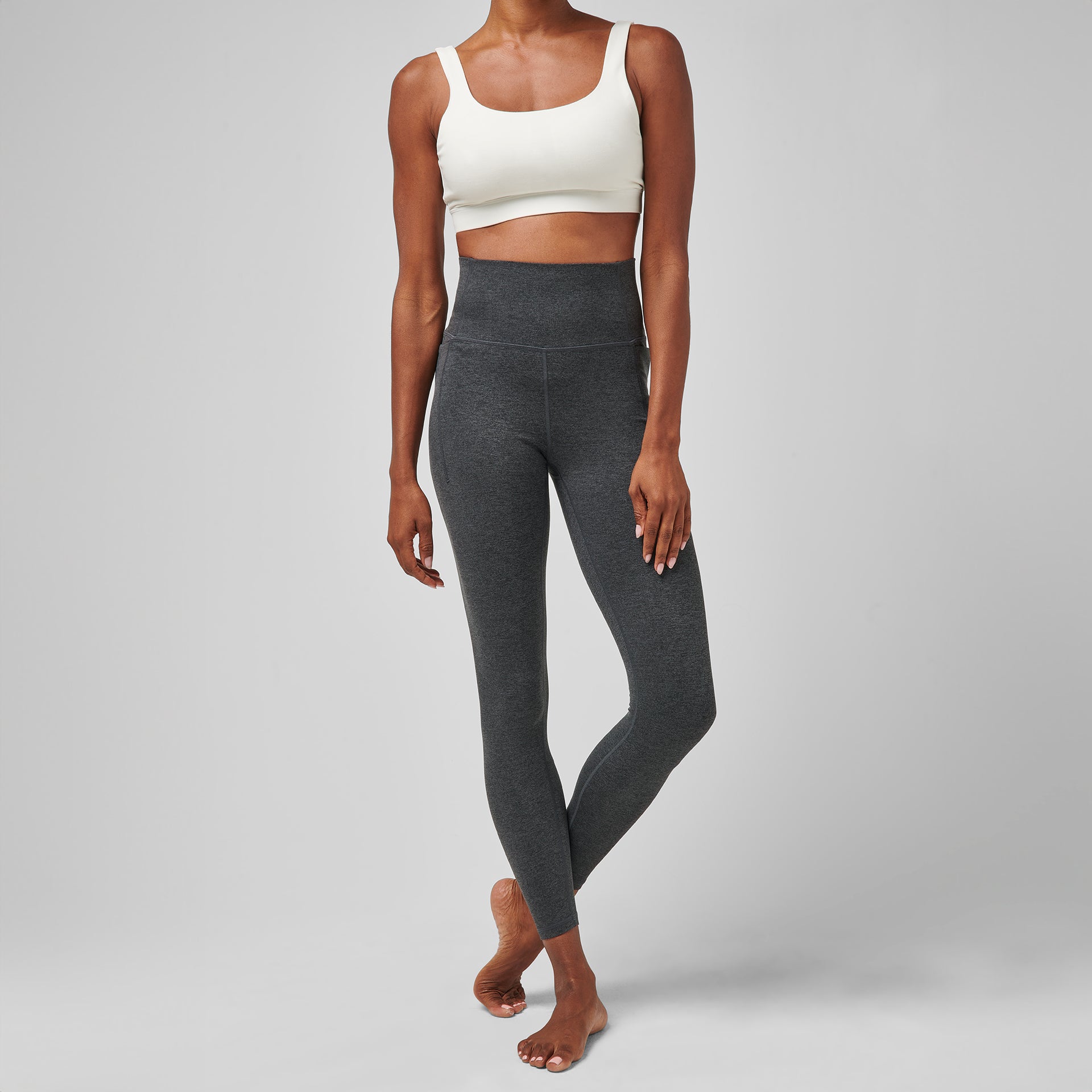
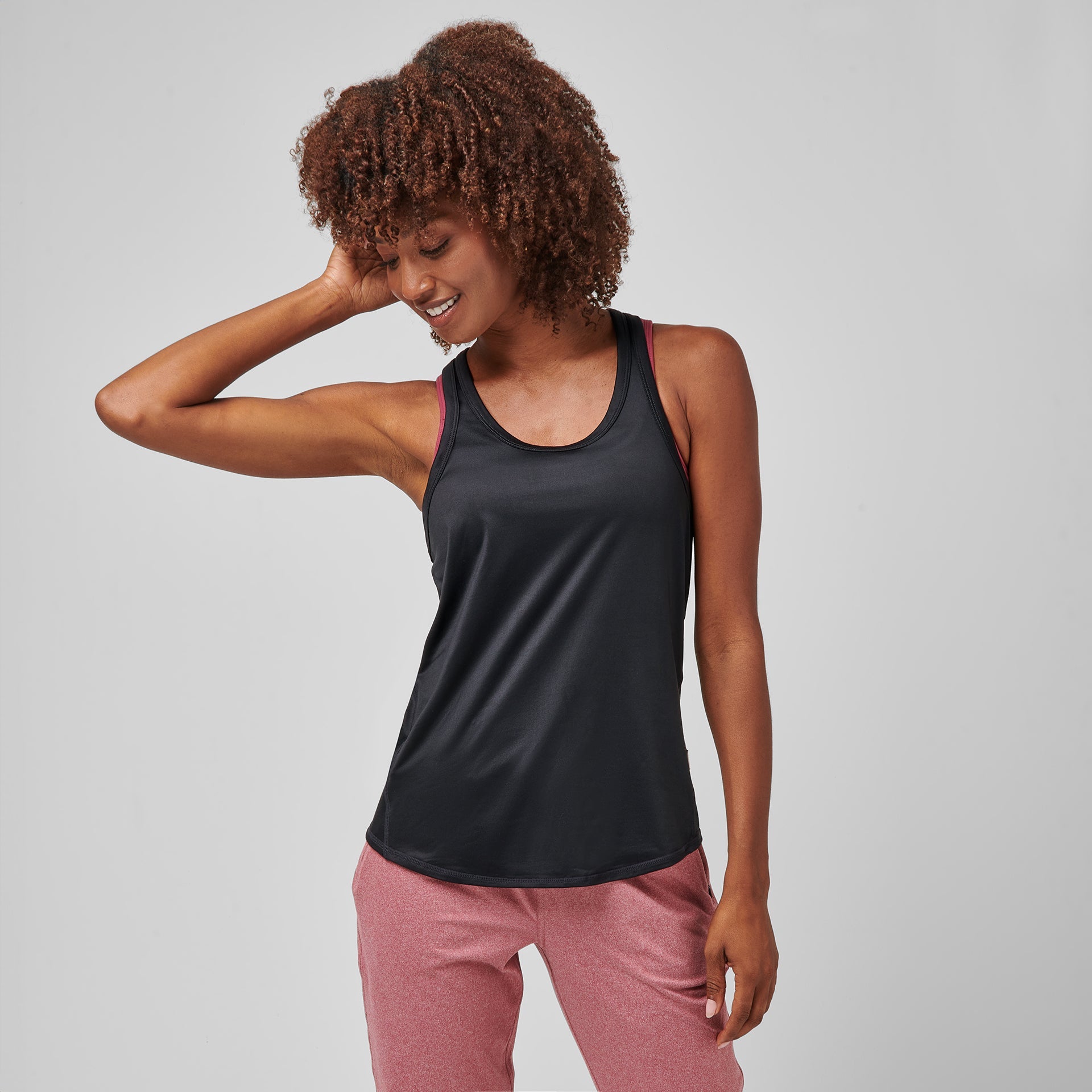
Ready to train without thinking about your gear? Get started with Greatness Wins and find performance apparel built to keep up with your hardest sessions.
Frequently Asked Questions
What type of fabric is best for hot yoga clothes?
Polyester-spandex and nylon-spandex blends are the most common choice because they wick sweat, dry quickly and hold a four-way stretch through repeated poses. The right hot yoga fabric depends on your priority: sweat management, softness, or natural fiber content. Fitted cuts move sweat off the skin faster than loose cotton, which absorbs it and stays heavy.
Are natural or synthetic fabrics better for hot yoga?
Synthetic blends generally handle heavy sweating better because they move moisture to the surface and dry fast. That said, natural fibers are not ruled out. Fabric choice comes down to fit, dry time and how the fabric feels when wet.
Which yoga clothing fabrics dry fastest during a hot class?
Lightweight polyester and nylon blends dry fastest because the fibers absorb little water and release moisture quickly. Cotton holds water in the fiber, so it stays damp and heavy longer. Bamboo blends sit in between: soft and breathable, but slower to dry than a performance knit. If you sweat heavily, look for a thin, knit synthetic with visible airflow rather than a thick, brushed interior.
Is cotton a good fabric for hot yoga?
Cotton is soft and breathable but absorbs sweat instead of moving it away, so it can cling, stay wet and feel cold between poses. If you prefer natural fibers, choose a lighter cotton blend and a fitted cut, and expect slower drying than a polyester-spandex legging.