Table of Contents
- What Separates Durable Athletic Apparel From Fast Fashion
- Best Performance Fabrics for Durability: A Buyer's Cheat Sheet
- Stitching, Seams, and Hardware: The Hidden Durability Tests
- Fit, Range of Motion, and Ergonomic Design
- How to Wash High Performance Apparel Without Killing the Fabric
- Repairability, Circularity, and Sustainable Textiles
- Conclusion: Building a Durable Athletic Apparel Rotation
- Frequently Asked Questions
Last Updated: September 27, 2026
What Separates Durable Athletic Apparel From Fast Fashion
The U.S. activewear market hit USD 22.32 billion in 2025, and North America is projected to hold a 39.3% share of global active wear in 2026, according to Coherent Market Insights' active wear market report. That scale explains why so much of what's sold as performance gear is built to survive a season, not a training block. Learning how to choose durable athletic apparel comes down to reading construction, not labels.
Best Performance Fabrics for Durability: A Buyer's Cheat Sheet
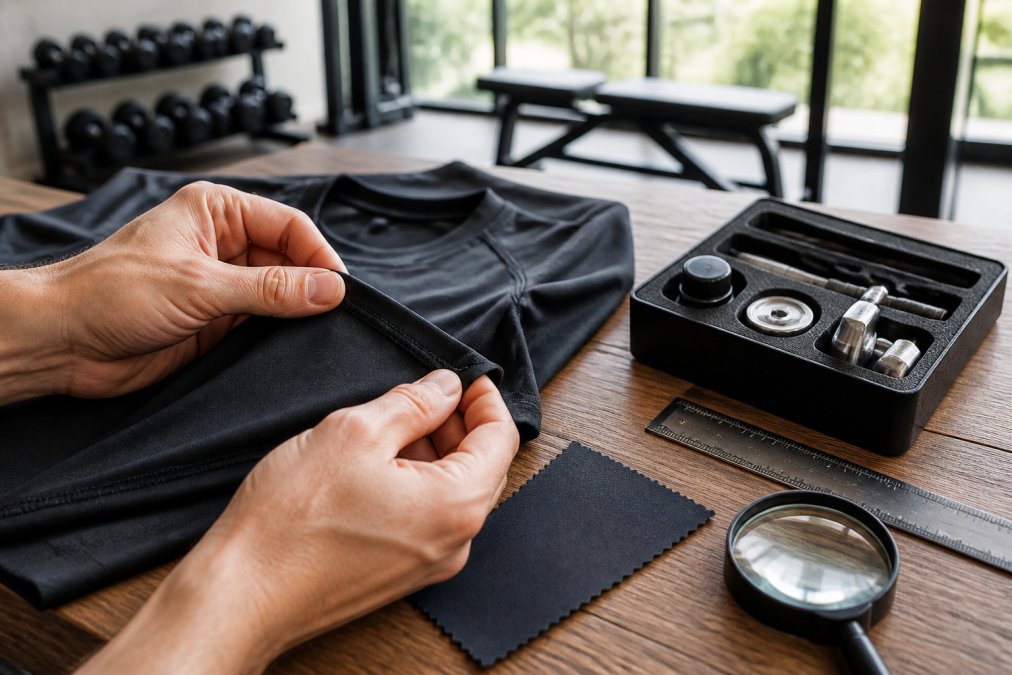
The best performance fabrics for durability combine synthetic fibers for strength with a fiber composition and fabric weight suited to your sport. There's no single winner, only the right blend, and the fastest way to separate marketing from engineering is knowing how durability is measured.
How Durability Is Actually Measured
Most brands won't publish these numbers, but knowing the tests lets you read spec sheets critically.
- Martindale abrasion test, A fabric swatch is rubbed against a standard abrasive under a set load, reported as the cycles survived before two threads break or the surface shows visible wear. Higher cycles = more abrasion-resistant. Lightweight fashion knits often fail in the low thousands; durable training knits push well past that.
- Tensile strength, Measures the force required to pull a fabric specimen apart, reported in pounds-force or newtons. Relevant for waistbands, straps, and any panel that gets yanked.
- Tear strength, Measures how much force is needed to propagate an existing rip. This is the number that predicts whether a small snag becomes a hole.
- Pilling resistance, Assessed on a 1-5 scale after controlled abrasion. A 4-5 means minimal fuzz balls after repeated wear and washing; a 1-2 means the garment looks worn out long before it structurally fails.
- Colorfastness to washing and light, Rated on a 1-5 gray scale. Low ratings mean fading and crocking, which is a durability problem even when the fabric itself holds up.
Fiber Composition and Fabric Weight
Read the tag before the price. Recycled polyester and nylon carry the load in performance gear, and fabric weight (grams per square meter, with denier describing fiber thickness) determines whether a piece survives abrasion or pills in a month. Heavier knits resist abrasion and tearing better; lighter knits breathe better but wear faster.
A few composition rules of thumb:
- Nylon generally outperforms polyester on abrasion resistance and tear strength, which is why it shows up in high-wear zones like socks, waistbands, and pack straps.
- Polyester holds color and shape well, resists UV degradation, and is usually cheaper, a strong all-rounder for tops and shorts.
- Spandex (elastane) delivers stretch but is the first fiber to degrade. More than roughly 10-12% spandex in a knit often means faster loss of shape recovery, especially if the garment is washed hot or tumble dried.
- Cotton feels great and manages odor, but holds moisture, dries slowly, and has lower abrasion resistance than synthetics. It's a comfort fiber, not a durability fiber, in high-sweat use.
Moisture-Wicking, Breathability, and Thermal Regulation
Moisture-wicking moves sweat off your skin; breathability lets heat escape; thermal regulation keeps your temperature steady. Synthetic fibers win on wicking and stretch recovery. Natural fibers like cotton feel better against skin and manage odor well, but hold moisture and dry slowly, a trade-off many athletes accept on low-sweat days.
Stitching, Seams, and Hardware: The Hidden Durability Tests
Seam integrity is where cheap gear fails first, and the seam type tells you more than the stitch count. Here's the mechanical difference between common constructions.
Seam Construction: Flatlock vs. Overlock vs. Bound
- Overlock (serged) seams, Two or more threads wrap the raw fabric edge. Fast, cheap, and standard inside most t-shirts and shorts. The limitation: the seam creates a raised ridge against skin, and under repeated stretch the thread can abrade the fabric edge it binds. On high-stretch knits, overlock seams commonly fail at the shoulder and crotch.
- Flatlock seams, Fabric edges are butted together and joined with a multi-thread stitch that lies flat. With load distributed across more thread and no raised ridge, flatlock resists chafing and handles stretch better, which is why it dominates compression wear, base layers, and anything worn against skin for hours. The trade-off: it requires more precise manufacturing, so it costs more.
- Bound seams, The raw edge is wrapped in a fabric strip (binding) and stitched. Common on necklines and armholes of higher-end tops. Durable and clean-finishing, but thin, low-quality binding can wear through.
- Taped seams, A strip of waterproof tape is heat-sealed over the seam. Found on water-resistant and windproof shells. The tape is the durability variable: cheap tape lifts and peels after a few wash cycles; quality tape stays bonded for the life of the shell.
What to look for in hand: tight, uniform stitching with no skipped stitches or loose threads, and reinforced stress points at shoulders, armholes, and crotch. A narrow seam allowance (the fabric margin inside the seam) is a warning sign, less material to hold the stitch under load.
Hardware: The First Things to Fail
Zippers, drawcords, and elastic take more abuse than fabric and usually fail first. Evaluate each specifically:
- Zippers, Look for metal or high-quality molded plastic teeth, not stamped thin plastic. Durability lives mostly in the slider and tape, not the teeth. Test the slider: it should move smoothly and not separate behind the slider when you gently pull the two sides apart. Vislon-style molded plastic zippers hold up well; coil zippers are lighter and more flexible but can snag. A zipper garage (a small fabric pocket the pull tucks into) reduces wear and prevents chafing.
- Drawcords and aglets, The aglet (the cord's tip) is the failure point. Metal aglets outlast plastic, and a heat-sealed cord end outlasts a knotted one. Check that the cord channel is reinforced where the cord exits, that's where cords saw through fabric.
- Elastic, Waistbands and cuffs lose recovery when the elastic core (often spandex or rubber) is degraded by heat and chlorine. A stitched-through waistband is harder to replace but less likely to roll. If it rolls or twists after a few washes, the elastic is already fatigued.
- Eyelets and grommets, Common on shorts and warm-up pants. Plastic eyelets crack; metal ones corrode in chlorinated pools. Look for eyelets set flush with the fabric, not proud of it, so they don't catch on things.
- Hook-and-loop (Velcro) closures, The hook side collects lint and hair, which reduces grip over time. A closure that's stitched, not glued, will outlast one that's glued.
A Quick In-Store Hardware Check
Turn the garment inside out. Run a thumb along the seam, a raised ridge means overlock; flat means flatlock. Zip and unzip the zipper three times. Pull the drawcord taut and release it. Flex the waistband. None of these tests take more than a minute, and each targets a component that fails before the fabric does.
Fit, Range of Motion, and Ergonomic Design
Ergonomic fit means the garment moves the way your body moves, not the way a mannequin stands. Test it in the fitting room: raise both arms overhead, rotate your torso, squat deep. If the shoulders bind or the waistband rolls, the cut is wrong regardless of size.
Men’s Logo Crew Sock (multi-pack) →
How to Wash High Performance Apparel Without Killing the Fabric
Knowing how to wash high performance apparel matters as much as what you buy. Turn garments inside out, wash cold on a gentle cycle, skip fabric softener, and air dry. Heat breaks down elastic fibers, degrades durable water repellent (DWR) finishes, and accelerates pilling.
- Wash after every heavy sweat session to prevent odor buildup in anti-microbial treatments
- Use a mild detergent, never bleach
- Zip zippers and close hook-and-loop before washing to prevent snags
- Air dry flat or hang; tumble dry low only if the care label allows
Repairability, Circularity, and Sustainable Textiles
Circularity is the durability question nobody asks at checkout: can this be repaired, and will it stay out of a landfill? The 2026 rollout of the EU Ecodesign for Sustainable Products Regulation is pushing brands to disclose durability and recyclability metrics, per Mordor Intelligence's sports apparel market analysis, and that pressure is reshaping how sustainable textiles get specified even for brands selling here.
| Durability Signal | What to Check | Why It Matters |
|---|---|---|
| Fiber composition | Tag: polyester, nylon, blends | Determines abrasion and tear strength |
| Fabric weight | gsm and denier | Heavier knits resist wear longer |
| Seam construction | Flatlock, tight uniform stitching | Prevents splitting at stress points |
| Hardware | Zippers, aglets, eyelets | Fails before fabric in cheap gear |
| Care requirements | Cold wash, air dry | Extends stretch recovery and DWR life |
Conclusion: Building a Durable Athletic Apparel Rotation
The challenge isn't finding gear that looks technical. It's finding gear that still performs after fifty washes, a full season of golf swings, and a kid who wears it three days a week. Greatness Wins builds premium, innovative athletic apparel for men and women who train hard and expect their gear to keep up, with performance-focused construction and free returns within the U.S. if a piece doesn't fit your movement.

Frequently Asked Questions
What fabric is most durable for athletic wear?
High-denier synthetic blends with nylon or recycled polyester hold up best for intense training. Nylon adds tear strength and abrasion resistance, while polyester resists pilling and holds color. Look for fabric weights around 150-250 gsm for year-round durability. Blends that include a small amount of spandex (5-10%) improve stretch recovery without sacrificing longevity. Natural fibers like cotton feel comfortable but break down faster under sweat and friction, so they work better for low-intensity or recovery wear.
How can you tell if gym clothes are high quality?
Start by checking the seams: flatlock stitching lies flat, resists chafing, and holds up better than standard overlock seams. Next, stretch the fabric in both directions and release it; quality knits snap back without sagging. Look for tight, even stitching, reinforced stress points at shoulders and hems, and hardware like zippers that glide smoothly. Finally, read the care label. Garments that require delicate washing or line drying often signal thinner, less durable fabric.
Does price correlate with the durability of athletic apparel?
Price is a signal, not a guarantee. Higher-priced gear often uses denser knits, better seam construction, and tested fabrics, but you still need to check the specs. The U.S. activewear market was valued at USD 22.32 billion in 2025 (Market Data Forecast, 2026), and brands across every price point compete on durability claims. Focus on fiber composition, fabric weight, and seam type rather than the tag alone. A mid-priced piece with flatlock seams and a 200 gsm knit can outlast a luxury item with thin fabric.
What are the signs of poor-quality performance fabric?
Watch for fabric that feels thin or papery, pills after one or two washes, or loses shape when stretched. Seams that pucker, loose threads, and zippers that catch are other red flags. A strong chemical or plastic smell can indicate low-grade dyes or finishes. If the care label says hand wash only and the fabric still feels fragile, it likely won't survive a real training cycle. Pilling resistance and wash-fastness are two of the fastest ways to spot a garment that won't last.
How do you maintain the durability of high-performance athletic gear?
Turn garments inside out, wash in cold water on a gentle cycle, and use a mild detergent without fabric softener or bleach. Skip the dryer; heat breaks down spandex and degrades durable water repellent (DWR) finishes. Hang or lay flat to dry. For socks, a multi-knit construction like the Men's Logo Crew Sock (https://greatnesswins.com/products/crew-length-sock-multi-pack) blends cotton breathability with recycled polyester and nylon strength, and it holds up better when washed cold and air-dried. Following these steps helps preserve moisture-wicking and stretch recovery.
Are sustainable textiles as durable as synthetic performance fabrics?
It depends on the fiber and construction. Recycled polyester and recycled nylon can match virgin synthetics in tensile strength and abrasion resistance when the fabric weight and knit are comparable. Natural fibers like organic cotton and merino wool offer comfort and odor management but generally have lower abrasion resistance. The push for brands to disclose durability and recyclability metrics makes it easier to compare sustainable options on real performance data rather than marketing claims.
What should I look for in seams and hardware for long-lasting gear?
Flatlock seams are the gold standard for high-friction areas because they reduce bulk and chafing while maintaining seam integrity. Look for reinforced bar tacks at pocket corners and stress points. Zippers should be smooth-gliding with a locking pull, and drawcords should have durable tips that don't fray. Hardware durability matters most in shorts and pants where waistbands and pockets take repeated stress. If a garment has glued seams instead of stitched ones, check for edge reinforcement; glue alone can fail after repeated washing.
How long should durable athletic apparel last with regular use?
With proper care, a well-constructed piece should hold its shape, color, and moisture-wicking performance for 50 to 100 wash cycles. That translates to roughly one to two years of regular training for most athletes. Garments that pill, lose stretch recovery, or develop seam failures within 20 washes usually had construction or fabric issues from the start. Tracking wash cycles and rotating between several pieces extends the life of each garment and keeps your kit performing at its best.