Table of Contents
- Synthetic Athletic Gear Loses Shape: The Root Causes
- Synthetic vs. Natural Fibers: Which Holds Up Better?
- How to Wash High Performance Apparel Without Ruining It
- Does Fabric Softener Ruin Athletic Gear? The Truth
- How to Restore Elasticity in Leggings and Other Stretched Gear
- The Hidden Factor: Body Heat and Sweat Chemistry
- Repair and Upcycling: Extending the Life of Your Gear
- Conclusion: Choose Gear That Lasts
- Frequently Asked Questions
Last Updated: September 12, 2026
Synthetic Athletic Gear Loses Shape: The Root Causes
Synthetic athletic gear loses shape because repeated mechanical stress and heat permanently break down the elastic polymers woven into the fabric. Spandex and elastane degrade faster than the polyester or nylon around them, so once those elastic bonds fail, the garment sags and never snaps back.
At Greatness Wins, we build performance apparel for athletes who expect their gear to hold up, which starts with understanding why most synthetic athletic gear fails.
The problem is not that synthetics are weak; it is that their stretch component has a shelf life measured in wash cycles, not years.
Elastane and Spandex: The Stretch That Fails
Elastane, sold in the U.S. as spandex, is a polyurethane-based fiber engineered to stretch up to 600% and recover. It is also the most fragile component in any synthetic blend. According to industry analysis on why synthetic workout clothes lose shape, repeated exposure to mechanical stress and heat causes permanent breakdown of these elastic polymers.
Elastane typically makes up only 5-20% of a performance fabric. The polyester or nylon carries the load, but the elastane delivers the fit, so when it fails, the whole garment fails with it.
Compression wear suffers most. A pair of leggings with 18% spandex feels locked-in on day one and stretched-out by month six. The polyester is still intact. The stretch is gone.
Heat and Mechanical Stress: The Invisible Damage
Heat and agitation are the two forces that kill synthetic gear fastest. A 2022 study from the National Center for Biotechnology Information on sports clothing thermoregulation found that thermal comfort is significantly affected by how fabric interacts with the body under load, which means the fibers are already working hard before the garment ever hits a wash cycle.
Then the dryer finishes the job. High heat relaxes the polymer chains in spandex, and once they relax past their recovery point, they stay relaxed. Tumble drying is the single fastest way to destroy athletic gear.
Synthetic vs. Natural Fibers: Which Holds Up Better?
Polyester holds its shape better than cotton or wool in high-abrasion, high-sweat conditions, but it does not stretch on its own. Natural fibers breathe better against skin but absorb moisture, get heavy, and lose structure when wet. The ratio of stretch fiber to base fiber is what actually determines whether a garment holds its shape after fifty washes.
| Fiber | Shape Retention | Moisture Handling | Abrasion Resistance | Best For |
|---|---|---|---|---|
| Polyester | Excellent | Wicks and dries fast | High | Training, running, golf |
| Nylon | Excellent | Wicks, slightly slower dry | Very high | Compression, cycling |
| Spandex blend | Good until elastane fails | Depends on base fiber | Moderate | Stretch-fit leggings, tees |
| Cotton | Poor when wet | Absorbs and holds sweat | Low | Low-impact, casual wear |
| Merino wool | Moderate | Regulates temperature | Low | Recovery, base layers |
How Blend Ratios Decide Shape Retention
The percentage on the tag is not marketing, it is a direct prediction of how the garment will age. A common pattern in performance knits:
- 90/10 polyester-spandex is the workhorse blend for training tees and lighter leggings. It has enough stretch to move with you but relies on polyester for structure, so the fit stays true while the "snap" softens gradually.
- 80/20 polyester-spandex is the compression blend. More elastane means a more locked-in feel on day one, but also more of the fragile fiber that eventually fails, best in the first three months, most disappointing by month twelve.
- Nylon-spandex blends (often 78/22 or 80/20) are common in cycling shorts and high-compression tights. Nylon's higher abrasion resistance means the base fiber outlasts the elastane by a wide margin, so the failure mode is almost always "the stretch went flat," not "the fabric wore through."
- Cotton-spandex blends (often 95/5) appear in casual athleisure. The low elastane content means less compression to lose, but cotton's poor wet strength means the garment sags under sweat load even while the spandex is intact.
The practical takeaway: a higher elastane percentage buys a tighter fit today and a shorter lifespan tomorrow. For shape that lasts years rather than months, look for moderate elastane paired with a high-abrasion base fiber like nylon, and treat the elastane as the consumable part.
Why Natural Fibers Lose Structure Differently
Cotton and wool do not fail the way synthetics do. Cotton absorbs water into the fiber wall, swelling it and letting hydrogen bonds reform as the fabric dries, which is why a wet cotton shirt can dry into a permanently stretched or shrunken shape. Wool's natural crimp gives it elasticity without elastane, but it felts and loses loft under agitation. Neither has a discrete "stretch component" that fails first; the whole fabric gradually loses its engineered shape.
Consumer behavior reflects the pressure on synthetics. According to Cotton Incorporated's 2024 athleisure research, 48% of consumers have replaced some of their denim with athleisure wear. That shift puts more garments into the wash cycle every week and more strain on the elastane inside them.
The honest take: polyester and nylon win on durability, but only when the spandex blended into them is protected. Read the blend ratio before you buy, and skip the care steps that accelerate elastane failure and the strongest base fiber in the world will not save the fit.
How to Wash High Performance Apparel Without Ruining It
Wash high performance apparel in cold water on a gentle cycle, inside-out, with a mild detergent and no fabric softener, and skip the dryer entirely. These four rules roughly double the usable life of most synthetic gear, because three mechanical forces act on the fabric every time the drum turns.
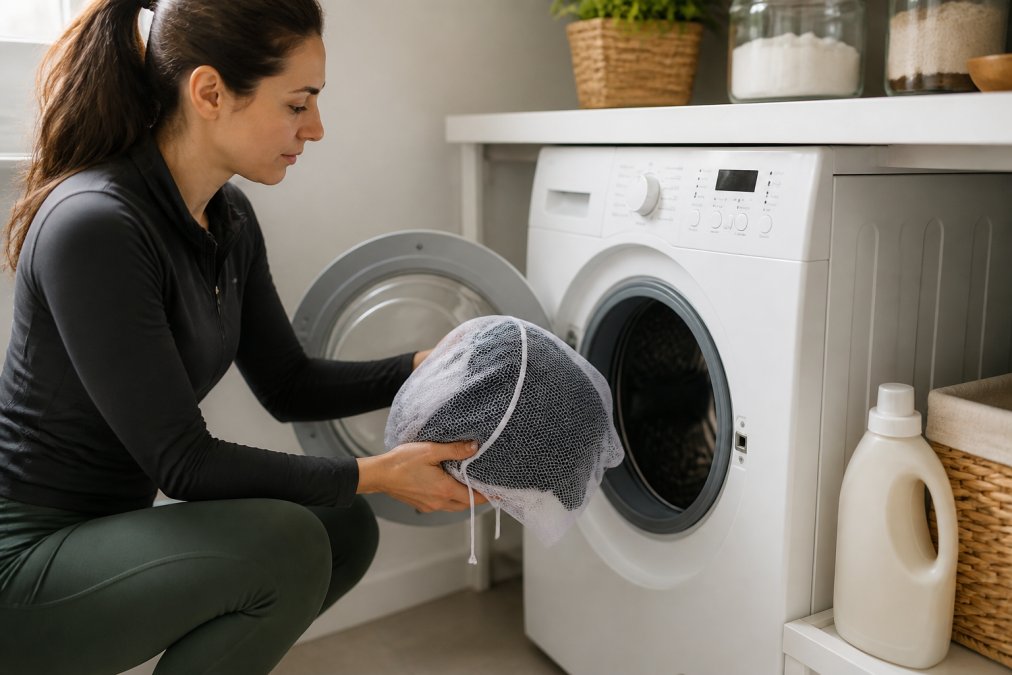
The full routine:
- Turn garments inside out to protect the outer face from abrasion
- Place leggings and compression pieces in a mesh laundry bag
- Use cold water (below 86°F) on a gentle or delicate cycle
- Add a mild, enzyme-free detergent, roughly half the normal dose
- Skip fabric softener and dryer sheets completely
- Air dry flat or hang, away from direct sun and radiators
Wash Cycle Mechanics: Temperature, Agitation, and Detergent
Temperature, agitation, and detergent chemistry each attack synthetic fibers differently, understanding the mechanism separates gear that lasts three years from gear that lasts three months.
Temperature. Elastane is a segmented polyurethane, soft, rubbery segments held together by rigid hard segments that act like physical cross-links. Warm water does not melt those cross-links, but it pushes the polymer chains toward their relaxed state; once a stretched fiber relaxes at elevated temperature, the hard segments reorganize and the fiber loses its memory of the shape it should return to. Cold water keeps the chains closer to their working configuration, which is why the 86°F ceiling matters more than any detergent choice.
Agitation. Every drum rotation drags fabric across fabric, which pills polyester and nylon and fatigues elastane at the microscopic level, each flex is a small withdrawal from its recovery budget. Front-loaders are gentler than top-loaders because they lift and drop rather than scrub against a central agitator. With a top-loader, use the lowest agitation setting, the shortest cycle that still cleans, and never run past the recommended time. A mesh laundry bag does not stop agitation, it reduces fabric-on-fabric contact points, where most damage happens.
Detergent chemistry. This is the variable most people get wrong. Powder detergents can leave undissolved residue in the tight weave of synthetic knits, trapping odor-causing bacteria and stiffening the fabric so it cannot recover freely. Liquid detergents labeled "free and clear" or formulated for technical fabrics rinse cleaner. Enzyme-based detergents break down protein and fat stains, but some enzymes can also attack the protein-based and polyurethane-based components in stretch blends over repeated washes, so an enzyme-free formula is the safer default for high-elastane gear. Use roughly half the dose you would for a cotton load; synthetic fibers hold less water and need less surfactant.
Cycle length and load size. A short cycle with a full drum is worse than a long cycle with a half-full drum, because a packed load cannot move freely and agitation concentrates on the same fold lines every rotation. Wash synthetics in a load no more than two-thirds full.
Does Fabric Softener Ruin Athletic Gear? The Truth
Fabric softener ruins athletic gear by coating synthetic fibers in a waxy film that blocks moisture-wicking and traps odor. The softness it delivers on cotton costs you the exact performance properties you paid for in technical apparel, one wash can noticeably reduce how well a shirt moves sweat away from your skin.
The same goes for dryer sheets. They deposit the same residue and add heat damage on top of it.
If you want softer-feeling gear, use a dedicated sport-wash detergent or add half a cup of white vinegar to the rinse cycle. Vinegar helps strip detergent residue without leaving a coating behind.
How to Restore Elasticity in Leggings and Other Stretched Gear
You can partially restore elasticity in leggings by soaking them in cold water with a small amount of mild detergent, then air drying flat. This will not rebuild broken elastane polymers, but it can relax fibers compressed or heat-set into a stretched position.
What actually works:
- Cold soak for 30 minutes. Removes residue that stiffens fabric and limits recovery.
- Never wring or twist. Squeeze gently and lay flat to dry.
- Low-heat iron only if labeled safe. A steamer is safer than an iron for most blends.
- Rotate your gear. Wearing the same pair of leggings three days a week wears out the elastane three times faster.
The blunt truth: once spandex has chemically degraded, no home remedy brings it back. Prevention is the entire game.
The Hidden Factor: Body Heat and Sweat Chemistry
Body heat and sweat chemistry accelerate fiber degradation from the inside. Sweat is slightly acidic and contains salts that interact with synthetic polymers over time, sitting in fabric between washes, it works on the fibers like a slow chemical bath.
This is why athletes who train daily burn through gear faster than casual gym-goers, even when both wash the same way: the garment is under load, at elevated temperature, and soaked in reactive fluid for hours.
Rinse gear soon after training if you cannot wash it immediately. A quick cold rinse removes most of the sweat load and buys your elastane real time.
Repair and Upcycling: Extending the Life of Your Gear
Repair and upcycling extend the life of synthetic gear that has lost shape but not structural integrity. A tailor can sometimes re-elasticize a stretched waistband, a fabric shaver de-pills a tee for low-impact training, and compression pieces that lost their snap can become recovery or layering wear.
Upcycling options worth knowing:
- Fabric shaver for pilling on polyester and nylon blends
- Tailor re-stitching for popped seams and stretched waistbands
- Repurpose stretched leggings as base layers under shorts
- Textile recycling programs for gear that is genuinely done
The better move is buying gear engineered to hold up in the first place. Greatness Wins builds performance apparel with consistent sizing and durable construction, so the fit you get on day one is the fit you get after fifty washes. Free shipping on orders over $100 and free returns within the U.S. make it low-risk to test.
Conclusion: Choose Gear That Lasts
Every synthetic garment has a clock running on its elastane. Whether it runs out in six months or three years depends on fiber quality, construction, and how you care for it.
Greatness Wins exists for athletes who are tired of replacing gear every season. Our Core Tech Tee is built with a double-brushed hand feel and consistent fit that survives real training loads, and our graphic tees blend cotton breathability with recycled polyester durability for lower-impact days. If you want apparel designed to support your pursuit of greatness instead of quitting on you, start with gear that was engineered to last.

Frequently Asked Questions
Can you restore the shape of stretched-out workout clothes?
Restoring shape depends on the damage. If elastic fibers have permanently broken down, full recovery is unlikely. However, you can try soaking the garment in warm water with a gentle detergent, then air drying flat to help it regain some structure. Avoid high heat, which further degrades spandex. For prevention, wash synthetic athletic gear in cold water and skip the dryer. If the fabric has lost its stretch recovery, it may be time to replace it.
Does heat cause synthetic athletic gear to lose shape?
Yes, heat is a major factor. High temperatures from washing or drying accelerate the breakdown of elastic polymers like spandex, causing them to lose stretch and shape. Repeated exposure to heat and mechanical stress permanently damages these fibers. Always wash synthetic gear in cold water and air dry to preserve elasticity. Even warm water can contribute to gradual degradation over time.
Why do synthetic fabrics pill after repeated washing?
Pilling occurs when short fibers break and tangle into small balls on the fabric surface. Synthetic fabrics like polyester and nylon are prone to pilling because their fibers are strong but can snag and break with agitation. Repeated washing, especially with rough fabrics, increases friction. To reduce pilling, turn garments inside out, use a gentle cycle, and avoid overloading the washer. Fabric softener can also worsen pilling by coating fibers.
Is it better to air dry synthetic athletic apparel?
Yes, air drying is strongly recommended. Dryer heat is one of the fastest ways to degrade spandex and other elastic fibers, leading to shape loss. Heat causes permanent breakdown of elastic polymers. Air drying preserves elasticity and extends garment life. Hang or lay flat to dry, avoiding direct sunlight which can fade colors. This simple habit can significantly improve longevity.
Your gear should not give out before you do. Greatness Wins makes premium performance apparel with the fit consistency, moisture-wicking fabrics, and durable construction that serious athletes demand, backed by free shipping on orders $100+ and free returns within the U.S. Get started with Greatness Wins and train in gear built to hold its shape.