Table of Contents
- Why Performance Golf Apparel Needs Special Care
- How to Wash Golf Shirts: The Complete Pre-Wash Process
- How to Remove Sweat Stains from Golf Shirts
- The Machine Wash Process for Performance Apparel
- How Often to Wash Golf Shirts
- How to Dry Performance Golf Apparel
- Care-Label and Fabric-Specific Instructions
- Extending the Life of Your Golf Apparel
- Frequently Asked Questions
Last Updated: October 17, 2026
Why Performance Golf Apparel Needs Special Care
Performance golf apparel is built differently than regular cotton shirts. These garments use synthetic fibers and technical fabrics engineered to wick moisture, stretch with your swing, and resist wrinkles.
Standard laundry methods damage performance fabrics. Hot water breaks down moisture-wicking coatings. Fabric softener clogs the fibers and kills breathability.
Athletes invest in high-performance polos and shorts, then wash them like regular clothes and wonder why they stop performing within months.
This guide covers the complete process for how to properly wash performance golf apparel. You'll learn which water temperature to use, how to remove stubborn sweat stains, the right detergent choices, and drying methods that preserve fabric integrity.
How to Wash Golf Shirts: The Complete Pre-Wash Process
Before your golf shirt touches a washing machine, preparation matters. Most damage happens during the wash cycle itself, but smart pre-wash steps prevent stains from setting and reduce the stress on delicate synthetic fibers.
Inspect and Treat Stains Before Washing
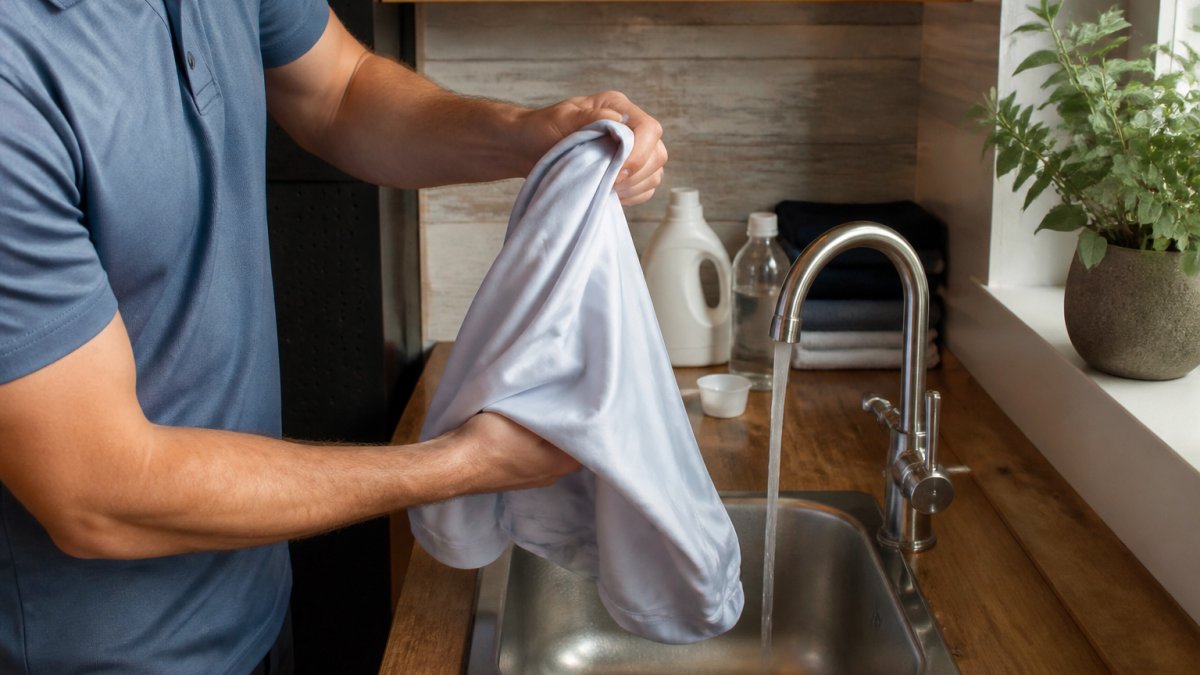
Check your golf shirt for stains immediately after wearing it. Sweat stains and grass marks set quickly. Waiting days makes them nearly impossible to remove.
Here's what to look for:
- Yellow or brown sweat stains under the arms
- Grass stains on the collar or sleeves
- Dirt marks on the back or shoulders
- Deodorant residue on the chest
Fresh stains come out with cold water and gentle rubbing. Older stains need pre-treatment. Don't use hot water, it locks the stain into synthetic fibers permanently. Instead, rinse with cold water and apply a stain treatment before washing.
Turn Garments Inside Out
This single step protects the visible surface of your golf shirt. When you wash performance apparel inside out, the outer fabric stays protected from agitation and detergent buildup.
Turning garments inside out also helps:
- Reduce fading on graphics and prints
- Prevent pilling on the surface
- Minimize friction damage to the fabric finish
- Extend the life of color-dyed materials
Make this a habit before every wash. It takes five seconds and delivers real protection.
How to Remove Sweat Stains from Golf Shirts
Sweat stains are the biggest challenge with performance apparel. Sweat contains salt, body oils, and proteins that bond to synthetic fibers. Standard detergent alone won't break these bonds.
Using Baking Soda and Vinegar Solutions
Baking soda and white vinegar are the most effective natural stain fighters for performance fabrics. They work on old stains and fresh ones.
For fresh sweat stains:
- Rinse the stained area with cold water
- Make a paste: mix baking soda with a small amount of cold water
- Apply the paste directly to the stain
- Let it sit for 30 minutes
- Rinse thoroughly with cold water
- Wash normally
For stubborn or older stains:
- Soak the garment in a solution of 1 part white vinegar to 4 parts cold water
- Let it soak for 1-2 hours
- Rinse well with cold water
- Apply baking soda paste as described above
- Rinse again and wash
The vinegar breaks down salt deposits. The baking soda lifts oils and proteins. Together, they remove stains without damaging synthetic fibers or moisture-wicking coatings.
Treating Odor and Detergent Buildup
Odor in performance apparel comes from two sources: bacteria trapped in fibers and detergent residue that prevents proper rinsing.
Detergent buildup is especially common with performance fabrics. Regular detergent doesn't rinse completely from synthetic fibers.
To eliminate odor:
- Use half the recommended amount of detergent
- Add a rinse cycle to your wash routine (most machines allow this)
- Soak garments in white vinegar solution before washing (1 part vinegar to 4 parts water, 30 minutes)
- Never use fabric softener, it adds buildup instead of removing it
If odor persists after washing, the detergent residue is likely the culprit. Wash the garment again with no detergent, just a vinegar rinse cycle. This strips away accumulated buildup.
The Machine Wash Process for Performance Apparel
Now that your golf shirt is pretreated and prepared, it's ready for the washing machine. The right settings matter more than you'd think.
Choosing Cold Water and Gentle Cycle Settings
Cold water is non-negotiable for performance golf apparel. Hot water damages synthetic fibers and sets stains. Even warm water can degrade moisture-wicking coatings.
Use cold water every time. Your detergent works fine in cold water, modern formulas are designed for it.
For the machine cycle:
- Select "gentle" or "delicate" cycle
- Never use "heavy duty" or "normal" cycles
- Gentle cycles reduce agitation and protect fabric structure
- They also minimize pilling and color fading
Avoid overloading the machine. Performance fabrics need room to move. A full load with heavy items like jeans will damage your golf shirts through friction. Wash them separately or with lighter garments.
Selecting the Right Detergent and Additives
Not all detergents are created equal for performance apparel. Standard laundry detergent often contains harsh chemicals that break down synthetic fibers and moisture-wicking technology.
Here's what to avoid:
- Bleach (damages colors and synthetic fibers)
- Fabric softener (clogs fibers and kills breathability)
- Scent boosters (contain oils that coat fibers)
- Enzyme-based detergents (designed for breaking down proteins in cotton, too aggressive for synthetics)
Use a mild detergent designed for athletic or performance wear. These formulas clean without harsh chemicals.
Some athletes add white vinegar to the rinse cycle instead of fabric softener. This removes detergent residue without adding buildup. Use about one-quarter cup per load.
How Often to Wash Golf Shirts
This question has no one-size-fits-all answer.
General guidelines:
- Light sweat (cool weather, moderate activity): wash after 2-3 wears
- Heavy sweat (hot weather, intense play): wash after every wear
- No visible sweat or odor: you can wear 2-3 times before washing
Washing less frequently extends garment life. However, sweat and body oils attract bacteria. Waiting too long creates odor that becomes harder to remove.
The sweet spot for most golfers is washing after every 2-3 rounds during cool months and after every round during hot months.
Never let sweaty golf shirts sit in a gym bag or hamper. Bacteria multiply quickly in moist environments.
How to Dry Performance Golf Apparel
How you dry your golf shirt matters as much as how you wash it. Heat is the enemy of performance fabrics.
Air-Drying vs. Low-Heat Tumble Drying
Air-drying is the best option for maximum garment lifespan. Lay the shirt flat on a clean surface or hang it on a hanger in a well-ventilated area.
Air-drying takes longer (4-8 hours depending on humidity) but preserves fabric integrity completely. The moisture-wicking coating stays intact. Elastic materials don't degrade. Colors stay vibrant.
If you need faster drying, use the tumble dryer on low heat only:
- Select "low heat" or "air dry" setting
- Never use medium or high heat
- Remove the shirt while slightly damp (don't over-dry)
- High heat sets any remaining stains permanently and damages synthetic fibers
Never use the dryer's "permanent press" or "high heat" settings. These temperatures destroy performance fabric coatings and elastic materials within a few cycles.
| Drying Method | Time Required | Best For | Impact on Longevity |
|---|---|---|---|
| Air-dry flat | 4-8 hours | All garments, maximum lifespan | Extends life significantly |
| Air-dry hanging | 6-10 hours | All garments, space-saving | Extends life significantly |
| Low-heat tumble dry | 20-30 minutes | When speed matters | Minimal impact if used occasionally |
| Medium/high heat | 15-25 minutes | NOT RECOMMENDED | Damages fabric, sets stains |
Care-Label and Fabric-Specific Instructions
Most guides tell you to read the care label and stop there. The label is the starting point, but different performance fabrics and finishes behave differently in the wash, and knowing why helps you make smart calls when a label is vague or missing.
Read the label first, then interpret it
The care label is authoritative for that garment. Look for water temperature, cycle type, bleach permission, drying method, and any ironing limits. When the label conflicts with generic advice in this guide, follow the label. When the label is missing or worn, default to the most conservative setting: cold water, gentle cycle, air-dry.
Polyester
Polyester is the workhorse of golf polos and shorts. It is durable and holds color well, but it is oleophilic, meaning it attracts and holds body oils. That is why polyester develops persistent odor faster than cotton. Wash polyester in cold water on a gentle cycle, avoid fabric softener, and consider a vinegar rinse to strip oil residue. Polyester tolerates low-heat tumble drying, but air-drying preserves any surface finish longer.
Elastane (spandex) and stretch blends
Elastane gives golf apparel its stretch, and heat is its main enemy. Repeated exposure to medium or high dryer heat breaks down elastane over time, which shows up as sagging waistbands, baggy knees, and lost shape. Wash stretch blends in cold water, never wring them aggressively, and air-dry or use the lowest heat setting. Hanging stretch garments long-term can also stretch them out, so fold rather than hang.
Nylon
Nylon is common in shorts, outerwear, and some polos. It is strong and abrasion-resistant but can pill with friction. Turn nylon garments inside out, wash with like fabrics, and avoid washing them alongside heavy items with zippers or hooks that snag.
Fabric finishes and coatings
Many performance garments carry a durable water repellent (DWR) finish or a moisture-wicking treatment. These finishes sit on the fiber surface and degrade with heat, harsh detergent, and fabric softener. To protect them, use cold water, mild detergent, and air-drying. If a DWR finish stops beading water, a wash with a technical fabric cleaner and a low-heat tumble can sometimes restore it, but check the label before trying any restorative product.
Trims, zippers, and closures
- Zip zippers closed and fasten buttons or snaps before washing to prevent snagging.
- Turn garments with prints, logos, or heat-transfer graphics inside out.
- Remove belts, ball markers, and detachable hoods.
- Wash caps separately or by hand; the brim can lose shape in a machine.
Extending the Life of Your Golf Apparel
Proper washing and drying are the foundation. A few additional habits extend garment life dramatically.
Rotate your golf shirts. If you play frequently, don't wear the same shirt every time.
Store garments properly. Fold performance apparel instead of hanging it long-term.
Wash less frequently when possible. Every wash cycle stresses synthetic fibers slightly.
Invest in quality from the start. Premium performance apparel like our Athletic Tech Polo is engineered with superior synthetic fibers and moisture-wicking technology that withstands proper care better than budget alternatives. The fabric construction itself is more durable. Combined with smart washing practices, premium gear lasts significantly longer.

When you wash performance golf apparel correctly, your investment pays off.
The process isn't complicated. Cold water. Gentle cycle. Air-dry when possible.
Proper care transforms how long your performance golf apparel lasts. Shop our full collection of golf polos and shorts designed to support your best swing, then protect your investment with the washing methods we've covered here.
Frequently Asked Questions
Can you put performance golf apparel in the dryer?
Yes, but with caution. Use a low-heat or air-dry setting to avoid damaging the synthetic fibers and moisture-wicking finish. High heat can set stains permanently and degrade the fabric's performance properties. Air-drying is the safest option for extending garment lifespan, though low-heat tumble drying works if you're short on time.
How do I remove odor from performance golf shirts?
Soak the shirt in a mixture of one part white vinegar to four parts cold water for 30 minutes before washing. For stubborn odor, sprinkle baking soda on the affected areas and let sit for 15 minutes. Wash in cold water with a sports-specific detergent designed to break down sweat and body oils. Avoid fabric softener, which traps odor in synthetic fibers.
Should I use fabric softener on performance golf clothes?
No. Fabric softener coats synthetic fibers and reduces their moisture-wicking ability, making your apparel less breathable and allowing sweat to build up. It also traps odor and detergent residue. Stick to detergent alone or use a sports-specific wash designed for technical fabrics.
How often should you wash golf shirts to maintain performance?
Wash golf shirts after every 2-3 wears if you play or train regularly and sweat heavily. If you wear them casually with minimal sweating, you can extend to 4-5 wears. Washing too frequently can fade colors and wear down the fabric, while washing too infrequently allows sweat and body oils to build up and degrade the moisture-wicking finish.