Quick Summary
UV protection golf shirts with a UPF 50 rating block at least 98% of UV rays, which makes them a practical choice for long rounds outdoors. The rating matters most alongside a relaxed, full-coverage fit and fabric that stays protective when wet and stretched.
- UPF 50 blocks at least 98% of UV rays, according to the article's cited guide.
- UPF protection is built into the fabric and does not wear off like sunscreen.
- A white cotton T-shirt has a UPF of about 7 dry and about 3 when wet.
- Only 7.1% to 16.7% of golf apparel reviewed carried a UPF label, so check the label.
- Wash inside out in cool water and skip the dryer to preserve UV protection.
Table of Contents
- What UPF Means and Why It Matters on the Course
- UPF 50 Golf Shirts: What the Rating Actually Covers
- How We Tested and Compared the Greatness Wins Polos
- Men's Sun Protection Golf Shirts: Fit, Stretch and Swing Mobility
- Women's Sun Protection Golf Shirts and Inclusive Fit Options
- Breathable, Moisture-Wicking Golf Shirts for Hot Rounds
- Caring for Your UV Golf Shirt So It Keeps Protecting You
- Choosing Your UV Golf Polo and Shopping Greatness Wins
- Frequently Asked Questions
Last Updated: October 29, 2026
Greatness Wins built its golf line around one question: does a shirt keep you cool, covered and free to swing? If you are shopping for uv protection golf shirts, the rating on the label is only the start of that answer. The number alone does not tell you how a shirt fits, how it stretches across your shoulders or how it handles a humid afternoon on the back nine.
What UPF Means and Why It Matters on the Course
UPF, or Ultraviolet Protection Factor, is the rating that tells you how much UV radiation a fabric lets through. A UPF 50 garment blocks at least 98% of UV rays, according to AnaClare's 2026 guide to sun-protective women's golf shirts. On a course where you spend four or five hours outdoors, that difference matters more than most golfers expect.
UPF Ratings Versus SPF Sunscreen
SPF measures how well a sunscreen blocks UVB rays on skin, and it wears off with sweat and friction. UPF measures how well a fabric blocks UV, and the protection stays in the cloth rather than rubbing away. Clothing is a different kind of tool, and most golfers using uv protection golf shirts still pair them with both. Skin Cancer Foundation guidance on sun-protective clothing recommends clothing as a primary layer of defense, with sunscreen on any skin that stays exposed.
UPF 50 Golf Shirts: What the Rating Actually Covers
A UPF 50 label tells you the fabric has been tested to block a high share of UV. It does not tell you how much of your body the shirt covers, and it does not guarantee that the protection holds up through a full round. Sleeve length, collar height and the fit at the shoulders all change how much skin sits under the fabric, and the fabric itself can lose effectiveness as it stretches, gets wet or wears thin.
What UPF 50 Blocks in Practice
UPF is a ratio, not a percentage of coverage. A UPF 50 fabric allows roughly 1/50th of the UV radiation that would reach bare skin to pass through, which works out to about 98% blocked. The Skin Cancer Foundation's sun-protective clothing guidance reports a UPF of about 7 for a white T-shirt and about 3 when it is wet, a reminder that the rating on a purpose-built golf shirt is doing real work that a casual tee does not.
Four Things That Change Real-World Protection
- Fabric construction. Tightly woven or knit fabrics block more UV than open, mesh-like constructions. That is why a breathable polo can still carry a high UPF: the openness is engineered for airflow while the yarn and knit density carry the protection. When a listing describes a "performance mesh" or "open pique," check whether the UPF rating is stated for that specific fabric rather than the line as a whole.
- Stretch and fit. A shirt that stretches across the shoulders in the backswing is also a shirt whose fabric is being pulled thinner at that moment. Maximum-stretch polos are built to recover, but a fit that is too tight will gap and thin at the shoulder blades and chest, the areas most exposed during the swing. A relaxed cut with a back drop-tail, like the Hamptons Mesh Polo, keeps fabric between you and the sun when you bend and rotate.
- Wetness and sweat. Moisture management moves sweat away from the skin, but a soaked fabric is a compromised fabric. The Skin Cancer Foundation's white-T-shirt example, UPF dropping from about 7 dry to about 3 wet, is the clearest illustration that protection is not static. On a humid afternoon, a shirt that wicks and dries quickly is also a shirt that holds its protection more consistently.
- Wear and laundering. UV protection is built into the fabric and cannot be renewed. Harsh detergents, high heat, fabric softener and bleach all degrade the structure over time, and a shirt worn thin at the elbows or stretched at the collar may lose coverage even if it still looks fine. Wash inside out in cool water, skip the dryer when you can, and retire shirts that have gone thin or limp.
Why the Label Alone Is Not Enough
Labeling is less consistent than it looks. A peer-reviewed evaluation of golf apparel for ultraviolet protection found UPF labeling on only 7.1% to 16.7% of the clothing options it reviewed, and it noted that garment design affects coverage. In practice, that means you should check the label, but you should also check the cut, the fabric description and the care instructions. A UPF 50 shirt that gaps at the shoulders or goes sheer when wet is not delivering the protection its tag promises.
How We Tested and Compared the Greatness Wins Polos
We have not run a side-by-side lab test of these shirts, and we will not claim one. What we can do is compare the published specifications and product descriptions for our current polos and explain which features matter for which golfer. Every spec below comes from the product listing, so you can verify it on the product page before you buy.
Men's Sun Protection Golf Shirts: Fit, Stretch and Swing Mobility
Swing mobility is where most golf shirts succeed or fail. A fabric that feels comfortable standing still can bind at the shoulders the moment you rotate into the backswing.
If you want a more structured look, the Performance Tech Stripe Polo uses an ultra-lightweight fabric with maximum stretch and a yarn-dyed microstripe, priced at $115.00.
For guidance on moisture-wicking options, see our Best Moisture Wicking Shirts for Golf in 2026. If you want to compare the broader athletic line, our Best Athletic Apparel for Golf Mobility covers how golf-specific movement shapes fabric choice.
Women's Sun Protection Golf Shirts and Inclusive Fit Options
The current catalog lists its golf polos under a single men's category, and the product descriptions do not state women's sizing or women's-specific cuts. We would rather not guess at fit details that are not in the listings. What we can do is give you a practical way to evaluate any sun-protection golf shirt, men's, women's or unisex, against your own measurements and the way you actually swing.
A Fit Framework That Works Across Cuts
Most golfers shopping outside their usual category run into the same three problems: shoulder width, sleeve length and torso length. Use the size chart on the product page and compare these three measurements against a shirt you already own and like: Proper fit ensures the fabric remains taut against the skin for maximum protection, though you should still apply a reliable sunscreen for golfers to any exposed areas that the shirt does not cover.
- Shoulder width. Measure seam to seam across the back of a shirt that lets you swing without binding. If the listed shoulder is narrower, the fabric will pull across the backswing.
- Sleeve length from shoulder seam. This is the number that determines sun coverage on the arms. A short sleeve that ends mid-bicep leaves more skin exposed than one that ends near the elbow; a long sleeve should reach the wrist without riding up when you extend your arms.
- Body length and drop-tail. A back drop-tail keeps fabric between you and the sun when you bend to tee up or read a putt. Compare the front and back lengths on the listing, a shirt that is short in back will gap in the address position.
Unisex and Men's Cuts: What to Expect
If you are sizing down to compensate, check the sleeve length first: sizing down shortens the sleeve and reduces the coverage you were trying to gain. A relaxed men's cut with a back drop-tail, like the Hamptons Mesh Polo, is often the easier starting point than a slim athletic cut.
What to Verify Before You Order
Because the listings do not state women's-specific sizing, treat the product page as the authoritative source. Before you buy, confirm four things: the size chart measurements, the stated UPF rating for that specific fabric, the sleeve length, and the care instructions. If a listing is missing any of these, that is a signal to ask before you order rather than guess.
Breathable, Moisture-Wicking Golf Shirts for Hot Rounds
Hot rounds punish heavy fabric.
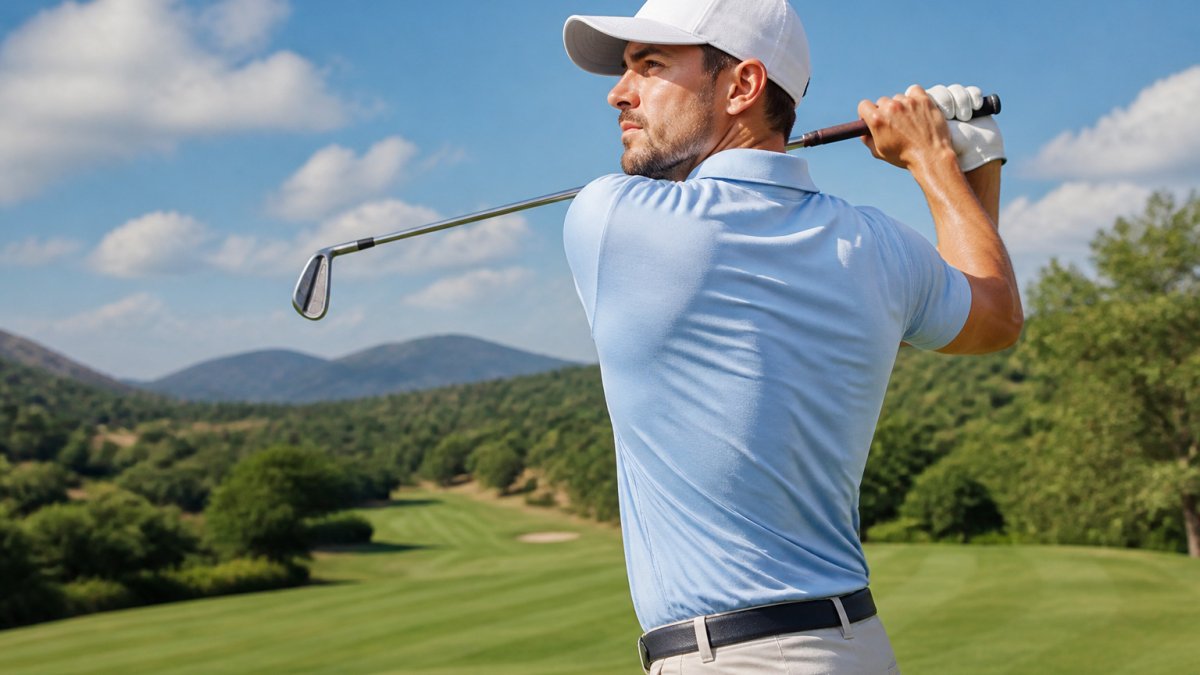
For a mesh option that holds up in heat, the Boats Performance Polo is a short-sleeve printed polo with maximum stretch and superior moisture-wicking, priced at $115.00.
Temperature-regulating fabric is a fair topic to dig into. Our guide to Temperature-Regulating Fabric Technology Explained covers how these materials are engineered and where they fall short.
For hot rounds, the article's lineup breaks down like this.
| Product | Key feature | Price |
|---|---|---|
| Classic Sport Polo | Breathable pique, open construction | $60.00 (final sale) |
| Boats Performance Polo | Maximum stretch, moisture-wicking | $115.00 |
| Long Sleeve Pique Polo | Enhanced breathability, back drop tail | $125.00 |
Caring for Your UV Golf Shirt So It Keeps Protecting You
UV protection is built into the fabric, which means the way you wash it matters. Protection is not a feature you can renew, so a shirt that is worn thin or stretched out may lose coverage even if it still looks fine.
Choosing Your UV Golf Polo and Shopping Greatness Wins
Start with the job you need the shirt to do. If you want a breathable pique for hot rounds, the Classic Sport Polo is available on final sale.

Check the listing for the exact fabric description and size chart before you buy, since the product pages are the authoritative source for specs. When you are ready to compare the full range, shop the Greatness Wins golf collection to see the current polos side by side.

Frequently Asked Questions
What is the best UPF rating for a golf shirt?
UPF 50+ is the most common top rating for golf shirts and is the benchmark most shoppers look for. A UPF 50 rating means the fabric is designed to block at least 98% of UV rays, according to the AnaClare guide cited in this review. Because garment design affects coverage, pair the rating with a fit that covers your arms and neck. The Greatness Wins Athletic Tech Polo and Performance Tech Stripe Polo are good starting points for a rating-focused search.
Are UPF 50 golf shirts worth it?
For regular rounds in hot or sunny conditions, a UPF 50 golf shirt is usually worth the cost compared with an ordinary cotton tee, which may provide a UPF of only about 7 when dry and about 3 when wet, . Prices for the Greatness Wins lineup range from $60.00 for the Classic Sport Polo on final sale to $125.00 for the Long Sleeve Pique Polo. Weigh the price against how often you play outdoors.
Do golf shirts with UV protection lose effectiveness after washing?
Protection can decline over time, so washing matters. Follow the care label, avoid harsh bleaches and high heat, and replace the shirt once it shows stretching, thinning or fading. Check the rating on the label and not just the product category.
What is the difference between UPF and SPF?
UPF measures how much ultraviolet radiation a fabric blocks, while SPF measures how well a sunscreen protects skin from UVB rays. A garment with UPF 50 blocks roughly 98% of UV rays, so it does not need reapplication the way sunscreen does. Many golfers use both: a UV-rated shirt for the torso and arms, and sunscreen on the neck, face and any exposed skin.