Table of Contents
- What Is Moisture-Wicking Fabric?
- How Moisture-Wicking Technology Works
- Moisture-Wicking vs. Cotton Shirts: Which Performs Better?
- Best Moisture-Wicking Shirts for Men: Quick Comparison
- Best Workout Shirts for Heavy Sweaters
- Key Features to Look for in Performance Shirts
- How to Care for Performance Apparel
- Frequently Asked Questions
Last Updated: September 19, 2026
What Is Moisture-Wicking Fabric?
Moisture-wicking fabric pulls sweat away from your skin and moves it to the outer surface for faster evaporation through capillary action. Unlike cotton, which absorbs and holds moisture against your body, moisture-wicking materials use hydrophobic inner layers and hydrophilic outer surfaces to create one-way moisture transport.
The science behind moisture-wicking is straightforward: synthetic fibers like polyester don't absorb water the way natural fibers do. Instead, they're designed to repel moisture at the skin contact point while actively drawing sweat outward. This dual-action approach prevents the clammy, heavy feeling you get when cotton absorbs your perspiration. According to Men's Health Fitness Editors' 2026 testing, performance shirts that effectively mitigate sweat and odor prioritize synthetic blends over traditional cotton for high-intensity activity.
Most moisture-wicking shirts combine polyester blends with antimicrobial coatings for odor resistance. Lighter constructions provide better breathability for intense training, while heavier fabrics offer durability and thermal regulation.
How Moisture-Wicking Technology Works
The Capillary Action Mechanism
Capillary action is the core principle behind moisture-wicking. Sweat moves through tiny spaces between fibers (capillaries) from areas of high moisture concentration to areas of low concentration, where it can evaporate. The hydrophobic inner layer repels sweat at the skin contact point, preventing absorption into the fiber itself. Simultaneously, the hydrophilic outer layer attracts that moisture and spreads it across a wider surface area, accelerating evaporation. This creates the "quick-dry" effect, the ability to wick away sweat immediately, which technical evaluations for 2026 running gear emphasize as the most critical performance property for athletic jerseys.
Polyester: The Performance Standard
Polyester dominates moisture-wicking apparel because its naturally hydrophobic fibers repel water and allow moisture to travel along the fiber rather than absorb into it. Most high-performance shirts use 70%+ polyester because this structure is inherently suited to moisture transport. Performance fabrics often feature mesh panels or flatlock seams in high-heat areas like underarms and back to maximize airflow.
Nylon Blends: Durability and Stretch
Nylon (typically 20-30%) is blended with polyester to improve durability and stretch. Nylon fibers resist abrasion better and provide superior elasticity for four-way stretch. Though nylon absorbs slightly more moisture than pure polyester, the durability trade-off is worthwhile for athletes needing both moisture management and longevity.
Merino Wool: Natural Performance
Merino wool fibers are naturally crimped and hollow, creating air pockets that trap heat while wicking moisture. Merino can absorb 30% of its weight in moisture without feeling wet and contains lanolin, a natural antimicrobial that reduces washing frequency. The drawback is cost (50-100% more than polyester) and lower durability in high-friction activities. Merino works best for endurance, travel, and cooler climates.
Fabric Weight and Construction
Fabric weight (GSM, grams per square meter) determines breathability and moisture transport speed. Lightweight fabrics under 150 GSM allow faster evaporation for hot-weather training. Mid-weight fabrics (150-200 GSM) balance breathability with durability. Heavier fabrics (200+ GSM) provide maximum durability but sacrifice some breathability.
Moisture-Wicking vs. Cotton Shirts: Which Performs Better?
Cotton is unsuitable for high-exertion environments. It absorbs and holds moisture against your skin, creating a wet, heavy garment that takes hours to dry.
Moisture-wicking synthetic shirts outperform cotton in every measurable way during athletic activity. They dry faster, prevent odor buildup, and maintain consistent comfort even during extended training sessions. Over 5,000 units of Hanes moisture-wicking cotton pocket t-shirts were purchased in a single month according to Amazon consumer purchase data, showing that even mass-market moisture-wicking options significantly outsell traditional cotton for performance use.
Quality moisture-wicking shirts cost more upfront than cotton, and some athletes find synthetics feel less soft initially. For casual wear, cotton is acceptable. For sweat-intensive activities, synthetic moisture-wicking fabrics deliver measurably better results.
Best Moisture-Wicking Shirts for Men: Quick Comparison
| Shirt | Price | Best For | Key Feature |
|---|---|---|---|
| Performance Training Tank | $45 | Hot-weather workouts | Featherweight, maximum breathability |
| Baselayer Tee | $39 | Everyday training | Mesh ventilation, lightweight |
| Baselayer Muscle Tank | $39 | High-motion activities | Strategic ventilation zones |
| Badge Graphic Tee | $39 | Versatile training | Cotton-polyester blend, easy care |
Performance Training Tank
The Performance Training Tank ($45) is engineered for intense workouts and hot-weather runs. Featherweight fabric delivers maximum moisture management without excess weight, and consistent fit ensures it stays in place during dynamic movement.

This tank excels for distance running, CrossFit, and summer training where minimal fabric coverage maximizes ventilation for serious heat generation.
Baselayer Tee
The Baselayer Tee ($39) features mesh ventilation in underarms, back, and sides for added breathability. Super lightweight fabric provides coverage without weight, making it versatile for gym sessions and outdoor runs.
This shirt works as a standalone training shirt or base layer under heavier gear. Mesh ventilation keeps you cool while moisture-wicking prevents sweat accumulation.
Baselayer Muscle Tank
The Baselayer Muscle Tank ($39) features mesh ventilation for added breathability and lightweight fabric. The muscle tank cut provides maximum shoulder and arm mobility for basketball, swimming, and cross-training.
Badge Graphic Tee
The Badge Graphic Tee ($39) blends cotton breathability with recycled polyester moisture-wicking and durability for low to medium impact activities. Easy care with minimal shrinkage maintains fit, and the graphic design suits casual wear while delivering performance. Pairing this shirt with moisture wicking underwear ensures consistent comfort and dryness during more strenuous movement.
This option bridges the gap between pure performance and everyday wearability. If you want a shirt that works for training but doesn't look purely athletic, this delivers. The cotton-polyester blend offers more breathability than pure synthetics while still managing moisture effectively.
Best Workout Shirts for Heavy Sweaters
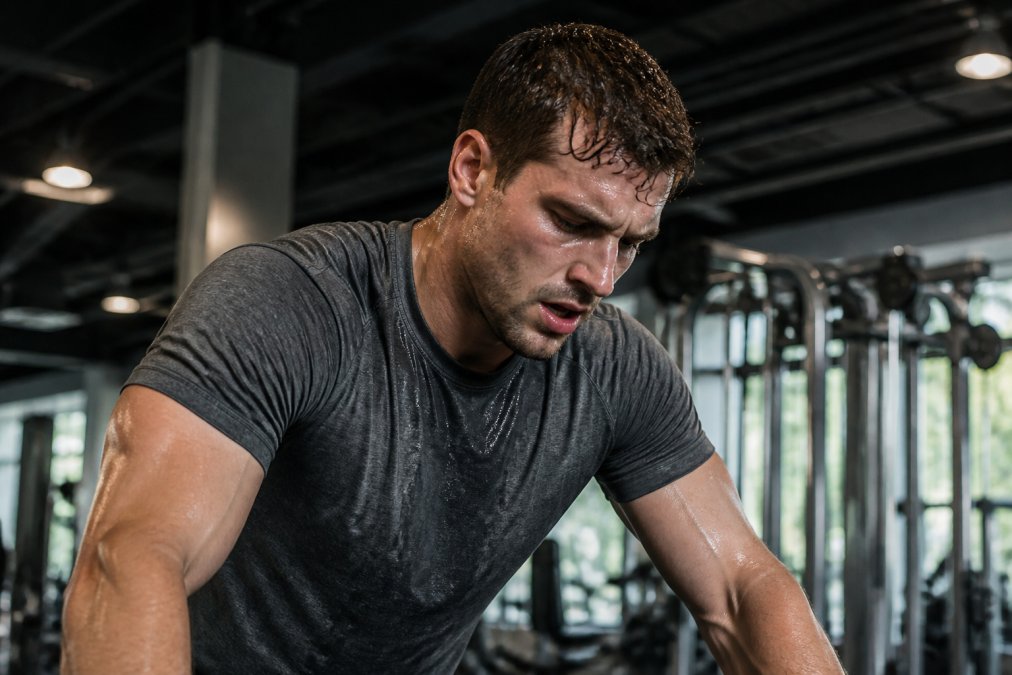
Heavy sweaters need shirts engineered for high moisture output. The Performance Training Tank ($45) combines featherweight construction with maximum ventilation zones, allowing sweat to move away from skin faster than full-coverage options.
Pair it with moisture-wicking socks like the Crew Length Sock ($15) or Athletic No Show Sock ($15) for complete sweat management from head to foot. The Men's Logo Crew Sock multi-pack ($38) offers a cost-effective option for athletes who go through multiple pairs weekly. According to Apparel N Bags' 2026 guide, the Ogio OG133 represents a leading moisture-wicking solution for professional and athletic wear, using proprietary "Performance Ever Last" technology to manage perspiration.
For heavy sweaters, fabric weight is critical.
Key Features to Look for in Performance Shirts
When evaluating moisture-wicking shirts for men, prioritize these technical specifications. Fabric composition is non-negotiable, polyester-dominant blends (70%+ polyester) outperform everything else. Mesh ventilation zones placed strategically in high-heat areas like underarms and back accelerate moisture transport. Flatlock seams prevent chafing during extended wear, a critical feature for distance athletes.
How to Care for Performance Apparel
Proper care extends the life of your moisture-wicking shirts significantly while also addressing an often-overlooked environmental concern: microplastic shedding from synthetic fibers.
Washing Best Practices
Drying and Storage
The Microplastic Shedding Problem
You can reduce microplastic shedding by:
- Using a microfiber-catching laundry bag (like a Guppyfriend or similar mesh bag designed to trap shed fibers). These bags capture 80-90% of released microfibers, preventing them from entering wastewater. Cost is typically $15-25 per bag, and they're reusable for hundreds of washes.
- Washing less frequently by choosing merino wool blends when possible. Merino's natural antimicrobial properties mean you can wear it 5-7 times before washing, reducing total wash cycles and microfiber release by 70-80% compared to synthetic shirts washed after every wear.
- Washing in cold water with full loads to minimize agitation and fiber release. Cold water causes less fiber damage than hot water, reducing shedding by approximately 30%.
- Air drying instead of machine drying, which reduces mechanical stress on fibers and further decreases shedding.
- Choosing higher-quality synthetic blends with tighter weaves. Budget polyester shirts shed more fibers than premium constructions because loose weaves release fibers more easily during washing.
The Merino Alternative for Eco-Conscious Athletes
Frequently Asked Questions
What's the difference between moisture-wicking and Dri-Fit fabrics?
Moisture-wicking is the broader technology that pulls sweat away from skin through capillary action. Dri-Fit is Nike's branded version of this technology. Both use synthetic fibers and hydrophobic inner layers to move moisture outward, but moisture-wicking is the general term applied across all brands. The key difference is the specific polyester blend and treatment used, some perform better than others depending on fabric weight and construction.
Do moisture-wicking shirts actually keep you cool?
Yes, but indirectly. Moisture-wicking fabrics accelerate evaporation by moving sweat away from your skin to the fabric's outer surface, where it dries faster. This speeds up the body's natural cooling process. However, the shirt itself doesn't generate cold, it enables your sweat to evaporate efficiently. The quick-drying effect is critical for athletic performance, especially during high-intensity workouts or outdoor runs in hot conditions.
What's the best moisture-wicking shirt for men who sweat a lot?
Look for lightweight polyester blends with mesh ventilation zones and a hydrophobic treatment. The Performance Training Tank ($45) features featherweight fabric designed for intense workouts on hot days with maximum breathability. Baselayer options ($39-$49) include strategically placed mesh ventilation for areas where you need it most. Synthetic fibers outperform cotton for heavy sweaters because they dry 3-5 times faster and resist odor buildup.
How do you wash moisture-wicking shirts to maintain performance?
Wash in cold water with similar colors, using mild detergent, avoid fabric softeners, which coat the fibers and reduce moisture-wicking ability. Dry on low heat or air dry; high heat damages synthetic fibers and antimicrobial treatments. Turn shirts inside-out to minimize pilling. Wash after every wear to prevent sweat buildup that degrades fabric performance. Proper care extends garment longevity and maintains the hydrophobic properties that make the shirt effective.