Table of Contents
- How Moisture Wicking Fabric Works During Intense Training
- Moisture Wicking Fabric Benefits for High-Intensity Training
- Best Moisture Wicking Shirts for Men: What to Look For
- How to Wash Moisture Wicking Clothes Without Killing Performance
- Moisture Wicking vs. Cotton: Why Cotton Fails Under Sweat
- Layering Systems and Environmental Impact of Synthetic Fabrics
- Conclusion
- Frequently Asked Questions
Last Updated: September 14, 2026
How Moisture Wicking Fabric Works During Intense Training
Moisture wicking fabric for intense training is an engineered textile that moves liquid sweat away from your skin to the outer surface of the garment, where it evaporates. The global market for these fabrics reached USD 3.16 billion in 2026 and is projected to hit USD 3.99 billion by 2030, a 6% compound annual growth rate, according to Research and Markets' moisture-wicking fabrics report. That growth reflects a simple reality: when you train hard, what you wear either helps your body cool itself or actively works against it.
At Greatness Wins, we build every piece around that principle. Below, we break down the mechanics, the materials that actually perform, and how to choose gear that holds up.
Capillary Action and Evaporation Rate
Capillary action is the physical process that pulls sweat along tiny channels in the fabric fibers, away from your skin and toward the exterior surface. Hydrophobic synthetic fibers, meaning they repel water, sit closest to your skin, while hydrophilic outer layers attract the moisture and spread it thin for faster evaporation. The faster the evaporation rate, the quicker your body sheds heat.
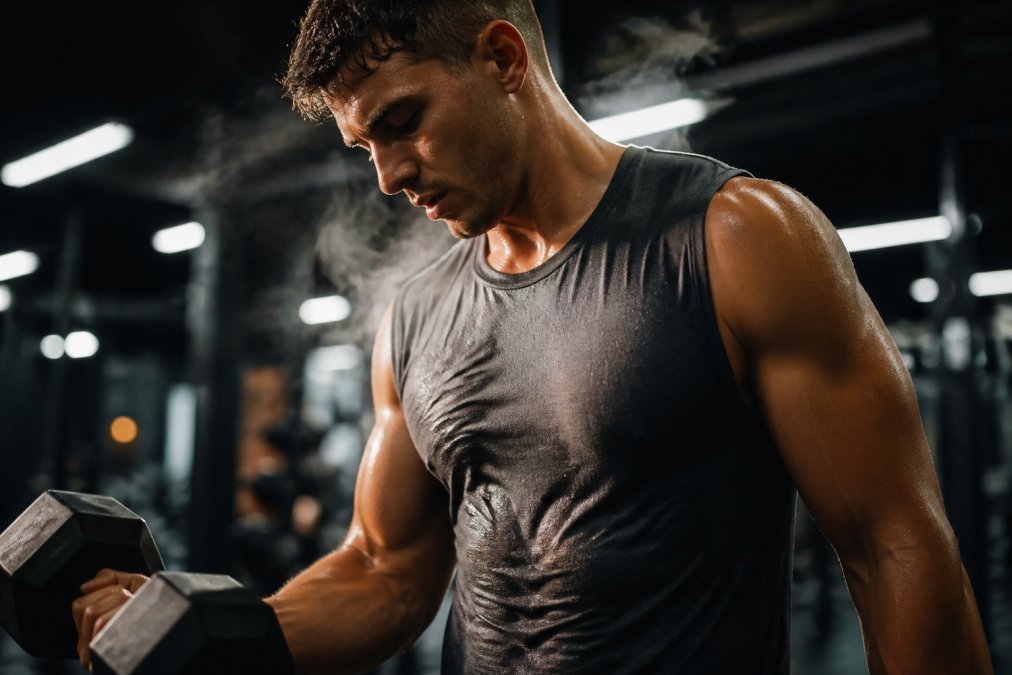
This is why fabric construction matters as much as fiber content. A tight knit with high moisture vapor transmission rate moves water faster than a loose weave that traps it.
Moisture Wicking Fabric Benefits for High-Intensity Training
The benefits go beyond staying dry. Athletes wearing moisture-wicking fabrics showed improved endurance and reported feeling less fatigued during high-intensity activities, according to Smartex Yarn's technical blog. The reason is thermoregulation: when sweat sits on your skin, your body keeps producing more to compensate, draining energy you need for the work itself.
Thermoregulation and Body Temperature
Thermoregulation is your body's process of maintaining a stable core temperature through sweating, blood flow, and heat dissipation. Wicking fabric supports this by removing the insulating layer of wet cloth. Cotton, by contrast, holds up to 27 times its weight in moisture, per 2XU's fabric science explainer, which traps heat against your skin.
Best Moisture Wicking Shirts for Men: What to Look For
The best moisture wicking shirts for men combine a hydrophobic inner layer, a lightweight construction, and odor-resistant treatment. Polyester remains the industry-recognized gold standard for workout apparel because it pulls sweat away from the skin and speeds evaporation during intense training (Interpro Fitness material guide). But "best" depends on what you're doing. A shirt that excels in a 95-degree outdoor conditioning session is the wrong pick for a cold-weather ruck, and the specs that matter shift with the workout.
Look for these baseline specifications:
- Polyester or nylon blends engineered for moisture transport
- GSM between 130 and 160 for high-intensity work (lighter breathes better)
- Antimicrobial properties to control odor between washes
- Flatlock seams to prevent chafing
- Consistent fit that doesn't shift during movement
Matching Fabric to Your Training Type
Fabric weight, knit structure, and fiber blend should track the demands of the session. A common pattern among performance apparel designers is to build a small rotation of shirts rather than one do-everything piece: Specialized care routines ensure these technical garments maintain fabric performance over repeated wash cycles, preserving the integrity of the weave long after the initial training block concludes.
- High-intensity intervals and hot-weather conditioning: 120-150 GSM polyester or polyester-spandex knit. The lighter the fabric, the faster moisture vapor escapes, and the less heat gets trapped against your torso. Look for open-knit or mesh ventilation panels under the arms and down the spine.
- Strength training and gym sessions: 150-180 GSM polyester or nylon blend. Slightly heavier fabric resists stretching under load and holds its shape through repeated barbell contact and machine work.
- Endurance running and cycling: 130-160 GSM polyester with a higher spandex content (typically 12-18%) for stretch and reduced seam chafe over long distances. Nylon blends dry slightly slower than polyester but feel softer against skin on multi-hour efforts.
- Cold-weather outdoor training: 180-220 GSM merino wool or merino-synthetic blend as a base layer. Merino regulates temperature across a wider range and resists odor naturally, which matters when you can't wash between sessions.
Fabric Weight, GSM, and Odor Management
GSM, or grams per square meter, measures fabric density. Lower GSM means lighter, more breathable cloth; higher GSM means more durability but less airflow. For intense training in heat, 130-160 GSM hits the sweet spot. Below 120 GSM, fabric can turn translucent when wet and loses shape quickly. Above 200 GSM, you're into cool-weather or recovery-wear territory where breathability drops.
Odor management comes from antimicrobial finishes or silver-ion treatments that inhibit the bacteria responsible for smell. Silver-ion treatments bond silver particles to the fiber, which disrupts bacterial cell function and keeps odor from building between washes. The trade-off: these treatments degrade over time, and harsh detergents or fabric softener accelerate the breakdown. If you train daily and can't wash after every session, prioritize shirts with a silver-ion or similar antimicrobial finish over untreated polyester, which can hold odor even after washing.
For hot-weather sessions, the Performance Training Tank uses a featherweight fabric built for breathability and durable enough to hold its fit wash after wash.

How to Wash Moisture Wicking Clothes Without Killing Performance
Washing moisture wicking clothes correctly preserves the wicking treatment and antimicrobial finish. The rules are simple but easy to break:
- Wash in cold water on a gentle cycle
- Skip fabric softener entirely (it coats fibers and blocks moisture transport)
- Avoid dryer sheets for the same reason
- Air dry when possible, or tumble on low
- Turn garments inside out to protect the outer surface
Heat and softener are the two biggest killers of performance fabric. A single hot wash with softener can leave a residue film that reduces evaporation rate for good.
Moisture Wicking vs. Cotton: Why Cotton Fails Under Sweat
Cotton fails under sweat because it's hydrophilic, meaning it absorbs and holds water rather than repelling it. During a 60-minute high-intensity session, inferior non-wicking garments can increase in weight by 200%, per 2XU's thermoregulation analysis, creating dead weight that drags on performance and chafes against skin.
| Fabric | Moisture Behavior | Best For | Drawback |
|---|---|---|---|
| Polyester | Wicks and dries fast | High-intensity training | Can retain odor without treatment |
| Nylon | Wicks, durable, soft | Endurance and layering | Slower dry than polyester |
| Merino wool | Wicks, naturally odor-resistant | Outdoor and cold-weather | Higher cost, slower dry |
| Cotton | Absorbs and holds moisture | Low-intensity, casual wear | Heavy when wet, causes chafing |
A Western Michigan University study on form-fitted moisture-wicking shirts found measurable physiological and perceptual responses tied to improved evaporative and ventilation properties, though researchers note that more work is needed to confirm the full extent of performance gains.
Layering Systems and Environmental Impact of Synthetic Fabrics
Building a Layering System for Extreme Conditions
Layering systems for extreme conditions start with a wicking base layer against your skin, add an insulating mid-layer for warmth, and finish with a breathable shell for wind and rain. The base layer does the critical work: if it holds moisture, every layer above it fails. A wet base layer conducts heat away from your body roughly 25 times faster than dry air, which is why cotton next to skin in cold weather is a genuine safety issue, not just a comfort one.
The three-layer system most outdoor athletes use:
- Base layer (next to skin): 150-200 GSM merino wool or a polyester-spandex blend. The job is moving sweat off your skin and into the mid-layer. Fit should be snug but not compressive.
- Mid-layer (insulation): Grid fleece, synthetic fill, or a heavier merino knit. This layer traps warm air and continues moving moisture outward. Pit zips or a half-zip let you dump heat during hard efforts without stripping layers.
- Shell (weather protection): A breathable, water-resistant shell with taped seams. The key spec is moisture vapor transmission rate (MVTR), the higher the number, the more sweat vapor escapes while rain stays out. A shell with a low MVTR traps your own sweat and defeats the base layer underneath.
For high-intensity training in the cold, the practical rule is to start slightly cold. You'll warm up within the first 10 minutes of hard effort, and a base layer that's already damp when you stop is the fastest route to a chill.
The Environmental Cost of Synthetic Wicking Fabrics
Most guides skip this, and it's the angle that matters most for athletes who train daily. Synthetic wicking fabrics are petroleum-derived, and they shed microplastics every time they go through a wash cycle. A single synthetic garment can release hundreds of thousands of microfibers per wash, and those fibers are small enough to pass through municipal wastewater treatment and reach waterways.
The broader activewear market is projected to grow from $440.39 billion in 2025 to $919.98 billion by 2033, per Alibaba's performance jersey guide, which makes responsible manufacturing a real priority rather than a marketing line. Buying fewer, more durable pieces and washing them in a microfiber-catching bag reduces the footprint without sacrificing performance.
What actually moves the needle:
- Buy fewer, higher-quality pieces. A shirt that holds its wicking performance through 100 washes replaces five cheap shirts that lose function after 20.
- Wash less often. Air-dry between sessions when possible. Every wash cycle is a microfiber release event.
- Use a microfiber filter bag or a washing machine filter. These capture shed fibers before they reach waterways and cost less than one replacement shirt.
- Choose recycled polyester where available. Recycled polyester (rPET) has a lower carbon footprint than virgin polyester and performs identically as a wicking fiber.
- Skip the dryer. Heat degrades both the wicking treatment and the fiber itself, shortening the garment's useful life.
Conclusion
The gap between gear that performs and gear that just looks the part comes down to fiber engineering, fabric weight, and how you care for it. Get those right and your body spends its energy on training, not on fighting its own clothing.
Frequently Asked Questions
How does moisture wicking fabric actually work?
Moisture wicking fabric uses capillary action to pull sweat from your skin into the fabric fibers, where it spreads across a wider surface area and evaporates faster. Hydrophobic synthetic fibers like polyester and nylon move moisture outward, while hydrophilic treatments help it spread and dry. This keeps sweat off your skin during high-intensity interval training instead of soaking through like cotton, which can hold up to 27 times its weight in moisture.
Is polyester better than cotton for intense training?
Yes. Polyester is the industry-recognized gold standard for workout apparel because it pulls sweat away from skin and dries quickly. Cotton absorbs and holds moisture, and inferior non-wicking garments can increase in weight by 200% during a 60-minute high-intensity session, creating dead weight that hinders performance. Polyester blends also resist chafing and maintain their shape through repeated washes.
How should you wash moisture wicking clothes to maintain performance?
Wash moisture wicking clothes in cold water on a gentle cycle, turn them inside out, and skip fabric softener and dryer sheets since they coat fibers and block wicking. Use a mild detergent, avoid chlorine bleach, and air dry when possible. High heat breaks down elastic fibers and antimicrobial treatments, so tumble dry low if you must. Proper care keeps quick-dry technology and odor resistance working after dozens of washes.
What are the benefits of moisture wicking fabric for high-intensity interval training?
Athletes wearing moisture wicking fabric showed improved endurance and reported feeling less fatigued during high-intensity activities, according to Smartex Yarn research. Benefits include faster evaporation, better thermoregulation, reduced chafing, and less skin irritation. The global moisture wicking fabrics market is valued at USD 3.16 billion in 2026 and projected to reach USD 3.99 billion by 2030 at a 6% CAGR, reflecting how much athletes now prioritize sweat management in performance apparel.
Training hard demands apparel that keeps up. Greatness Wins builds premium performance gear for athletes who treat every session as a step toward their best, with featherweight moisture-wicking construction, consistent sizing, and free shipping on orders over $100 plus free returns within the U.S. Get started with Greatness Wins and train in gear engineered to move sweat, not slow you down.