Quick Summary
Ethical manufacturing in sportswear means making athletic apparel with fair wages, safe factory conditions, no child or forced labor, responsibly sourced materials and measured environmental impact. Check named factories, third-party audits and what each certification actually covers.
- Manufacturing and materials production account for an estimated 98% of Columbia Sportswear's total measured emissions.
- Ask whether the brand names its factories and publishes supplier lists or audit results.
- Fair trade certification shows a factory met labor and pay standards at audit time, not fabric durability.
- Match each certificate to the specific factory that made your product, and check its expiry date.
- Four brands, including New Balance and adidas, reported double-digit increases in manufacturing emissions in the last year.
Table of Contents
- Why Ethical Manufacturing Matters More in Sportswear Now
- Defining Ethical Manufacturing for Performance Apparel
- Fair Wages, Safe Factories and Labor Rights
- Supply Chain Transparency in Fashion: Tracing Materials to the Mill
- Fair Trade Certification in Apparel: What the Labels Actually Prove
- How to Spot Greenwashing and Check Auditing Frameworks
- Sustainable Activewear Brands: How to Compare Them Side by Side
- Choosing Ethically Made Gear for Your Training
- Frequently Asked Questions
Ethical Manufacturing in Sportswear: What to Check
Last Updated: November 4, 2026
Why Ethical Manufacturing Matters More in Sportswear Now
Ethical manufacturing in the sportswear industry is no longer a side note for shoppers. The global sportswear market is projected to grow from $437.4 billion in 2026 to $890.4 billion by 2033 (Grand View Research sportswear market report).
Demand for responsible products is climbing with the market. The sustainable sportswear segment is projected to grow at a CAGR of 13.5% between 2026 and 2033 (LinkedIn Pulse sustainable sportswear market analysis). Manufacturing emissions are a clear example: four major brands, New Balance, lululemon, ASICS and adidas, reported double-digit increases in manufacturing emissions in the last year (Stand.earth report on sportswear brands and pollution).
Regulators are also paying closer attention. U.S. scrutiny of supply chains has focused on PFAS, due diligence, carbon emissions and greenwashing claims (Trace For Good supply chain regulatory overview). That is useful context for any shopper: a brand's claims about its factories should be checkable.
Defining Ethical Manufacturing for Performance Apparel
Ethical manufacturing is the practice of making clothing so that workers are paid fairly and work in safe conditions, materials are sourced responsibly, and environmental impact is measured and reduced. For performance apparel, that definition has to cover fabrics as well as factories, because technical materials carry their own environmental costs.
The label covers more ground than most shoppers expect. It includes fair wages, safe workplaces, the elimination of child and forced labor, responsible material sourcing, and low-impact processes such as dyeing and finishing.
Manufacturing is where most of the impact sits. Columbia Sportswear's own assessment found that manufacturing and materials production account for an estimated 98% of its total measured emissions (Apparel Impact Institute Columbia Sportswear case study).
Fair Wages, Safe Factories and Labor Rights
Fair wages and safe factories are the foundation of any ethical claim. Workers who sew your shirt should earn enough to live on, work in buildings that meet safety standards, and have a real way to raise complaints.
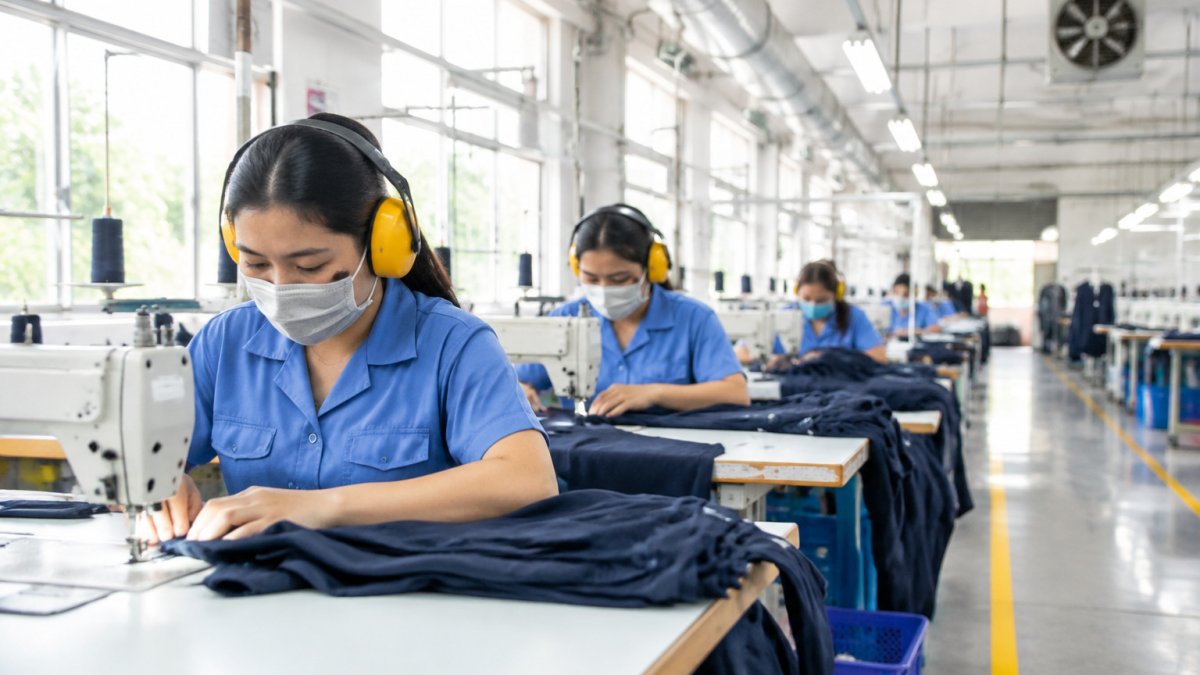
A factory visit is not the only way to check. Ask whether the brand publishes its supplier list, whether it names the factories that make its products, and whether it reports on wage and safety audits. Brands that answer those questions plainly give you something to compare against those that do not.
Labor rights also show up in how a company responds to problems. Look for a published supplier code of conduct and a process for workers to report violations. If you cannot find either, treat the brand's ethics statement as a marketing claim until it proves otherwise.
Supply Chain Transparency in Fashion: Tracing Materials to the Mill
Supply chain transparency means being able to follow a garment back through its stages: the finished product, the sewing factory, the fabric mill, and the source of the fiber. Most apparel brands can see the first two stages. Far fewer can trace the fiber, which is where many environmental and labor problems begin.
Traceability matters most for materials. Organic cotton, recycled polyester and performance fabrics all have different supply chains, and a claim about one does not automatically extend to the others. Brands that name their mills and fiber sources give you a way to verify what you are buying.
Watch for vague language such as "responsibly sourced" with no supporting detail. Specific, checkable claims are the better signal.
Fair Trade Certification in Apparel: What the Labels Actually Prove
Fair trade certification in apparel means a factory has been audited against a set of labor and pay standards by an independent third party.
That distinction matters for activewear.
The most useful skill is knowing which standard you are looking at. Several certification schemes appear on sportswear, and they verify different things:
- Fair Trade Certified (Fair Trade USA) covers factories and farms against labor, wage, and environmental criteria, and in apparel it typically applies to specific products rather than an entire brand. It is the label most often cited on hoodies, tees, and basics.
- SA8000 (Social Accountability International) is a workplace standard covering child labor, forced labor, health and safety, freedom of association, discrimination, discipline, working hours, and remuneration. A SA8000 certificate applies to a specific facility, so ask which factory holds it.
- GOTS (Global Organic Textile Standard) covers both organic fiber content and social criteria across processing stages, which makes it one of the few labels that speaks to labor and material at once.
- OEKO-TEX Standard 100 tests finished articles for harmful substances; it is a chemical-safety label, not a labor label, and should not be read as proof of fair wages.
- bluesign focuses on chemical and environmental performance in textile production, again not on wages or hours.
A common pattern is that brands stack labels: a GOTS-certified fabric, a Fair Trade Certified sewing factory, and an OEKO-TEX tested trim.
Watch out: a certificate number is only useful if you can match it to the factory that made your specific item.
Ask which certification the brand holds, who audited it, whether the audit covers the specific factory that made your product, and when the certificate expires.
The main certification schemes on sportswear verify different things, so it helps to know which question each label answers.
| Label | What it verifies | Note |
|---|---|---|
| Fair Trade Certified (Fair Trade USA) | Labor, wage and environmental criteria at factories and farms | Often applies to specific products, not whole brands |
| SA8000 (Social Accountability International) | Child labor, forced labor, health and safety, wages, working hours | Certificate applies to a specific facility |
| GOTS (Global Organic Textile Standard) | Organic fiber content plus social criteria | Covers labor and material together |
| OEKO-TEX Standard 100 | Harmful substances in finished articles | A chemical-safety label, not a labor label |
| bluesign | Chemical and environmental performance in textile production | Does not verify wages or hours |
How to Spot Greenwashing and Check Auditing Frameworks
Greenwashing is a sustainability claim that sounds strong but cannot be verified.
Auditing frameworks give you a way to test claims rather than trust them. A credible framework names the standard being checked, the body doing the audit, the scope of the audit, and how often it is repeated.
Three frameworks are worth knowing for sportswear:
- SA8000 audits social performance at a facility level, covering child labor, forced labor, health and safety, freedom of association, discrimination, discipline, working hours, and remuneration. Reports are summarized in facility certificates, and the certificate names the site.
- GOTS combines organic fiber verification with social criteria across processing, and its public database lets you check a certified supplier by name and license number.
- Higg Facility Environmental Module (FEM) and the Higg Brand & Retail Module (BRM) are self-assessment tools used widely in apparel; they are useful for comparing facilities but are self-reported unless verified by a third party, so treat unverified Higg scores as a starting point, not proof.
A practical checklist for reading any audit claim:
- Name the standard. "Audited" alone means nothing; "SA8000-certified" is checkable.
- Name the auditor. Third-party audits by firms such as SGS, Bureau Veritas, or Intertek carry more weight than self-audits.
- Name the facility. A certificate tied to a specific factory address can be matched to your product's origin.
- Check the date. Audits are snapshots; a certificate from several years ago may not reflect current conditions.
- Check the scope. A labor audit says nothing about chemical use, and a chemical audit says nothing about wages.
- Look for the corrective-action record. The strongest programs publish how findings were resolved, not just that an audit happened.
A useful habit is to ask three questions about any sustainability claim. What is being measured? Who measured it? And when was it last checked? If a brand cannot answer those, the claim is weaker than the marketing suggests.
Watch out: a brand can hold a valid certificate for one facility while sourcing most of its volume elsewhere. Ask what share of production the certified factory represents before treating the label as representative of the product line.
Sustainable Activewear Brands: How to Compare Them Side by Side
Comparing sustainable activewear brands works best when you pick a small set of criteria and apply them the same way to each one. Focus on factory transparency, material sourcing, published emissions or audit data, and whether the product's performance holds up.
Greatness Wins is our own starting point for that comparison. Our Logo Graphic Hoodie, priced at $70.00, is made from a premium organic cotton blend and is listed with our Fair Trade Factory Certified label. You can see what that looks like in practice on the Logo Graphic Hoodie product page, and it is a reasonable benchmark when you compare other brands' claims.

Read our moisture-wicking shirts guide for men alongside any brand comparison, so you can judge sustainability claims against how the gear actually performs.
Choosing Ethically Made Gear for Your Training
Choosing ethically made gear is ultimately a trade-off between values and performance. The best choice is a product that is both responsibly made and built to last through the training you actually do. Durability is part of the ethical case, because a jacket that lasts years creates less waste than one you replace every season.
Before you buy, check the factory certification, the fabric composition and the brand's transparency about its supply chain. Then think about how you will use the gear. Heavy training and frequent washing put more stress on fabric, so a durable construction matters more than a single green claim.
If you want to understand what durable activewear should look like, our premium activewear buying guide explains the qualities to weigh. For a sense of how long good gear should hold up, see how long quality workout clothes should last. Materials are covered in our best fabrics for durable athletic wear guide, and seven steps to extend the life of workout clothes can help you get more use from what you buy.
Frequently Asked Questions
What is the most ethical sportswear brand?
No single brand leads on every measure, because ethical manufacturing covers wages, safety, materials, emissions and transparency. A brand's rating depends on which of these you weigh most. The most useful starting point is to check whether a brand publishes its supplier list, names its factories, and holds third-party certifications such as Fair Trade Certified or audit reports from recognized programs. Be cautious of broad claims like "eco-friendly" that come without specific data. Compare brands on the same criteria rather than relying on a single headline.
Is adidas or Nike more ethical?
Both companies publish sustainability reports, and the most useful way to judge them is to compare the disclosures themselves. To judge either company, look at their supplier disclosure, emissions data by year, and labor audit results rather than marketing language. Neither is a clear winner on every measure.
How can consumers verify if sportswear is ethically manufactured?
Start by checking for supply chain transparency: does the brand list its tier-one factories and disclose materials sources? Then look for third-party certifications and understand what each one covers, since a fair trade label addresses wages and working conditions while an organic or recycled material label addresses fiber content. Be skeptical of vague terms and claims with no data behind them. Brands that publish audit summaries and explain how they handle violations give you more to evaluate than those that only show a logo.
Why does ethical manufacturing increase the cost of athletic gear?
Paying living wages, maintaining safe factories, using certified organic or recycled materials and undergoing independent audits all add cost at the production stage. Smaller production runs can also raise per-unit costs. These expenses are usually passed on to the buyer, which is why ethically made products often sit at a higher price point. Greatness Wins' Logo Graphic Hoodie, priced at $70.00, is made from a premium organic cotton blend.
Choosing ethically made sportswear is easier when you know what to check. Start with the factory, the fabric and the evidence behind each claim, then pick gear that fits how you train. Shop all golf and training pieces at Greatness Wins.