Last Updated: November 20, 2026
Quick Summary
Choose a sports bra for hot weather in a lightweight, moisture-wicking knit like double jersey or interlock, with mesh panels at the back and under the band for airflow. Match support to impact, favoring ventilated encapsulation for high-impact training, and check that the band fits snugly on the loosest hook.
- Avoid cotton for high-sweat sessions because it holds water and dries slowly.
- Compression bras suit A-C cups and low to medium impact; encapsulation handles high impact.
- The High Output Sports Bra costs $59 and uses a breathable double jersey interlock knit.
- If two or more fitting checklist boxes fail, size up or switch styles.
- Rinse your bra after sweaty sessions, wash cold, skip fabric softener, and air dry.
Table of Contents
- Why a Standard Sports Bra Fails in Heat and Humidity
- Sports Bra Material for Hot Weather: What to Look For
- Compression vs. Encapsulation Sports Bra: Which Handles Heat Better
- Finding the Best Encapsulation Sports Bra for High-Impact Training
- How to Tell If a Sports Bra Fits Right in Hot Weather
- Matching Support Level to Your Workout and Body Shape
- Preventing Chafing and Skin Irritation in Sweaty Workouts
- Caring for Your Sports Bra Between Hot Workouts
- Frequently Asked Questions
Why a Standard Sports Bra Fails in Heat and Humidity
A standard sports bra fails in heat because it traps sweat against your skin instead of moving it away.
The problem is fabric weight and air flow, not support. Many everyday bras use dense knits with tight elastic bands that hold moisture.
At Greatness Wins, we build training gear around one question: does it still perform when you are sweating hard? For hot-weather training, that means breathable double jersey knits with moisture-wicking finishes, not thick fashion-first fabrics.
Sports Bra Material for Hot Weather: What to Look For
The best sports bra material for hot weather is a lightweight, moisture-wicking knit with built-in stretch and ventilation where you need it most. Fabric does most of the work in the heat, so start here before you think about style.
Moisture-Wicking and Quick-Drying Fabrics
Moisture-wicking fabric is a knit engineered to pull sweat from your skin to the outer surface, where it dries fast. Quick-drying performance matters more in humidity, because sweat that cannot evaporate just sits there.
Look for double jersey or interlock knits, which stay smooth against skin and resist soaking through. Avoid cotton for high-sweat sessions; it holds water and dries slowly. If you want a deeper look at fabric technology, our guide to moisture wicking fabric for intense training covers the details.
Breathability, Mesh Panels, and Ventilation
Breathability is about air moving through the fabric, not just sweat leaving it. Mesh panels placed at the back and under the band release heat where your body dumps it fastest.
A wireless design with a lighter band helps here too. Less structure means less trapped heat. Pair a ventilated bra with breathable workout tops for hot weather and you get airflow across your whole torso instead of one small zone.
Compression vs. Encapsulation Sports Bra: Which Handles Heat Better
Encapsulation and compression sports bras suit different cup sizes and impact levels. The difference comes down to how each one controls bounce.
Compression presses the breasts flat against the chest. It is simple, light, and cool, but it can feel restrictive and cause skin-on-skin contact in sweat.
Encapsulation gives each breast its own molded cup, so support comes from structure rather than flattening.
| Feature | Compression | Encapsulation |
|---|---|---|
| Bounce control | Good for A-C cups | Strong across cup sizes |
| Airflow | Moderate | Better, cups separate |
| Skin contact | Higher | Lower |
| Best for | Low to medium impact | High impact, running, HIIT |
Finding the Best Encapsulation Sports Bra for High-Impact Training
The best encapsulation sports bra for high-impact training combines molded cup support with heat-friendly fabric.
Our pick is the High Output Sports Bra. It is designed for maximum performance and intense training, made from a breathable double jersey interlock knit with moisture-wicking to keep you dry.
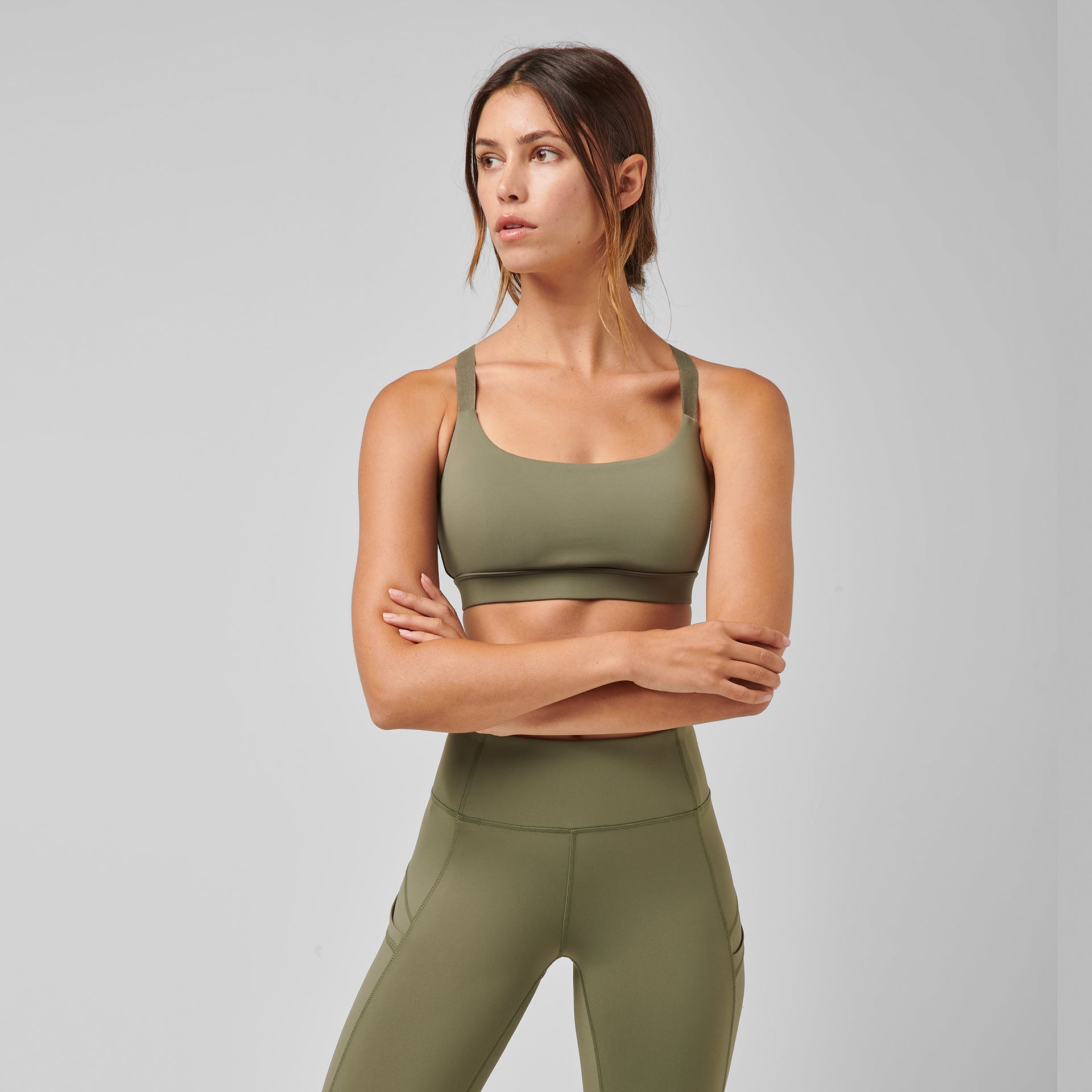
Best for: running, HIIT, and court sports in warm conditions. Skip if: you want a minimalist low-impact bra for yoga or walking.
How to Tell If a Sports Bra Fits Right in Hot Weather
A sports bra fits right in hot weather when the band stays snug on the loosest hook, the cups contain you without spillage, and nothing shifts when you jump. Heat makes fabric stretch, so a bra that fits at room temperature can loosen mid-session.
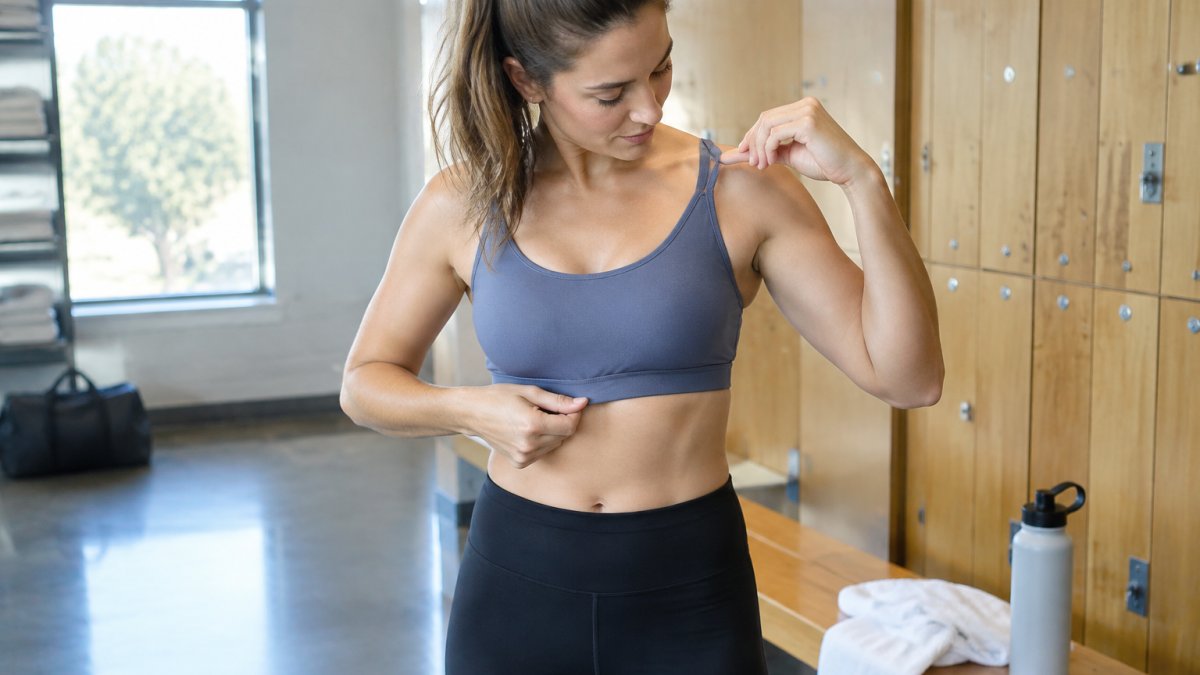
- You can slide two fingers under the band, no more, and the band does not twist
- Adjustable straps stay put after five minutes of movement and do not dig into your shoulders
- Cup coverage holds with no spillage when you bend forward and side to side
- Removable pads stay flat and do not bunch or fold after you move
- Seams sit away from your underarms and ribcage, especially where skin folds
- Fabric feels light, not thick or stiff, in your hand and does not cling when damp
- A quick jump test produces minimal bounce and no band shift
If two or more boxes fail, size up or switch styles. If only the band fails, try a band extender before changing cup size.
Test Fit in Motion, Not Just Standing Still
A static mirror check misses the failures that show up mid-workout. Do this three-step sequence in the fitting room or at home:
- Reach and rotate. Raise both arms overhead, then rotate your torso left and right. The band should stay level and the cups should not gap or dig.
- Jump and settle. Do ten small jumps. The bra should settle back into place without you tugging it. If you have to adjust the band or straps afterward, the fit is off.
- Simulate sweat. If you can, wear the bra for a 10-minute warm-up or light jog before deciding. Fabric that feels fine dry can stretch, cling, or rub once damp.
Watch out: A bra that passes the static check but fails the jump test will likely chafe once sweat softens the skin, so do not talk yourself into keeping it.
How Heat Changes Fit Mid-Session
Heat and humidity can change how a bra fits during a session, so check fit again after you have been moving for a while. Choose a band that fits on the loosest hook so you have room to tighten as the fabric relaxes, and favor adjustable straps over fixed ones for the same reason.
Fit Checks by Bra Style
Compression bras should feel evenly snug across the chest without flattening you painfully; if the band rides up, the cups are likely too small. Encapsulation bras should hold each breast separately with no spillage at the top or sides; if the center gore lifts away from your sternum, the band is too loose. Racerback styles can pull at the neck if the straps are too short, so check that you can still rotate your shoulders freely.
When to Size Up vs. Switch Styles
Size up when the band leaves red marks that last more than a few minutes, when the cups spill at the top or sides, or when the straps dig in even at their loosest setting. Switch styles when the band fits but bounce persists, which usually means you need encapsulation rather than more compression.
Matching Support Level to Your Workout and Body Shape
Match support level to impact first, then to your body shape, then to the heat and duration of the session. Most guides stop at impact level; in hot weather you also need to account for how long you will sweat and how much humidity slows drying.
A Decision Guide by Activity, Climate, and Duration
Use this sequence to narrow your choice before you shop:
- Set your impact level. High impact includes running, HIIT, plyometrics, and court sports. Medium impact includes gym sessions, cycling, and hiking. Low impact includes yoga, walking, and strength work with long rests.
- Adjust for heat and humidity. In high humidity, favor lighter fabrics and more ventilation even if you give up a little structure. In dry heat, you can keep more structure because sweat evaporates faster.
- Adjust for duration. Sessions under 30 minutes tolerate simpler compression styles.
- Adjust for cup size. Smaller cups can rely on compression. Larger cups need encapsulation for real bounce control.
A simple rule: high impact plus high humidity plus long duration points to a ventilated encapsulation bra with adjustable straps. Low impact plus short duration points to a light compression bra.
Support by Impact Level
| Impact level | Activities | Support style | Heat consideration |
|---|---|---|---|
| High | Running, HIIT, court sports | Encapsulation or high-support compression | Prioritize ventilation and adjustable band |
| Medium | Gym, cycling, hiking | Medium-support compression or encapsulation | Mesh panels help on longer sessions |
| Low | Yoga, walking, light strength | Light compression | Lighter fabric matters more than structure |
Matching to Body Shape and Breast Size
Cup size changes the equation more than band size does. Smaller cups can rely on compression because there is less mass to control.
Body shape affects where a bra rubs. If you have a shorter torso, check that the band does not roll when you sit or bend. If you have a fuller ribcage, look for bands with wider elastic and flat seams.
When to Choose Compression vs. Encapsulation
Choose compression for low to medium impact and smaller cups, where a simple, light design is cooler and adequate. Choose encapsulation for high impact, larger cups, or long sessions in heat, where separating the breasts reduces skin contact and bounce migration. If you are between sizes, favor the encapsulation option for high-impact work and the compression option for low-impact work.
Once your bra is dialed in, complete the kit with moisture-wicking leggings for women so your whole outfit manages sweat the same way.
Preventing Chafing and Skin Irritation in Sweaty Workouts
Chafing comes from three things: wet fabric, friction, and seam placement. Remove any one and irritation drops sharply. Flatlock seams and smooth knits cut friction, while wicking fabric stops the wetness that softens skin.
A common mistake is sizing down for "more support."
For longer sessions, apply anti-chafe balm at the band line and underarms. If chafing is a recurring problem, our guide on how to prevent chafing during long distance running goes deeper.
Caring for Your Sports Bra Between Hot Workouts
Rinse your sports bra after a sweaty session and air dry it away from direct heat.
Wash on cold with like fabrics, skip the fabric softener, and never wring it out. Rotate two or three bras so each one fully dries between uses. A bra that stays damp in a gym bag grows odor and loses stretch.
Sweat-heavy training exposes weak gear fast. If your current bra sags, rubs, or stays soaked halfway through a run, it is time to upgrade rather than adjust.
Frequently Asked Questions
What type of bra material is best for hot weather?
Look for lightweight, breathable knits with moisture-wicking and quick-drying properties. Double jersey interlock knits, like the fabric in the High Output Sports Bra, are made with moisture-wicking. Avoid heavy cotton that holds moisture, and favor mesh panels or ventilation zones in high-sweat areas. Fabric weight matters too: thinner, stretch-friendly knits move with you and release heat better than dense, padded constructions.
Should you choose a compression or encapsulation sports bra for hot-weather exercise?
Compression bras press the breasts against the chest to limit bounce, while encapsulation bras use separate cups to support each breast. Encapsulation and compression styles suit different cup sizes and impact levels. If you are doing high-impact training in humidity, test both and pick the one that stays dry and does not trap heat against your skin.
How do I know if a sports bra fits right for sweaty workouts?
The band should sit snug and level without riding up when you raise your arms. You should be able to breathe deeply and twist without the bra shifting. Straps should not dig in or slide off, and the cups should fully contain breast tissue without spillage. Do a quick jump test in the fitting room: if you feel excessive bounce or the band lifts, size down or switch to a higher-support style. Recheck fit after 10 minutes of movement, since heat and sweat change how fabric sits.
Which sports bra features help keep you cool during a workout?
Prioritize moisture-wicking fabric, mesh ventilation panels, and a lightweight construction. Adjustable straps and a racerback design help you dial in a secure fit without over-compressing. Quick-drying fabric matters most in humidity, because it prevents sweat from pooling against your skin between sets or during cooldowns.